

The Authority in Global Agricultural Chemistry & Bio-Resources
Mayonnaise vs. Salad Dressing: Ingredient and Texture Differences
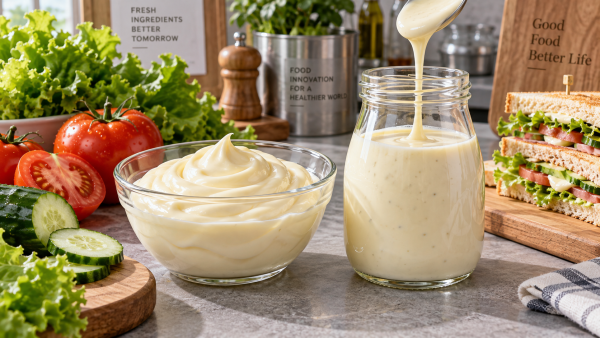
A jar labeled “salad dressing” may look interchangeable with a jar of mayonnaise, especially when both are sold beside sandwich spreads and chilled deli ingredients. For food buyers, product developers, caterers, and private-label teams, that assumption can create avoidable problems. The two products can perform very differently in a recipe, on a production line, and during storage.
The main distinction is not simply flavor. It begins with formulation: mayonnaise is generally an oil-in-water emulsion with a relatively high oil content, while many salad dressings use more water, sweeteners, starches, acids, and stabilizers to produce a lighter, less costly, or more pourable product. Those differences affect viscosity, mouthfeel, ingredient declaration, nutrition positioning, and how the product behaves when mixed with vegetables, proteins, or other sauces.
Why the distinction matters beyond the label
For a household consumer, the choice may come down to taste or calorie preference. In commercial food operations, formulation affects portion control, recipe consistency, equipment settings, and finished-product appearance. A deli salad made with a thick emulsion may hold its shape in a display tray, while one made with a thinner dressing can release liquid after refrigeration. A sandwich spread that performs well in a prepared meal may still be unsuitable for a high-speed line if it strings, separates, or applies unevenly through the dispensing system.
Buyers also need to consider whether a product is being used as a finished condiment, a base for a compound sauce, or an ingredient in a prepared food. Replacing one with the other can change the final product in ways that are not immediately obvious during a small kitchen trial. The effect may only appear after mixing, chilling, holding, transporting, or placing the item under retail lighting.
How ingredient systems create different products
Traditional mayonnaise is built around an emulsion of oil and egg yolk or egg-derived emulsifiers, with acid such as vinegar or lemon juice, salt, and seasonings. The exact formula varies by market and manufacturer, but the technical goal remains the same: distribute very small oil droplets evenly through the water phase and maintain a stable, smooth structure.
Salad dressing is a broader category. Some dressings are creamy and mayonnaise-like; others are pourable, sweetened, tangy, or visibly separated. A creamy salad dressing may contain oil and egg ingredients, but it often contains more water than a conventional full-fat mayonnaise. It may also use modified starches, gums, protein ingredients, sweeteners, or other stabilizing components to create body and suspension.
These ingredients are not automatically signs of poor quality. They serve practical functions. Starch can increase thickness in a lower-oil formula. Hydrocolloids can help limit water separation. Sugar can soften acidity and support a familiar flavor profile. The appropriate formulation depends on intended use, nutritional target, regional taste expectations, and the processing conditions of the finished food.
The ingredient list should be read as a functional document rather than a marketing detail. It can indicate whether a product is likely to provide richness from oil, thickness from starch, a savory profile from egg ingredients, or a sweeter profile suited to specific salads. It also helps procurement teams identify allergen implications, vegan requirements, claims limitations, and possible reformulation risks when changing suppliers.
Texture is a performance characteristic
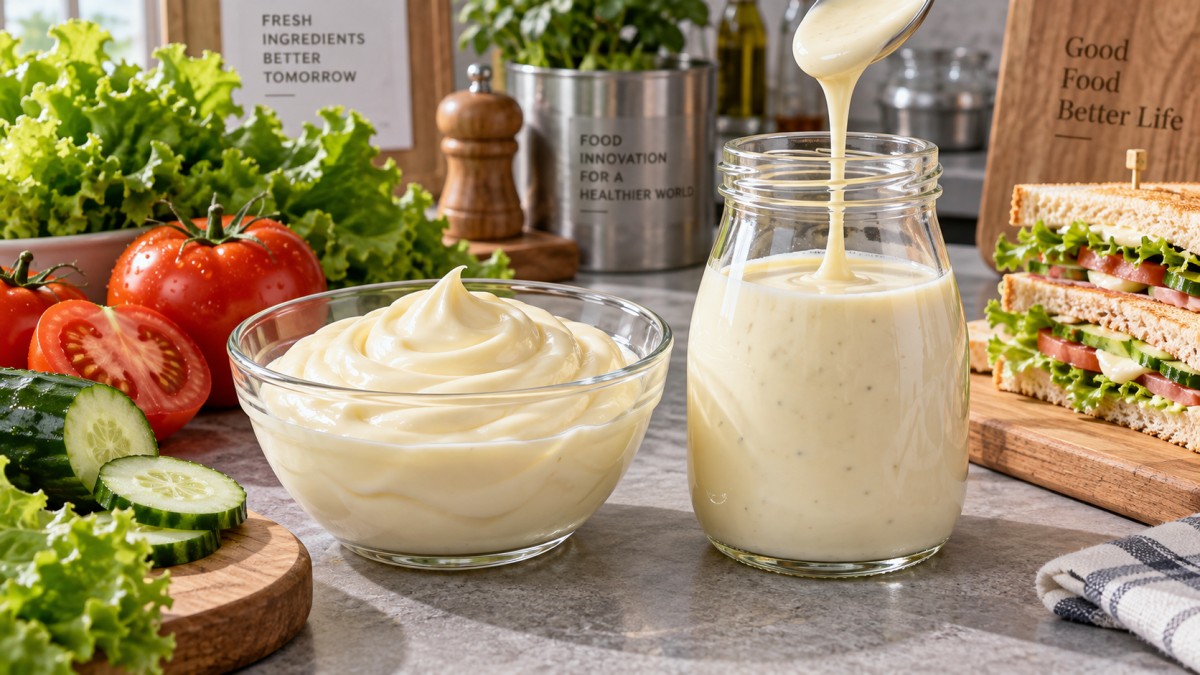
Texture is often described casually as “thick” or “thin,” but commercial users need a more precise view. Viscosity influences how a product spreads, pumps, coats ingredients, and remains distributed after mixing. A stable emulsion also needs to resist oiling off, weeping, or graininess during its expected shelf life and use cycle.
A high-viscosity product may be preferred for burgers, wraps, filled bakery items, and deli salads where a spread needs to stay in place. Yet very thick products can be harder to dispense from bottles, sachet fillers, or automated depositors. They may require different pump settings, wider nozzles, or a controlled processing temperature. If a formulation becomes too soft when warm, it may run off food surfaces before packing. If it is too firm after refrigeration, it may tear bread or fail to coat diced vegetables evenly.
Pourable dressings present a different set of considerations. They can distribute rapidly across leafy salads and may offer easier portioning in foodservice. However, a thinner formula can migrate to the bottom of a container, dilute seasoning on fresh produce, or create a watery appearance when used with ingredients that release moisture. Cucumbers, tomatoes, cooked pasta, shredded cabbage, and thawed vegetables can all contribute water to a prepared salad.
What happens after mixing matters
A bench sample can look acceptable before it meets the rest of the recipe. Once mixed with vegetables or protein, the acidity, salt level, temperature, and free water in the other ingredients may affect the perceived thickness of the finished product. A dressing with good bottle stability may still appear loose in a potato salad after several hours if the potatoes were not properly cooled or if they retained excess surface moisture.
Texture should therefore be assessed in the intended application, not only from a spoon or directly from a package. For prepared-food operations, a useful evaluation includes mixing at normal production speed, holding under the expected refrigeration conditions, checking the product after transport simulation where relevant, and observing whether liquid gathers at the bottom of the pack.
Low-fat formulations require closer purchasing checks
Low-fat products often create the greatest confusion because reducing oil changes more than nutrition information. Oil contributes flavor release, lubricity, body, and the dense visual appearance associated with conventional mayonnaise. When oil is reduced, manufacturers commonly need to rebalance water, acid, seasoning, starches, gums, proteins, or emulsifiers. The result can be a successful product, but it should not be assumed to perform identically to a full-fat counterpart.
For buyers comparing low-fat options, a useful starting point is to review the formula alongside the intended application. A detailed comparison of how formulation changes can affect product choice is available in this discussion of Mayonnaise and related dressing differences. The practical issue is whether the product has been designed for spreading, mixing, dipping, or pouring, rather than whether it merely carries a familiar category name.
Low-fat mayonnaise-style products may be appropriate where a lighter sensory profile or nutritional positioning is required. They can also be more sensitive to ingredient interactions in compound recipes. Added starches may develop a pasty impression when used heavily. Some stabilizer systems may respond differently to freeze-thaw exposure, high shear, or acidic inclusions. A buyer using the product in a chilled ready meal should clarify whether the supplier’s stated storage guidance applies to the unopened product only or to the completed food after preparation.
Purchasing checks for low-fat products
- Confirm the intended texture: Ask whether the product is formulated as a spread, a spoonable salad binder, or a pourable dressing. These uses require different flow behavior.
- Review the full ingredient declaration: This supports allergen management, claim review, and assessment of whether starches or stabilizers may affect the final recipe.
- Evaluate flavor after chilling: Cold temperatures can mute seasoning and make acidity, sweetness, or starch-related notes more noticeable.
- Test with actual inclusions: Conduct trials with the vegetables, meats, pasta, or plant-based ingredients used in production rather than using water-only or plain-product comparisons.
- Check handling conditions: Confirm recommended storage temperature, pack format, mixing limitations, and whether the product can be pumped or deposited through existing equipment.
- Define acceptance criteria: Establish what is acceptable for separation, viscosity, color, flavor, and finished-product hold time before approving a substitute.
Common sourcing errors
One common error is comparing products only by unit price. A lower-priced dressing may require a higher usage rate to deliver the same coating or flavor impact as a denser product. Conversely, a rich emulsion may be unnecessary when the recipe already includes cheese, oils, or other high-fat ingredients. The relevant comparison is cost per finished serving at the required sensory and handling performance, not price per kilogram alone.
Another issue is treating “creamy” as a technical specification. The term does not define oil level, viscosity, emulsifier system, sweetness, or stability. Procurement documents should specify the application and the properties that matter: desired consistency at refrigeration temperature, target flavor direction, allergen constraints, pack size, shelf-life expectations, and whether the product must tolerate mixing with high-moisture ingredients.
Buyers should also avoid assuming that a product is interchangeable across every format. A dressing suitable for retail salad kits may be too fluid for a bakery filling. A thick sandwich spread may not flow reliably through portion-control sachet equipment. Product approval should involve the people who manage recipe development, quality assurance, packaging, and line operations, since each team may identify a different failure point.
Choosing by use case rather than category name
The most useful question is not whether mayonnaise or salad dressing is “better.” It is what the finished food needs the sauce to do. A rich, cohesive emulsion may suit sandwiches, burgers, filled rolls, and dense deli salads. A lighter or sweeter creamy dressing may fit coleslaw, pasta salads, or operations seeking a different nutrition and cost balance. A pourable dressing may be more appropriate when even distribution across fresh leaves is the priority.
Ingredient and texture differences should be treated as design inputs. When buyers define the use environment, holding time, temperature exposure, and target eating experience before comparing labels, they are more likely to select a product that remains stable and appealing through preparation, packing, and service.
Related Intelligence
- Natural IngredientsMayonnaise vs. Salad Dressing: Ingredient and Texture DifferencesMayonnaise vs. salad dressing: discover key ingredient, texture, stability, and application differences to choose the right product for every recipe.
- Natural IngredientsIndustrial-Scale Agricultural Sourcing: Key Criteria for Reliable SupplyIndustrial scale agri sourcing made reliable: assess supplier capacity, traceability, landed cost, logistics, and resilience to protect production continuity.
- Natural IngredientsHow Microencapsulated Botanical Ingredients Improve Stability and Controlled ReleaseMicroencapsulated botanical ingredients enhance stability, protect sensitive actives, and enable controlled release for reliable performance across demanding applications.
The Morning Broadsheet
Daily chemical briefings, market shifts, and peer-reviewed summaries delivered to your terminal.
