

The Authority in Global Agricultural Chemistry & Bio-Resources
Southeast Asia Tightens Aeration Equipment Import Rules

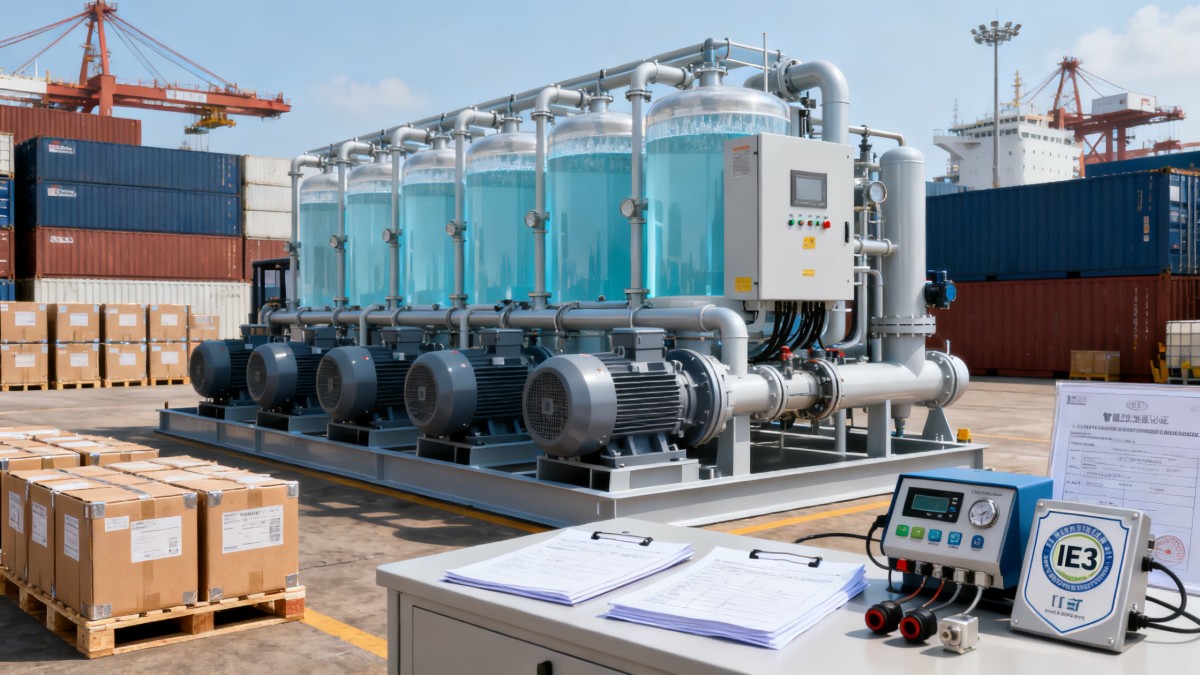
On June 25, 2026, ASEAN-ACCSQ released AMPS-AE 2026, introducing a new compliance threshold for imported Aeration & Water Tech equipment in parts of Southeast Asia. With mandatory IE3 energy efficiency and smart variable-frequency control module certification set to apply from October 1, 2026, the change is relevant not only to equipment exporters and importers, but also to buyers, certification-related service providers, and supply chain teams handling documentation and delivery. What deserves closer attention is that the update is already linked to customs system changes in Vietnam, Thailand, and Indonesia, making this more than a technical standard notice for businesses moving older models into these markets.
A confirmed shift from product specification to import access
According to the provided event information, ASEAN-ACCSQ issued the ASEAN Minimum Energy Performance Standards for Aeration Equipment (AMPS-AE 2026) on June 25, 2026. The standard will be enforced from October 1, 2026 for imported aerators, impeller aeration equipment, and related Aeration & Water Tech products.
The confirmed requirements in the input are twofold: imported products within the stated scope must meet the IE3 energy efficiency level, and they must also obtain certification for a smart variable-frequency control module. The provided information also states that Vietnam, Thailand, and Indonesia have already started customs system upgrades. Older models that do not satisfy AMPS-AE 2026 will not be able to complete import declaration.
Beyond these points, the input does not provide additional implementation details, transition arrangements, documentary format, or market-specific certification procedures.
Where the immediate pressure is likely to appear
Export and trading companies face a direct customs compliance check
From an industry perspective, exporters and trading firms handling aeration equipment are among the first parties likely to feel the impact, because the reported change is tied directly to import declaration eligibility. The practical issue is not only whether a product can be sold, but whether it can be declared at customs once the new system logic is applied. These companies should pay close attention to whether existing models, technical files, and shipment documents can support claims related to IE3 performance and smart variable-frequency control module certification.
Procurement teams may need to revisit model selection and delivery timing
Buyers and procurement departments may also be affected because product selection now intersects more clearly with import compliance. Analysis shows that the risk is not limited to product price or lead time; it may also involve whether a chosen model remains eligible for import after October 1, 2026. For procurement-linked projects, the points worth checking are whether tender specifications, purchase orders, and supplier commitments are aligned with the new standard and whether older models are still being proposed for affected markets.
Manufacturers and technical suppliers may face document and configuration pressure
For manufacturers and technical suppliers, the rule change may shift attention toward product configuration and supporting compliance materials. Observably, where a product line includes legacy models, the main concern is whether those models can still be supplied into markets where customs systems have already been upgraded. This makes technical documentation, certification status, and model-level compliance review more relevant in pre-shipment preparation and customer communication.
Certification and testing-related service providers may see higher verification demand
Certification-related companies and testing service institutions may become more involved because the announced requirements combine an energy efficiency threshold with a control-module certification element. Analysis shows that businesses preparing market entry, shipment clearance, or bid documentation may need more precise verification support. Even so, the input does not specify the exact certification pathway, so any operational conclusion on process or timing still requires further confirmation.
What companies should examine before the October enforcement date
Review whether older models remain commercially usable in the affected markets
The most immediate issue is product screening. Companies with older aerator or impeller aeration models in active quotations, backlog orders, or planned shipments should check whether those models can meet the IE3 and smart variable-frequency control module requirements stated in the input. This is especially relevant where the same product family includes both updated and legacy configurations.
Check technical files and compliance documents for import-readiness
What deserves closer attention is the completeness of technical and compliance records. Businesses should examine whether product specifications, certification materials, model descriptions, and shipment-related documents are consistent with the announced standard requirements. Because the input does not include detailed documentary rules, this should be treated as a compliance review priority rather than as a settled checklist.
Watch for changes in tender wording and buyer-side technical requirements
Observably, even before all implementation details become fully visible, standard changes of this kind can affect how buyers describe acceptable models in tenders and procurement documents. Companies active in Vietnam, Thailand, and Indonesia should monitor whether technical bid alignment needs to change, especially for projects involving imported equipment.
Reassess shipment scheduling and market allocation
Analysis shows that timing may become a practical risk point. Where goods are intended for markets already upgrading customs systems, delivery scheduling and market allocation may need closer review. The core issue is whether a model that was commercially viable before the enforcement date could face declaration obstacles afterward if compliance is incomplete.
Why this looks like an execution signal, not just a standards update
From an industry perspective, this development is more appropriate to understand as an execution signal attached to trade administration, not merely as a forward-looking standards release. The reason is straightforward: the provided information does not stop at announcing AMPS-AE 2026, but links it to customs system upgrades in Vietnam, Thailand, and Indonesia and states that non-compliant older models will be unable to complete import declaration.
At the same time, this should not be overstated. The input does not provide detailed national enforcement guidance, documentary templates, or market feedback, so there is still a need to watch how certification interpretation, customs handling practice, and buyer-side specification updates develop after the effective date approaches.
How this development is best understood for now
At this stage, the event is best read as a concrete tightening of import access conditions for certain Aeration & Water Tech equipment in parts of Southeast Asia. The confirmed facts point to a clear compliance direction: older models that fail the stated requirements face a direct trade barrier at the declaration stage in the markets identified in the input. Analysis shows that the most relevant near-term impact is on model eligibility, paperwork readiness, procurement alignment, and shipment planning rather than on broad market conclusions.
A measured reading is therefore necessary. This is neither a routine standards notice nor a complete picture of final market practice. It is a rule change with immediate operational relevance, while some aspects of implementation still require continued observation.
Basis of this article and points that still require verification
This article is based on the user-provided news title, event date, and event summary. For developments of this type, commonly relevant source categories may include official announcements, releases from regulatory bodies, customs or trade authorities, industry association notices, standards organization documents, and reporting by authoritative media. A specific official source link was not provided in the input, so the exact official publication path still needs to be verified on an ongoing basis.
Further observation is still needed on implementation details, certification interpretation, customs execution practice, changes in tender documents, industry feedback, and how companies in the supply chain adjust their compliance and delivery arrangements.
Related Intelligence
- Aeration & Water TechSelecting Solids Filtration for Aquaculture: Flow Rates, Loading, and Fish WelfareSolids filtration aquaculture guide: compare flow rates, peak loading, capture performance, maintenance, and fish welfare to choose a reliable system.
- Aeration & Water TechWhat RO water treatment systems deliver consistent 98% salt rejection at 25°C with feed TDS over 3,000 ppm?RO water treatment systems that deliver proven 98% salt rejection at 25°C with >3,000 ppm TDS—engineered for API synthesis, aquaculture & grain processing.
- Aeration & Water TechCan pond aeration systems maintain dissolved oxygen above 5 mg/L during summer stratification in catfish ponds?Pond aeration systems can sustain >5 mg/L DO during summer stratification—when engineered for mixing *and* oxygen transfer. See field-proven data & design essentials.
The Morning Broadsheet
Daily chemical briefings, market shifts, and peer-reviewed summaries delivered to your terminal.
