

The Authority in Global Agricultural Chemistry & Bio-Resources
Recirculating Aquaculture Systems Explained: Core Components, Water Flow, and Use Cases
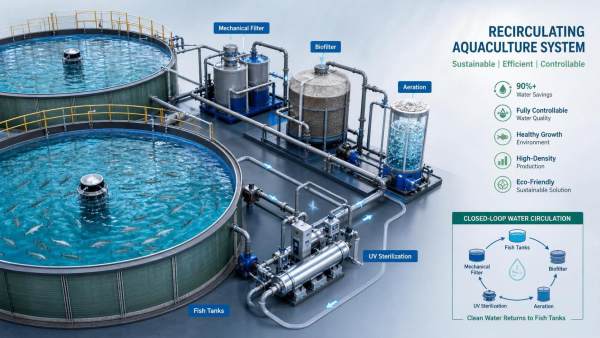
Why are recirculating aquaculture systems getting so much attention?
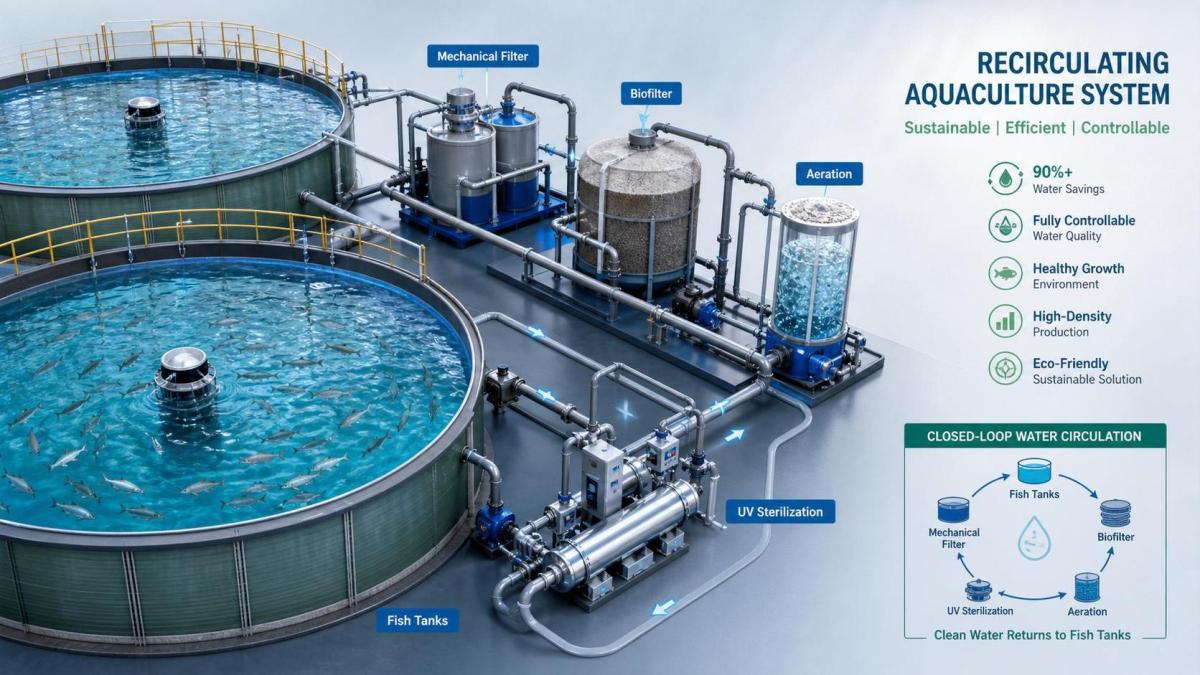
Recirculating aquaculture systems are no longer a niche concept in fish farming. They have become a serious answer to water scarcity, disease pressure, and tighter environmental rules.
At a basic level, these systems reuse most of the production water after treatment. That single design choice changes how farms manage location, stocking density, discharge, and biosecurity.
This matters beyond aquaculture alone. Across primary industries, controlled production systems are gaining value because they reduce waste, support traceability, and make technical performance easier to measure.
That wider industrial context explains why editorial platforms such as AgriChem Chronicle increasingly track aquaculture technology alongside machinery, feed processing, and regulated chemical supply chains.
For anyone researching recirculating aquaculture systems, the key question is not just what they are. It is how the water loop works, what equipment keeps it stable, and where the model actually makes sense.
What exactly is a recirculating aquaculture system?
A recirculating aquaculture system, often shortened to RAS, is a land-based farming setup that continuously treats and reuses water from fish or shrimp tanks.
Instead of sending water through once and discharging it, the system removes solids, converts toxic ammonia, adds oxygen, and returns conditioned water to the culture units.
Simple pond farming depends heavily on local water conditions. Recirculating aquaculture systems depend more on engineering discipline, monitoring, and operational consistency.
That distinction is important. RAS is not just a tank with filters. It is a tightly managed biological and mechanical loop where fish health, feed efficiency, and water chemistry are linked every hour.
In practical terms, recirculating aquaculture systems are often chosen when operators need predictable output, lower water consumption, or stronger control over contamination and disease entry.
Which core components keep the system running properly?
People often ask whether recirculating aquaculture systems are mainly about tanks. In reality, tanks are only one part of the operating chain.
A stable system usually includes several treatment stages, each solving a different water quality problem. If one stage underperforms, the whole loop feels it quickly.
- Culture tanks: hold the stock and determine flow pattern, stocking density, and waste collection behavior.
- Mechanical filtration: removes uneaten feed and feces before they break down into dissolved waste.
- Biofiltration: converts ammonia into less toxic nitrate through nitrifying bacteria.
- Degassing units: strip excess carbon dioxide and other unwanted gases.
- Oxygenation equipment: restores dissolved oxygen to levels suitable for biomass and feeding activity.
- Disinfection steps: often UV or ozone, used to reduce pathogen load in selected parts of the loop.
- Pumps, sensors, and controls: maintain flow rate, monitor chemistry, and trigger intervention when parameters drift.
The most sensitive component is usually the biofilter. It needs steady temperature, alkalinity, oxygen, and loading rates. Abrupt changes can weaken nitrification and stress the stock.
That is why technical reviews of recirculating aquaculture systems often focus less on hardware lists and more on system balance, redundancy, and monitoring logic.
How does water actually move through recirculating aquaculture systems?
The water flow is easier to understand when viewed as a loop rather than a line. Water leaves the culture tank carrying solids, dissolved waste, and carbon dioxide.
First, solids are separated. This step matters because organic buildup increases oxygen demand and makes downstream treatment less efficient.
Next, water passes through the biofilter. Here, beneficial bacteria convert ammonia from fish metabolism into nitrite and then nitrate.
After biological treatment, the system often removes carbon dioxide and fine gases, then reoxygenates the water before it returns to the tanks.
Some recirculating aquaculture systems also include UV or ozone treatment. These tools do not replace filtration, but they can improve sanitation when integrated carefully.
Fresh water is still added, though in small volumes. This makeup water compensates for sludge removal, evaporation, and the need to dilute certain dissolved compounds over time.
A quick reference for the water loop
This table is useful because many RAS problems start as flow or treatment imbalances, not as a single equipment failure.
Where do recirculating aquaculture systems make the most sense?
Not every species or market needs full recirculation. The better question is where recirculating aquaculture systems create a measurable advantage over ponds, cages, or flow-through farms.
They are often a strong fit for hatcheries, nursery phases, broodstock programs, and premium species where survival and uniformity justify higher technical input.
RAS is also relevant in regions with limited water access, strict effluent regulations, or cold climates where indoor control improves year-round production planning.
In shrimp and finfish production, land-based systems can shorten exposure to external pathogens. That biosecurity benefit becomes more valuable when disease outbreaks disrupt open-water operations.
There is also a supply chain angle. Controlled systems can support more consistent batch data, input tracking, and compliance reporting, which increasingly matter in regulated food and ingredient markets.
For an industry journal covering aquaculture, chemicals, and processing, that overlap is significant. Water treatment, sanitation, feed conversion, and operational traceability all connect to broader industrial performance.
What are the main risks, costs, and common misunderstandings?
The biggest misunderstanding is that recirculating aquaculture systems automatically reduce risk. They reduce some risks, but they also concentrate others inside one controlled environment.
Power loss, oxygen interruption, sensor drift, and poor solids management can escalate fast. A pond may absorb mistakes slowly. A dense RAS often does not.
Capital cost is another issue people often underestimate. Tanks are visible, but civil works, backup systems, sensors, blowers, sludge handling, and automation can drive the budget much higher.
Operating cost also depends on local electricity, labor skill, feed quality, and replacement parts. Two recirculating aquaculture systems with similar size can have very different economics.
The most common operational mistakes usually include:
- Sizing the biofilter for average load instead of peak feeding periods.
- Ignoring alkalinity consumption and pH stability.
- Treating monitoring as optional rather than continuous.
- Overestimating the ease of species transfer from conventional systems.
- Planning for ideal water quality without robust emergency redundancy.
In actual project reviews, the better approach is to test assumptions around biomass density, discharge rules, water source quality, and outage response before final design decisions are locked.
How should you evaluate a recirculating aquaculture system before moving forward?
A useful evaluation starts with biology, not brochures. Species behavior, target harvest size, feeding rate, and tolerance to water parameter swings should shape the system concept.
Then look at engineering fit. Flow rate, oxygen demand, solids capture efficiency, backup power, and control architecture need to match the biological plan.
It also helps to compare systems with a practical checklist rather than broad claims. The table below keeps that comparison grounded.
That final point is often overlooked. In sectors shaped by environmental and technical standards, documentation quality can matter almost as much as mechanical design.
Recirculating aquaculture systems offer clear advantages when water efficiency, control, and biosecurity truly matter. They are most successful when biological goals, process engineering, and operational discipline are aligned from the start.
The next step is usually straightforward: define the species and production target, map the water loop, compare treatment capacity against peak load, and test the cost of redundancy before making broader assumptions.
That kind of structured review leads to better decisions than focusing on headline claims alone, especially in fast-evolving aquaculture and primary industry markets.
Related Intelligence
- RAS SystemsSustainable Aquaculture Practices That Cut Feed Waste and Protect Fish Farm Water QualitySustainable aquaculture for fish farms: reduce feed waste, protect water quality, and build resilient, efficient systems with practical strategies.
- RAS SystemsDrum Filter System Price: How Flow Rate, Micron Rating, and Automation Affect CostDrum filter system price depends on flow rate, micron rating, automation, materials, and lifecycle costs. Compare quotes confidently and choose the right system.
- RAS SystemsHow to Specify Large-Scale Fish Farming Equipment for High-Output RAS ProjectsLarge scale fish farming equipment guide for high-output RAS projects—specify tanks, filtration, oxygen, automation, and redundancy for reliable growth.
The Morning Broadsheet
Daily chemical briefings, market shifts, and peer-reviewed summaries delivered to your terminal.
