

The Authority in Global Agricultural Chemistry & Bio-Resources
Choosing a Cost-Saving Tractor: Fuel, Maintenance and Total Ownership Costs
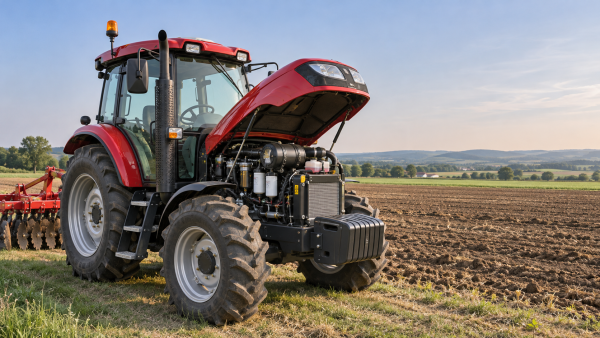
The cheapest tractor on a quotation sheet is not necessarily the cheapest to operate. A better choice is the machine that completes the required work at the lowest acceptable total cost, while remaining reliable during the periods when it is needed most. For buyers comparing cost saving tractors, that means looking beyond the purchase price to fuel, routine servicing, repairs, downtime and the amount likely to be recovered at resale.
Start with the jobs the tractor must perform, then compare complete ownership scenarios over the same period and expected workload. A model with a higher initial price may be less expensive over its working life if it uses less fuel per unit of work or receives faster local support. Equally, a simpler, lower-priced machine may be the better investment when annual use is limited and demanding work is infrequent.
Define the workload before comparing tractors
Horsepower is an important starting point, but it does not describe the whole job. List the implements the tractor must operate, the tasks it will perform, the ground conditions and the expected working hours for each activity. Include road transport, loader work and stationary power take-off (PTO) duties where relevant. A machine that spends most of its time pulling cultivation equipment faces a different cost profile from one used mainly for light transport or loader work.
Match the tractor to the implements and the work rate required, not just the largest horsepower figure available. An undersized tractor may struggle to maintain the required output, work longer hours or place excessive strain on components. An oversized machine can carry a higher purchase price and additional weight without producing a useful increase in output. Its fuel use may also be difficult to justify on predominantly light tasks.
Look beyond engine power to transmission suitability, hydraulic capacity, PTO requirements, lifting capacity, tyres and ballast. For example, a loader tractor needs the hydraulic performance and stability to handle its expected loads; engine power alone will not establish whether it is fit for the job. Allow enough capacity for realistic peak demands, but avoid paying for specifications that are unlikely to be used.
Compare fuel cost against work completed
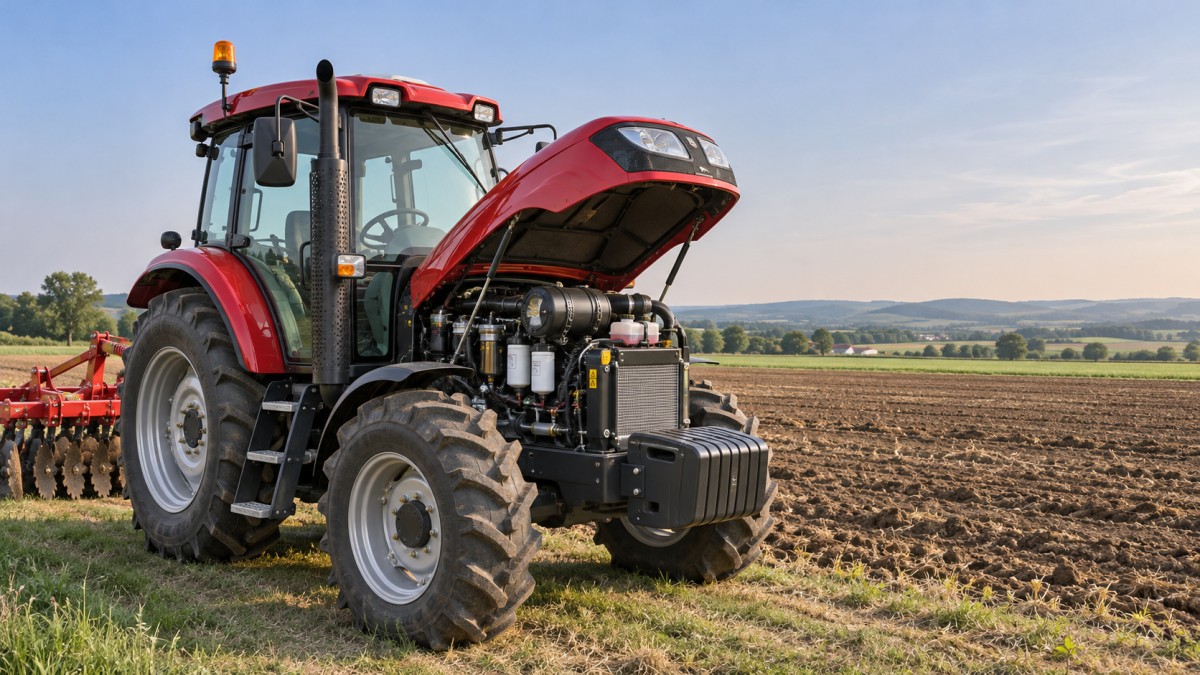
Fuel consumption matters, especially for tractors with high annual utilisation. But litres per hour can be misleading: a machine that consumes more fuel each hour may finish the same job faster. Where possible, compare fuel used per hectare, per tonne moved or per other relevant unit of output, alongside the time required to complete the task.
Use comparable operating conditions when evaluating claims or demonstrations. Soil, moisture, implement width, working depth, travel speed, tyre setup and operator technique can all change the result. A fuel figure recorded during light transport should not be treated as a forecast for heavy field work. Ask suppliers to explain the task and conditions behind any consumption figures they provide.
Efficiency also depends on how well the tractor and implement work together. An appropriate transmission and suitable gearing can help the operator maintain a productive speed without unnecessary engine load. Tyre choice, pressure and ballast affect traction; excessive wheel slip wastes fuel, while excessive ballast can increase rolling resistance and compaction. The best configuration depends on the task rather than a single universal setup.
For budgeting, estimate annual fuel cost by task rather than applying one hourly figure to every operation. Multiply expected hours for each task by its estimated consumption and the fuel price used in the purchasing model. Use the same price assumptions for every candidate, then test a higher and lower fuel-price scenario. This shows whether the preferred tractor remains competitive when operating costs change.
Build a total ownership cost comparison
Compare offers over the same ownership period, with the same expected workload and a consistent treatment of financing and tax. The basic calculation is:
Total ownership cost = acquisition and financing costs + fuel and operating fluids + maintenance and repairs + tyres and other wear items + insurance and storage + downtime costs − expected resale value.
The categories should reflect the actual purchase arrangement. For a cash purchase, consider the cost of tying up capital; for a financed purchase, include relevant interest and fees. Avoid counting the same financing cost twice. Treat recoverable taxes consistently, and include attachments or options needed to make each tractor capable of the same work.
Separate costs supported by a quotation from estimates that depend on future conditions. A supplier may provide a fixed service package, while repair costs and resale value remain uncertain. Test the comparison with less favourable assumptions for those uncertain items. If a model is only cheaper when its resale value is unusually strong, that is a weaker purchasing case than one supported by lower recurring costs.
For tractors with different expected output, calculate cost per hectare or another relevant measure as well as total annual cost. A lower annual cost has limited value if the machine cannot complete the required work within the available time.
Maintenance costs depend on access as well as parts
Ask each supplier for the service schedule covering the planned ownership period, including intervals based on both operating hours and elapsed time. Price the filters, fluids, inspections and labour involved, and identify major scheduled services separately. A tractor used for relatively few hours may still require calendar-based servicing, so an hourly cost estimate alone can understate its maintenance bill.
Check which work can be completed by the farm’s own technicians and which tasks require dealer tools, software or specialist training. Straightforward access to filters, lubrication points and components can reduce routine service time. Conversely, a machine with inexpensive parts may still be costly to maintain if routine work requires substantial disassembly or repeated dealer visits.
Compare service agreements carefully. Establish what labour, travel, consumables and inspections are included; whether coverage has hour or time limits; and how unscheduled repairs are handled. A package can improve budget certainty, but only if its scope matches expected use. Exclusions and response arrangements can matter as much as the headline price.
Modern emissions-control and electronic systems may add fluid, maintenance or diagnostic requirements. These should be included in the comparison without assuming that simpler machinery is always cheaper overall. Features that improve control or productivity can justify their cost when they support the actual workload and can be maintained locally.
Put a value on downtime and dealer support
A breakdown during a flexible transport schedule is not equivalent to one during a short planting or harvest window. Consider what happens if each candidate is unavailable: can another tractor operate the implement, is rental equipment accessible, and would a delay disrupt other field operations? The cost may include a replacement machine and operator, contractor charges, idle labour or delayed work.
Dealer support should therefore be evaluated as part of the machine, not as an afterthought. Ask about local technician coverage, travel charges, parts supply arrangements and the process for obtaining urgent assistance. Request written response commitments where they are commercially important, and distinguish a response from a completed repair. A prompt diagnosis does not necessarily mean a required component will be available immediately.
Fleet compatibility can also reduce disruption. Tractors that share suitable implements, operator controls or commonly stocked service items may be easier to substitute and support. Standardisation should not override a major mismatch in capability, but it has practical value when several machines perform overlapping jobs.
New, used or leased: compare the risk as well as the price
A new tractor generally offers a clearer starting condition and a manufacturer warranty, subject to its terms. It may suit a workload where availability is critical or where the buyer expects to retain the machine for a long period. Its higher initial outlay still needs to be justified against expected use and future value.
A used tractor can reduce acquisition cost, particularly when annual hours are modest or a backup machine is needed. Its value depends heavily on condition and maintenance history, not just age or indicated hours. Review service records and inspect for leaks, tyre wear, structural damage and signs of poor repair. Operate the tractor under a representative load where practical, checking the transmission, hydraulics, PTO and warning systems. Price any immediate work into the offer and allow for repair uncertainty.
Leasing or rental can be useful when the requirement is seasonal, uncertain or temporary, or when a business wants to limit its initial capital commitment. Compare the complete contract with ownership, including permitted hours, servicing responsibilities, insurance, excess-use charges, return-condition requirements and any purchase option. A lower periodic payment does not automatically mean a lower cost over the full term.
Turn supplier quotations into a decision
Before requesting final offers, give suppliers the same workload description and ask them to specify the equipment needed to meet it. The most useful quotations make it possible to compare like with like rather than leaving options and operating assumptions to be inferred.
- Specify annual hours by task, implements, ground conditions, peak working periods and planned ownership duration.
- Request an itemised delivered price, including necessary tyres, ballast, hydraulic connections and other task-specific equipment.
- Ask for scheduled maintenance requirements, parts and labour pricing, warranty terms and service-package exclusions.
- Request fuel-consumption evidence relevant to the intended work, with the operating conditions clearly described.
- Document service coverage, parts arrangements and any commitments for urgent support.
- Use consistent assumptions for fuel price, financing, annual utilisation and expected resale across all models.
Once the comparison is complete, revisit the assumptions most likely to change the result: annual hours, fuel consumption, service expense, resale value and the cost of downtime. The preferred purchase should meet the required work rate and remain financially credible across a reasonable range of conditions, not only in the most favourable forecast.
Related Intelligence
- Heavy Agri MachinerySeasonal Maintenance Tips for Farm Equipment in North AmericaNorth America maintenance tips for farm equipment: plan seasonal inspections, prevent downtime, and keep machinery field-ready from planting through harvest.
- Heavy Agri MachineryAEM: US Four-Wheel-Drive Tractor Sales Rose 7.7% in OctoberUS four-wheel-drive tractor sales rose 7.7% year over year in October 2026, AEM reports. Discover what the increase means for the equipment market.
- Heavy Agri MachineryChoosing a Cost-Saving Tractor: Fuel, Maintenance and Total Ownership CostsCompare cost saving tractors by fuel use, maintenance, downtime and resale value. Discover how to choose the right model and reduce total ownership costs.
The Morning Broadsheet
Daily chemical briefings, market shifts, and peer-reviewed summaries delivered to your terminal.
