

The Authority in Global Agricultural Chemistry & Bio-Resources
How to Size a Grain Pre-Cleaner for Capacity, Crop Type, and Impurity Load
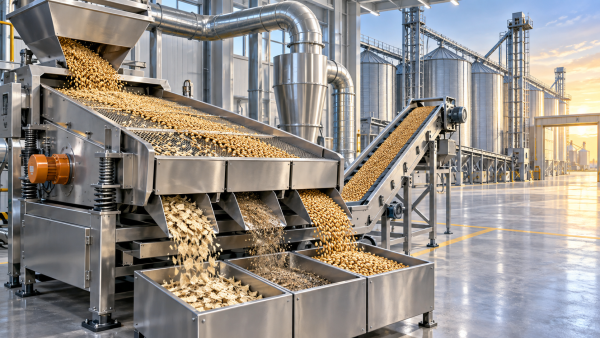
Start with the required net flow of clean grain at the point where the pre-cleaner sits in the handling line, then size the machine against the worst credible incoming condition rather than an ideal dry, uniform sample. A grain pre-cleaner that matches nominal harvest intake but loses capacity when fines, straw, wet material, or light foreign matter increase will restrict the entire system. The useful capacity is the sustained rate at which the machine can remove the required material without overloading screens, carrying usable grain into the reject stream, or starving the downstream dryer, bin, or cleaner.
The rated throughput on a data sheet is only a starting reference. It often assumes a particular crop, test weight, moisture range, screen arrangement, and contamination level. Those conditions need to be reconstructed against the intended duty. Capacity selection becomes defensible when it connects field intake, crop properties, impurity distribution, operating hours, and the downstream process limit.
Set the design flow before comparing machine ratings
Begin with the highest expected receiving flow, not average seasonal volume. If a receiving pit, conveyor, or truck unloading arrangement can deliver grain faster than the pre-cleaner can process it, the difference must be absorbed by surge storage or by planned waiting time. Neither should be assumed without quantifying the available buffer.
A practical design basis separates three values:
- Average seasonal throughput: total tonnes expected over the operating period. This is useful for estimating operating hours, but it rarely establishes the required machine size.
- Peak incoming flow: the maximum sustained rate delivered during active receiving. This determines whether grain backs up at the intake point.
- Required clean-grain flow: the rate needed by the dryer, storage route, milling line, or seed-processing line after impurities are removed.
Where gross incoming flow is expressed as mass per hour, the material balance should include the expected reject fraction. If the incoming stream is 100 tonnes per hour and the planned removal is 4 tonnes per hour, the cleaned stream is approximately 96 tonnes per hour. That simple calculation becomes less reliable when the reject fraction contains a meaningful amount of good grain, which is one reason capacity testing must include reject inspection rather than throughput alone.
The pre-cleaner should normally be selected to accept the gross incoming flow under its design impurity condition. Selecting solely against downstream clean-grain demand can create a restriction at the receiving end whenever trash content rises. Conversely, an oversized pre-cleaner fed by a restricted elevator or conveyor will not improve line capacity. Review the complete route: receiving pit, lift, distributor, machine inlet, aspiration duct, discharge conveyors, reject collection, and the next processing stage.
Translate the crop into machine loading
Two crops with the same mass flow do not impose the same load on a screen deck or aspiration chamber. Bulk density changes the volumetric flow entering the machine. Kernel size, shape, surface texture, fragility, and the range of foreign materials determine whether screening, air separation, or both will carry most of the duty.
Bulk density should be checked as received, not taken from a standard reference. A machine inlet, aspiration leg, or conveyor is often constrained by volume, while commercial planning may use tonnes. Low-density grain with a high volume of husk, straw, or other light material can fill the machine well before its mass-based rating is reached.
Kernel-size distribution also matters. A nominal screen aperture chosen from average kernel dimensions can be unsuitable where grain includes shrivelled kernels, broken kernels, or a broad mix of varieties. The question is not simply whether a kernel can pass an opening. It is whether the chosen arrangement consistently separates the unwanted fraction while retaining acceptable grain through fluctuating feed conditions.
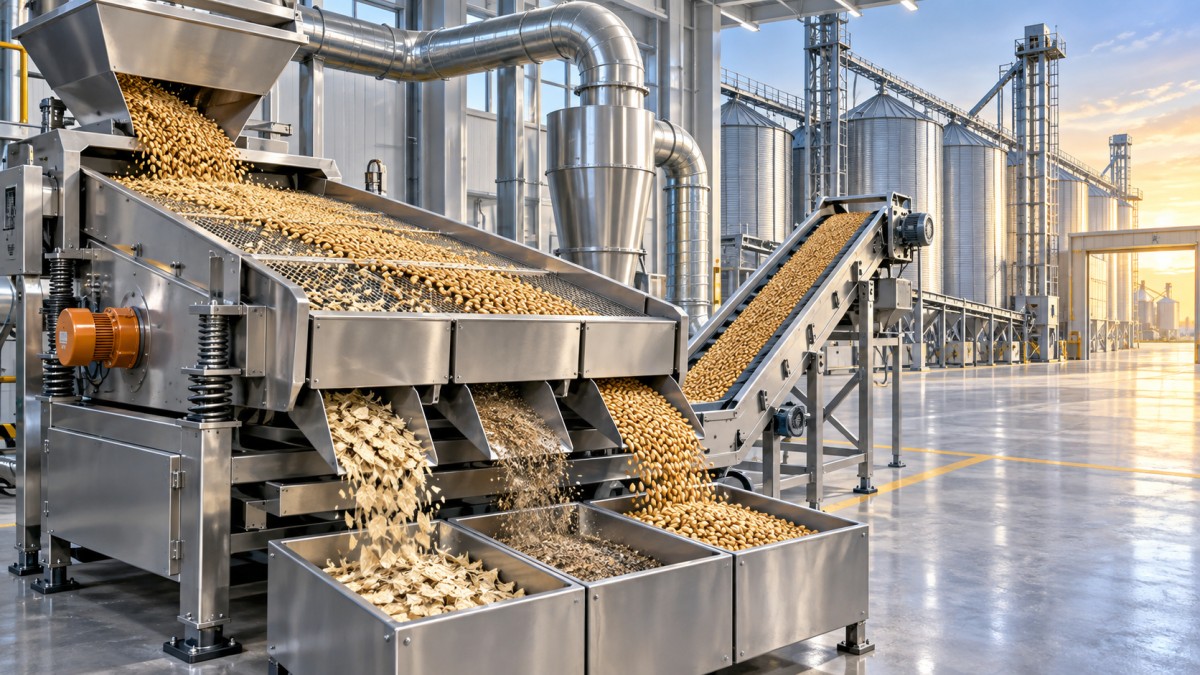
Impurity load changes both throughput and separation quality
Incoming impurity should be described by type as well as total percentage. A sample containing dust and light chaff behaves very differently from one containing wet weed seeds, long straw, stones, soil clods, or large cob pieces. Equal mass fractions can create sharply different burdens on screens, aspiration, and reject handling.
Classify the intake material into at least four fractions: oversize material, undersize material, light material, and dense foreign material. This clarifies the separation duty. A screen-based pre-cleaner can remove oversize and undersize fractions efficiently when the size contrast is sufficient. An aspiration channel is effective against low-density material, but it cannot reliably replace a screen where the contaminant has a similar aerodynamic response to the crop. Dense stones and metal require dedicated protection where they are credible hazards; neither should be treated as a routine by-product of pre-cleaning.
Long, flexible trash deserves particular attention. Straw and stems may bridge at inlets, wrap around rotating components, or lie across screen openings. They reduce open screening area without necessarily raising the apparent dust load. If the expected crop condition includes substantial long material, evaluate the feed section and scalping arrangement under representative material. A nominal capacity test using clean grain and dry fines will not expose this problem.
High fines content presents a different pattern. The machine may retain normal feed movement at first, then lose separation efficiency as perforations blind or air passages load with dust. The resulting failure can look like a capacity issue even when the root cause is insufficient screen cleaning, unsuitable aperture geometry, or inadequate aspiration maintenance.
Moisture is a sizing variable, not a note on the specification
Moisture affects flowability, adhesion, screen blinding, and the behavior of lightweight contaminants. Damp chaff and soil are more likely to stick to screens or form agglomerates. Moist grain may move differently across vibrating surfaces and can require a lower practical feed rate to preserve stratification. When a pre-cleaner protects a dryer, its duty is often heaviest precisely when crop moisture is elevated, so dry-crop test capacity should not be used as the sole selection condition.
Record moisture alongside impurity samples during the periods likely to produce the most difficult intake. Also note whether grain arrives immediately after harvesting, after temporary field storage, or following wet-weather delays. Material condition can change within a day, and a representative evaluation should reflect that range. A machine that has enough installed drive power does not automatically have sufficient active screen area or air-separation capacity for wet, dirty grain.
Match the separation target to the downstream equipment
Pre-cleaning is rarely intended to deliver a final market-grade separation. Its purpose is usually to remove enough objectionable material that downstream equipment operates predictably. The target should therefore be expressed in process terms: protection of dryer airflow, reduction of bin contamination, avoidance of conveyor blockage, reduction of dust loading, or preparation for a subsequent fine-cleaning stage.
A dryer may tolerate a certain amount of broken grain but be sensitive to chaff that disrupts air distribution. Storage may be more concerned with removing fines and biological debris that concentrate in bins. A milling or feed-processing route may require a cleaner incoming stream because later separators have limited capacity or because foreign material creates wear and quality risks. These are distinct duties and should not be collapsed into a generic requirement for “clean grain.”
Define the acceptable outlet condition with samples and observations from the next stage. For example, if downstream aspiration is becoming overloaded, increasing pre-cleaner screen area alone may not solve the issue. The selected machine needs sufficient air volume, an appropriate settling or separation zone, and a dust collection arrangement that maintains stable airflow. If large trash is causing elevator plugging, the relevant feature may be an effective scalping deck and reject conveyor, rather than a higher total rated capacity.
Screen area, aspiration, and feed distribution need to work as a system
Capacity claims should be traced to the active separating surfaces and the way material reaches them. A wide machine with poor inlet distribution can concentrate grain on part of the deck, leaving the rest underused. Local overloading reduces the opportunity for kernels and impurities to stratify, lowering separation even where total installed screen area appears adequate.
Ask how the feed is spread across the full width, how bed depth is controlled, and whether the distributor is adjustable for different crops. Examine the route taken by the largest contaminants. If oversize material is carried through a section intended for fine separation, it can reduce effective capacity and accelerate wear. The same review should include discharge points, since reject paths that plug or flood can force material back into the machine.
Aspiration performance also depends on the dust system around it. Duct resistance, fan selection, air leaks, and dust collector condition affect the actual air velocity through the separator. A pre-cleaner may appear satisfactory during commissioning but lose light-material removal after duct modifications or filter loading. The equipment boundary should therefore include the fan, ductwork, collection point, and means of adjusting and verifying airflow.
Use a duty matrix rather than one headline number
For each candidate grain pre cleaner machine, compare capacity under the actual crop and impurity condition, the required screen arrangement, expected airflow setting, and the intended operating window. Place the expected peak flow beside the stated duty, then identify the basis for any margin. Margin is useful only when it covers a known variable such as wetter intake, a higher trash fraction, or a short receiving peak. A vague oversizing allowance can hide an unresolved mismatch between the machine and the process.
Where the same installation will handle multiple crops, establish whether rapid changeover is operationally realistic. Screen replacement, air-setting changes, deck-angle adjustment, and cleanout requirements can determine whether the nominal multi-crop capability is usable. Residual grain from a previous lot may also matter where crop identity or seed purity must be preserved. Access doors and cleanout points should be reviewed during layout, not after the machine is installed between conveyors and walls.
Validate the selected size with representative material
The strongest validation is a controlled trial using incoming material that reflects the difficult end of expected conditions. Measure gross feed rate, collect samples from the cleaned stream and each reject stream, and inspect where usable kernels report. Track screen condition over enough operating time for blinding or buildup to appear. Short tests can demonstrate that material passes through a machine; they do not necessarily demonstrate sustained separation.
During evaluation, distinguish low capacity from poor separation. If the feed backs up while screens remain relatively clear, inlet geometry, discharge restrictions, or insufficient active deck area may be limiting. If throughput is maintained but the clean stream still carries light material, the cause may lie in airflow balance or feed presentation to the aspiration zone. If rejects contain excessive good grain, screen selection, air setting, or an unstable feed layer may be responsible. Each symptom points toward a different correction.
Installation allowances should be resolved before final selection: headroom for screen withdrawal, maintenance access to bearings and drives, safe collection of rejects, isolation of vibration from adjacent structures, and adequate space for ducting. The machine must also be supplied at a stable rate. A poorly controlled upstream conveyor can cycle the feed from starvation to overload, making a correctly sized cleaner perform inconsistently.
The final size should therefore be stated as a defined duty: crop or crop range, gross hourly feed, moisture condition, impurity composition, required outlet condition, screen configuration, airflow arrangement, and expected operating schedule. That description is more useful than a single throughput rating because it preserves the assumptions behind the selection and exposes the conditions that would require a different configuration.
Related Intelligence
- Grain Silos & StorageHow to Size a Grain Pre-Cleaner for Capacity, Crop Type, and Impurity LoadGrain pre cleaner machine sizing guide: match capacity, crop type, moisture, and impurity load to improve flow, separation quality, and downstream performance.
- Grain Silos & StorageHow Can You Verify That a Grain Handling System Meets Export Standards?How do I know if a grain handling system meets export standards? Explore practical checks for traceability, sanitation, quality control, and export-ready compliance.
- Grain Silos & StorageExport-Compliant Grain Storage Systems: Standards, Documentation, and Design ChecksExport compliant storage systems: learn how grain facilities strengthen segregation, condition control, fumigation readiness, traceability, and shipment release.
The Morning Broadsheet
Daily chemical briefings, market shifts, and peer-reviewed summaries delivered to your terminal.
