

The Authority in Global Agricultural Chemistry & Bio-Resources
Cold Pressed Carrier Oils Bulk: How to Compare Origin, Extraction Quality, and Stability

Cold Pressed Carrier Oils Bulk: How to Compare Origin, Extraction Quality, and Stability
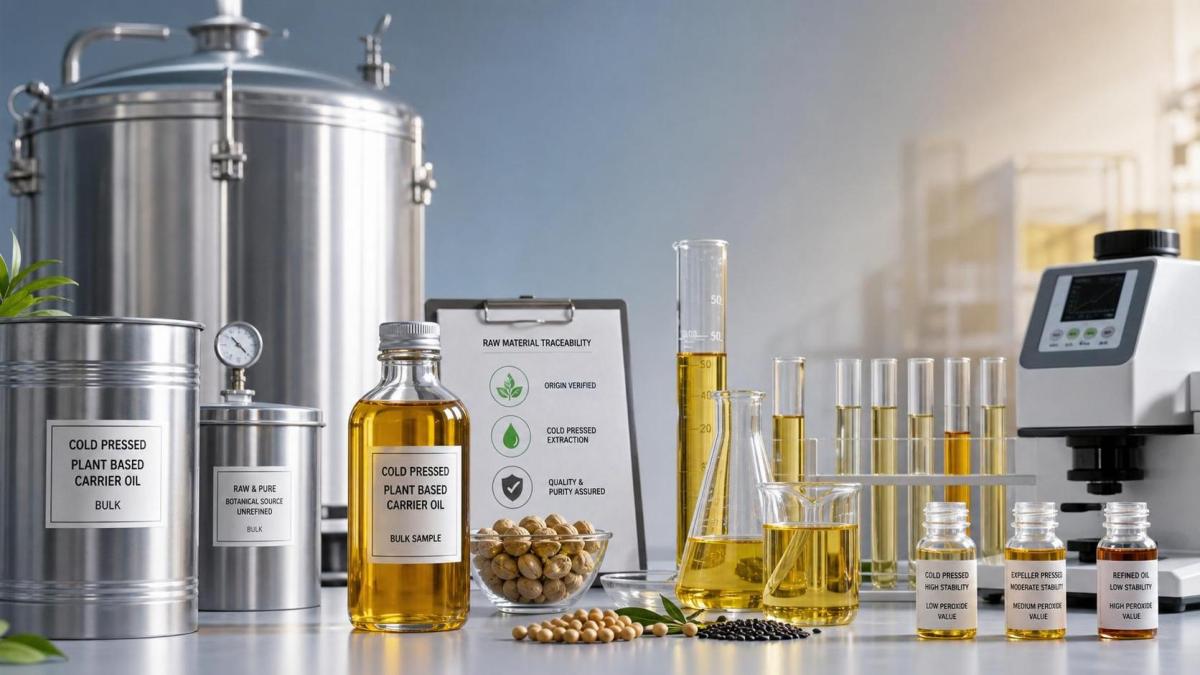
For teams buying cold pressed carrier oils bulk, the real question is not who quotes lowest. It is who can prove quality, consistency, and control.
That matters because these oils often sit inside regulated products. They also influence texture, oxidation behavior, label claims, and storage risk.
In practical sourcing, three checks usually separate a dependable supplier from a risky one. Those checks are origin traceability, extraction quality, and stability under real handling conditions.
When reviewing cold pressed carrier oils bulk, these factors should be tested together. Looking at only one can hide a serious weakness elsewhere.
This is especially true for buyers supporting GMP, FDA, EPA, or internal hazard control frameworks. Documentation quality is now part of product quality.
Start with origin, not price
The first filter for cold pressed carrier oils bulk is geographic and agricultural origin. Country alone is not enough.
You need to know the crop variety, harvest season, farming inputs, and post-harvest handling. These details influence fatty acid profile and contamination risk.
A supplier that says “sourced from multiple regions” may still be acceptable. But they should define blending rules and lot segregation methods.
From a quality standpoint, traceability should move backward to farm or cooperative, and forward to packed batch. Anything weaker creates recall friction.
Ask for records that support origin control:
- lot-specific country and region declarations
- harvest dates and storage duration before pressing
- pesticide management or residue screening plans
- allergen cross-contact control during transport and processing
- chain-of-custody documents for each bulk shipment
This is where many cold pressed carrier oils bulk programs become vulnerable. Good-looking certificates can hide mixed lots with uneven field histories.
A stronger signal is consistency across several production months. Stable origin data usually predicts more stable chemistry.
Define what “cold pressed” actually means
The phrase “cold pressed” sounds clear, but supplier definitions often vary. That creates avoidable procurement risk.
Some producers define it by low inlet temperature. Others define it by exit temperature or by the absence of solvent extraction.
For cold pressed carrier oils bulk, ask for the exact process window. Include seed conditioning temperature, press temperature, filtration steps, and residence time.
More importantly, ask whether heat was introduced to improve yield. A small temperature increase can change oxidation rate and volatile retention.
A robust technical review should confirm:
- no solvent contact during extraction
- defined maximum process temperature
- documented press cleaning and changeover control
- validated filtration or settling method
- no undeclared deodorization or refining step
In actual operations, extraction integrity affects more than marketing language. It also influences color, odor, sediment level, and impurity load.
That means the best cold pressed carrier oils bulk suppliers treat process transparency as a quality parameter, not just a sales claim.
Use a tighter analytical quality screen
A certificate of analysis is useful, but only if the specification is meaningful. Generic limits are often too wide for serious control.
When comparing cold pressed carrier oils bulk, start with core oxidation and identity markers. Then add contaminant and handling indicators.
A useful habit is comparing three to five consecutive lots. One compliant lot tells very little about long-term process capability.
For cold pressed carrier oils bulk, trend data often reveals hidden issues faster than absolute pass or fail results.
Check oxidative stability under realistic conditions
Stability is where many sourcing decisions succeed or fail. A fresh oil can still perform poorly after filling, transport, or repeated tank exposure.
For cold pressed carrier oils bulk, shelf life should never be accepted as a generic statement. It should be backed by method, conditions, and packaging assumptions.
Ask whether the supplier uses Rancimat, accelerated oxidation studies, or retained sample monitoring. Then match those results to your storage reality.
Key stability questions include:
- Was nitrogen blanketing used after pressing and during filling?
- What headspace remains in drums, IBCs, or flexitanks?
- How does light exposure affect the specific oil?
- Does filtration remove natural antioxidants or beneficial solids?
- What is the maximum recommended temperature during shipping?
This also means packaging is part of quality. Cold pressed carrier oils bulk handled in oxygen-permeable systems may age much faster than expected.
The better suppliers will discuss oxidation pathways in plain terms. They can explain not just the result, but why the oil behaves that way.
Audit the supplier’s control system
Even strong lab data can be undermined by weak plant control. That is why supplier auditing remains essential.
For cold pressed carrier oils bulk, focus less on presentation and more on repeatability. The question is whether they can reproduce the same quality every time.
A practical audit checklist should cover:
- incoming raw material inspection and rejection rules
- cleaning validation for presses, tanks, and transfer lines
- calibration status for temperature and analytical equipment
- deviation handling, CAPA records, and change control
- retained sample program and complaint investigation history
More recently, buyers also check digital traceability and document response speed. Slow or inconsistent records are early warning signs.
If a supplier of cold pressed carrier oils bulk cannot connect farm, process, test, and shipment data quickly, escalation becomes harder during incidents.
Build a comparison model that is easy to defend
A good sourcing model should support technical review, audit readiness, and internal sign-off. It should also survive pressure from short-term cost targets.
One simple method is weighted scoring. Rate each cold pressed carrier oils bulk supplier across origin, extraction, analytical quality, stability, and documentation strength.
Then add risk multipliers for unclear farming inputs, high-peroxide trend shifts, or weak packaging controls. This makes the decision easier to explain internally.
A defensible decision framework usually includes:
- minimum technical release criteria
- preferred specification targets, not just limits
- supplier audit score and corrective action status
- packaging and logistics suitability review
- ongoing lot trending after approval
This approach helps separate commercial noise from measurable quality. It also reduces the chance of approving cold pressed carrier oils bulk that fail later in storage.
In the end, the best supplier is usually the one with the clearest process story and the smallest quality surprise rate.
Final takeaway
Comparing cold pressed carrier oils bulk should be a technical exercise, not a price exercise disguised as one.
Start with traceable origin. Verify what cold pressed means in that plant. Review trend-based analytics. Test stability against real logistics and storage conditions.
Then document the decision in a way that supports audits, investigations, and future supplier reviews. That is how procurement risk becomes manageable.
For organizations buying cold pressed carrier oils bulk at scale, better comparison discipline usually leads to fewer deviations, stronger shelf-life performance, and more confident release decisions.
Related Intelligence
- Botanical ExtractsChoosing Botanical Extracts for Pharmaceuticals: Potency, Purity, and ComplianceBotanical extracts for pharmaceuticals: learn how to assess potency, purity, traceability, and GMP compliance for confident, regulatory-ready supplier selection.
- Botanical ExtractsBotanical Extracts Market Outlook: Supply, Pricing, and Buyer RisksBotanical extracts market insights on supply, pricing, quality control, and buyer risks—compare suppliers confidently and protect your sourcing strategy.
- Botanical ExtractsEurope Botanical Extracts Market: Key Growth Drivers, Risks, and OpportunitiesEurope botanical extracts market insights: explore growth drivers, regulatory risks, supply-chain challenges, and scalable opportunities for compliant, high-value ingredients.
The Morning Broadsheet
Daily chemical briefings, market shifts, and peer-reviewed summaries delivered to your terminal.
