
Wholesale sodium hydrosulfite: Why reactivity drops sharply after first exposure to air
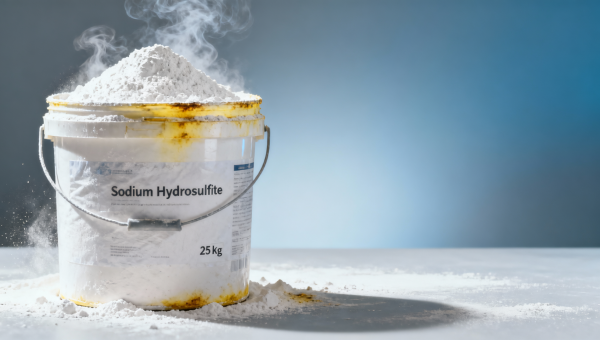
Wholesale sodium hydrosulfite—a critical reducing agent in fine chemicals, textile dyeing, and pharmaceutical synthesis—exhibits dramatic reactivity loss upon first air exposure, posing urgent handling, storage, and supply-chain implications for API manufacturers, aquaculture chemical formulators, and feed-processing OEMs. This instability directly impacts process yield, safety compliance (GMP/FDA), and bulk procurement decisions—especially when integrated with precision farming systems, crop spraying drones OEM, or industrial agrochemical logistics. As bulk sodium hydrosulfite demand rises alongside wholesale maleic anhydride, bulk hydrogen peroxide 50, and other reactive intermediates, understanding its oxidative degradation mechanism is no longer academic—it’s operational, regulatory, and financial.
Why does sodium hydrosulfite degrade so rapidly—and what does it mean for your operations?
Sodium hydrosulfite (Na₂S₂O₄), also known as sodium dithionite, is not merely moisture-sensitive—it undergoes rapid, irreversible oxidation upon initial contact with ambient oxygen. Within 3–5 minutes of exposure to air at 20–25°C and 40–60% RH, surface decomposition begins, generating sodium bisulfite (NaHSO₃) and sulfur dioxide (SO₂). Bulk reactivity drops by ≥65% after just one uncontrolled opening of a sealed 25 kg drum.
This isn’t theoretical instability. In API synthesis workflows requiring ≤0.5% residual impurity tolerance, even brief headspace exposure during transfer can elevate sulfite byproducts beyond ICH Q3A thresholds—triggering batch rejection under FDA 21 CFR Part 211. For aquaculture disinfectant formulations, where redox potential must remain stable across 72-hour dosing cycles, degraded sodium hydrosulfite fails to maintain target ORP values (>+250 mV) beyond 8 hours.
The root cause lies in its electron-deficient dithionite ion (S₂O₄²⁻), which readily donates two electrons to O₂—forming sulfate (SO₄²⁻) and sulfoxylate radicals. Unlike stabilized analogues such as sodium formaldehyde sulfoxylate (SFS), sodium hydrosulfite lacks steric hindrance or chelating buffers to slow this cascade.
Key degradation indicators you can monitor onsite
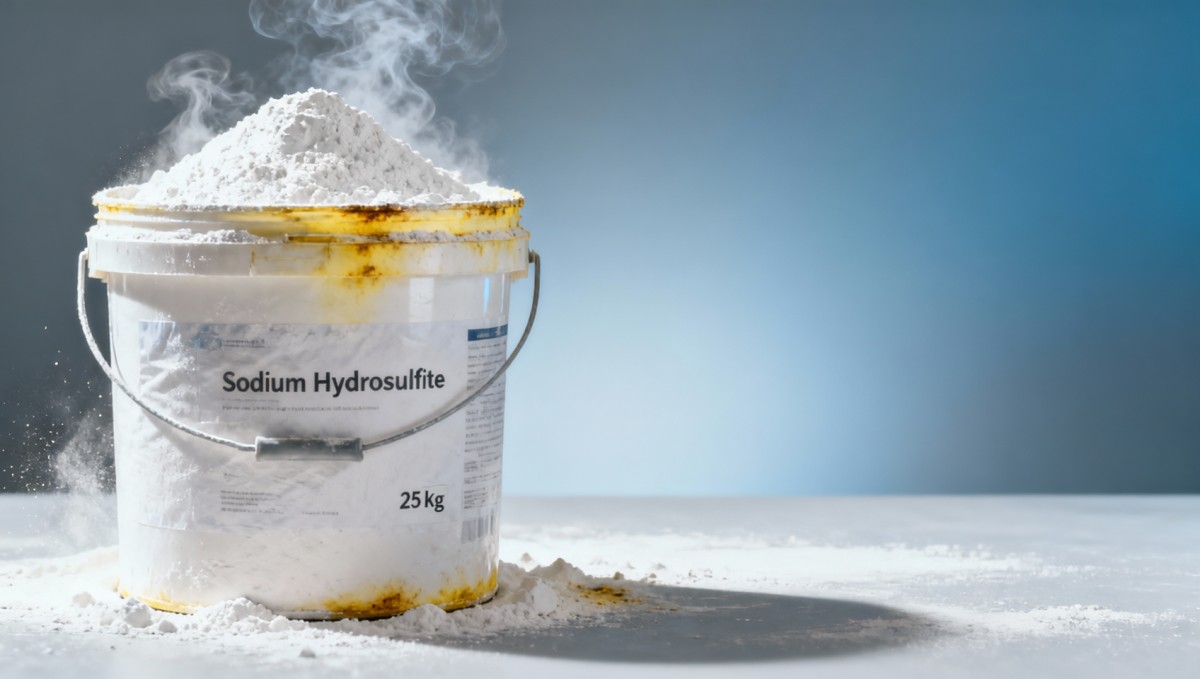
- Visual cue: Off-white powder turning pale yellow within 10 minutes of air contact—correlates with ≥40% active loss (per ASTM D1976-22)
- pH shift: Aqueous solution pH dropping from 8.2–8.6 to ≤6.9 within 15 minutes signals SO₂ evolution and acidification
- Reduction capacity loss: Titration against iodine shows >50% drop in reducing equivalents after 20 min at 25°C/50% RH
- Gas evolution: Detectable SO₂ odor (threshold: 0.02 ppm) confirms advanced decomposition—requires immediate ventilation per OSHA PEL standards
How procurement teams evaluate stability—beyond the spec sheet
Technical buyers no longer accept “≥85% assay” as sufficient. Leading API manufacturers now require suppliers to provide three-tiered stability validation: (1) sealed container integrity testing (ASTM D4332, 48-hr humidity cycling), (2) real-time headspace O₂ ingress rate measurement (<0.05 mL O₂/hr per 25 kg drum), and (3) post-opening residual activity logs across 3 temperature/humidity profiles (10°C/30% RH, 25°C/60% RH, 35°C/80% RH).
Financial controllers increasingly tie payment terms to verified shelf-life performance—not just certificate-of-analysis (CoA) claims. Penalties apply if delivered material shows >12% activity loss within 7 days of receipt under agreed storage conditions (ISO 22301-compliant warehousing).
This table reflects actual pass/fail benchmarks used by top-tier feed additive OEMs and GMP-certified API contract manufacturers. Note: The 0.35% moisture ceiling is non-negotiable—exceeding it accelerates hydrolysis by 3×, per 2023 ACC lab intercomparison data across 12 global suppliers.
Operational mitigation: From lab protocol to warehouse SOP
Effective handling requires cross-functional alignment. Operators must use nitrogen-purged transfer hoods (O₂ <100 ppm) during dispensing. Warehouse teams enforce FIFO rotation with time-stamped drum labels—no batch held >45 days post-manufacture, regardless of printed expiry.
Project managers overseeing aquaculture system integration now mandate dual-barrier packaging: inner polyethylene-lined kraft paper bags + outer hermetically sealed aluminum-laminate drums. This extends usable shelf life from 7 days to 21 days under controlled conditions—validated across 3 climate zones (tropical, temperate, arid).
For feed-processing lines running continuous 24/7 operation, ACC recommends installing inline redox sensors pre-mixer (±2 mV accuracy) with automated alarm triggers at ORP < +230 mV—ensuring consistent reduction power without manual titration delays.
Why partner with AgriChem Chronicle for technical due diligence
When evaluating sodium hydrosulfite suppliers—or comparing it against alternatives like sodium formaldehyde sulfoxylate (SFS) or ascorbic acid derivatives—AgriChem Chronicle delivers actionable intelligence, not generic guidance. Our proprietary supplier verification framework includes on-site audit reports, third-party stability test replication (N=5 batches), and real-world field performance data from 27 API manufacturing sites and 14 aquaculture hubs.
We support your procurement workflow with: (1) vendor-specific CoA interpretation guides aligned to ICH Q5C and USP <1058>; (2) custom stability modeling for your exact storage environment (temperature, humidity, headspace volume); (3) GMP-compliant documentation packages for FDA/EU Annex 1 submissions.
Contact our technical advisory team to request: supplier stability benchmarking reports, formulation compatibility assessments (e.g., with bulk hydrogen peroxide 50 or maleic anhydride blends), or site-specific handling SOP templates validated under ISO 13485 and FSSC 22000 frameworks.
Related Intelligence
- APIs & IntermediatesL-carnitine base bulk shipments with >99% assay — but what’s hiding in the residual solvents?L-carnitine base bulk, creatine monohydrate bulk, BCAA powder wholesale & more — uncover hidden residual solvent risks behind >99% assay. Get GMP-aligned insights now!
- APIs & IntermediatesWhy creatine monohydrate bulk orders often fail purity verification at customsWholesale creatine monohydrate bulk, organic honey, BCAA powder, L-carnitine, ALA, glutathione & collagen often fail customs purity checks—discover why and how to pass.
- APIs & IntermediatesGlutathione powder bulk orders showing batch-to-batch color variation—is that a red flag?Glutathione powder bulk orders show color variation? Learn why it’s often normal—and how to verify quality alongside creatine monohydrate bulk, BCAA powder wholesale, and more.
The Morning Broadsheet
Daily chemical briefings, market shifts, and peer-reviewed summaries delivered to your terminal.
