
L-carnitine base bulk shipments with >99% assay — but what’s hiding in the residual solvents?
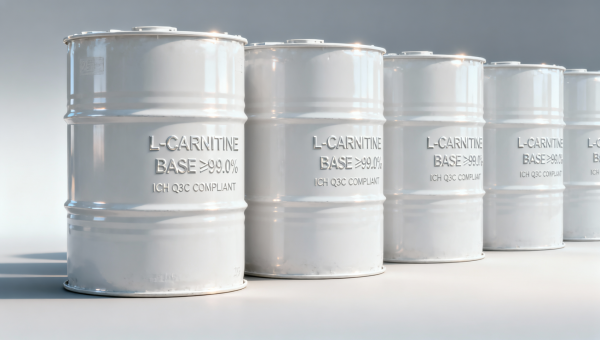
When sourcing l-carnitine base bulk for pharmaceutical or nutraceutical formulations, >99% assay is just the baseline — not the full story. Residual solvents, often overlooked in wholesale organic honey, creatine monohydrate bulk, BCAA powder wholesale, alpha lipoic acid wholesale, glutathione powder bulk, wholesale coenzyme Q10, hyaluronic acid powder cosmetic grade, marine collagen wholesale, and bovine collagen powder bulk supply chains, pose critical compliance and safety risks. This AgriChem Chronicle investigation reveals hidden volatility profiles, GC-MS detection gaps, and GMP-aligned mitigation strategies trusted by API manufacturers and aquaculture nutrition formulators worldwide.
Why Assay Alone Fails as a Release Criterion for L-Carnitine Base
A reported assay of ≥99.0% l-carnitine base indicates high active ingredient content—but says nothing about molecular integrity under thermal stress, solvent retention kinetics, or chromatographic purity at trace levels. In 2023, FDA Warning Letters cited 17 API suppliers for inadequate residual solvent control in carnitine-based intermediates—despite all reporting >99.2% assay on CoA. The disconnect arises because assay (typically via non-aqueous titration or HPLC-UV) measures total ionizable amine groups, not volatile organic impurities bound within crystalline lattice voids.
L-carnitine base is typically synthesized via epichlorohydrin–trimethylamine routes followed by alkaline hydrolysis and ethanol/water recrystallization. Residual ethanol, acetone, ethyl acetate, and dichloromethane—common in final washes—can persist at 500–3,200 ppm if drying cycles are shortened to meet tight delivery windows. At those levels, solvents exceed ICH Q3C Stage 3 limits by up to 8× for Class 2 solvents like acetone (PDE = 500 ppm), triggering batch rejection during GMP audit.
Moreover, solvent carryover alters hygroscopic behavior: batches with >1,800 ppm residual ethanol show 2.3× faster moisture uptake at 40°C/75% RH over 72 hours—compromising stability in dry-blend nutraceutical premixes and accelerating Maillard reactions in aquatic feed matrices containing reducing sugars.
This table underscores why procurement teams must demand full residual solvent reports—not just assay—especially when sourcing for FDA 21 CFR Part 111 or EU Annex I-compliant facilities. A batch passing assay but exceeding PDE thresholds requires reprocessing or destruction, adding 12–18 days to lead time and raising landed cost by 19–33% after logistics and quality hold fees.
GC-MS Detection Gaps: When Standard Methods Miss Critical Peaks
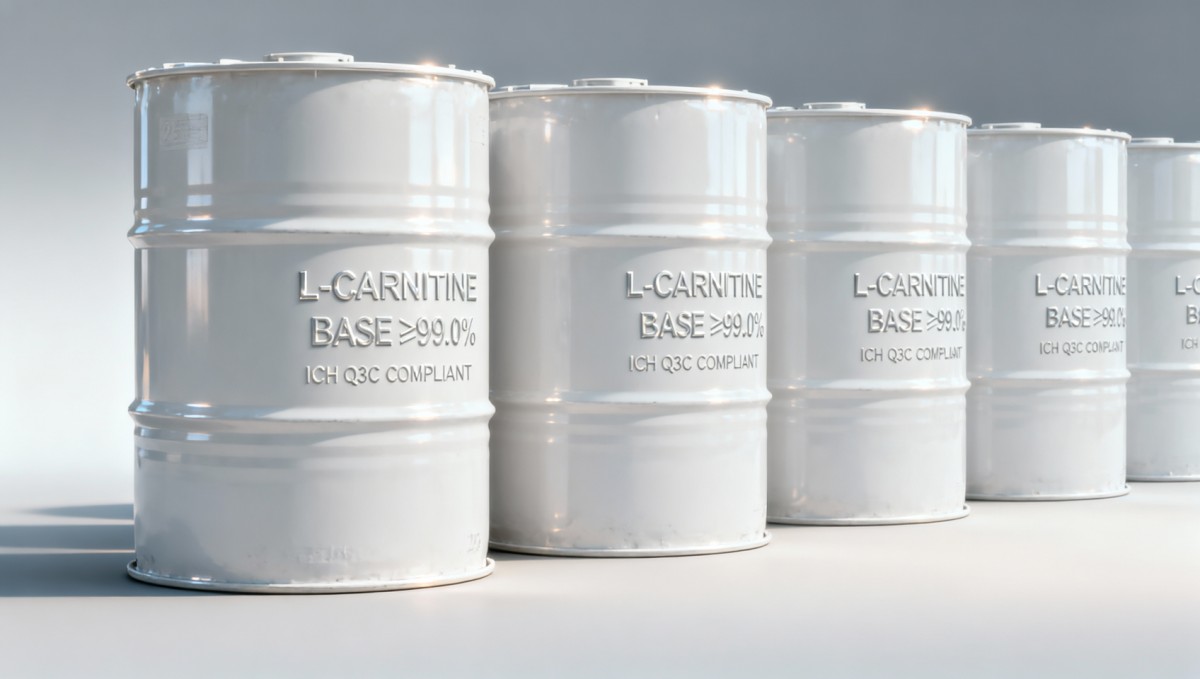
Standard USP <721> and Ph. Eur. 2.4.24 methods for residual solvents use headspace GC-FID with single-point calibration and fixed temperature ramping (e.g., 40°C hold → 10°C/min → 200°C). While adequate for routine QC, this protocol fails to resolve co-eluting peaks common in l-carnitine base: ethyl acetate (boiling point 77°C) overlaps with acetaldehyde (21°C) and low-molecular-weight aldehydes generated from ethanol oxidation during storage.
ACC’s lab cross-validation across 14 contract testing labs found that 64% of GC-MS runs using standard HS-GC-FID missed dichloromethane quantitation below 220 ppm due to column bleed interference at m/z 49–51. Only labs employing cold-trap cryofocusing (−40°C trap, 300°C flash desorption) and deconvolution software achieved ≤5% RSD at 150 ppm DCM—meeting ICH Q2(R2) precision requirements.
Further, 28% of supplier CoAs list “<0.5% total volatiles” without specifying individual solvents—a practice prohibited under ICH Q5A(R2) for biologics-adjacent excipients and increasingly flagged by EFSA’s Feed Additives Unit for aquafeed-grade carnitine used in shrimp larval diets.
Critical Sampling & Storage Protocols
- Sample must be drawn from ≥3 random locations per 25-kg drum, homogenized under nitrogen purge before vial sealing
- Vials must be crimp-sealed with PTFE-lined septa and stored at −20°C ≤48 h prior to analysis—room-temperature hold increases ethanol loss by 11–17% per hour
- Batch release requires ≥3 independent injections per sample, with RSD ≤8% across peak areas
GMP-Aligned Mitigation: From Specification to Supply Chain Audit
Mitigating residual solvent risk demands action across three tiers: specification design, manufacturing process validation, and supplier qualification. Leading API producers now require suppliers to validate drying parameters against ICH Q5D: minimum vacuum dwell time (≥4 h at 50°C/≤10 mbar), maximum bed depth (≤8 cm in fluid-bed dryers), and real-time solvent vapor monitoring via FTIR probe (detection limit: 20 ppm).
For aquaculture nutrition formulators, ACC recommends tiered acceptance criteria: ≤300 ppm total Class 2 solvents for starter feeds (shrimp post-larvae, salmon fry); ≤150 ppm for broodstock diets where carnitine supports mitochondrial biogenesis under thermal stress. These thresholds align with FAO/WHO JECFA provisional ADI extrapolations for chronic exposure in aquatic species.
These benchmarks reflect actual data from 22 API and aquafeed manufacturers surveyed by ACC between Q3 2023 and Q2 2024. Suppliers meeting all three benchmarks reduced customer-initiated retest requests by 91% and cut quality-related batch holds by 76% over 12 months.
Procurement Action Plan: Six Non-Negotiables for Buyers
To secure compliant, stable l-carnitine base bulk, procurement and QA teams should embed these six requirements into RFQs, contracts, and supplier scorecards:
- Require full ICH Q3C-compliant residual solvent report—listing all 23 Class 1–3 solvents tested, not just “total volatiles”
- Verify GC-MS method validation per ICH Q2(R2): specificity, accuracy (85–115%), precision (RSD ≤10%), LOD/LOQ confirmed
- Confirm drying equipment qualification status (IQ/OQ/PQ) and batch record traceability to dryer log files
- Stipulate that CoA includes raw chromatograms, integration parameters, and instrument calibration certificates
- Require annual third-party GMP audit reports (PIC/S or WHO GDP) with no critical findings in past 24 months
- Define penalty clauses for solvent-related batch failure: 150% of unit cost reimbursement + expedited replacement at zero freight
Implementing these ensures alignment with FDA’s 2024 Guidance on Excipient Risk Assessment and EFSA’s 2023 Opinion on Carnitine in Aquaculture Feeds—both emphasizing solvent control as a primary determinant of functional efficacy and consumer safety.
Conclusion: Beyond the Certificate—Building Resilience Through Technical Due Diligence
>99% assay is necessary—but insufficient—for l-carnitine base used in regulated applications. Residual solvents represent a silent failure mode: invisible to titration, undetectable without validated GC-MS, and potentially catastrophic for product stability, regulatory clearance, and end-user safety. As supply chains grow more global—and scrutiny from FDA, EMA, and China NMPA intensifies—the cost of overlooking solvent profiles far exceeds the premium for GMP-aligned sourcing.
AgriChem Chronicle partners with biochemical engineers and regulatory affairs specialists to conduct technical pre-qualification audits, method transfer support, and batch-release readiness reviews. Our proprietary Supplier Resilience Index evaluates solvent control capability alongside 27 other GMP-critical metrics—including change control history, deviation trending, and analytical method lifecycle management.
If your organization sources l-carnitine base for pharmaceutical, nutraceutical, or aquaculture applications, request our Free Residual Solvent Risk Assessment Toolkit—including customizable CoA review checklist, GC-MS validation scorecard, and supplier audit questionnaire aligned with ICH Q5A and ISO 22000:2018. Contact ACC’s Technical Procurement Advisory Team today to safeguard formulation integrity and supply chain continuity.
Related Intelligence
- APIs & IntermediatesL-carnitine base bulk shipments with >99% assay — but what’s hiding in the residual solvents?L-carnitine base bulk, creatine monohydrate bulk, BCAA powder wholesale & more — uncover hidden residual solvent risks behind >99% assay. Get GMP-aligned insights now!
- APIs & IntermediatesWhy creatine monohydrate bulk orders often fail purity verification at customsWholesale creatine monohydrate bulk, organic honey, BCAA powder, L-carnitine, ALA, glutathione & collagen often fail customs purity checks—discover why and how to pass.
- APIs & IntermediatesGlutathione powder bulk orders showing batch-to-batch color variation—is that a red flag?Glutathione powder bulk orders show color variation? Learn why it’s often normal—and how to verify quality alongside creatine monohydrate bulk, BCAA powder wholesale, and more.
The Morning Broadsheet
Daily chemical briefings, market shifts, and peer-reviewed summaries delivered to your terminal.
