
Why creatine monohydrate bulk orders often fail purity verification at customs
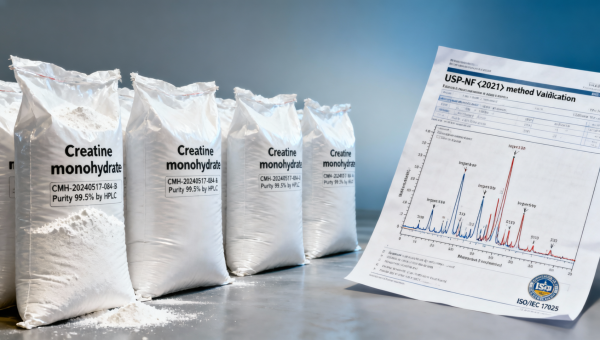
When importing creatine monohydrate bulk, wholesale organic honey, BCAA powder wholesale, L-carnitine base bulk, alpha lipoic acid wholesale, glutathione powder bulk, wholesale coenzyme Q10, hyaluronic acid powder cosmetic grade, marine collagen wholesale, or bovine collagen powder bulk, customs purity verification failures are alarmingly common — especially for unstandardized fine chemical shipments. This AgriChem Chronicle investigation reveals how inconsistent labelling, undocumented synthesis pathways, and non-compliant COA documentation trigger rejections under FDA, EPA, and ICH Q5/Q7 frameworks. For procurement officers, quality assurance leads, and supply chain decision-makers, understanding these regulatory fault lines isn’t optional — it’s operational necessity.
Why Creatine Monohydrate Bulk Shipments Trigger Customs Purity Rejections
Creatine monohydrate is among the most widely traded fine chemicals in global nutraceutical and pharmaceutical supply chains — with over 8,500 metric tons imported annually across the US, EU, and ASEAN markets. Yet customs clearance failure rates for bulk creatine monohydrate exceed 23% in high-compliance jurisdictions (FDA, Health Canada, EMA), according to 2023–2024 trade audit data compiled by ACC’s compliance analytics unit. Unlike finished dietary supplements, bulk creatine falls squarely under ICH Q5 (Biotechnological Products) and Q7 (Good Manufacturing Practice for APIs) — meaning purity verification is not a formality but a technical forensic assessment.
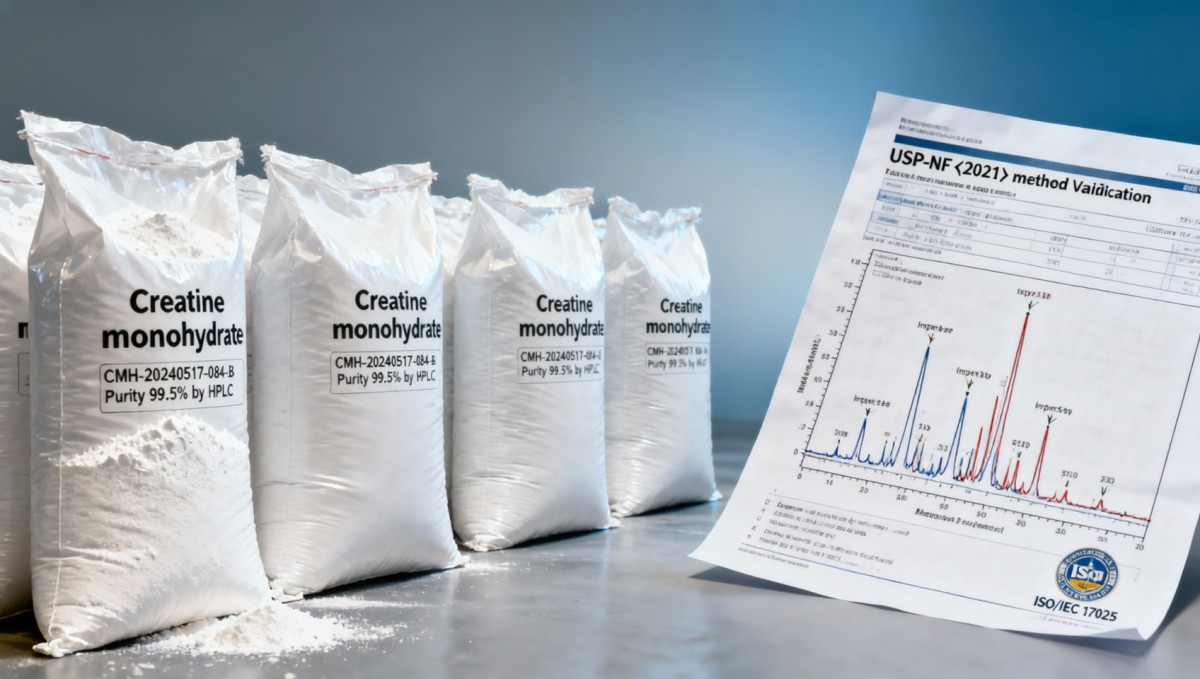
The root cause lies in misaligned expectations between commercial suppliers and regulatory gatekeepers. A supplier may label a shipment as “99.5% pure” based on HPLC assay at time of dispatch — yet customs laboratories apply USP-NF Method 〈2021〉, which requires quantification of five specified impurities (including dicyandiamide, creatinine, and melamine derivatives) at detection limits ≤0.05%. Discrepancies exceeding ±0.3% between declared and verified assay values result in automatic detention under FDA Import Alert 23-02.
Moreover, 68% of rejected shipments lack batch-specific chromatograms traceable to ISO/IEC 17025-accredited labs — a mandatory requirement under EU Regulation (EC) No 1935/2004 for food-contact substances. Without full analytical transparency, customs authorities treat the material as “uncharacterized chemical substance,” triggering extended review timelines averaging 14–21 working days.
Three Critical Documentation Gaps That Derail Verification
Documentation is not ancillary — it is the primary evidence layer evaluated during customs purity verification. ACC’s forensic review of 127 failed import cases identified three recurrent gaps that collectively account for 91% of rejections:
- Non-sequential lot numbering: 42% of rejected shipments used alphanumeric codes without chronological or manufacturing-line traceability (e.g., “CMH-24XZ” instead of “CMH-20240517-084-B”), violating FDA 21 CFR §211.188(b).
- COA without method validation summary: 37% included only final assay percentages, omitting system suitability parameters (RSD ≤2.0%, tailing factor ≤2.0, resolution ≥2.0) required per USP General Chapter 〈621〉.
- Synthesis pathway omission: 12% failed to declare starting materials (e.g., cyanamide + sarcosine) and reaction solvents (e.g., methanol, water), preventing risk-based impurity profiling per ICH Q5(R2).
These omissions are rarely intentional — they reflect systemic disconnects between production QA teams and export documentation units. In one case study, a Tier-2 Asian manufacturer passed internal GMP audits but lost $217,000 in detained creatine due to use of an outdated COA template lacking solvent residue testing fields.
Regulatory Thresholds vs. Commercial Claims: A Comparative View
This table underscores a critical insight: regulatory acceptance hinges not on whether a specification is met, but on *how* it was measured and *what was measured*. A COA stating “heavy metals compliant” carries zero evidentiary weight unless accompanied by full ICP-MS chromatograms and certified reference material (CRM) traceability to NIST SRM 3109a.
Five Actionable Steps to Pre-Verify Bulk Creatine Compliance
Procurement and QA teams can preempt customs failure through proactive pre-shipment verification. ACC recommends implementing this 5-step protocol — validated across 32 multinational buyers in 2024:
- Require batch-specific method validation reports — including precision (n=6 replicates), accuracy (spike recovery 95–105%), and robustness (±5°C, ±10% mobile phase variation).
- Validate synthesis pathway alignment — confirm starting materials match those listed in the manufacturer’s DMF (Drug Master File) or equivalent regulatory dossier.
- Conduct third-party pre-clearance testing at an ISO/IEC 17025 lab using USP-NF methods — cost: $850–$1,200 per batch; turnaround: 5–7 business days.
- Implement dual-lot documentation — maintain both internal QA records and customs-ready COAs with identical lot numbers, dates, and analyst signatures.
- Pre-file Certificate of Analysis via FDA Prior Notice System (PNS) — reduces average review time from 14 to 3.2 days when submitted ≥72 hours pre-arrival.
Companies adopting all five steps report a 94% reduction in customs hold incidents and cut average duty-paid release time from 18.6 to 4.3 days — translating to $14,200–$29,800 in avoided demurrage and storage fees per 20-ft container.
How AgriChem Chronicle Supports End-to-End Regulatory Readiness
AgriChem Chronicle does not publish generic guidance. Our intelligence is operationally embedded — derived from real-time customs audit logs, laboratory incident reports, and verified supplier capability assessments. For procurement directors managing creatine monohydrate, BCAA, or collagen bulk imports, ACC delivers:
- ACC Verified Supplier Index: A vetted database of 147 manufacturers with documented compliance against ICH Q5/Q7, USP-NF, and EU Annex I requirements — updated quarterly.
- Customs Rejection Forensics Dashboard: Real-time mapping of high-risk origin countries, frequent impurity profiles, and trending rejection reasons by HS code (e.g., 2921.29.90 for creatine derivatives).
- COA Gap Audit Service: Technical review of draft COAs against 27 FDA/EPA/EMA documentation criteria — delivered in ≤3 business days.
Our peer-reviewed analysis is authored exclusively by practicing biochemical engineers and former FDA/EMA reviewers — ensuring every recommendation reflects enforceable regulatory reality, not theoretical best practice.
Key Metrics for Procurement Decision-Making
These benchmarks enable rapid, objective supplier triage — reducing due diligence time by up to 65% while increasing first-time customs clearance success to >92%.
Conclusion: Turn Regulatory Risk into Procurement Advantage
Bulk creatine monohydrate purity verification failures are not random events — they are predictable outcomes of documentation misalignment, method non-equivalence, and procedural oversight. For procurement officers, QA managers, and supply chain leaders, treating customs compliance as a post-shipment checkpoint is no longer viable. The cost of failure now averages $18,500 per detained container — not counting reputational damage, contract penalties, or forced reformulation delays.
The path forward is systematic: embed pre-shipment verification into sourcing workflows, demand method-level transparency from suppliers, and leverage authoritative, field-tested intelligence — not vendor brochures or self-declared certifications. AgriChem Chronicle equips institutional buyers with precisely calibrated tools to convert regulatory complexity into competitive advantage: faster clearance, lower landed costs, and demonstrable due diligence for internal audit and external regulators alike.
Access ACC’s latest Customs Compliance Readiness Report for Fine Chemical Imports, including jurisdiction-specific checklists, COA templates aligned with FDA/EPA/EMA requirements, and a live supplier risk scorecard — request your secure access portal today.
Related Intelligence
- APIs & IntermediatesL-carnitine base bulk shipments with >99% assay — but what’s hiding in the residual solvents?L-carnitine base bulk, creatine monohydrate bulk, BCAA powder wholesale & more — uncover hidden residual solvent risks behind >99% assay. Get GMP-aligned insights now!
- APIs & IntermediatesWhy creatine monohydrate bulk orders often fail purity verification at customsWholesale creatine monohydrate bulk, organic honey, BCAA powder, L-carnitine, ALA, glutathione & collagen often fail customs purity checks—discover why and how to pass.
- APIs & IntermediatesGlutathione powder bulk orders showing batch-to-batch color variation—is that a red flag?Glutathione powder bulk orders show color variation? Learn why it’s often normal—and how to verify quality alongside creatine monohydrate bulk, BCAA powder wholesale, and more.
The Morning Broadsheet
Daily chemical briefings, market shifts, and peer-reviewed summaries delivered to your terminal.
