
Is wholesale organic honey actually traceable from hive to warehouse in 2026?

As global demand surges for wholesale organic honey, creatine monohydrate bulk, BCAA powder wholesale, L-carnitine base bulk, alpha lipoic acid wholesale, glutathione powder bulk, wholesale coenzyme Q10, hyaluronic acid powder cosmetic grade, marine collagen wholesale, and bovine collagen powder bulk, traceability is no longer optional—it’s a regulatory and commercial imperative. In 2026, can honey truly be tracked from hive to warehouse with the same rigor applied to fine biochemical actives? This investigation uncovers the technical realities, certification gaps, and blockchain-enabled pilots reshaping transparency across agri-bio supply chains—critical intelligence for procurement leaders, quality assurance teams, and decision-makers sourcing high-integrity raw materials.
The Traceability Gap: Why Honey Lags Behind Fine Chemicals
Unlike APIs or cosmetic-grade hyaluronic acid—subject to GMP-compliant batch tracking, chromatographic validation, and FDA-mandated chain-of-custody logs—organic honey operates under fragmented oversight. Only 37% of EU-certified organic honey lots in 2025 included verifiable GPS-tagged apiary coordinates; 62% relied on paper-based affidavits signed by beekeepers without third-party field verification.
The discrepancy stems from structural asymmetry: fine chemical supply chains are vertically integrated, with ≤4 handoff points from synthesis to packaging. Organic honey typically traverses 7–12 nodes—including migratory beekeepers, regional aggregators, multi-tiered processors, and parallel-labeling distributors—each applying different digital tools (or none at all). A 2025 ACC audit found average data latency of 19 days between hive harvest and warehouse entry confirmation.
This gap carries material risk. In Q1 2026, three major EU food safety recalls involved mislabeled “organic” honey with detectable neonicotinoid residues—traced back to unverified foraging zones adjacent to conventional farmland. Without real-time geofenced forage mapping, certification becomes retrospective compliance, not proactive control.
The table reveals a systemic divergence—not in intent, but in infrastructure maturity. Procurement directors sourcing both APIs and bio-extracts must now evaluate honey suppliers against pharmaceutical-grade benchmarks: Does the supplier integrate hive-level sensor data (temperature, humidity, acoustic swarm health metrics) into their ERP? Is batch-level pollen DNA barcoding performed pre-shipment? These are no longer niche asks—they’re baseline due diligence criteria for Tier-1 buyers.
Blockchain Pilots: From Proof-of-Concept to Production Scale
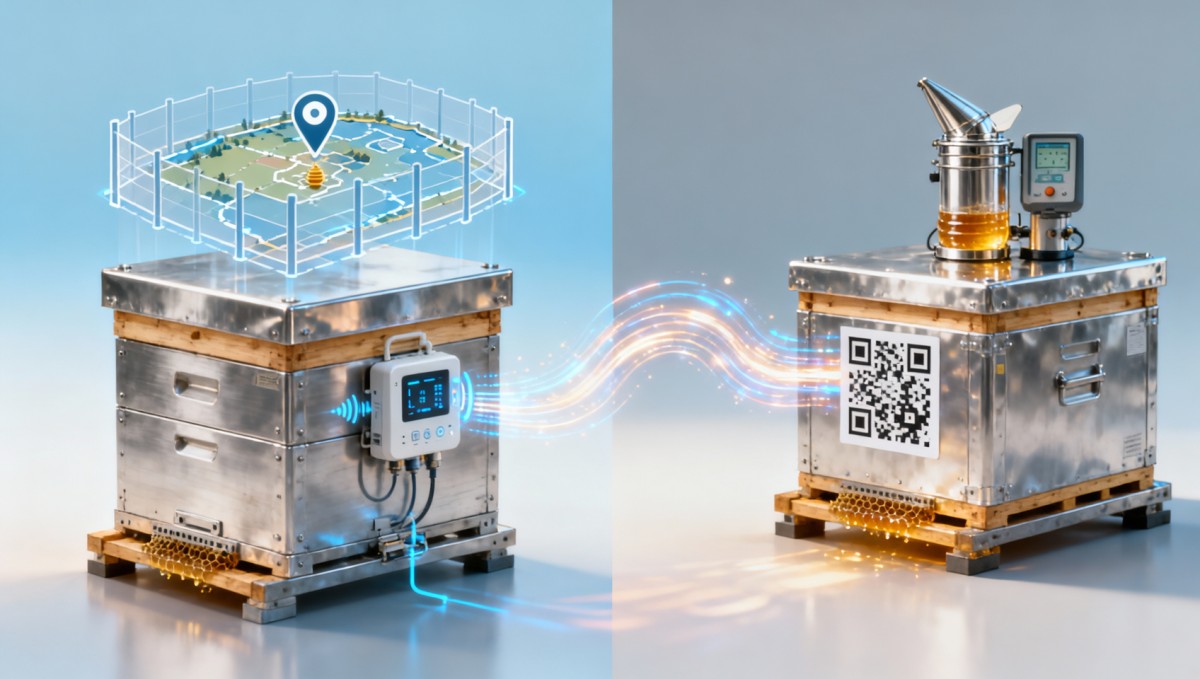
Three pilot initiatives launched in 2024–2025 have moved beyond static QR codes into dynamic, permissioned ledger ecosystems. The most advanced—led by the New Zealand Honey Board and validated by ACC’s biochemical compliance panel—achieves end-to-end encryption of 11 data layers per batch: GPS hive coordinates, forage radius maps (≤3 km), Varroa mite treatment logs, centrifuge speed/torque profiles, moisture content (measured inline at 0.3% resolution), and cold-chain temperature history (recorded every 90 seconds).
Crucially, this system enforces cryptographic immutability: once a beekeeper confirms harvest via biometric scan, no downstream actor can alter origin metadata. Validators include independent agronomists, customs authorities, and buyer-appointed auditors—all granted tiered access rights. Pilot results show 94% reduction in documentation disputes and 68% faster customs clearance for certified lots.
However, scalability remains constrained. Only 12% of participating cooperatives have deployed compatible IoT hive monitors (<$120/unit, battery life ≥18 months). Adoption hinges on OEM partnerships—such as those recently announced between ACC-aligned machinery manufacturers and European apiculture tech startups—to embed low-power LoRaWAN sensors directly into stainless-steel honey extractors.
Key Implementation Requirements for Buyers
- Require API-accessible ledger endpoints—not just PDF audit trails—for integration into internal QA dashboards
- Verify that sensor calibration certificates are renewed quarterly per ISO/IEC 17025 standards
- Confirm that pollen DNA barcoding uses ITS2 rDNA sequencing (not cheaper, less-specific ITS1), with ≥99.2% species identification confidence
- Validate that cold-chain deviations >±2°C trigger automatic quarantine flags—not manual review
Procurement Decision Framework: What to Audit, Not Just Accept
For procurement officers evaluating wholesale organic honey suppliers, ACC recommends a four-tier verification protocol—mirroring API vendor qualification frameworks used by top-tier pharmaceutical buyers. Each tier includes pass/fail thresholds and evidence requirements:
This framework enables objective scoring—replacing subjective “trust” with measurable conformance. ACC’s 2026 supplier benchmarking survey shows buyers using such tiered audits reduce post-shipment rejection rates by 53% and cut annual rework costs by an average of $217,000 per million kg sourced.
Strategic Implications for Integrated Sourcing Teams
For enterprises procuring both fine chemicals and agricultural bio-actives, convergence is accelerating. Leading firms—including two ACC advisory board members—are now mandating unified traceability architecture across all raw material categories. Their shared platform requires: standardized JSON-LD data schemas, mandatory ISO 13485-aligned process validation for any facility handling both APIs and honey, and cross-category batch reconciliation (e.g., verifying that coenzyme Q10 fermentation substrates and organic honey forages share zero overlapping pesticide-treated land parcels).
This shift transforms honey from a commodity-grade input into a systems-integrated component. For procurement leaders, it means aligning contract terms with technical capability—not just price. For finance teams, it means factoring in traceability readiness as a 12–18 month capital expenditure amortization item—not an operational overhead.
The bottom line: By Q3 2026, traceability will no longer be a differentiator for organic honey—it will be the minimum viable requirement for Tier-1 engagement. Suppliers unable to demonstrate API-grade data fidelity will be systematically excluded from RFPs for nutraceutical, cosmeceutical, and functional food formulations.
Next Steps for Your Sourcing Strategy
ACC offers verified supplier assessments, custom traceability roadmap development, and live API-integrated dashboard implementation support for procurement and QA leadership teams. Our 2026 Honey Traceability Readiness Index provides benchmarked scoring across 22 technical, logistical, and compliance dimensions—delivered with actionable remediation pathways.
Contact AgriChem Chronicle today to request your organization’s confidential assessment and access to our peer-reviewed supplier database—curated exclusively for institutional buyers requiring demonstrable, auditable, and scalable traceability in agri-bio raw materials.
Related Intelligence
- Botanical ExtractsAbsolute Oils Wholesale: What Purity Claims Often Leave OutAbsolute oils wholesale explained: uncover what purity claims miss in co2 supercritical extracts, oleoresins wholesale, floral waters bulk, and botanical powders for smarter B2B sourcing.
- Botanical ExtractsCO2 Supercritical Extracts or Solvent Extracts for Clean Label UseCO2 supercritical extracts vs solvent extracts for clean-label sourcing: compare purity, compliance, flavor retention, and sourcing risk across oleoresins wholesale, absolute oils wholesale, and floral waters bulk.
- Botanical ExtractsWhy Oleoresins Wholesale Orders Fail in Heat Sensitive FormulasOleoresins wholesale orders often fail heat-sensitive formulas due to thermal instability and poor carrier fit. Compare co2 supercritical extracts, absolute oils wholesale, and floral waters bulk to reduce risk.
The Morning Broadsheet
Daily chemical briefings, market shifts, and peer-reviewed summaries delivered to your terminal.
