
CO2 Supercritical Extracts or Solvent Extracts for Clean Label Use
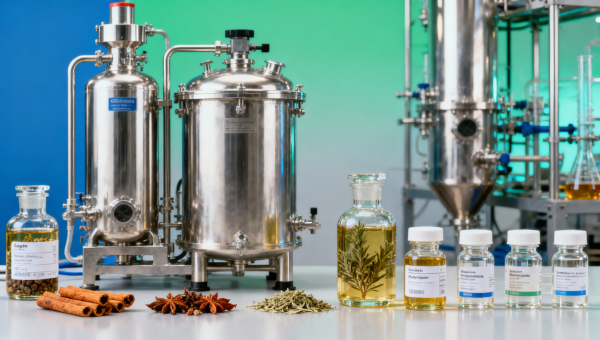
For clean-label formulators and procurement teams, choosing between co2 supercritical extracts and solvent extracts affects purity, compliance, flavor retention, and commercial risk. As demand rises across bio-extracts, oleoresins wholesale, absolute oils wholesale, and floral waters bulk, this analysis examines which extraction route better supports safety, performance, and scalable sourcing for regulated food, nutraceutical, and ingredient markets.
In B2B supply chains, extraction is not just a processing detail. It shapes specification sheets, residual solvent risk, organoleptic consistency, labeling claims, and the cost profile of every finished batch. For technical evaluators, procurement managers, QA teams, and financial approvers, the right choice depends on use case, target compounds, compliance requirements, and the realities of industrial sourcing.
This article compares CO2 supercritical extracts and solvent extracts from a commercial and technical perspective. It focuses on what matters most in regulated ingredient markets: purity thresholds, process suitability, scale-up risk, delivery stability, and how buyers can build a sourcing framework that reduces rework, rejects, and hidden cost.
Understanding the Two Extraction Routes in Industrial Ingredient Supply
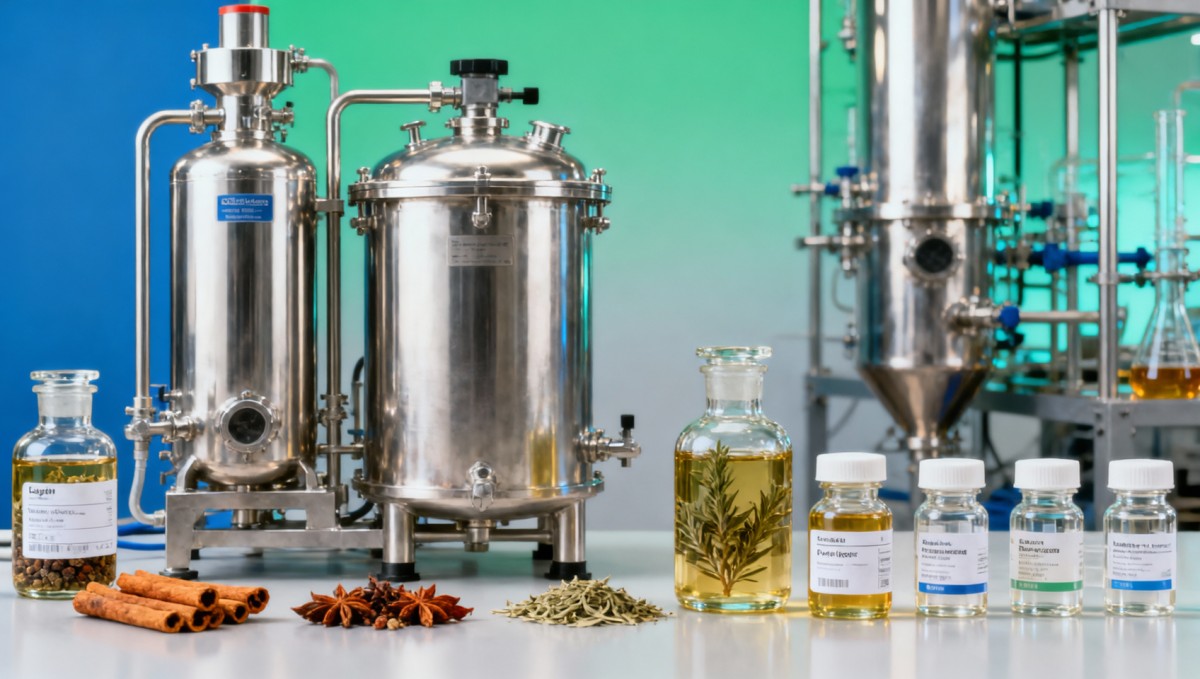
CO2 supercritical extraction uses carbon dioxide above its critical point, commonly around 31.1°C and 73.8 bar, where it behaves like both a gas and a liquid. In this state, CO2 can penetrate plant matrices efficiently and dissolve lipophilic compounds with relatively high selectivity. The method is widely used for botanical concentrates, oleoresins, aroma fractions, and premium clean-label ingredients.
Solvent extraction covers a broader family of processes using ethanol, hexane, hydrocarbons, or other approved solvents to isolate target compounds. It remains common in large-volume manufacturing because it can deliver higher throughput, recover waxes and heavier aromatic components, and process raw materials that may not respond efficiently to CO2 alone.
For buyers, the practical difference is not simply “natural versus less natural.” The real distinction lies in extraction selectivity, residual management, flavor fidelity, post-processing requirements, and whether the ingredient is intended for food, nutraceutical, cosmetic, or technical applications. In many procurement reviews, these factors influence approval more than headline price.
A clean-label strategy usually requires more than an attractive origin story. It requires batch consistency, documented process controls, residue compliance, and a specification aligned with end-use processing conditions such as heat exposure, pH range, and dosage level. That is why technical and commercial teams should evaluate extraction route together, not separately.
How extraction route changes the commercial profile
At industrial scale, extraction affects at least 5 purchasing variables: unit cost, usable yield, lead time, regulatory file burden, and sensory performance. A lower-cost solvent extract may require extra deodorization, winterization, or residue verification. A higher-cost CO2 extract may reduce downstream cleaning steps or support a stronger clean-label position in retail-facing products.
The table below outlines the most relevant operating and sourcing distinctions for institutional buyers comparing the two options.
The key takeaway is that CO2 supercritical extracts usually perform better where clean-label positioning, residue sensitivity, and aroma preservation matter most. Solvent extracts remain commercially relevant where target compounds are difficult to recover efficiently, where the application tolerates heavier fractions, or where cost per kilogram is the overriding factor.
Purity, Compliance, and Label Risk in Regulated Markets
In food, nutraceutical, and fine ingredient markets, purity is not measured by marketing language alone. It is assessed through specification limits, residue analysis, contaminant screening, microbiological status, and process traceability. Procurement teams should review at least 4 documentation layers: certificate of analysis, process description, allergen statement, and regulatory suitability for the destination market.
CO2 supercritical extracts are often preferred for clean-label use because the extraction medium evaporates cleanly at depressurization, reducing concern about residual processing aids. This can simplify internal QA review, especially for companies selling into premium retail, infant-adjacent nutrition, natural flavor systems, or low-residue product lines where one failed batch can trigger weeks of investigation.
Solvent extracts are not inherently non-compliant. Many are fully acceptable when manufactured under controlled conditions and tested against applicable residual solvent limits. The challenge is that documentation burden tends to be higher. Buyers may need additional verification on solvent class, recovery efficiency, final residue range, and whether the extract requires further purification before release.
For multinational sourcing, compliance review should also consider local interpretations of “natural,” market-specific food regulations, and customer questionnaire requirements. A material approved in one region may still create commercial friction in another if the extraction route conflicts with brand policy, distributor expectations, or retailer ingredient screening protocols.
Critical checks for QA, procurement, and regulatory teams
- Confirm whether the extract is intended for direct food use, intermediate blending, fragrance, or technical processing, because acceptable residue expectations differ by application.
- Review the full solvent or process aid declaration, including any secondary steps such as winterization, filtration aids, or carrier addition.
- Ask for batch-to-batch testing frequency. Monthly verification may be insufficient for high-variability botanicals; lot-by-lot review is often safer.
- Check whether heavy metals, pesticides, PAHs, or microbiology can concentrate during extraction, especially for roots, spices, and resinous raw materials.
Where label claims become vulnerable
Label risk often appears late in the project, after samples have passed sensory review. Common failure points include undeclared carrier systems, inconsistent nomenclature between markets, and extract specifications that do not match customer-facing claim language. A 2% residue deviation or a missing process disclosure can delay product launch by 2–6 weeks, especially when multiple stakeholders must reapprove the file.
For clean-label positioning, CO2 supercritical extracts usually offer a more straightforward compliance story. However, the final decision should still be based on documented evidence, not assumptions. A well-controlled solvent extract with robust testing can outperform a poorly standardized CO2 extract in real-world supply reliability.
Performance in Flavor, Bioactive Retention, and Application Fit
Extraction technology affects more than purity. It changes solubility behavior, color intensity, oxidation stability, and how closely the ingredient reflects the original botanical profile. In flavor and aroma applications, small differences can become significant at dosage rates of 0.05% to 0.5%. In nutraceutical systems, the retained bioactive spectrum may influence both efficacy claims and formulation stability.
CO2 supercritical extraction is especially valued where volatile compounds are commercially important. Because the process can run at comparatively moderate temperatures, it often preserves top notes better than methods involving aggressive heating during solvent removal. This is relevant for spice oleoresins, delicate botanicals, and premium aromatic concentrates used in clean-label beverages, seasoning systems, and functional foods.
Solvent extraction can still be the better technical route when the target is a broader molecular range, including waxes, pigments, or heavier aromatic fractions. In some floral, resinous, or highly dense raw materials, the richer extraction profile may be exactly what perfumery, personal care, or specialty ingredient formulators need. That is why “better” depends on the performance target, not ideology.
For users and operators, another practical factor is process compatibility. CO2 extracts may be more concentrated and require careful dosing, while some solvent-derived extracts are easier to disperse after standard dilution. Project teams should run bench validation under actual pH, thermal, and mixing conditions before approving commercial volume.
Application-oriented comparison
The matrix below helps technical and commercial teams match extraction route to end-use priorities rather than making decisions only on purchase price.
For oleoresins wholesale, the decision often comes down to whether brightness and low-residue positioning justify the premium. For absolute oils wholesale, solvent extraction can remain highly relevant because the market may prioritize fullness, tenacity, and traditional aromatic character. For floral waters bulk, upstream extraction philosophy also matters because buyers increasingly want process transparency across the full ingredient family.
Common performance evaluation steps
- Run a pilot at 1–3 dosage points instead of a single benchmark concentration.
- Check sensory stability after 30, 60, and 90 days where shelf-life is critical.
- Test compatibility under production heat, often 60–90°C for food processing steps.
- Compare active-marker retention before and after blending, not only at incoming QC.
Procurement Economics, Supply Stability, and Scale-Up Decision Criteria
Commercial decisions are rarely made on chemistry alone. Procurement teams must balance target cost, minimum order quantity, lead time, seasonal raw material variability, and the likelihood of future reformulation. A CO2 supercritical extract may cost more per kilogram, but if it reduces rejection risk, shortens regulatory review, or lowers usage rate by 10% to 20%, the total landed value may be stronger.
Lead time can also differ materially. Depending on crop season and factory configuration, standard industrial batches may move in 2–6 weeks, while customized fractions or post-processed standardized extracts may require 6–10 weeks. Buyers should ask whether the supplier controls in-house extraction, toll processing, or a blended sourcing network, because this affects traceability and delivery resilience.
From a finance approval perspective, the safest comparison model includes at least 6 elements: ex-works price, freight sensitivity, assay-adjusted usable yield, QC release cost, inventory risk, and expected complaint exposure. This avoids the common mistake of choosing the cheapest extract only to absorb hidden cost through inconsistent performance or extended approval cycles.
Distributors and agents should also pay attention to packaging and storage. Concentrated extracts may ship in 1 kg, 5 kg, 25 kg, or drum-scale formats, but oxidation risk, viscosity, and temperature sensitivity differ significantly. Materials requiring cold-chain or controlled storage can change warehouse economics and regional stocking strategy.
Procurement decision framework
The table below offers a practical screening model for procurement, QA, and project managers evaluating scalable sourcing for clean-label ingredient programs.
In many cases, the best buying strategy is phased. Teams begin with technical validation lots, then approve one primary supplier and one secondary source. This 2-source model may slightly increase audit work, but it usually lowers disruption risk in volatile botanical markets where crop quality can shift within a single season.
Implementation, Common Mistakes, and Buyer FAQs
Implementation success depends on aligning extraction route with final specification before commercial onboarding. Many failed sourcing projects begin with a promising sample but no agreement on active markers, sensory tolerance, carrier content, or residual thresholds. By the time the first 25 kg or 100 kg order arrives, the material no longer fits the production environment or label plan.
A practical onboarding process usually has 5 stages: sample screening, documentation review, pilot validation, commercial quotation alignment, and release protocol setup. When these steps are compressed into a single purchasing cycle, the probability of rework rises sharply. For higher-risk categories, QA and procurement should define rejection triggers before the first PO is issued.
Another common mistake is treating all botanicals the same. Spices, flowers, seeds, roots, and resin-rich materials behave differently in extraction and storage. What works for a citrus-derived CO2 extract may not work for a floral absolute or a heavy oleoresin. Technical teams should compare extraction route by botanical family and intended dosage form, not by one generalized policy.
Below are the questions buyers most often raise when evaluating CO2 supercritical extracts versus solvent extracts for clean-label use.
How should procurement teams decide when both options are technically available?
Start with the market claim and risk profile. If the product will be sold on a premium clean-label platform, if retailer screening is strict, or if QA resources are limited, CO2 supercritical extracts often reduce approval friction. If the application values broader aromatic depth and can accommodate more documentation review, solvent extracts may remain commercially efficient.
Are solvent extracts always cheaper in total cost?
Not always. Unit price may be lower, but total cost can rise when you add residue testing, slower approvals, higher dosage, or more frequent sensory adjustments. A difference of 8% to 15% on purchase price can disappear if one option creates batch failures, additional filtration, or delayed launch windows.
What should QA teams request from suppliers before approving a commercial lot?
At minimum, request a recent COA, full process declaration, solvent or processing aid statement, storage recommendation, shelf-life basis, and at least 2 or 3 recent batch references for comparison. For higher-risk botanicals, request contaminant screening and a clear explanation of how concentrated compounds are managed during extraction.
A short implementation checklist
- Define the intended claim language before selecting the extract type.
- Set numeric acceptance criteria for key markers, residues, and sensory limits.
- Validate under real production conditions, not only bench-top ideal conditions.
- Review MOQ, lead time, and seasonal availability at the same time as technical data.
- Keep one backup source for strategic materials with long harvest cycles.
For most clean-label programs, CO2 supercritical extracts offer an advantage in purity perception, residue control, and premium positioning. Solvent extracts still have a valid place where broader fraction capture, traditional aromatic depth, or lower upfront cost matter more than label simplicity. The strongest decision comes from matching extraction route to specification, compliance burden, and total commercial risk rather than relying on one fixed preference.
If your team is comparing bio-extracts, oleoresins wholesale, absolute oils wholesale, or floral waters bulk for regulated ingredient supply, a structured technical-commercial review will save time and reduce approval friction. Contact AgriChem Chronicle to explore sourcing intelligence, compare extraction pathways, and get a more informed basis for supplier selection, product development, and procurement planning.
Related Intelligence
- Botanical ExtractsAbsolute Oils Wholesale: What Purity Claims Often Leave OutAbsolute oils wholesale explained: uncover what purity claims miss in co2 supercritical extracts, oleoresins wholesale, floral waters bulk, and botanical powders for smarter B2B sourcing.
- Botanical ExtractsCO2 Supercritical Extracts or Solvent Extracts for Clean Label UseCO2 supercritical extracts vs solvent extracts for clean-label sourcing: compare purity, compliance, flavor retention, and sourcing risk across oleoresins wholesale, absolute oils wholesale, and floral waters bulk.
- Botanical ExtractsWhy Oleoresins Wholesale Orders Fail in Heat Sensitive FormulasOleoresins wholesale orders often fail heat-sensitive formulas due to thermal instability and poor carrier fit. Compare co2 supercritical extracts, absolute oils wholesale, and floral waters bulk to reduce risk.
The Morning Broadsheet
Daily chemical briefings, market shifts, and peer-reviewed summaries delivered to your terminal.
