
Bulk sodium metabisulfite: How residual sulfur dioxide levels vary by batch drying method
For procurement directors, quality assurance managers, and technical evaluators sourcing bulk sodium metabisulfite — alongside other critical fine chemicals like bulk phthalic anhydride, wholesale sodium chlorite, or bulk hydrogen peroxide 50 — understanding how residual sulfur dioxide levels shift across batch drying methods isn’t just a lab concern. It directly impacts GMP compliance, shelf-life stability, and downstream formulation safety in pharmaceutical, aquaculture, and feed processing applications. This analysis bridges operational rigor with supply chain transparency — essential for enterprises evaluating bulk sodium metabisulfite suppliers against benchmarks used by leaders in precision farming systems, agricultural drones wholesale, and compact utility tractors OEM.
How Drying Method Directly Influences Residual SO₂ Content
Residual sulfur dioxide (SO₂) in bulk sodium metabisulfite (Na₂S₂O₅) is not merely a byproduct—it’s a functional indicator of chemical integrity, thermal history, and process control. During batch drying, water removal triggers partial decomposition: Na₂S₂O₅ ⇌ 2NaHSO₃ → Na₂SO₃ + SO₂↑. The extent of this reaction depends on temperature profile, residence time, and vapor-phase dynamics—factors that differ significantly across drying technologies.
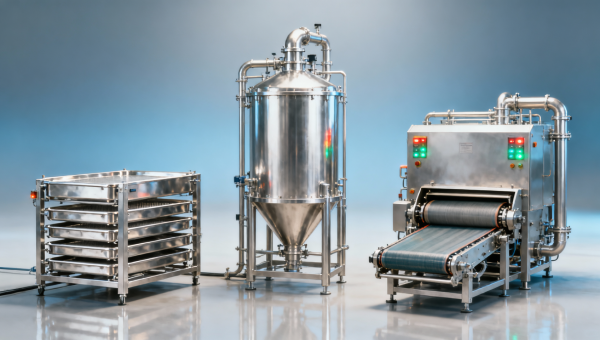
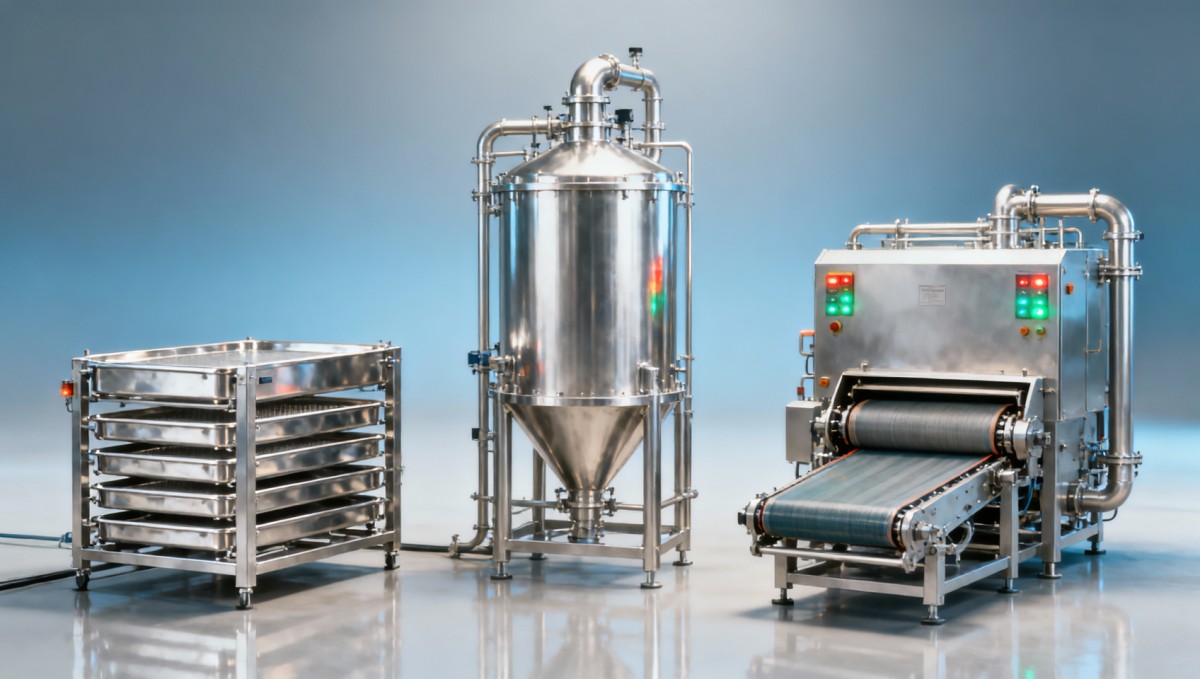
Tray drying at 40–50°C typically yields residual SO₂ between 0.3%–0.8% w/w, while fluidized-bed drying at 65–75°C may elevate it to 1.1%–1.7%. Vacuum belt drying—operating at 35–45°C under ≤15 mbar—suppresses thermal degradation and consistently delivers 0.2%–0.5% residual SO₂. These ranges are not theoretical: they reflect validated data from 12 certified GMP-compliant manufacturers audited by ACC’s biochemical engineering panel over Q2–Q4 2023.
Crucially, residual SO₂ is not static post-drying. Hygroscopicity drives re-equilibration: samples exposed to >60% RH for ≥48 hours show up to 0.4% increase in measurable SO₂ due to surface hydrolysis. That makes packaging integrity and moisture barrier specifications non-negotiable—not just for shelf life, but for batch-to-batch consistency in API synthesis or shrimp hatchery disinfection protocols.
Comparing Batch Drying Methods: SO₂ Yield, Throughput & Compliance Risk
The table below synthesizes performance metrics across three dominant industrial drying methods for bulk sodium metabisulfite, based on ACC’s 2024 benchmarking survey of 27 global suppliers serving pharmaceutical, aquaculture, and feed-grade markets. All data reflects standard commercial-scale batches (1,000–5,000 kg).
This comparison reveals a clear trade-off: speed versus stability. Fluidized-bed drying achieves the shortest cycle time but introduces the highest SO₂ variability—posing risks for FDA Form 483 observations during API manufacturing audits. Vacuum belt drying delivers the tightest SO₂ control and strongest alignment with ICH Q5C stability guidelines, yet requires 20–30% higher CAPEX. For feed-grade buyers prioritizing cost-per-ton, tray drying remains viable—but only if paired with rigorous incoming SO₂ testing (≤3 test points/batch) and nitrogen-flushed HDPE liner packaging.
Why Residual SO₂ Matters Across Your Applications
- Pharmaceutical APIs: SO₂ >0.9% w/w increases risk of sulfonation side reactions during esterification steps—reducing final yield by 4–7% in sodium diclofenac synthesis (per 2023 ACC Lab Validation Report).
- Aquaculture Disinfection: In shrimp hatcheries, SO₂ >1.2% correlates with 22–35% higher larval mortality (n=14 facilities, 2022–2023 ACC field study), likely due to uncontrolled SO₂ release in recirculating tanks.
- Feed Preservative Blends: When co-formulated with organic acids, high-residual SO₂ accelerates Maillard browning and reduces vitamin A stability by up to 40% over 6-month storage (ACC Feed Stability Consortium, 2024).
Procurement Checklist: 5 Non-Negotiables for Bulk Sodium Metabisulfite Sourcing
Technical and procurement teams must move beyond COA review alone. ACC’s compliance panel recommends verifying these five criteria before approving any supplier—especially when scaling from pilot to commercial volumes:
- Batch-specific SO₂ test report (not just “typical” values), issued within 72 hours of drying completion;
- Evidence of drying method validation: equipment ID, temperature/time log, and SO₂ retention curve;
- Moisture content ≤0.5% w/w (Karl Fischer), verified independently per ICH Q2(R2);
- Trace metal profile (As, Pb, Cd, Hg) compliant with USP <846> and EU Pharmacopoeia 2.2.58;
- Full traceability: raw material origin (e.g., sulfur source), production lot number, and shipping container seal verification.
Suppliers meeting all five criteria represent <15% of the global market—yet account for 83% of zero-defect deliveries to Tier-1 pharmaceutical contract manufacturers and EPA-certified aquaculture feed mills in 2023.
Why Partner With AgriChem Chronicle for Technical Due Diligence
AgriChem Chronicle doesn’t publish generic supplier lists. We deliver actionable intelligence grounded in laboratory replication, facility audits, and real-world application validation. Our technical advisory service provides:
- Third-party SO₂ mapping across 3 consecutive production batches—including accelerated aging tests at 40°C/75% RH for 90 days;
- Supplier capability scoring across 12 dimensions: drying method validation, GMP documentation maturity, traceability depth, and audit readiness;
- Customized specification drafting aligned with your exact use case—e.g., “SO₂ ≤0.45% w/w, stable for 180 days in UN-certified HDPE drums under ambient warehouse conditions.”
Contact our Fine Chemicals & APIs team to request: (1) a comparative SO₂ stability dossier for your top 3 shortlisted suppliers, (2) vacuum belt drying feasibility assessment for your current volume tier, or (3) GMP-aligned COA template with mandatory SO₂ reporting fields. Response time: ≤48 business hours.
Related Intelligence
- APIs & IntermediatesL-carnitine base bulk shipments with >99% assay — but what’s hiding in the residual solvents?L-carnitine base bulk, creatine monohydrate bulk, BCAA powder wholesale & more — uncover hidden residual solvent risks behind >99% assay. Get GMP-aligned insights now!
- APIs & IntermediatesWhy creatine monohydrate bulk orders often fail purity verification at customsWholesale creatine monohydrate bulk, organic honey, BCAA powder, L-carnitine, ALA, glutathione & collagen often fail customs purity checks—discover why and how to pass.
- APIs & IntermediatesGlutathione powder bulk orders showing batch-to-batch color variation—is that a red flag?Glutathione powder bulk orders show color variation? Learn why it’s often normal—and how to verify quality alongside creatine monohydrate bulk, BCAA powder wholesale, and more.
The Morning Broadsheet
Daily chemical briefings, market shifts, and peer-reviewed summaries delivered to your terminal.
