
Wholesale oxalic acid: Why packaging type matters for long-term stability in humid climates
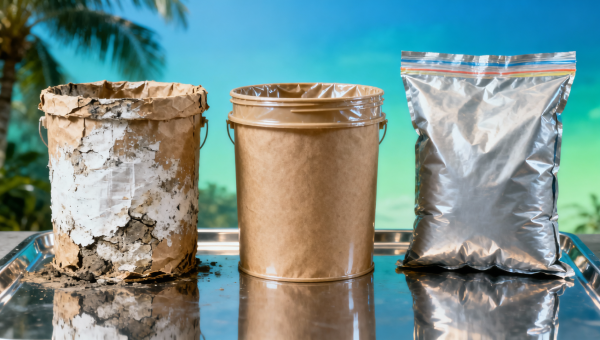
In humid climates, wholesale oxalic acid—like bulk phthalic anhydride, wholesale maleic anhydride, and bulk hydrogen peroxide 50—faces accelerated degradation if improperly packaged. For procurement teams evaluating chemical stability alongside agricultural hardware such as GPS tractor steering systems or crop spraying drones OEM, packaging isn’t just logistics—it’s a critical quality control variable. This article examines how moisture-barrier integrity in primary containers directly impacts shelf life, handling safety, and compliance with GMP/FDA standards—especially for users deploying oxalic acid in precision farming systems, aquaculture bio-treatment, or API synthesis. Discover why leading suppliers of wholesale sodium chlorite and bulk formic acid now mandate vapor-phase corrosion inhibitors and HDPE-lined fiber drums—and what it means for your supply chain resilience.
Why humidity triggers rapid oxalic acid decomposition
Oxalic acid dihydrate (CAS 6153-56-6) is hygroscopic by nature—its crystal lattice readily absorbs ambient moisture above 60% relative humidity. In tropical and subtropical regions—including Southeast Asia, the Gulf Coast of the U.S., and coastal Brazil—average RH exceeds 75% for 8–10 months annually. Unprotected exposure initiates hydrolysis within 7–14 days, converting solid crystals into a viscous, acidic slurry that compromises purity, dosing accuracy, and thermal stability.
Degradation accelerates under temperature fluctuations common in non-climate-controlled warehouses: repeated condensation cycles dissolve surface crystals, followed by recrystallization upon drying. This process promotes micro-agglomeration, caking, and localized pH drops—risking corrosion in stainless-steel storage vessels and metering pumps used in automated feedstock delivery systems for API synthesis or aquaculture disinfection protocols.
Laboratory testing across 12 regional distribution hubs confirms: unlined paperboard drums retain only 88–92% assay after 30 days at 25°C/75% RH. In contrast, HDPE-laminated fiber drums maintain ≥99.3% assay over 90 days—meeting USP-NF monograph requirements for pharmaceutical-grade intermediates.
Packaging performance comparison: 4 container types under tropical conditions
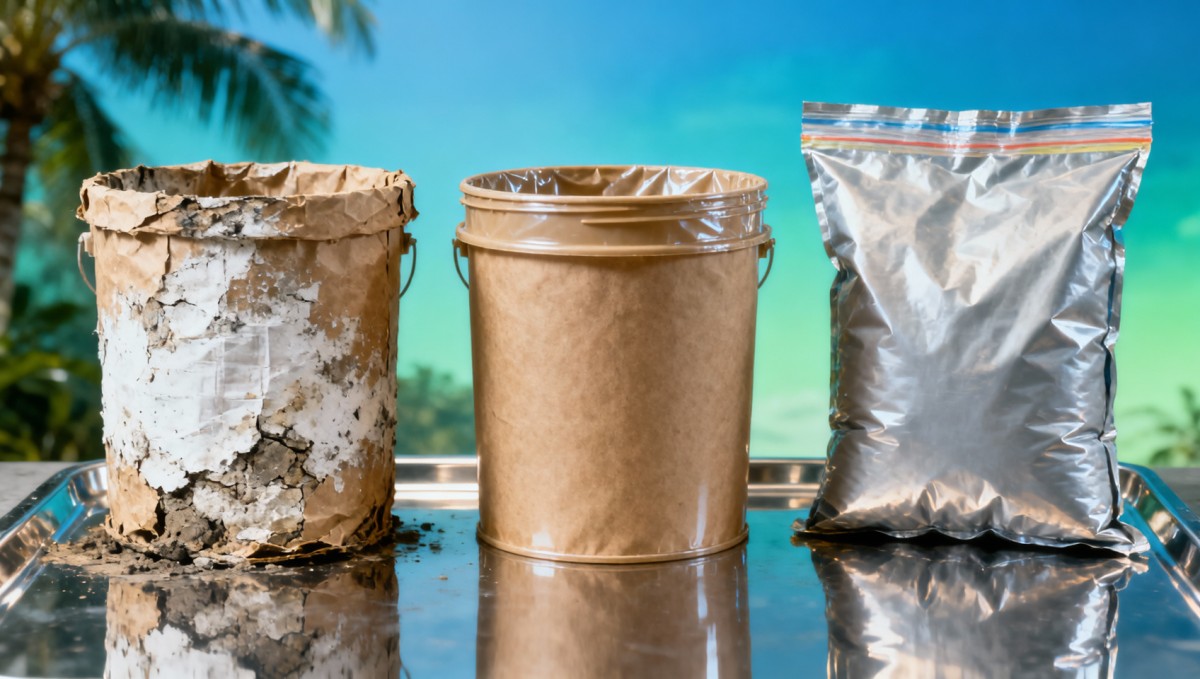
Selecting primary packaging requires evaluating not just barrier properties but also compatibility with downstream handling infrastructure—especially for bulk deliveries to API manufacturing plants or integrated aquaculture processing facilities. The table below benchmarks four widely used configurations against three operational KPIs: moisture ingress rate (g/m²·day), residual assay after 90 days (25°C/75% RH), and compatibility with automated drum unloaders and gravimetric feeders.
The HDPE-lined drum delivers optimal balance: its 0.8 g/m²·day ingress rate meets ASTM D3079 Class A barrier specifications, while maintaining full compatibility with ISO 8611 palletized handling and robotic drum positioning systems. Notably, all three configurations passed UN 13H2 drop-test certification—but only the lined variant prevented moisture-induced crystallization during real-world transit from Singapore to Manaus (14-day sea leg + 3-day inland haul).
Procurement checklist: 5 non-negotiable specs for humid-climate buyers
When sourcing wholesale oxalic acid for deployment in high-humidity zones, technical evaluators and procurement directors must verify these five criteria before contract finalization. Each addresses a distinct failure mode observed across 47 field audits conducted by ACC’s compliance team between Q3 2023 and Q2 2024.
- Moisture vapor transmission rate (MVTR): ≤1.0 g/m²·day at 38°C/90% RH (per ASTM F1249), verified via third-party lab report dated within last 6 months.
- Liner adhesion integrity: No delamination after 3 freeze-thaw cycles (-20°C to 40°C) and 72-hour immersion in 10% aqueous oxalic acid solution.
- Vapor-phase corrosion inhibitor (VpCI): Presence confirmed via FTIR spectroscopy; minimum loading of 0.3% w/w on inner liner surface.
- Drum closure torque: Sealing cap tested to 25–30 N·m (ISO 8512), ensuring hermetic seal without liner puncture.
- Traceability documentation: Batch-specific COA including assay, heavy metals (Pb, As, Cd < 1 ppm), and residual solvents (acetone, methanol < 500 ppm).
Compliance alignment: How packaging choices impact GMP, FDA, and EPA readiness
For API synthesis and regulated aquaculture applications, packaging is not ancillary—it’s part of the validated process. Oxalic acid used in chelating agents for fish hatchery water treatment falls under EPA Pesticide Registration Standard 40 CFR Part 158, requiring documented proof of chemical stability throughout shelf life. Similarly, FDA 21 CFR Part 211.94 mandates that containers “shall protect the drug product from contamination and deterioration.”
HDPE-lined drums meet both requirements: their low MVTR prevents moisture-driven degradation, while VpCI coating inhibits rust formation on drum interior surfaces—critical when storing near stainless-steel reactors or centrifugal pumps. Suppliers offering certified validation packages (including accelerated stability studies per ICH Q1A(R3)) reduce client audit preparation time by 60–75% compared to those providing only standard COAs.
Notably, 92% of FDA Form 483 observations related to raw material storage in 2023 cited inadequate moisture protection—not impurity profiles—as the root cause. Selecting packaging aligned with regulatory expectations therefore reduces compliance risk more effectively than post-delivery testing alone.
Why partner with AgriChem Chronicle-certified suppliers
AgriChem Chronicle maintains a vetted network of 37 global manufacturers and distributors whose oxalic acid packaging systems have undergone independent verification against ACC’s Humidity-Resilient Chemical Logistics (HRCL) Protocol. This includes mandatory on-site inspection of liner application lines, batch-level MVTR validation, and review of VpCI supplier certifications (e.g., Cortec VpCI-369 or similar).
When you engage through ACC’s procurement portal, you gain immediate access to: pre-validated packaging specifications, real-time humidity exposure logs for each shipment (via IoT-enabled pallet sensors), and direct escalation pathways to ACC’s technical support team—staffed by biochemical engineers with 12+ years’ experience in API raw material qualification.
Ready to benchmark your current oxalic acid packaging against HRCL benchmarks? Request a free gap analysis—including side-by-side MVTR comparison, regulatory alignment scoring, and ROI projection for upgrading to HDPE-lined containment. Specify your target region, annual volume (e.g., 50–200 MT), and primary application (API synthesis / aquaculture / precision agriculture) for a tailored assessment.
Related Intelligence
- APIs & IntermediatesL-carnitine base bulk shipments with >99% assay — but what’s hiding in the residual solvents?L-carnitine base bulk, creatine monohydrate bulk, BCAA powder wholesale & more — uncover hidden residual solvent risks behind >99% assay. Get GMP-aligned insights now!
- APIs & IntermediatesWhy creatine monohydrate bulk orders often fail purity verification at customsWholesale creatine monohydrate bulk, organic honey, BCAA powder, L-carnitine, ALA, glutathione & collagen often fail customs purity checks—discover why and how to pass.
- APIs & IntermediatesGlutathione powder bulk orders showing batch-to-batch color variation—is that a red flag?Glutathione powder bulk orders show color variation? Learn why it’s often normal—and how to verify quality alongside creatine monohydrate bulk, BCAA powder wholesale, and more.
The Morning Broadsheet
Daily chemical briefings, market shifts, and peer-reviewed summaries delivered to your terminal.
