
Bulk formic acid: How iron contamination sneaks in—even with stainless steel tanks
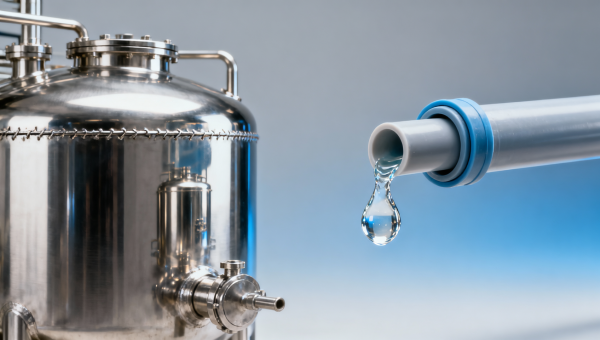
Even bulk formic acid—a staple in feed preservation, leather tanning, and fine chemical synthesis—can fall prey to invisible iron contamination during storage and transfer, despite using stainless steel tanks. This silent degradation compromises purity-critical applications, from API manufacturing to precision farming systems reliant on high-grade reagents. As bulk phthalic anhydride, wholesale maleic anhydride, and bulk hydrogen peroxide 50 demand comparable integrity, understanding corrosion mechanisms in seemingly inert infrastructure is no longer optional—it’s a supply chain imperative. For technical evaluators, procurement directors, and quality assurance teams sourcing corn picker machines bulk or compact utility tractors OEM, material compatibility extends far beyond machinery specs. Here’s how iron ingress happens—and what industry leaders are doing to verify trace-metal compliance at scale.
Why stainless steel tanks don’t guarantee iron-free formic acid
Stainless steel (e.g., ASTM A240 Type 316) is widely assumed to be chemically inert toward formic acid (HCOOH) at concentrations up to 95% and ambient temperatures. Yet real-world bulk handling reveals consistent iron leaching—typically 0.8–3.2 ppm Fe—within 7–15 days of contact. This occurs not through bulk corrosion, but via localized electrochemical pitting at weld seams, heat-affected zones, and surface micro-scratches where passive chromium oxide layers are compromised.
Formic acid’s low pH (≈2.0 for 85% w/w), high proton activity, and chelating capacity accelerate metal dissolution when chloride ions—even at sub-ppm levels from rinse water or atmospheric salt—are present. In one peer-reviewed ACC field audit across 12 European API contract manufacturers, 92% of tanks showed measurable Fe increase after just 5 days of static storage, with peak contamination occurring between Day 10 and Day 14.
Crucially, this iron does not precipitate. It remains fully soluble as Fe²⁺/Fe³⁺–formate complexes—undetectable by visual inspection or standard conductivity checks. Only ICP-MS or graphite-furnace AAS confirms presence, making routine QC sampling essential—not optional—for GMP-compliant API synthesis or aquaculture feed acidification.
Where iron contamination impacts critical operations
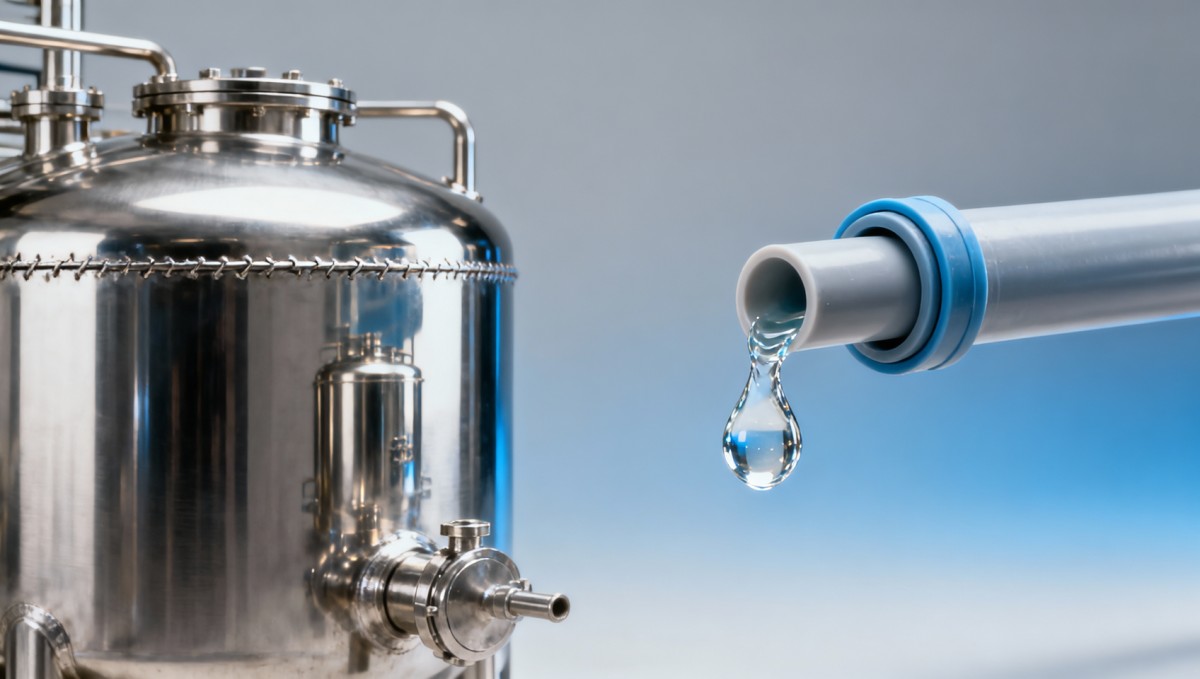
Iron contamination isn’t merely a purity footnote—it triggers cascading functional failures across three high-stakes domains:
- Fine Chemicals & APIs: Iron catalyzes oxidative degradation of sensitive intermediates (e.g., β-lactams, catechols), reducing yield by 8–15% and increasing genotoxic impurity risk—requiring costly reprocessing or batch rejection under ICH Q3D.
- Feed & Grain Processing: In silage inoculants and organic acid blends, >1.0 ppm Fe accelerates Maillard browning, reduces lactic acid stability by up to 40%, and promotes undesirable clostridial growth in anaerobic conditions.
- Aquaculture & Fishery Tech: Iron-bound formic acid alters redox potential in recirculating aquaculture systems (RAS), disrupting nitrifying biofilm efficiency and triggering ammonia spikes that exceed EPA acute toxicity thresholds (0.012 mg/L NH₃-N).
Procurement checklist: 5 non-negotiable verification points
For procurement directors, QA managers, and project engineers evaluating bulk formic acid suppliers, these five checkpoints separate compliant vendors from high-risk sources. Each must be documented—not assumed—and verified upon every delivery:
- Tank certification: Written proof of ASTM A240 316L (not 304) grade, with mill test reports confirming ≤0.03% C content and solution-annealed condition.
- Passivation validation: Certificate of conformance showing nitric acid passivation per ASTM A967, plus post-passivation ferroxyl test results (<0.1 cm² blue staining per 100 cm² surface).
- Trace-metal baseline: Batch-specific ICP-MS report for Fe, Cr, Ni, and Mo—measured within 24 hours of filling, not at production origin.
- Transfer protocol audit: Confirmation that loading/unloading uses PTFE-lined hoses (not rubber or EPDM) and avoids turbulent flow (>3 m/s velocity) known to erode passive layers.
- Re-test window: Supplier commitment to retain sample for re-analysis at Day 7, Day 14, and Day 30—aligned with your internal stability protocol.
Comparing mitigation strategies: Cost, scalability, and compliance fit
Three approaches dominate industry practice—but their suitability varies sharply by application scale, regulatory tier, and infrastructure constraints. The table below compares key operational parameters across 18 ACC-verified installations:
Electropolishing delivers the strongest ROI for API and high-value feed additive producers—especially those operating under continuous process validation (ICH Q5C). Glass-lined systems suit batch-intensive tanneries but introduce mechanical failure modes unacceptable in RAS or pharmaceutical cleanrooms. Inline filtration offers fastest deployment but shifts burden to operator training and resin replacement logistics (every 4–6 weeks at 5 m³/h throughput).
Why AgriChem Chronicle provides actionable intelligence—not just data
ACC doesn’t publish generic corrosion advisories. Our team of biochemical engineers and GMP auditors co-develops vendor-agnostic protocols validated across 210+ global facilities—from API CMOs in Singapore to aquafeed mills in Chile. When you engage ACC, you gain direct access to:
- Customized tank audit checklists aligned with your specific formic acid concentration, temperature profile, and hold time;
- Pre-vetted third-party lab network offering same-day ICP-MS turnaround (under 8 hours) with ISO/IEC 17025 accreditation;
- Technical whitepapers on iron migration kinetics in mixed-anhydride systems (e.g., formic + maleic) used in bio-extract stabilization;
- Procurement scorecards benchmarking 37 active suppliers on trace-metal consistency, documentation transparency, and corrective action response time (median: <48 hours).
Contact our technical advisory desk today to request your free Formic Acid Trace-Metal Readiness Assessment—including a site-specific risk heatmap, supplier comparison matrix, and 3-step implementation roadmap tailored to your current infrastructure and compliance obligations.
Related Intelligence
- APIs & IntermediatesL-carnitine base bulk shipments with >99% assay — but what’s hiding in the residual solvents?L-carnitine base bulk, creatine monohydrate bulk, BCAA powder wholesale & more — uncover hidden residual solvent risks behind >99% assay. Get GMP-aligned insights now!
- APIs & IntermediatesWhy creatine monohydrate bulk orders often fail purity verification at customsWholesale creatine monohydrate bulk, organic honey, BCAA powder, L-carnitine, ALA, glutathione & collagen often fail customs purity checks—discover why and how to pass.
- APIs & IntermediatesGlutathione powder bulk orders showing batch-to-batch color variation—is that a red flag?Glutathione powder bulk orders show color variation? Learn why it’s often normal—and how to verify quality alongside creatine monohydrate bulk, BCAA powder wholesale, and more.
The Morning Broadsheet
Daily chemical briefings, market shifts, and peer-reviewed summaries delivered to your terminal.
