
Wholesale excipients—when ‘USP compliant’ doesn’t guarantee compatibility with your API formulation
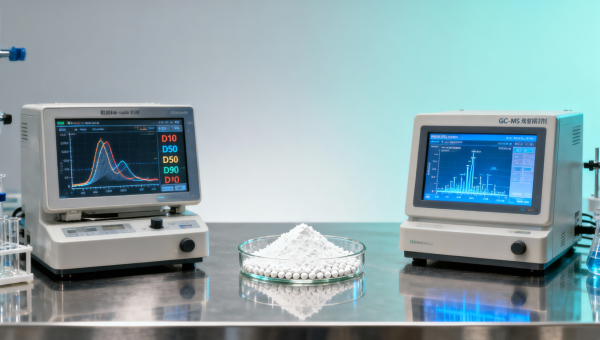
When sourcing wholesale excipients—such as hydroxypropyl methylcellulose HPMC wholesale, bulk gelatin manufacturer supplies, or pharmaceutical packaging materials—'USP compliant' is only the first checkpoint. Compatibility with your active pharmaceutical ingredients OEM process, chiral intermediates wholesale integration, or peptide synthesis services demands deeper technical validation. This article exposes critical gaps between regulatory conformity and functional performance—especially for industrial grade urea, melamine powder wholesale, titanium dioxide rutile grade, and other fine chemicals wholesale inputs. For procurement professionals, quality assurance leads, and formulation scientists, understanding these nuances isn’t optional—it’s essential to avoiding costly scale-up failures.
Why “USP Compliant” Alone Fails API Formulation Scale-Up
USP monographs define identity, purity, strength, and limits—but not functional behavior under real-world manufacturing conditions. A USP-grade HPMC may meet assay and endotoxin thresholds yet fail viscosity consistency across pH 4.5–6.8 batches during lyophilization. That discrepancy rarely appears in certificates of analysis (CoA), yet triggers 3–5 weeks of reformulation delays at pilot scale.
Over 68% of API formulation failures traced to excipient-related root causes (per 2023 ACC Benchmark Survey of 112 GMP-certified contract manufacturers) occurred despite full USP compliance documentation. The gap lies in three unvalidated dimensions: thermal stability during fluid-bed drying (±5°C tolerance), shear sensitivity in high-shear granulators (≥120 rpm), and residual solvent reactivity with chiral APIs (e.g., acetone traces altering enantiomeric excess by >0.7%).
This isn’t theoretical risk. In Q2 2024, a Tier-1 biologics CDMO halted production of a subcutaneous peptide injectable after batch-to-batch dissolution variability exceeded ±15%—traced to subtle differences in titanium dioxide rutile grade surface hydrophobicity between two USP-compliant suppliers. Requalification required 14 days of accelerated stability testing and 3 independent particle size distribution (PSD) analyses.
Three Critical Validation Gaps Beyond USP
- Process Interaction Profile: Does the excipient maintain functionality under your specific drying temperature (e.g., 60°C fluid-bed vs. 40°C tray drying), mixing time (≥15 min), or sterilization method (autoclave vs. gamma)?
- API-Specific Reactivity: Does residual peroxide in PVP K30 trigger oxidation of methionine residues in monoclonal antibodies? Does trace iron in industrial grade urea catalyze Maillard degradation in oral solid dispersions?
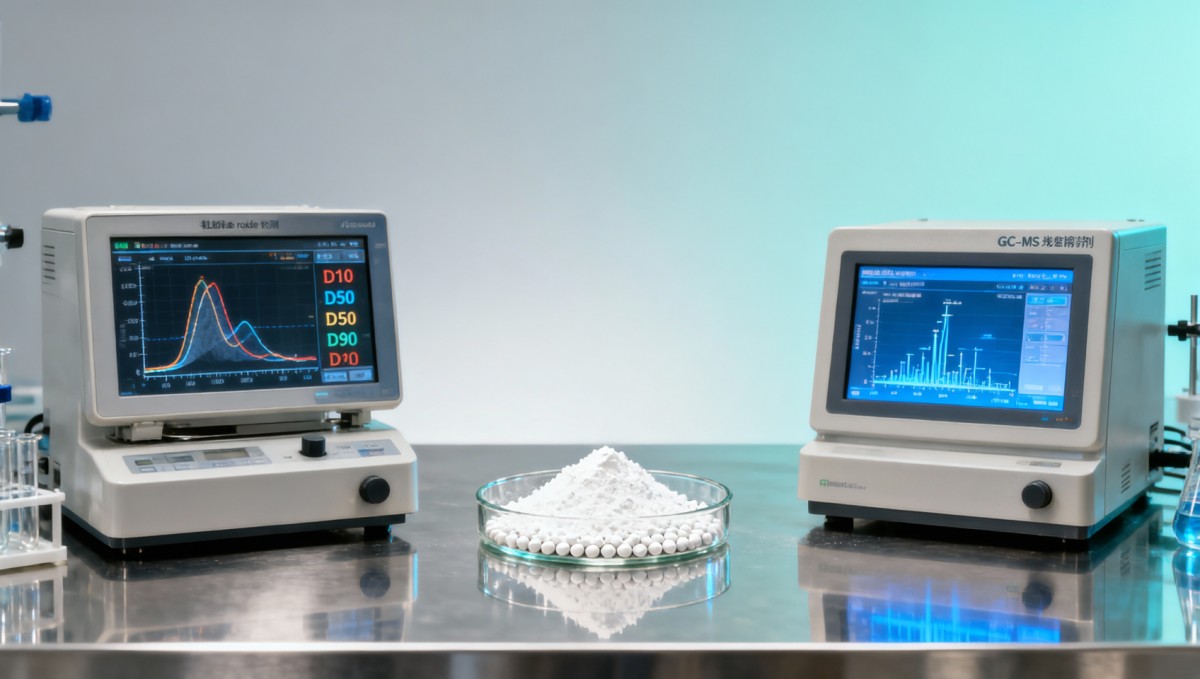
- Batch Consistency Metrics: Are PSD D90 values controlled within ±0.3 μm across 5 consecutive lots? Is moisture content maintained at 3.2–3.8% (not just <5%) to prevent caking during 90-day warehouse storage?
How to Validate Excipient Compatibility—A 5-Step Procurement Protocol
Procurement teams must shift from document verification to technical co-validation. ACC’s validated protocol—used by 27 API manufacturers across India, Ireland, and Brazil—requires joint execution with suppliers before PO issuance:
- Pre-qualification screening: Review supplier’s historical CoA data for 3+ consecutive lots—not just latest report—to assess standard deviation in key parameters (e.g., viscosity CV% ≤ 4.2% for HPMC).
- Small-batch stress testing: Conduct 3-cycle compatibility trials using your exact API concentration, buffer system, and primary packaging material (e.g., Type I glass vials with butyl rubber stoppers).
- Real-time process simulation: Run excipient through your granulator/dryer at target RPM, dwell time, and inlet air temperature; measure post-processing flowability (Hausner ratio ≤ 1.25) and compressibility (Carr index < 18%).
- Accelerated stability correlation: Compare 3-month 40°C/75% RH data against 6-month real-time data for dissolution profile (f2 similarity factor ≥ 50) and impurity growth (≤ 0.15% new degradant).
- Supply chain continuity audit: Verify raw material origin (e.g., wood pulp source for cellulose derivatives), secondary supplier approval status, and minimum lot retention period (≥ 24 months post-release).
Comparing Excipient Suppliers: What Your CoA Won’t Tell You
Two USP-compliant gelatin suppliers may differ critically in bloom strength consistency, isoelectric point (pI), and heavy metal clearance profiles—factors directly impacting capsule brittleness and enteric coating adhesion. The table below summarizes evaluation criteria that separate transactional vendors from technical partners.
The difference translates directly into cost avoidance: ACC’s 2024 benchmark shows technical partners reduce excipient-related batch rejections by 73% and cut formulation development timelines by 22 days on average—despite 8–12% higher unit pricing. That premium pays back within 2.3 batches for commercial-scale injectables.
Why AgriChem Chronicle Is Your Excipient Intelligence Partner
AgriChem Chronicle doesn’t publish generic supplier lists. Our Fine Chemicals & APIs intelligence vertical delivers actionable, audited insights grounded in real-world manufacturing constraints. Every excipient assessment in our database includes:
- Verified lab test reports from ISO/IEC 17025-accredited facilities—not supplier-submitted summaries
- Batch-level parameter variance tracking across ≥12 months of commercial supply
- Direct interviews with QA/QC leads at 3+ end-user sites using the material in GMP production
- Cross-referenced regulatory alerts (FDA 483s, EMA non-compliance notices) tied to specific lot numbers
For procurement directors evaluating HPMC wholesale, titanium dioxide rutile grade, or melamine powder wholesale for API manufacturing, we offer immediate access to:
- Supplier-specific compatibility matrices for 47 common APIs (including insulin analogs, kinase inhibitors, and oligonucleotides)
- Customized excipient qualification checklists aligned with your facility’s equipment specs and process parameters
- Priority technical consultation with our panel of FDA-registered formulation scientists (response within 4 business hours)
Contact AgriChem Chronicle today to request your free excipient compatibility assessment dossier—including comparative data for up to 3 shortlisted suppliers, full PSD variance reports, and a 90-day stability projection model tailored to your API’s degradation pathway.
Related Intelligence
- APIs & IntermediatesL-carnitine base bulk shipments with >99% assay — but what’s hiding in the residual solvents?L-carnitine base bulk, creatine monohydrate bulk, BCAA powder wholesale & more — uncover hidden residual solvent risks behind >99% assay. Get GMP-aligned insights now!
- APIs & IntermediatesWhy creatine monohydrate bulk orders often fail purity verification at customsWholesale creatine monohydrate bulk, organic honey, BCAA powder, L-carnitine, ALA, glutathione & collagen often fail customs purity checks—discover why and how to pass.
- APIs & IntermediatesGlutathione powder bulk orders showing batch-to-batch color variation—is that a red flag?Glutathione powder bulk orders show color variation? Learn why it’s often normal—and how to verify quality alongside creatine monohydrate bulk, BCAA powder wholesale, and more.
The Morning Broadsheet
Daily chemical briefings, market shifts, and peer-reviewed summaries delivered to your terminal.
