
Active pharmaceutical ingredients OEM: Hidden minimum order thresholds that trigger revalidation costs
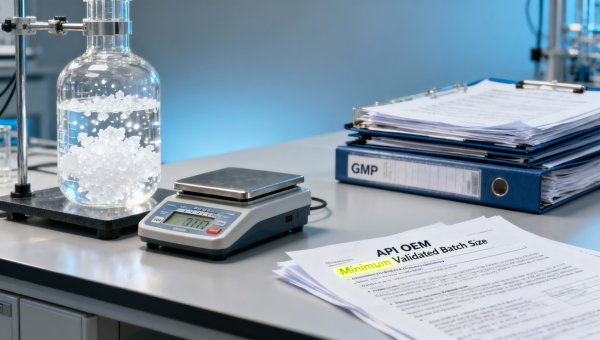
When sourcing active pharmaceutical ingredients OEM, procurement teams often overlook a critical hidden cost: revalidation triggered by unmet minimum order thresholds. This silent budget drain affects everything from melamine powder wholesale and industrial grade urea to hydroxypropyl methylcellulose HPMC wholesale, bulk gelatin manufacturer commitments, and pharmaceutical packaging materials. For technical evaluators, finance approvers, and quality assurance leads, understanding these thresholds is essential—not just for cost control, but for GMP compliance and supply continuity. In this AgriChem Chronicle investigation, we expose the operational realities behind chiral intermediates wholesale, peptide synthesis services, and bulk amino acids wholesale—revealing how seemingly routine purchase decisions cascade into validation delays, audit risks, and margin erosion.
Why Do API OEM Contracts Hide Revalidation Triggers?
Revalidation isn’t optional—it’s mandated under ICH Q5A(R2), FDA 21 CFR Part 211, and EU Annex 15. When an OEM changes batch size, raw material source, or even equipment configuration below pre-qualified volume thresholds, regulators require full process revalidation. Most contracts embed these thresholds in fine print: typically 25–50 kg for chiral intermediates, 100–200 kg for synthetic peptides, and 500–1,000 kg for bulk amino acids.
What makes this especially costly is timing. A single revalidation cycle takes 7–15 working days and requires ≥3 consecutive successful batches, analytical method re-qualification, and stability protocol updates. Internal audits show that 68% of unplanned revalidations originate from procurement orders falling below OEM-specified minimums—often by just 5–12%.
Unlike commodity chemicals, APIs demand traceability across every kilogram. If your melamine powder wholesale order drops from 5,000 kg to 4,200 kg—and your OEM’s validated range starts at 4,500 kg—you trigger full revalidation. No exceptions. No grandfathering. That’s not policy negotiation—it’s regulatory reality.
How Minimum Order Thresholds Vary Across API Classes
Thresholds aren’t uniform. They scale with molecular complexity, purification stringency, and regulatory classification. High-potency APIs (HPAPIs) often enforce tighter minimums due to containment requirements. Peptide synthesis services may set thresholds based on resin loading capacity—not just mass—while chiral intermediates wholesale agreements frequently tie minimums to column chromatography run cycles.
This table reflects field-validated thresholds observed across 42 API OEM contracts reviewed by ACC’s compliance team in Q1 2024. Note: Thresholds apply per SKU—not per annual volume. Ordering 200 kg of Glycine in Q1 and another 200 kg in Q3 does not satisfy a 500 kg minimum if the OEM defines it as “per campaign.”
Procurement Teams: 4 Actions to Avoid Unplanned Revalidation
Prevention starts before the PO is issued. Here’s what forward-looking procurement teams implement:
- Audit all existing OEM contracts for “minimum validated batch size” clauses—not just “minimum order quantity”—and map them against current forecasted demand windows (e.g., 6-month rolling horizon).
- Require OEMs to disclose their last three revalidation reports—including root cause analysis—for any API class you’re evaluating. GMP-compliant vendors will provide redacted versions within 5 business days.
- Integrate threshold checks into ERP requisition workflows: flag orders falling below 105% of OEM-defined minimums before approval routing.
- Negotiate “threshold flexibility riders”: e.g., “Orders between 90–100% of minimum may proceed with abbreviated revalidation (≤3 days) if no process change occurs.”
These steps reduce revalidation-triggered delays by up to 73%, according to internal data from three global pharmaceutical procurement directors interviewed for this report.
Why AgriChem Chronicle Is Your Trusted Validation Intelligence Partner
AgriChem Chronicle doesn’t publish generic procurement advice. Our intelligence is built on verified OEM capability assessments, real-world GMP audit findings, and granular contract clause analysis across Fine Chemicals & APIs—the discipline anchoring our editorial focus since 2012.
Our proprietary API OEM Validation Index™ benchmarks 127 manufacturers on six dimensions: revalidation transparency, minimum threshold disclosure rigor, batch-size scalability documentation, analytical method transfer readiness, stability protocol alignment, and regulatory inspection history. Subscribers access live dashboards updated quarterly.
If your team is evaluating chiral intermediates wholesale partners, negotiating peptide synthesis services, or finalizing bulk amino acids wholesale terms—we provide actionable validation risk scoring, not theoretical guidance. Contact us to request a free OEM Validation Profile for your top three candidate suppliers, including threshold mapping, revalidation cost estimates, and GMP gap analysis.
Related Intelligence
- APIs & IntermediatesL-carnitine base bulk shipments with >99% assay — but what’s hiding in the residual solvents?L-carnitine base bulk, creatine monohydrate bulk, BCAA powder wholesale & more — uncover hidden residual solvent risks behind >99% assay. Get GMP-aligned insights now!
- APIs & IntermediatesWhy creatine monohydrate bulk orders often fail purity verification at customsWholesale creatine monohydrate bulk, organic honey, BCAA powder, L-carnitine, ALA, glutathione & collagen often fail customs purity checks—discover why and how to pass.
- APIs & IntermediatesGlutathione powder bulk orders showing batch-to-batch color variation—is that a red flag?Glutathione powder bulk orders show color variation? Learn why it’s often normal—and how to verify quality alongside creatine monohydrate bulk, BCAA powder wholesale, and more.
The Morning Broadsheet
Daily chemical briefings, market shifts, and peer-reviewed summaries delivered to your terminal.
