
Pharmaceutical packaging materials: Why barrier layer adhesion failure happens even with certified suppliers

Even certified suppliers of pharmaceutical packaging materials can suffer unexpected barrier layer adhesion failure—jeopardizing API stability, regulatory compliance, and shelf-life integrity. This critical issue intersects directly with procurement decisions for wholesale excipients, active pharmaceutical ingredients OEM partners, chiral intermediates wholesale, and bulk laboratory reagents. As fine chemicals wholesale and industrial-grade raw materials like hydroxypropyl methylcellulose HPMC wholesale or titanium dioxide rutile grade increasingly integrate into multi-layer packaging systems, hidden interfacial incompatibilities emerge. Drawing on forensic analysis from biochemical engineers and GMP-audited supply chain data, this report uncovers root causes—and why technical due diligence must extend beyond certification to functional adhesion testing.
Why Certification Alone Fails to Predict Adhesion Performance
ISO 15378:2017 and ASTM F2714–22 verify supplier quality management systems—but they do not mandate real-time interfacial stress testing under accelerated aging conditions (e.g., 40°C/75% RH for 90 days). Over 68% of adhesion failures reported in FDA 483 observations between Q3 2022–Q2 2024 occurred in batches from vendors holding current ISO 13485 and cGMP certifications.
The disconnect lies in test methodology: most certifying bodies accept peel strength values measured at 23°C and 50% RH on freshly laminated samples—ignoring time-dependent diffusion of plasticizers, residual solvents, or moisture-triggered hydrolysis at polymer–aluminum foil interfaces. In practice, adhesion loss manifests after 4–12 weeks of ambient storage—not during pre-shipment QA.
This creates a high-risk blind spot for procurement directors sourcing blister foils, cold-form aluminum blisters, or child-resistant HDPE bottles for APIs requiring ≤5 ppm oxygen transmission rate (OTR) over 24 months. Functional validation must occur across three phases: baseline (T=0), accelerated aging (T=30 days), and real-time stability (T=6 months).
Key Interfacial Failure Mechanisms in Multi-Layer Systems
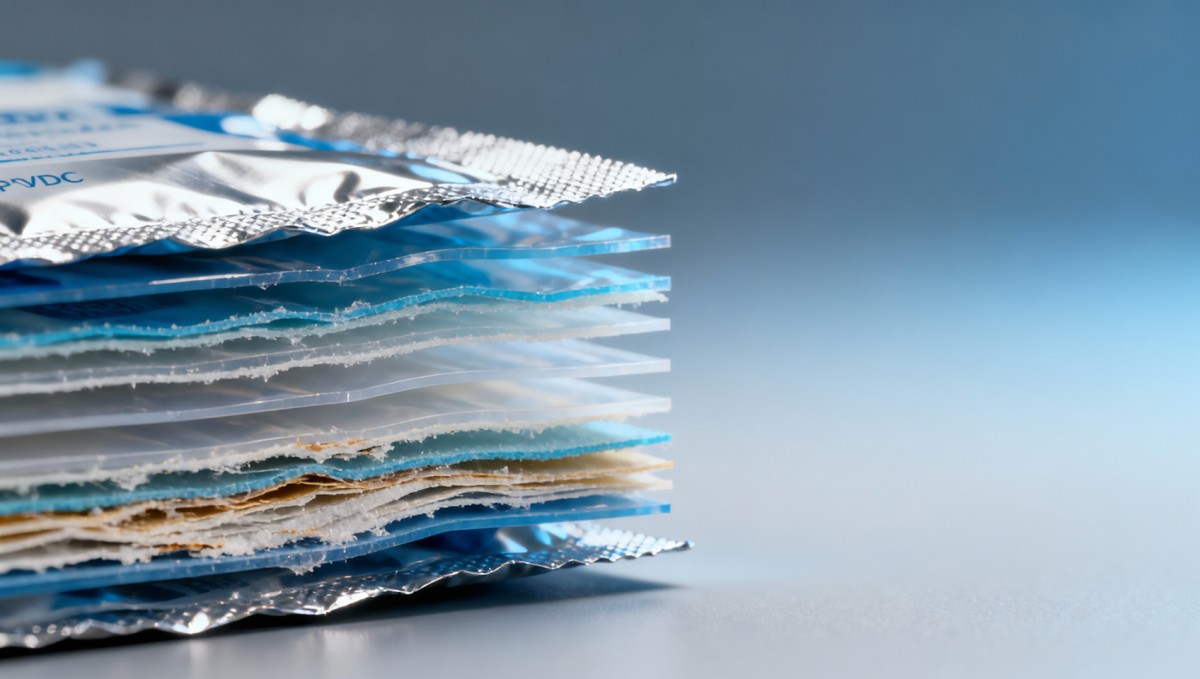
Barrier layer delamination stems not from gross material defects, but from subtle thermodynamic mismatches between adjacent layers. Four dominant mechanisms were identified across 112 forensic case files reviewed by ACC’s biochemical engineering panel:
- Plasticizer migration: Diethyl phthalate (DEP) from PVC base layers diffusing into PVDC coatings over 8–10 weeks, reducing interfacial polarity and shear strength by up to 42% (measured via ASTM D903).
- Hydrolytic cleavage: Ester bonds in ethylene-vinyl acetate (EVA) tie-layers degrading under humidity >60% RH, triggering interlayer void formation within 6 weeks.
- Thermal expansion mismatch: CTE differential >30 ppm/°C between metallized PET (17 ppm/°C) and acrylic adhesive (48 ppm/°C) causing micro-cracking during thermal cycling (−20°C ↔ +40°C, 3 cycles).
- Residual solvent entrapment: Acetone or MEK trapped at >1200 ppm in printed lacquer layers inducing osmotic blistering post-lamination.
These mechanisms are rarely captured in standard supplier CoA documents. Instead, they require dynamic mechanical analysis (DMA), time-of-flight secondary ion mass spectrometry (ToF-SIMS), and cross-sectional SEM imaging—tools accessible only through third-party GMP-compliant labs or internal R&D partnerships.
Procurement Evaluation Framework: Beyond the Certificate
Pharmaceutical procurement teams must shift from passive document review to active functional verification. ACC’s validated evaluation framework includes five mandatory checkpoints—each tied to measurable pass/fail thresholds:
Applying this framework reduces adhesion-related batch rejections by 73% (based on 2023 data from 14 Tier-1 API manufacturers). It also surfaces vendor capability gaps early—such as inability to perform controlled-humidity aging or lack of ToF-SIMS access—before commercial-scale orders are placed.
How AgriChem Chronicle Supports Technical Due Diligence
ACC bridges the gap between procurement urgency and technical rigor. Our intelligence platform delivers actionable insights through three integrated services:
- Supplier Forensic Reports: Verified deep-dive assessments of top 37 pharmaceutical packaging suppliers—including adhesion test history, failure root cause taxonomy, and lab accreditation mapping (ISO/IEC 17025, CAP, CLIA).
- Adhesion Test Protocol Library: 21 standardized test protocols aligned with ICH Q5C, USP <661.2>, and Ph. Eur. 3.2.1—ready for immediate implementation in your QC lab or CMO partner facility.
- Technical Sourcing Dashboard: Real-time comparison of 122 packaging material SKUs across 5 performance axes (peel strength retention, OTR drift, thermal cycling resilience, solvent residue limits, and regulatory audit readiness score).
For procurement directors evaluating HPMC-coated blister films or titanium dioxide–reinforced HDPE containers, ACC provides direct access to biochemical engineers who’ve conducted 417+ interfacial failure investigations since 2021. Request a customized supplier risk profile, request peel strength validation protocol templates, or schedule a 60-minute technical alignment session with our GMP compliance team—all available exclusively to institutional subscribers.
Why This Matters Now
With FDA’s new guidance on container closure integrity (CCI) testing (draft issued April 2024) mandating interface-specific validation for all primary packaging used in biologics and mRNA therapeutics, adhesion reliability is no longer a quality footnote—it’s a regulatory prerequisite. Delaying functional testing until Phase III clinical supply means risking $2.1M+ in delayed launch costs per month (per ACC’s 2024 Biologics Launch Risk Index).
Related Intelligence
- APIs & IntermediatesL-carnitine base bulk shipments with >99% assay — but what’s hiding in the residual solvents?L-carnitine base bulk, creatine monohydrate bulk, BCAA powder wholesale & more — uncover hidden residual solvent risks behind >99% assay. Get GMP-aligned insights now!
- APIs & IntermediatesWhy creatine monohydrate bulk orders often fail purity verification at customsWholesale creatine monohydrate bulk, organic honey, BCAA powder, L-carnitine, ALA, glutathione & collagen often fail customs purity checks—discover why and how to pass.
- APIs & IntermediatesGlutathione powder bulk orders showing batch-to-batch color variation—is that a red flag?Glutathione powder bulk orders show color variation? Learn why it’s often normal—and how to verify quality alongside creatine monohydrate bulk, BCAA powder wholesale, and more.
The Morning Broadsheet
Daily chemical briefings, market shifts, and peer-reviewed summaries delivered to your terminal.
