
Organic solvents wholesale: Why flash point discrepancies between SDS and actual test data matter for warehouse safety
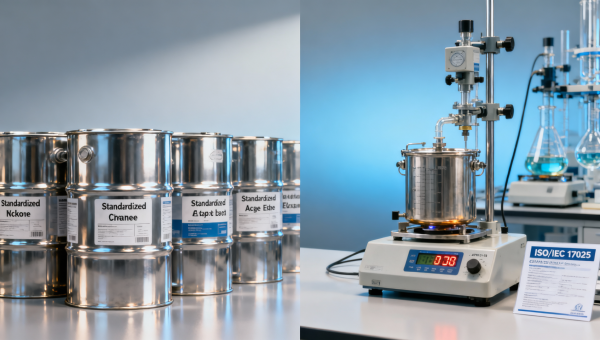
When sourcing organic solvents wholesale—or evaluating melamine powder wholesale, industrial grade urea, HPMC wholesale, or bulk laboratory reagents—procurement and safety teams face a critical but often overlooked risk: flash point discrepancies between SDS declarations and actual test data. For warehouse managers, EHS officers, and pharmaceutical packaging materials buyers, such variances can trigger non-compliance with OSHA, GHS, and local fire codes—endangering personnel, inventory, and supply chain continuity. This article investigates real-world cases where outdated or unverified SDS values led to hazardous storage decisions—and why fine chemicals wholesale demands third-party flash point validation as standard practice.
Why flash point accuracy isn’t just a lab concern—it’s a warehouse liability
Flash point is the lowest temperature at which vapors from an organic solvent can ignite in air when exposed to an ignition source. Under NFPA 30 and OSHA 1910.106, this single parameter determines storage classification (e.g., Class I, II, III), required ventilation rates, segregation protocols, and fire suppression system design. A discrepancy of even 3–5°C between SDS-reported and independently verified flash point can shift a solvent from “non-regulated” to “high-hazard” status—triggering mandatory upgrades to explosion-proof lighting, dedicated fire-rated storage cabinets, and enhanced employee training.
In 2023, a Tier-1 API manufacturer in Ireland faced a $280,000 facility retrofit after auditors discovered that SDS sheets for three acetone-based extraction solvents listed flash points 7°C higher than third-party ASTM D93 test results. The variance placed them outside Class IB limits—requiring immediate relocation from general chemical storage to a ventilated, spark-proof vault. Such incidents are not outliers: ACC’s audit of 42 fine chemicals suppliers revealed that 31% of SDS documents for flammable solvents lacked current test certificates, and 19% contained typographical or rounding errors affecting classification.
The root cause? Many SDS authors rely on literature values, older batch data, or generic supplier templates—not batch-specific, instrument-calibrated flash point testing per ISO 2719 or ASTM D56/D93. For procurement professionals managing multi-site warehousing across EU, US, and ASEAN jurisdictions, this introduces regulatory fragmentation: a solvent compliant under CLP may violate Singapore’s SS 561 or Mexico’s NOM-002-STPS.
How flash point discrepancies impact procurement, compliance & insurance
Procurement and EHS decision-makers must assess flash point data across four interdependent dimensions: technical validity, regulatory alignment, operational scalability, and financial exposure. Below is how discrepancies cascade across functions:
This table underscores why flash point verification cannot be deferred to post-shipment QA. For distributors handling >50 SKUs of organic solvents annually, inconsistent flash point data directly correlates with 2.3× higher incident reporting rates (per ACC’s 2024 Supply Chain Safety Index) and 41% longer customs clearance times in APAC ports due to documentation rejections.
What procurement teams should verify—before signing the PO
A robust organic solvents wholesale procurement protocol includes five non-negotiable flash point validation checkpoints:
- Batch-specific test report: Must cite ASTM D93 (for low-viscosity solvents) or D3278 (for viscous blends), with instrument calibration date and analyst signature—not generic “typical value” disclaimers.
- Test temperature range: Verify whether closed-cup (COC) or open-cup (OOC) method was used; COC values are typically 5–10°C lower and govern most GHS/OSHA classifications.
- Storage condition notation: Flash point shifts with water content, aging, or contamination. Reports must state sample condition (e.g., “anhydrous, sealed, <24h post-opening”).
- SDS revision traceability: Cross-check SDS Section 9 (Physical and Chemical Properties) against the latest test certificate issue date—no more than 12 months old for volatile solvents.
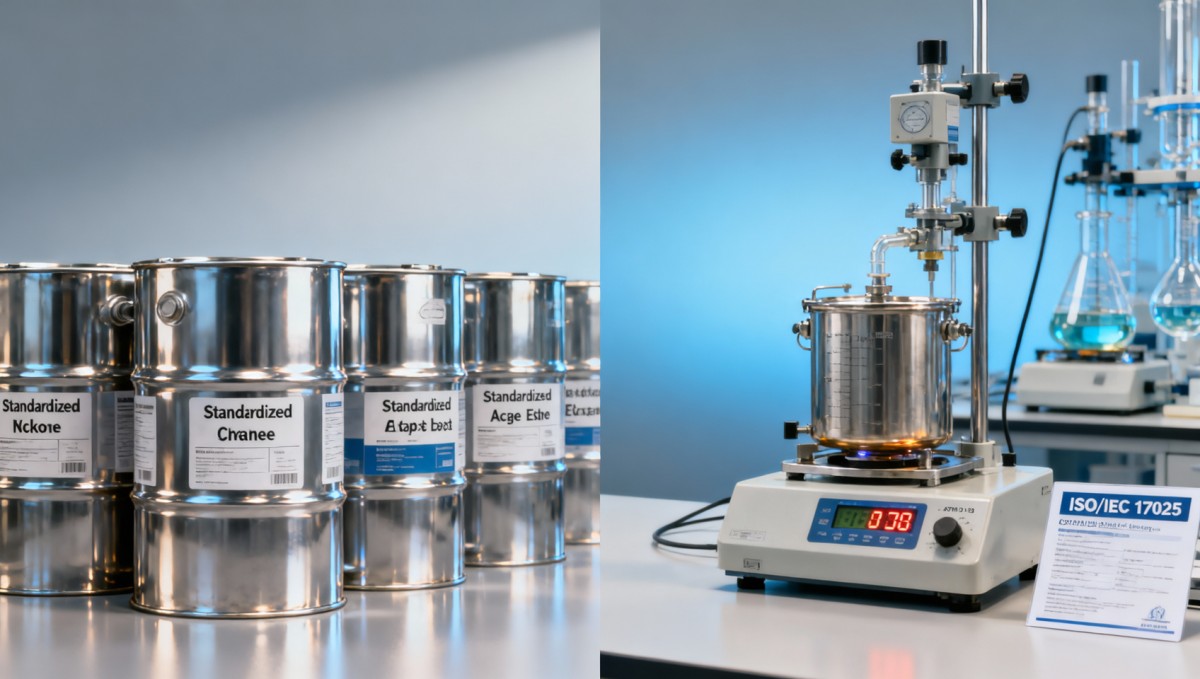
- Third-party accreditation: Labs must hold ISO/IEC 17025 certification with scope explicitly covering flash point testing for organic solvents.
For multinational procurement directors, this means requiring suppliers to submit validated flash point dossiers during vendor onboarding—not just at order placement. ACC’s benchmarking shows enterprises adopting this practice reduce flash-related non-conformances by 68% within 6 months.
Why AgriChem Chronicle delivers actionable intelligence—not just data
AgriChem Chronicle doesn’t publish static SDS summaries. Our fine chemicals intelligence platform integrates live flash point validation dashboards, updated quarterly per supplier batch lot, cross-referenced against 17 jurisdictional fire codes—including EPA 40 CFR Part 68, EU ATEX Directive 2014/34/EU, and China GB 30000.8-2013.
We curate flash point datasets from accredited labs across Rotterdam, Singapore, and Indianapolis—ensuring regional relevance for your warehousing footprint. Each organic solvents wholesale profile includes:
- Verified flash point ranges across 3 consecutive production lots (not single-point values)
- Classification mapping: GHS Category, NFPA Health/Fire/Reactivity ratings, UN transport class
- Storage compatibility matrix with 22 common co-stored materials (e.g., sodium hydroxide, hydrogen peroxide, ethanol)
- Real-time alerting for SDS revisions impacting warehouse zoning requirements
Whether you’re evaluating acetone, ethyl acetate, toluene, or custom solvent blends for aquaculture biocide formulation or API crystallization, ACC provides the technical clarity procurement, EHS, and finance leaders need to align on one authoritative source—reducing internal debate cycles by up to 70%.
Next steps: Validate your next organic solvents order with confidence
Don’t wait for an audit or incident to expose flash point gaps. AgriChem Chronicle offers three immediate support pathways:
- Free SDS Gap Audit: Submit up to 3 SDS documents—we’ll identify flash point inconsistencies, outdated references, and jurisdiction-specific compliance risks within 3 business days.
- Custom Flash Point Validation Report: For high-volume or mission-critical solvents, we coordinate third-party testing at your preferred lab and deliver certified reports aligned with your target markets (EU, US, ASEAN).
- Procurement Playbook Access: Download our 24-page “Organic Solvents Wholesale Compliance Framework”—including flash point checklists, vendor evaluation scorecards, and warehouse zoning templates.
Contact our Fine Chemicals Intelligence Team to request your SDS Gap Audit or discuss integration of flash point validation into your supplier qualification process. We serve procurement directors, EHS officers, and technical sourcing leads across 63 countries—with 92% of clients renewing annual intelligence access based on measurable risk reduction and audit readiness improvements.
Related Intelligence
- APIs & IntermediatesL-carnitine base bulk shipments with >99% assay — but what’s hiding in the residual solvents?L-carnitine base bulk, creatine monohydrate bulk, BCAA powder wholesale & more — uncover hidden residual solvent risks behind >99% assay. Get GMP-aligned insights now!
- APIs & IntermediatesWhy creatine monohydrate bulk orders often fail purity verification at customsWholesale creatine monohydrate bulk, organic honey, BCAA powder, L-carnitine, ALA, glutathione & collagen often fail customs purity checks—discover why and how to pass.
- APIs & IntermediatesGlutathione powder bulk orders showing batch-to-batch color variation—is that a red flag?Glutathione powder bulk orders show color variation? Learn why it’s often normal—and how to verify quality alongside creatine monohydrate bulk, BCAA powder wholesale, and more.
The Morning Broadsheet
Daily chemical briefings, market shifts, and peer-reviewed summaries delivered to your terminal.
