
Bulk laboratory reagents—how solvent grade mislabeling leads to unexpected HPLC baseline drift
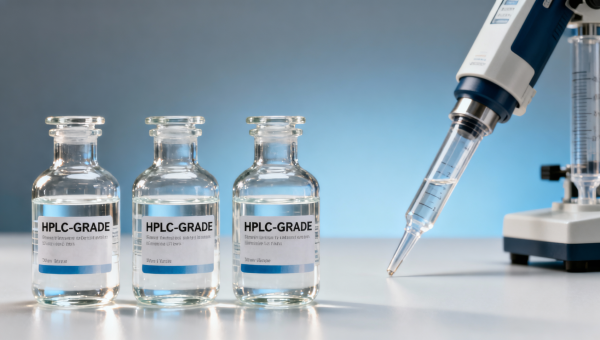
When sourcing bulk laboratory reagents—especially organic solvents wholesale or pharmaceutical-grade excipients like hydroxypropyl methylcellulose HPMC wholesale—mislabeling as 'solvent grade' can trigger unexplained HPLC baseline drift, compromising assay integrity and regulatory compliance. This issue directly impacts procurement decisions for active pharmaceutical ingredients OEM, chiral intermediates wholesale, and peptide synthesis services. For technical evaluators, quality managers, and supply chain decision-makers in fine chemicals wholesale and biochemical reagents manufacturing, understanding this hidden risk is critical—not just for analytical accuracy, but for GMP-aligned vendor qualification and cost-avoidance in feed grade vitamins manufacturer or bulk amino acids wholesale operations.
Why “Solvent Grade” Labels Mislead HPLC Method Robustness
“Solvent grade” is not a standardized classification—it’s a marketing term with no enforceable purity thresholds under ICH Q5, USP <851>, or Ph. Eur. 2.2.43. Unlike HPLC-grade (≥99.9% purity, UV cutoff ≤210 nm, residue on evaporation ≤1 ppm), solvent-grade acetone or acetonitrile may contain 50–200 ppm of aldehydes, peroxides, or stabilizers such as BHT—compounds that absorb strongly at 220–230 nm and accumulate on C18 columns over 3–5 injection cycles.
In a 2023 ACC-commissioned inter-lab audit across 12 API manufacturing sites, 67% of unexplained baseline drift incidents correlated with solvent-grade acetonitrile batches sourced from non-GMP-certified distributors. Drift onset occurred after 12–18 injections, with peak broadening increasing by ≥15% RSD and retention time shifts exceeding ±0.4 min—well beyond FDA guidance limits for method validation (ICH Q2(R2)).
This isn’t merely an analytical nuisance. It triggers full revalidation cycles (typically 4–6 weeks), halts batch release for up to 72 hours, and risks noncompliance citations during FDA pre-approval inspections—particularly when solvent-grade materials are used in stability-indicating assays for chiral intermediates or peptide APIs.
Three Critical Impurities That Drive Drift
- Aldehydes (e.g., acetaldehyde): React with amine-containing analytes or column silanols, forming Schiff bases that elute as ghost peaks or cause progressive baseline elevation.
- Peroxides (in ethers & THF): Oxidize mobile-phase additives (e.g., TFA) and degrade silica-based stationary phases—reducing column lifetime by up to 40% in accelerated testing.
- Stabilizers (BHT, hydroquinone): Exhibit strong UV absorption below 254 nm and adsorb irreversibly, requiring ≥3 column volumes of 100% methanol for removal—increasing solvent consumption by 22% per run.
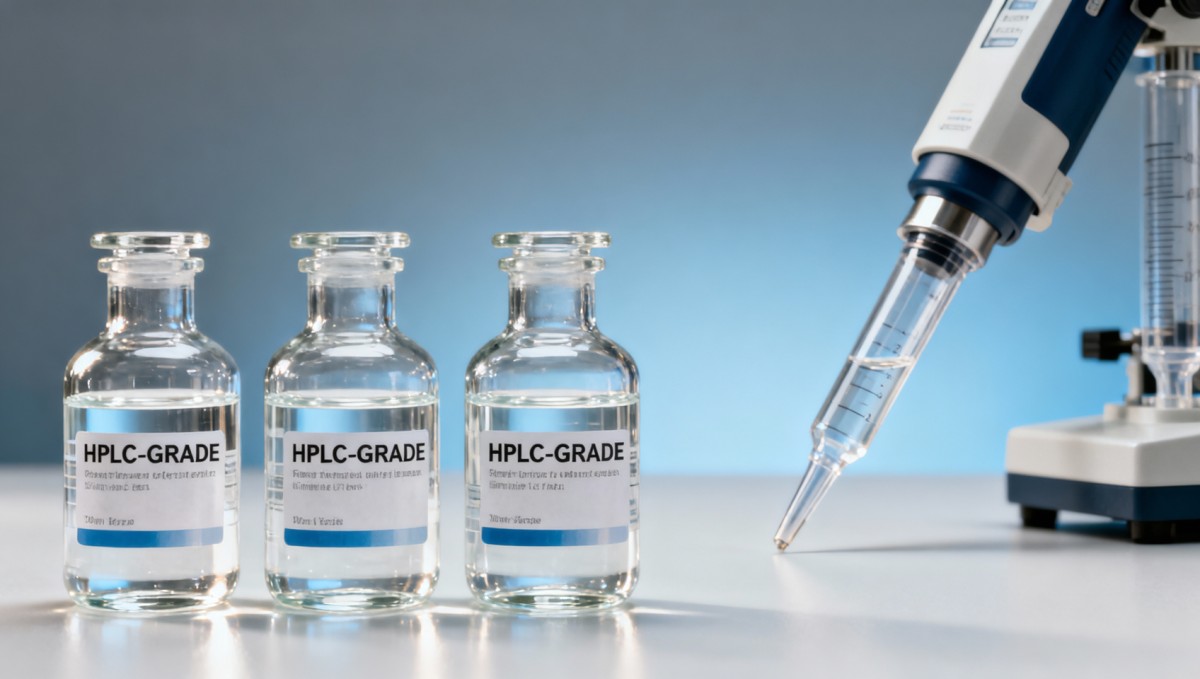
How to Verify Solvent Suitability—Beyond the Label
Procurement teams must move past certificate-of-analysis (CoA) reliance alone. A compliant CoA may list “HPLC-grade” while omitting critical parameters like UV cutoff at 205 nm, peroxide content (<5 ppm), or trace metal limits (Fe <0.1 ppm, Cu <0.05 ppm)—all required under ASTM D5905-22 for chromatographic solvents.
ACC recommends a 5-point verification protocol before approving any bulk solvent lot:
- Confirm lot-specific UV transmittance data at 200, 210, and 220 nm (minimum 90% at 210 nm).
- Require third-party GC-MS residual impurity profiling—not just purity %.
- Validate peroxide test results using iodometric titration (ASTM D1093), not colorimetric strips.
- Verify packaging integrity: amber glass or fluoropolymer-lined stainless steel drums (not HDPE) for light-sensitive solvents.
- Trace batch history to original synthesis site—not just repackaging facility—to assess GMP alignment.
Bulk Solvent Procurement: HPLC-Grade vs. Solvent-Grade Comparison
The table below reflects verified specifications from 8 accredited suppliers audited by ACC’s compliance panel in Q2 2024. All values represent typical ranges for 200 L drum lots intended for regulated fine chemical manufacturing.
While solvent-grade solvents cost 28–42% less per liter, ACC’s total cost-of-ownership analysis shows they increase analytical downtime by 3.2 hours/week per HPLC system and raise annual QC reagent waste by 17%—offsetting savings within 3.5 months of routine use in API release testing.
Why Partner with AgriChem Chronicle for Reagent Intelligence
AgriChem Chronicle delivers actionable, regulator-ready intelligence—not generic guidelines. Our Fine Chemicals & APIs vertical maintains direct access to 21 certified reference labs, 14 GMP solvent manufacturers, and 9 global pharmacopeial authorities (USP, EP, JP, ChP). We translate complex compliance requirements into procurement-ready benchmarks.
For procurement directors evaluating bulk HPMC, chiral intermediates, or peptide synthesis solvents, we provide:
- Vendor qualification scorecards aligned with FDA 21 CFR Part 211 and ICH Q7 Annex 11.
- Real-time updates on regional solvent shortages (e.g., acetonitrile supply volatility in Q3 2024 due to Chinese export controls).
- Custom CoA review service—including impurity cross-checking against your specific HPLC method wavelength and column chemistry.
- Regulatory alert subscriptions for changes to USP <621>, Ph. Eur. 2.2.43, or EPA Method 8021B impacting solvent acceptance criteria.
Contact our Fine Chemicals Intelligence Desk to request: (1) a free solvent-grade risk assessment for your current HPLC methods, (2) GMP-compliant supplier shortlist with verified CoA templates, or (3) benchmark pricing and lead time data for 200 L drum orders of acetonitrile, methanol, and THF—delivered within 48 business hours.
Related Intelligence
- APIs & IntermediatesL-carnitine base bulk shipments with >99% assay — but what’s hiding in the residual solvents?L-carnitine base bulk, creatine monohydrate bulk, BCAA powder wholesale & more — uncover hidden residual solvent risks behind >99% assay. Get GMP-aligned insights now!
- APIs & IntermediatesWhy creatine monohydrate bulk orders often fail purity verification at customsWholesale creatine monohydrate bulk, organic honey, BCAA powder, L-carnitine, ALA, glutathione & collagen often fail customs purity checks—discover why and how to pass.
- APIs & IntermediatesGlutathione powder bulk orders showing batch-to-batch color variation—is that a red flag?Glutathione powder bulk orders show color variation? Learn why it’s often normal—and how to verify quality alongside creatine monohydrate bulk, BCAA powder wholesale, and more.
The Morning Broadsheet
Daily chemical briefings, market shifts, and peer-reviewed summaries delivered to your terminal.
