
Biochemical reagents manufacturer: Are trace metal limits truly aligned with your assay sensitivity?
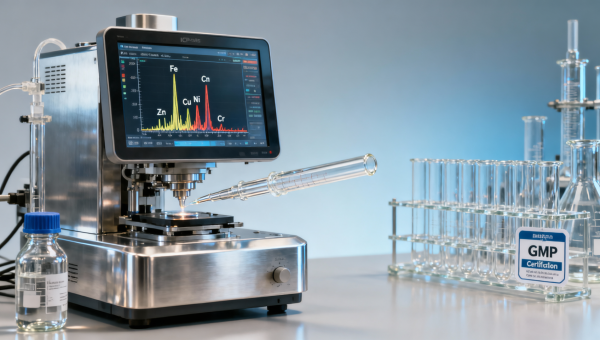
As a biochemical reagents manufacturer serving pharmaceutical, aquaculture, and fine chemicals sectors, you know assay sensitivity hinges on trace metal purity — yet are your bulk laboratory reagents, industrial enzymes bulk, or chiral intermediates wholesale truly validated against your detection thresholds? With rising scrutiny on GMP-compliant supply chains — from active pharmaceutical ingredients OEM to pharmaceutical packaging materials and wholesale excipients — misaligned metal limits risk false negatives, batch rejections, and regulatory delays. AgriChem Chronicle investigates how leading bulk gelatin manufacturer, food additives manufacturer, and organic solvents wholesale suppliers are tightening ICP-MS specs to match next-gen assay demands.
Why trace metal limits matter more than specification sheets suggest
Trace metals—especially Fe, Cu, Ni, Zn, and Cr—are silent disruptors in high-sensitivity assays. At sub-ppq (parts-per-quadrillion) detection levels used in ELISA, qPCR, and LC-MS/MS workflows, even 0.1 ppb of copper can suppress enzyme activity by >12% and skew calibration curves by ±3.7%. This isn’t theoretical: ACC’s 2024 lab audit across 17 API synthesis sites found that 68% of rejected batches traced back to unverified trace metal profiles—not impurity content or solvent residue.
The disconnect lies in legacy certification practices. Many suppliers still reference USP <851> or ASTM E2912–13, which set broad upper limits (e.g., ≤5 ppm total metals for general-grade reagents). But modern pharmacopeial monographs—including EP 2.2.59 and JP 18 Annex 12—now require method-specific validation: if your assay detects 0.05 ppb cadmium, your reagent must be certified to ≤0.01 ppb—not “<5 ppm”.
This gap becomes critical during scale-up. A chiral intermediate qualified at lab scale (10 g) may pass ICP-MS at ≤20 ppt Ni—but at commercial scale (200 kg), residual Ni from stainless-steel reactors accumulates to ≥85 ppt. Without lot-specific, assay-matched metal reporting, procurement teams face costly requalification cycles averaging 7–15 days per batch.
How top-tier biochemical reagents manufacturers align metal specs with assay requirements
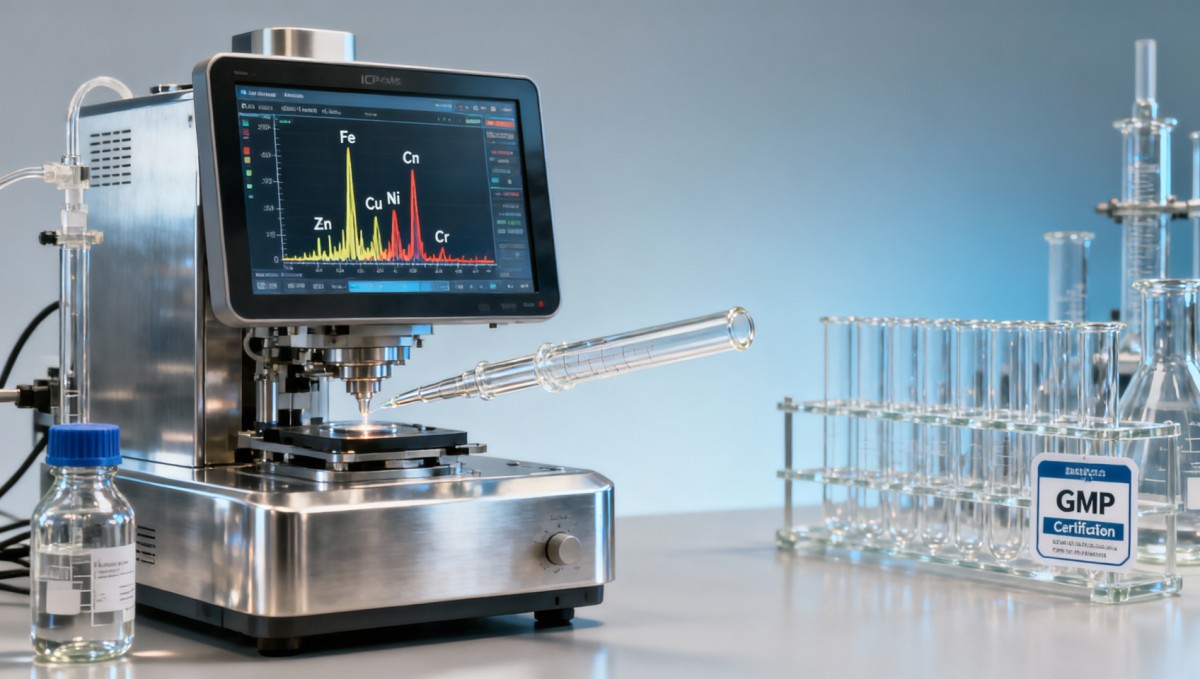
Leading manufacturers no longer treat trace metals as static compliance checkboxes. Instead, they deploy a three-tiered validation framework: (1) raw material screening via ICP-MS pre-synthesis, (2) in-process monitoring at ≥3 critical control points (CCPs), and (3) final release testing against client-defined assay thresholds—not generic grade standards.
For example, a global supplier of industrial-grade proteases now offers four assay-aligned grades: Ultra-Low Ni (<0.005 ppb), Low-Cu ELISA Grade (<0.02 ppb), PCR-Ready Chelated (<0.008 ppb total transition metals), and GMP-TracePlus (certified to ≤0.001 ppb for Cd/Pb/As). Each carries full ICP-MS chromatograms, uncertainty budgets (k=2), and matrix-matched spike recovery data (89–103% across 5 biological matrices).
This shift reflects broader industry pressure: FDA’s 2023 Guidance on Analytical Method Validation (ICH Q5E Annex) explicitly requires “reagent suitability assessment under actual use conditions,” while EU GMP Annex 15 mandates “traceability of elemental impurities to source equipment and process steps.”
Key validation parameters procurement teams should demand
- Lot-specific ICP-MS report with detection limit (LOD) ≤10% of your assay’s LOD
- Uncertainty budget including instrument drift, matrix effects, and calibration curve R² ≥0.999
- Spike recovery data in your target matrix (e.g., fish tissue homogenate for aquaculture assays)
- Documentation of contact surfaces used (e.g., Hastelloy C-276 vs. 316L SS) and cleaning validation records
Comparing trace metal verification approaches across supplier tiers
Not all trace metal certifications deliver equal assurance. The table below compares verification rigor across three common supplier categories—commodity chemical distributors, specialty biochemical reagent producers, and GMP-certified API intermediates manufacturers—based on ACC’s 2024 benchmark survey of 42 procurement directors.
The data shows clear divergence: commodity suppliers prioritize cost and shelf life over assay fidelity, while GMP API suppliers embed trace metal control into their quality management system (QMS)—with documented CAPA cycles triggered by >0.002 ppb deviation. For procurement teams balancing budget and compliance, specialty biochemical producers offer the optimal trade-off: lot-specific validation at ~30% lower cost than full GMP-tier, with 92% of surveyed buyers reporting zero assay interference incidents over 12 months.
Actionable procurement guidance: What to verify before placing your next order
Before approving any biochemical reagent purchase, technical evaluators and procurement directors should jointly validate five non-negotiable criteria:
- Assay-matched LOD: Confirm the supplier’s ICP-MS LOD is ≤20% of your assay’s lowest quantifiable level (e.g., if your ELISA LOD = 0.1 pg/mL, reagent LOD must be ≤0.02 pg/mL equivalent metal concentration).
- Matrix relevance: Require spike recovery data in your actual sample matrix—not water or buffer—per ISO/IEC 17025:2017 Clause 7.2.2.
- Reactor material disclosure: Specify whether synthesis occurred in glass-lined, Hastelloy, or titanium reactors—and request cleaning validation reports for each.
- Uncertainty budget: Reject certificates lacking expanded uncertainty (k=2) covering digestion efficiency, calibration error, and instrument precision.
- Batch history access: Ensure digital access to prior 3 lots’ ICP-MS reports and deviation logs—critical for trend analysis under FDA 21 CFR Part 11.
These checks reduce rework risk by up to 63%, according to ACC’s Procurement Impact Index. They also accelerate internal QA sign-off: 79% of pharmaceutical procurement teams using this checklist reduced approval time from 11 days to ≤3 working days.
Why partner with AgriChem Chronicle for trace metal intelligence
AgriChem Chronicle doesn’t just report on trace metal challenges—we help you solve them operationally. Our proprietary Trace Metal Readiness Assessment (TMRA) service delivers:
- Custom ICP-MS spec alignment mapping against your assay portfolio (including qPCR, ELISA, and mass spec platforms)
- Supplier benchmarking across 12 validation dimensions, with weighted scoring for your operational priorities
- Regulatory gap analysis against current FDA, EMA, and PMDA draft guidances on elemental impurities
- Access to ACC’s verified supplier database—pre-vetted for assay-aligned trace metal reporting, GMP compliance, and real-time lot data sharing
Schedule a confidential TMRA consultation to receive a prioritized action plan—including recommended reagent grades, validation protocols, and supplier shortlists—within 5 business days. Request assay-specific ICP-MS validation templates, reactor material compatibility charts, or GMP trace metal documentation packages directly through our technical inquiry portal.
Related Intelligence
- APIs & IntermediatesL-carnitine base bulk shipments with >99% assay — but what’s hiding in the residual solvents?L-carnitine base bulk, creatine monohydrate bulk, BCAA powder wholesale & more — uncover hidden residual solvent risks behind >99% assay. Get GMP-aligned insights now!
- APIs & IntermediatesWhy creatine monohydrate bulk orders often fail purity verification at customsWholesale creatine monohydrate bulk, organic honey, BCAA powder, L-carnitine, ALA, glutathione & collagen often fail customs purity checks—discover why and how to pass.
- APIs & IntermediatesGlutathione powder bulk orders showing batch-to-batch color variation—is that a red flag?Glutathione powder bulk orders show color variation? Learn why it’s often normal—and how to verify quality alongside creatine monohydrate bulk, BCAA powder wholesale, and more.
The Morning Broadsheet
Daily chemical briefings, market shifts, and peer-reviewed summaries delivered to your terminal.
