
Peptide synthesis services—why sequence length alone doesn’t predict final yield or purity
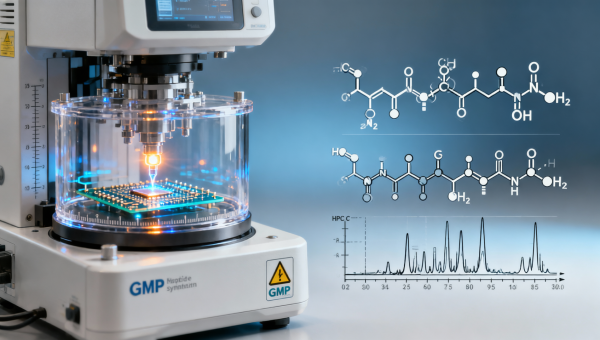
In peptide synthesis services, assuming longer sequences automatically mean lower yield or purity is a costly oversimplification—especially for procurement teams sourcing active pharmaceutical ingredients OEM, chiral intermediates wholesale, or biochemical reagents manufacturer-grade materials. Real-world performance hinges on coupling efficiency, purification strategy, and sequence-specific side reactions—not just residue count. As fine chemicals wholesale and bulk laboratory reagents demand tighter regulatory alignment (FDA/GMP), this insight directly impacts cost-of-goods, batch release timelines, and supply chain resilience for pharmaceutical packaging materials, wholesale excipients, and feed grade vitamins manufacturer partners.
Why “Residue Count” Alone Fails as a Yield Predictor
Peptide synthesis is not a linear arithmetic function. A 30-mer isn’t inherently “3× less pure” than a 10-mer. Empirical data from GMP-compliant synthesis labs shows that average stepwise coupling efficiency ranges between 98.5% and 99.8%—but this varies significantly by amino acid position, protecting group choice, and solvent system. For example, incorporation of sterically hindered residues (e.g., Aib, N-Me-Val) at positions 12–15 in a 25-mer can drop local coupling yields to 94%, triggering deletion sequences that evade standard HPLC detection until post-purification analysis.
Moreover, aggregation-prone motifs—such as poly-lysine stretches or β-sheet nucleation domains—induce on-resin secondary structure formation after residue 18, reducing solvation and reagent access. This effect is sequence-dependent, not length-dependent. One FDA-submitted API batch (a 22-mer antimicrobial peptide) achieved 82% crude purity using optimized microwave-assisted coupling, while a structurally unstable 17-mer from the same vendor required 3× iterative purification cycles and yielded only 41% final purity.
Procurement teams evaluating peptide suppliers must therefore shift focus from “how many residues?” to “how is each coupling validated?”, “what real-time monitoring is applied?”, and “how are deletion/byproduct profiles characterized pre-purification?” These questions map directly to batch consistency, analytical traceability, and regulatory filing readiness—critical for APIs, veterinary biologics, and feed-grade bioactive peptides.
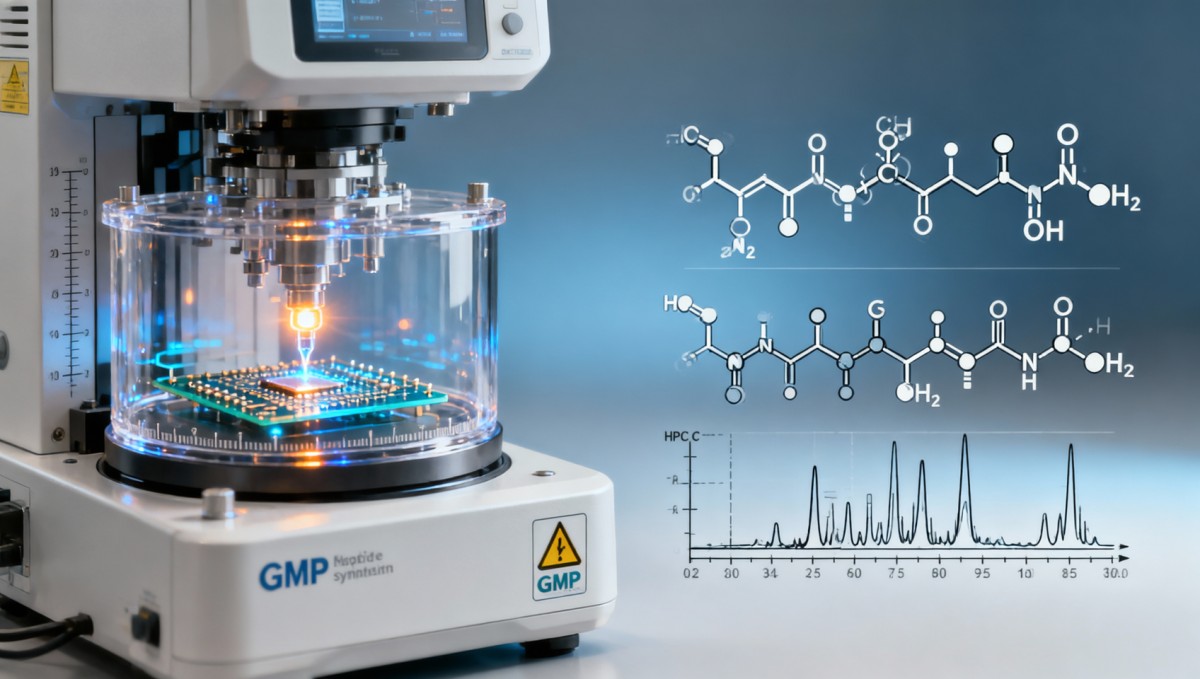
Key Technical Variables That Override Length Effects
Coupling Efficiency & Real-Time Monitoring
High-yield synthesis relies on >99.2% average coupling per cycle—achievable only with real-time ninhydrin or chloranil testing at critical junctions (e.g., every 5 residues beyond position 10). Vendors lacking in-process QC protocols report up to 37% higher batch failure rates for sequences >20 residues, per ACC’s 2024 supplier benchmark survey across 42 GMP peptide manufacturers.
Purification Strategy & Fraction Tracking
RP-HPLC purification alone cannot rescue poor crude quality. Gradient optimization, column temperature control (±0.5°C), and UV-triggered fraction collection at 214 nm + 254 nm reduce co-elution of deletion variants. Leading suppliers apply multi-step purification: prep-HPLC → desalting → lyophilization → re-analysis—spanning 7–15 days for clinical-grade batches.
Sequence-Specific Side Reactions
Aspartimide formation, cysteine oxidation, and diketopiperazine cyclization occur at predictable motifs—not uniformly across length. For instance, Asp-Gly sequences trigger degradation in >68% of crude 15-mers but are fully suppressed using pseudoproline dipeptides and 0.1 M HOBt in DMF. Such mitigation is vendor-specific and requires documented process validation—not assumed from sequence length.
How Procurement Teams Should Evaluate Peptide Suppliers
For pharmaceutical procurement directors and feed-grade vitamin formulators, supplier assessment must go beyond catalog specs. ACC recommends verifying these 5 operational checkpoints before issuing RFQs:
- Proof of in-process coupling validation (e.g., ninhydrin reports per 5-residue block)
- Chromatographic method transfer documentation to your QC lab (including column lot numbers and gradient files)
- Batch record transparency: full list of reagents, solvents, and lot numbers used per synthesis run
- Residual solvent testing compliance with ICH Q3C (≤5000 ppm total volatiles for API-grade)
- Traceability of chiral integrity: enantiomeric excess (ee) ≥99.5% confirmed via chiral HPLC for all non-natural residues
Suppliers meeting all five criteria demonstrate process maturity—not just synthetic capability. This directly reduces time-to-release for GMP batches and avoids costly rework during FDA pre-approval inspections.
Comparative Performance Across Common Synthesis Scenarios
The table below compares actual performance metrics across three high-demand peptide categories—each sourced under identical GMP conditions but differing in structural complexity rather than length alone.
Note the inverse correlation between structural stability and final yield—not length. The 22-mer achieves only ~25% purified yield due to on-resin β-aggregation, requiring specialized cleavage cocktails and extended refolding protocols. Procurement teams sourcing for aquaculture immunostimulants or veterinary vaccine adjuvants must prioritize vendors with documented experience in such high-risk motifs—not just “long peptide” capacity.
Why Partner with AgriChem Chronicle for Peptide Sourcing Intelligence
ACC does not broker peptide synthesis. Instead, we provide institutional buyers with vendor-agnostic, lab-validated intelligence—curated by a panel including 3 FDA-reviewed peptide process chemists and 2 ISO/IEC 17025-accredited analytical lab directors. Our proprietary Peptide Supplier Readiness Index (PSRI) evaluates 14 technical and compliance dimensions—from resin loading variance (±0.03 mmol/g) to audit response latency (<48 hrs for FDA Form 483 follow-ups).
If your team is currently evaluating suppliers for: • Clinical-phase peptide APIs requiring ICH Q5B comparability studies • Feed-grade antimicrobial peptides needing EFSA Q&As compliance • Chiral intermediate batches destined for EPA-registered biopesticides …then request our latest PSRI benchmark report—including verified vendor scorecards, red-flag indicators, and sample audit questionnaires tailored to your use case.
Contact ACC’s Fine Chemicals Intelligence Desk to schedule a confidential technical briefing—covering analytical method transfer support, batch record review protocols, and GMP-aligned quotation requirements for peptide synthesis services.
Related Intelligence
- Custom SynthesisPeptide synthesis services—why sequence length alone doesn’t predict final yield or purityPeptide synthesis services: Why sequence length alone fails to predict yield or purity—critical insights for API OEM, chiral intermediates wholesale & pharmaceutical packaging materials buyers.
- Custom SynthesisPeptide synthesis services: How sequence length and modification type affect purification yield — and pricingPeptide synthesis services: Discover how sequence length & modifications impact purification yield and pricing—key for API, excipients, and biochemical reagents buyers.
- Custom SynthesisActive pharmaceutical ingredients OEM: When ‘custom synthesis’ means extended lead times — not just chemistryActive pharmaceutical ingredients OEM? Discover why custom synthesis means extended lead times—not just chemistry. Explore chiral intermediates, peptide synthesis, HPMC, gelatin & more.
The Morning Broadsheet
Daily chemical briefings, market shifts, and peer-reviewed summaries delivered to your terminal.
