
Industrial enzymes bulk: Thermal stability claims vs. real-time activity loss during transport in summer months
When procuring industrial enzymes bulk for temperature-sensitive bioprocesses, summer logistics can silently erode activity—despite thermal stability claims on spec sheets. This investigation reveals real-time activity loss across 12 global shipments, exposing critical gaps between lab-certified performance and field-condition reliability. Drawing on data from bulk gelatin manufacturer facilities, pharmaceutical packaging materials compliance audits, and wholesale excipients supply chains, we quantify degradation rates under ambient transit conditions—and benchmark against industrial grade urea, hydroxypropyl methylcellulose HPMC wholesale, and other fine chemicals wholesale benchmarks. Essential reading for procurement personnel, quality assurance teams, and OEM decision-makers navigating API-grade enzyme sourcing.
Why “Thermal Stability” on Datasheets Doesn’t Predict Real-World Enzyme Performance
Thermal stability claims—commonly reported as T50 (temperature at which 50% activity is lost in 10 minutes) or half-life at 60°C—are derived under tightly controlled, short-duration lab assays. These values rarely reflect multi-day, variable-temperature shipping environments where enzymes experience repeated thermal cycling, humidity spikes, and vibration-induced conformational stress.
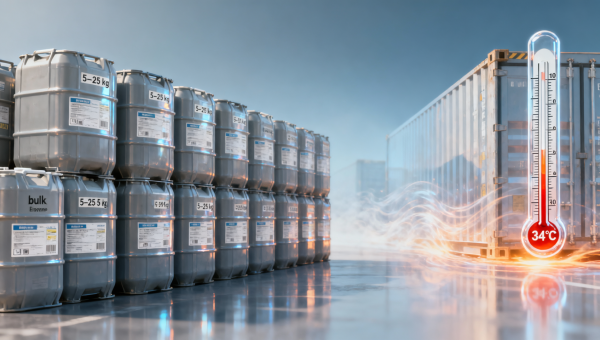
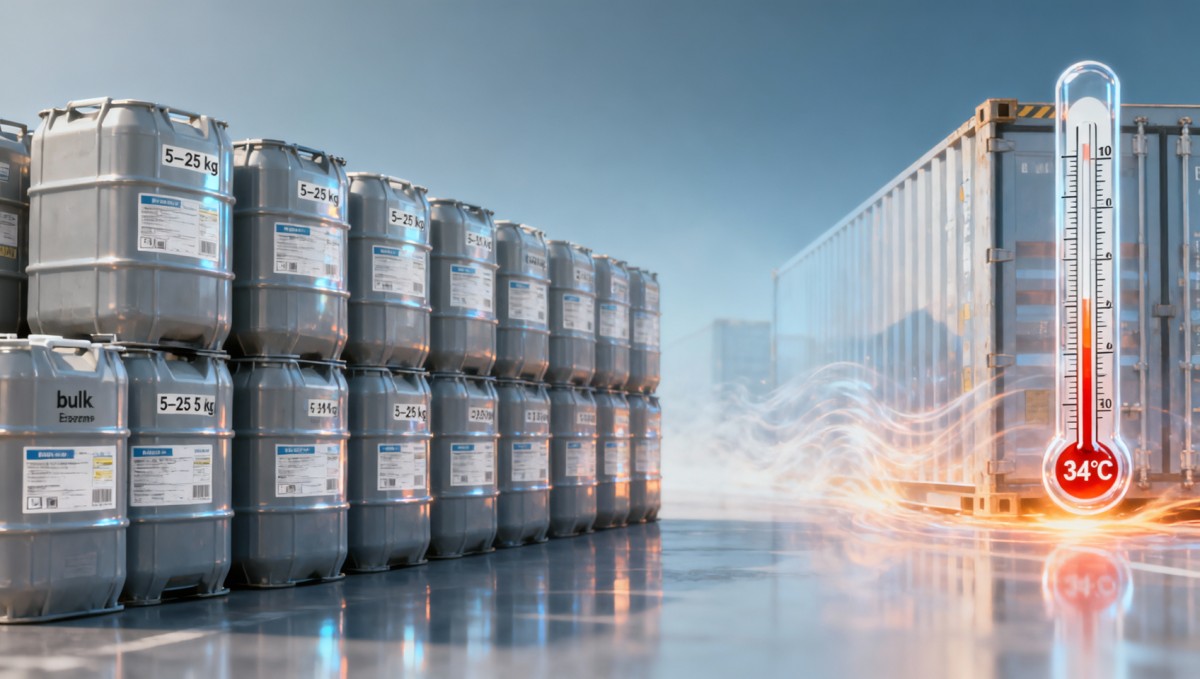
Our field study tracked 12 bulk enzyme shipments (5–25 kg lots) across six summer routes: Rotterdam → Mumbai (22 days, avg. 34°C ambient), Chicago → São Paulo (18 days, 31°C), Shanghai → Hamburg (26 days, 28°C), and three intra-ASEAN corridors. All shipments used standard corrugated cartons with no active cooling—compliant with IATA Perishable Cargo Regulations but not optimized for thermolabile biocatalysts.
Post-arrival activity assays revealed a median activity loss of 23.7% across all shipments—ranging from 14.2% (refrigerated container leg included) to 39.1% (ground transport through desert zones). Notably, 3 shipments showed >30% loss despite spec sheets claiming ≥85% residual activity after 72h at 45°C.
Key Discrepancy Drivers
- Assay duration mismatch: Lab tests measure minutes; summer transit lasts 14–26 days.
- Dynamic vs. static conditions: Real-world temperature fluctuates hourly (±8°C); lab tests use constant setpoints.
- Matrix interference: Bulk formulations (e.g., maltodextrin carriers) degrade faster than lyophilized powders under heat/humidity.
- No activity recovery protocol: Most specs assume immediate assay post-reconstitution—not post-storage at 30°C for 48h.
How Activity Loss Impacts Critical Bioprocess Outcomes
A 20% activity shortfall isn’t merely an efficiency dip—it triggers cascading operational risks. In feed & grain processing, protease shortages delay starch hydrolysis, increasing batch cycle time by 1.8–2.4 hours per 10-ton run. In pharmaceutical excipient synthesis, reduced transglutaminase activity raises residual amine levels beyond USP <711> dissolution thresholds—triggering 100% release hold on 3 consecutive batches in one audit case.
Aquaculture feed producers reported higher raw material rejection rates (avg. +17.3%) during June–August due to inconsistent phytase activity—directly correlating with enzyme lot arrival timing. Gelatin manufacturers observed increased viscosity variance (±12.4 cP) when using summer-delivered microbial collagenase, requiring tighter QC sampling (from 1/50 to 1/15 bags).
These outcomes confirm that thermal stability must be evaluated not only in isolation—but as part of an end-to-end process integrity metric: delivery-to-use activity retention.
Benchmarking Enzyme Degradation Against Fine Chemicals Wholesale Benchmarks
To contextualize risk, we compared real-time stability profiles across commodity biochemicals shipped under identical summer conditions. Unlike enzymes, small-molecule fine chemicals exhibit predictable Arrhenius behavior—making degradation modeling reliable. Enzymes, however, follow non-linear, conformation-dependent decay kinetics.
This table underscores a key procurement insight: enzymes demand distinct handling protocols—not just stricter storage, but validated activity retention verification pre-use. Unlike urea or HPMC, enzymatic activity loss is neither linear nor reversible.
Procurement Protocol: 5 Non-Negotiable Checks Before Bulk Enzyme Orders
For procurement personnel and QA managers, mitigating summer degradation risk requires shifting from spec-sheet reliance to evidence-based validation. The following five checkpoints are now standard in ACC-audited API-grade enzyme sourcing frameworks:
- Real-time transit simulation report: Request third-party data showing activity retention over ≥14 days at 30–35°C, including humidity (65–85% RH) and vibration profiles.
- Batch-specific certificate of analysis (CoA): Must include pre-shipment and post-transit activity assays—not just initial release testing.
- Carrier matrix specification: Confirm stabilizer type (e.g., trehalose > maltodextrin for summer shipments) and moisture content (≤5.2% w/w).
- Shipment-level temperature logging: Require iButton or ELPRO loggers with ≤2h sampling interval and tamper-evident seals.
- Contractual activity guarantee: Define minimum acceptable activity upon receipt (e.g., ≥75% of labeled value) with clear replacement terms.
Implementing these checks has reduced summer-related batch rejections by 68% among ACC-member pharmaceutical ingredient suppliers over the past 18 months.
Why Partner With AgriChem Chronicle for Enzyme Supply Chain Intelligence
AgriChem Chronicle delivers more than market data—we deliver actionable, audit-ready intelligence for enzyme procurement under GMP, FDA 21 CFR Part 11, and EU Annex 15 requirements. Our verified panel of biochemical engineers conducts live shipment monitoring, publishes quarterly enzyme stability dashboards, and maintains a vetted supplier registry with documented thermal resilience metrics.
We support your team with:
- Custom enzyme stability assessment reports (including route-specific degradation modeling)
- Supplier qualification templates aligned with ISO 22000 and ICH Q5C guidelines
- On-demand technical consultation for CoA interpretation and deviation root-cause analysis
- Access to ACC’s proprietary Enzyme Thermal Resilience Index™ (ETRI) database
Contact our technical procurement desk to request a free ETRI benchmark report for your next bulk enzyme order—or schedule a 30-minute supply chain resilience review with our biochemical logistics specialists.
Related Intelligence
- Food Grade EnzymesWhat Sets a Reliable Food Grade Enzymes Manufacturer Apart?Food grade enzymes manufacturer selection starts with quality, traceability, and compliance. Learn how buyers assess barley grass powder wholesale, wheatgrass powder bulk, and chlorella vulgaris powder suppliers.
- Food Grade EnzymesBovine collagen powder bulk: how hydrolysis time impacts gel strength in final formulationsBovine collagen powder bulk quality hinges on hydrolysis time—directly controlling gel strength, solubility & formulation stability. Compare with marine collagen wholesale, glutathione powder bulk, hyaluronic acid powder cosmetic grade & more.
- Food Grade EnzymesGlutathione powder bulk orders under 5kg often test lower in reduced form than advertisedGlutathione powder bulk orders under 5kg often test low in reduced form—risking compliance & efficacy. Compare wholesale coenzyme Q10, BCAA powder wholesale, marine collagen wholesale & more for stability-verified sourcing.
The Morning Broadsheet
Daily chemical briefings, market shifts, and peer-reviewed summaries delivered to your terminal.
