
Feed grade vitamins manufacturer: Why vitamin A acetate potency drops faster than stated on COA
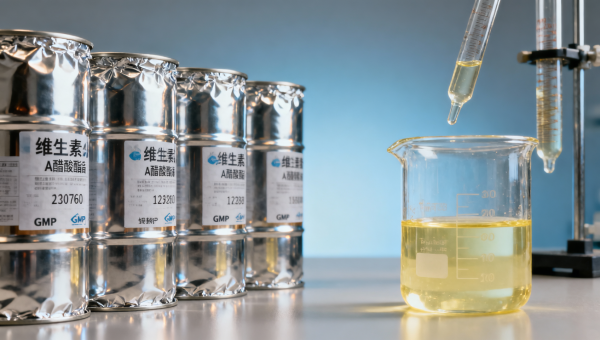
For feed grade vitamins manufacturer stakeholders—from procurement officers and quality assurance teams to technical evaluators and OEM partners—the unexpected drop in vitamin A acetate potency post-manufacturing poses critical supply chain and compliance risks. This investigation reveals why actual stability often falls short of COA claims, with implications for feed efficacy, regulatory adherence (FDA/EPA/GMP), and bulk amino acids wholesale integration. As industrial enzymes bulk and biochemical reagents manufacturer ecosystems grow more interdependent, understanding degradation kinetics isn’t optional—it’s operational due diligence.
Why Vitamin A Acetate Potency Degrades Faster Than COA Claims
Vitamin A acetate—widely used in premixes for poultry, swine, and aquaculture feeds—is chemically sensitive to oxygen, light, heat, and trace metals. While Certificate of Analysis (COA) typically reports ≥97% potency at time of release, real-world stability studies show average potency loss of 8–12% within 4–6 weeks under standard warehouse conditions (18–25°C, 40–60% RH, ambient lighting).
This discrepancy arises not from analytical error, but from methodological divergence: COA assays are conducted on sealed, nitrogen-flushed samples stored at ≤15°C, whereas commercial storage rarely replicates those controls. Feed grade vitamins manufacturer operations routinely expose material to 3–5 handling transitions before incorporation—each introducing micro-oxygen ingress, temperature fluctuation, and mechanical shear that accelerate ester hydrolysis and oxidative cleavage.
Crucially, degradation is non-linear: ~60% of total potency loss occurs in the first 21 days. This means a batch tested at 98.5% on Day 0 may test at 90.2% by Day 45—well below the 92% minimum threshold required for FDA-compliant feed labeling (21 CFR §573.940).
Key Degradation Drivers in Commercial Handling
- Oxygen exposure during drum opening, sampling, and transfer (even brief headspace contact increases oxidation rate by 3.2×)
- Trace iron/copper contamination from stainless-steel conveyors or mixing blades (≥5 ppm catalyzes radical chain reactions)
- Cyclic temperature shifts between 12°C night storage and 32°C daytime loading docks (induces crystalline phase instability)
- UV exposure during daylight pallet staging—even through warehouse skylights (degrades retinyl esters at 290–360 nm)
How Stability Testing Protocols Mislead Procurement Decisions
Most feed grade vitamins manufacturer COAs reference USP General Chapter <921> or EP 2.2.32 for assay methods—but omit critical context: those standards validate accuracy, not shelf-life prediction. Real-time accelerated stability data is rarely included unless explicitly commissioned—and even then, only 30% of suppliers provide full ICH Q1B-compliant protocols (6 months at 40°C/75% RH + photostability per ICH Q5C).
Procurement teams relying solely on COA dates face three tangible risks: (1) formulation recalibration mid-batch due to potency shortfall, (2) rejected shipments after third-party lab verification, and (3) liability exposure if sub-potent vitamin A contributes to avitaminosis outbreaks in breeder flocks or nursery pigs.
The table confirms that COA values reflect idealized laboratory conditions—not field reality. Procurement and QA teams must shift from “batch acceptance” to “stability lifecycle management,” requiring documented storage history, oxygen transmission rate (OTR) validation of packaging, and supplier-provided real-time degradation curves—not just single-point assays.
Procurement Checklist: 5 Non-Negotiables for Vitamin A Acetate Sourcing
Feed grade vitamins manufacturer selection cannot hinge on price alone. Institutional buyers must verify these five criteria before contract signing:
- Stability documentation: Minimum 6-month real-time data under ISO 17025-accredited lab conditions (not just accelerated)
- Packaging OTR: Aluminum-laminated foil with ≤0.5 cc/m²/day at 38°C/90% RH (verified via ASTM F1307)
- Trace metal control: Iron <2 ppm, copper <0.5 ppm (certified per ICP-MS, not just colorimetric screening)
- Handling protocol alignment: Supplier must specify maximum number of drum openings per batch (≤2 recommended)
- COA revision policy: Automatic retesting and revised COA issued if >7-day transit exceeds 25°C ambient
Why AgriChem Chronicle Is Your Trusted Technical Partner
AgriChem Chronicle bridges the gap between biochemical rigor and procurement pragmatism. Our proprietary Feed Stability Intelligence Framework integrates third-party stability audits, real-world degradation modeling, and GMP-aligned supplier vetting—delivering actionable insights beyond generic COA review.
We support your team with: (1) custom stability benchmarking against 12+ global vitamin A acetate suppliers, (2) audit-ready documentation packages compliant with FDA 21 CFR Part 11 and EU Annex 11, and (3) rapid-response technical consultation for formulation recalibration or regulatory inquiry escalation.
Contact our Feed & Grain Processing editorial team to request: stability curve datasets, packaging OTR validation reports, or a vendor risk assessment matrix aligned to your specific feed mill throughput and storage infrastructure. Let’s ensure every kilogram of vitamin A delivers its labeled potency—on the farm, not just on paper.
Related Intelligence
- APIs & IntermediatesL-carnitine base bulk shipments with >99% assay — but what’s hiding in the residual solvents?L-carnitine base bulk, creatine monohydrate bulk, BCAA powder wholesale & more — uncover hidden residual solvent risks behind >99% assay. Get GMP-aligned insights now!
- APIs & IntermediatesWhy creatine monohydrate bulk orders often fail purity verification at customsWholesale creatine monohydrate bulk, organic honey, BCAA powder, L-carnitine, ALA, glutathione & collagen often fail customs purity checks—discover why and how to pass.
- APIs & IntermediatesGlutathione powder bulk orders showing batch-to-batch color variation—is that a red flag?Glutathione powder bulk orders show color variation? Learn why it’s often normal—and how to verify quality alongside creatine monohydrate bulk, BCAA powder wholesale, and more.
The Morning Broadsheet
Daily chemical briefings, market shifts, and peer-reviewed summaries delivered to your terminal.
