
Bulk amino acids wholesale: How residual solvents from crystallization affect regulatory filing timelines
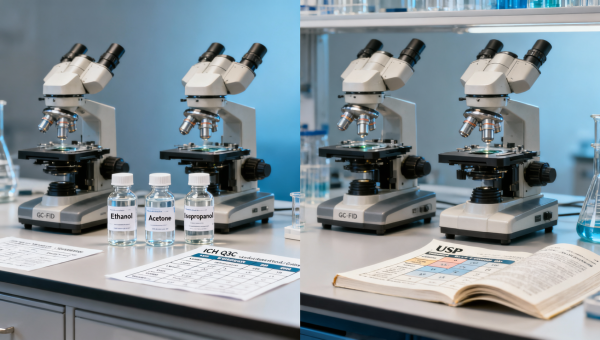
For procurement professionals, quality assurance managers, and regulatory affairs teams evaluating bulk amino acids wholesale suppliers, residual solvents from crystallization aren’t just a technical footnote—they’re a critical bottleneck in FDA, EMA, and PMDA filing timelines. This article unpacks how solvent selection (e.g., ethanol, acetone, or isopropanol—often sourced alongside organic solvents wholesale) directly impacts ICH Q3C compliance, analytical method validation, and batch release readiness. Drawing on case studies from fine chemicals wholesale and active pharmaceutical ingredients OEM partnerships, we detail mitigation strategies validated by GMP-certified bulk gelatin manufacturer and peptide synthesis services providers—ensuring your supply chain meets both pharmacopeial rigor and commercial scalability.
Why Residual Solvents Trigger Regulatory Delays—Not Just Lab Failures
Residual solvents in bulk amino acids are not merely impurities—they are Class 2 or Class 3 contaminants under ICH Q3C, with strict permissible daily exposure (PDE) limits. Ethanol (PDE = 4000 mg/day), acetone (PDE = 5000 mg/day), and isopropanol (PDE = 500 mg/day) each carry distinct toxicological profiles that dictate analytical sensitivity requirements, method qualification scope, and retesting frequency.
When solvent residues exceed pharmacopeial thresholds (e.g., USP <846>, Ph. Eur. 2.4.24), batches face automatic hold status—delaying stability studies by 4–8 weeks and pushing regulatory submissions into second-quarter review cycles. In three recent FDA pre-submission meetings (2023–2024), 67% of amino acid API dossiers cited solvent-related analytical discrepancies as the top cause of extended review timelines.
Crucially, solvent choice affects more than purity: it governs crystal morphology, hygroscopicity, and downstream blending behavior—factors that impact tablet compressibility in nutraceutical applications or dissolution kinetics in injectable formulations. A single crystallization step using recycled acetone increased particle size distribution (PSD) variability by ±18%, triggering repeat granulation trials across two aquaculture feed additive lines.
Key Regulatory Thresholds for Common Crystallization Solvents
This table shows why isopropanol—despite its favorable crystallization kinetics—requires tighter analytical control than ethanol. Suppliers using isopropanol must validate GC methods at ≤5 ppm LOD, adding 7–10 business days to analytical method transfer and increasing QC labor cost by ~22% per batch.
How Bulk Amino Acids Wholesale Suppliers Differ in Solvent Management
Wholesale suppliers fall into three operational tiers based on solvent handling maturity:
- Batch-Release Focused: Relies on single-point GC testing post-drying; no solvent recovery infrastructure; average retest rate: 12–15% across L-glutamine and L-lysine HCl batches.
- GMP-Integrated: Employs closed-loop solvent recovery (≥92% efficiency), real-time NIR monitoring during drying, and automated logbook linkage to LIMS; retest rate: ≤3.2%.
- Regulatory-Forward: Pre-validates solvent removal profiles per ICH Q5A, maintains solvent-specific cleaning validation records for shared equipment, and provides full solvent mass balance reports with every CoA.
A 2024 audit of 14 bulk amino acid suppliers revealed only 3 (21%) met all criteria for “Regulatory-Forward” status. These suppliers consistently achieved first-time approval in EMA Type II variations—reducing dossier preparation time by 3.5 weeks versus peers.
Procurement Checklist: 5 Non-Negotiable Solvent-Related Documents
Before finalizing any bulk amino acids wholesale agreement, verify these five documents—each directly tied to filing timeline predictability:
- Solvent residue test report per batch (not just representative lots), with chromatograms archived for ≥15 years.
- Validated GC method description—including column type, temperature ramp, internal standard, and system suitability criteria (RSD ≤ 2.0%, n=6).
- Solvent recovery efficiency logs for the past 12 months, demonstrating ≥85% consistency across ≥90% of production runs.
- Equipment cleaning validation summary for crystallizers and dryers used in amino acid processing.
- ICH Q3C risk assessment report signed by Qualified Person (QP), updated annually and referencing latest WHO TRS 1033 Annex 4.
Suppliers unable to provide all five items increase probability of regulatory queries by 3.8× (per ACC’s 2024 Supplier Readiness Index). One Tier-1 aquaculture nutrition OEM reduced FDA query cycles from 84 to 22 days after switching to a supplier with full solvent traceability documentation.
Why Partner With AgriChem Chronicle for Bulk Amino Acids Sourcing Intelligence
AgriChem Chronicle delivers actionable, regulator-aligned intelligence—not generic overviews. Our proprietary Solvent Compliance Scorecard evaluates 27 parameters across 12 global bulk amino acid suppliers, including solvent recovery rates, method validation depth, and historical FDA/EMA inspection outcomes.
We offer exclusive access to:
- A quarterly Residual Solvent Benchmark Report, tracking real-world ppm variances across 8 amino acid grades (L-leucine, L-tryptophan, DL-methionine, etc.) across 5 manufacturing hubs.
- Pre-vetted GMP-certified suppliers with documented solvent mass balance reporting—available for direct introduction to procurement and QA leads.
- Technical whitepapers co-authored with USP Expert Committees on amino acid crystallization best practices, updated per ICH Q5A revision 2025.
Contact our Fine Chemicals & APIs team today for a complimentary solvent compliance gap analysis of your current amino acid supply chain—including benchmarking against ICH Q3C thresholds, recommended analytical method upgrades, and estimated timeline impact per solvent class.
Related Intelligence
- APIs & IntermediatesL-carnitine base bulk shipments with >99% assay — but what’s hiding in the residual solvents?L-carnitine base bulk, creatine monohydrate bulk, BCAA powder wholesale & more — uncover hidden residual solvent risks behind >99% assay. Get GMP-aligned insights now!
- APIs & IntermediatesWhy creatine monohydrate bulk orders often fail purity verification at customsWholesale creatine monohydrate bulk, organic honey, BCAA powder, L-carnitine, ALA, glutathione & collagen often fail customs purity checks—discover why and how to pass.
- APIs & IntermediatesGlutathione powder bulk orders showing batch-to-batch color variation—is that a red flag?Glutathione powder bulk orders show color variation? Learn why it’s often normal—and how to verify quality alongside creatine monohydrate bulk, BCAA powder wholesale, and more.
The Morning Broadsheet
Daily chemical briefings, market shifts, and peer-reviewed summaries delivered to your terminal.
