
What Sets a Reliable Food Grade Enzymes Manufacturer Apart?
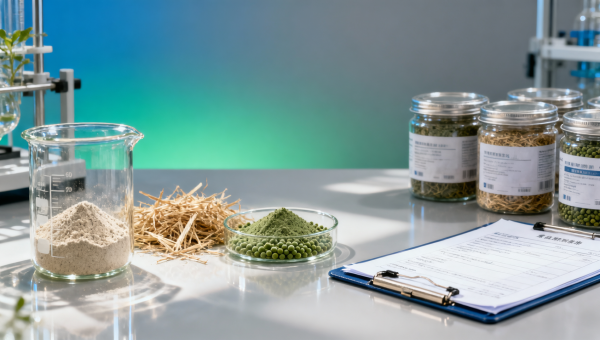
Choosing a reliable food grade enzymes manufacturer goes far beyond price. Buyers evaluating ingredients such as barley grass powder wholesale, wheatgrass powder bulk, or chlorella vulgaris powder need verified quality systems, traceable sourcing, and regulatory consistency. This article outlines the core signals that help procurement, technical, and quality teams identify dependable partners in today’s tightly controlled global ingredients market.
In practice, the selection process affects far more than unit cost per kilogram. It influences product stability, audit readiness, recall exposure, formulation consistency, and even downstream market access. For procurement managers, technical evaluators, operators, and safety teams, a dependable supplier is one that can perform consistently over 12-month to 36-month sourcing cycles, not only during sample approval.
Food grade enzymes are often assessed alongside other sensitive bio-based ingredients because they share the same core procurement concerns: controlled manufacturing, contamination prevention, validated specifications, and transparent documentation. That is why the evaluation framework used for enzyme manufacturers is also highly relevant when sourcing plant powders, algae ingredients, fermentation-derived actives, and other regulated food or nutraceutical inputs.
Why manufacturer reliability matters in food ingredient sourcing
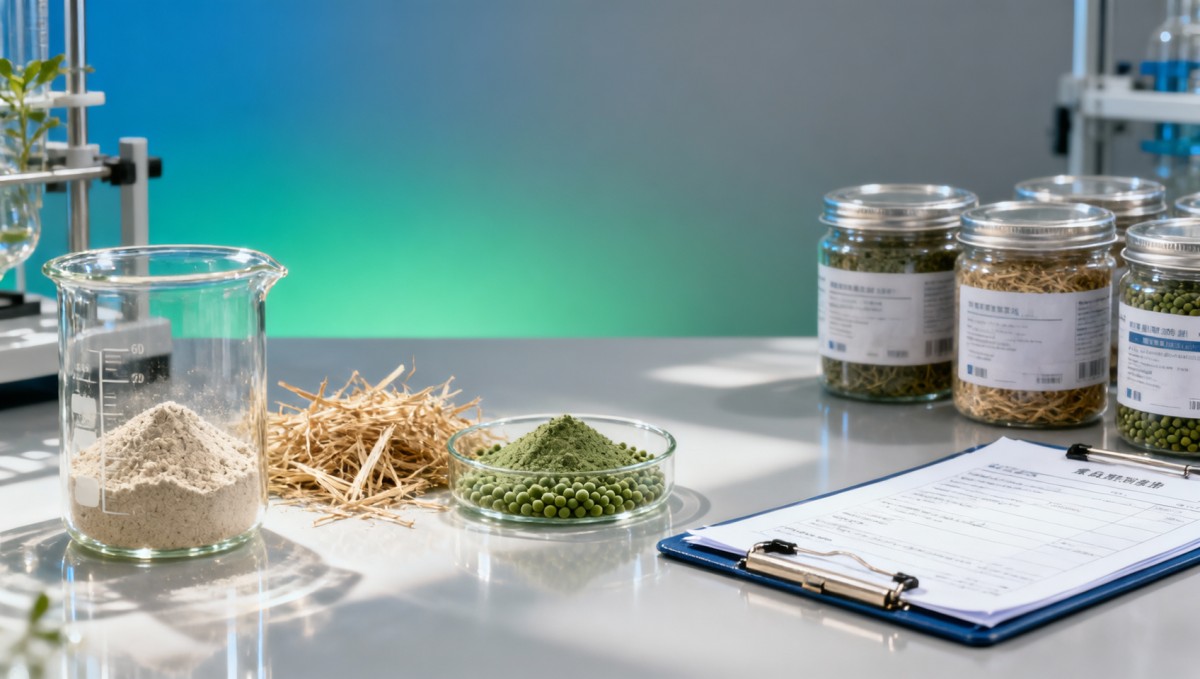
A reliable food grade enzymes manufacturer protects buyers from hidden operational risks. Enzymes are functional ingredients, so even small variation in activity level, moisture, microbial load, or carrier composition can alter production performance. In a commercial setting, a deviation of 5% to 10% in activity may affect dosage, process efficiency, and final batch consistency.
This is especially important for companies handling powdered botanical or algae ingredients such as barley grass powder wholesale, wheatgrass powder bulk, and chlorella vulgaris powder. Although these products differ from enzymes in function, buyers often expect the same level of traceability, allergen control, and contaminant screening. A supplier unable to manage one category rigorously is unlikely to perform well across the broader ingredient portfolio.
Reliability also matters because cross-border ingredient trade is documentation-heavy. Typical purchasing decisions require 6 to 10 document types, including specification sheets, certificates of analysis, allergen statements, microbiological limits, country-of-origin declarations, and packaging details. Missing or inconsistent paperwork can delay customs clearance by 7 to 21 days.
For technical and quality teams, the right manufacturer is not simply a factory with output capacity. It is a partner that can explain process controls, lot segregation, cleaning validation, and shelf-life rationale. When a supplier can provide clear answers within 24 to 72 hours, the buyer’s internal approval process becomes faster and far less risky.
Core business risks of choosing the wrong supplier
- Batch inconsistency that forces rework, reformulation, or dosage adjustment during production.
- Incomplete traceability that creates exposure during audits, recalls, or customer complaints.
- Variable lead times, especially when normal delivery shifts from 2–4 weeks to 6–8 weeks without planning visibility.
- Insufficient contaminant control for heavy metals, pathogens, residual solvents, or undeclared allergens.
What procurement and technical teams usually compare first
The table below shows the factors most commonly reviewed during the first-stage screening of a food grade enzymes manufacturer. These same screening points are often used when evaluating adjacent ingredients from plant or algae supply chains.
The key takeaway is that reliability begins with process discipline. A supplier with strong paperwork but weak production control is still a supply risk. Conversely, a factory with technical capability but poor documentation may struggle to support regulated export markets and enterprise procurement systems.
Manufacturing and quality systems that signal dependability
One of the clearest ways to assess a food grade enzymes manufacturer is to review how quality is built into production rather than inspected at the end. Strong manufacturers typically manage control points across raw material intake, fermentation or extraction, drying, blending, packing, and release. In many ingredient operations, this means at least 5 to 8 documented checkpoints before shipment.
For ingredients such as barley grass powder wholesale or wheatgrass powder bulk, this same logic applies. Buyers should ask whether the manufacturer controls agricultural intake variability, particle size consistency, moisture range, and microbial limits. A quality system is dependable only when it covers both biological complexity and operational repeatability.
A useful indicator is whether the supplier can explain acceptance criteria in measurable terms. Examples include moisture targets such as 4% to 8%, total plate count thresholds, mesh size distribution, pH range, or enzyme activity tolerance per lot. Vague claims like “stable quality” are far less useful than documented release windows and deviation handling procedures.
Quality teams should also check retention sample practices and complaint response timelines. In well-run operations, retained samples are archived for the stated shelf-life or longer, and preliminary quality investigations often begin within 24 to 48 hours of a reported issue. That speed matters when a production line or customer shipment is on hold.
Operational markers of a mature quality system
- Incoming material verification with identity, contamination, and traceability review before release to production.
- In-process monitoring that captures temperature, time, pH, moisture, or activity at defined intervals.
- Documented cleaning and segregation procedures to reduce cross-contact risk across product families.
- Final lot release supported by test results, packaging checks, and labeling confirmation.
Questions a technical auditor should ask
Ask how many batches are reviewed before a new process parameter is accepted, what deviation trend triggers corrective action, and how often equipment calibration is performed. For many facilities, calibration cycles fall within monthly, quarterly, or annual schedules depending on instrument criticality. The point is not the exact interval, but whether the system is defined and followed.
Another practical test is to request a redacted batch record or a mock traceability exercise. If the supplier can trace one finished lot back to key raw material lots and forward to shipment records within 2 to 4 hours, it usually indicates stronger data discipline and recall preparedness.
Traceability, sourcing transparency, and regulatory readiness
Traceability is often the dividing line between a usable supplier and a strategic supplier. For food grade enzymes and adjacent bio-ingredients, buyers need to know where inputs come from, how they are processed, and whether lot identity remains intact from intake to dispatch. In a practical sense, traceability should cover at least 1 step back to source materials and 1 step forward to distribution records, with stronger systems covering every internal process stage.
This issue becomes even more important when sourcing products with natural origin variability, including chlorella vulgaris powder and cereal grass powders. Agricultural inputs can shift by season, geography, and harvest condition. A dependable manufacturer compensates through supplier qualification, incoming testing, and clear blending or standardization rules rather than leaving variation unmanaged.
Regulatory readiness also extends beyond having certificates on file. Buyers should assess whether documents are current, lot-linked, and consistent across commercial orders. For example, if allergen statements, heavy metal limits, or microbiology specifications change without formal notice, both procurement and quality approval can break down quickly.
Well-prepared manufacturers usually maintain documentation packages that can be assembled in 1 to 3 business days for new buyers. Slower response may not always mean poor quality, but it often signals weak internal coordination among quality assurance, regulatory, and export teams.
Documentation checkpoints before supplier approval
The following table summarizes what different stakeholder groups usually need before approving a food grade enzymes manufacturer or a supplier of comparable functional ingredients.
This comparison shows that supplier approval is multidimensional. A manufacturer that satisfies technical requirements but cannot support procurement planning or quality documentation will still slow commercial onboarding. The best partners align across all three functions instead of optimizing only one.
Common transparency gaps to watch for
- Country-of-origin statements that name only export country, not source region or processing origin.
- Specifications that list wide acceptance ranges without explaining target values or standardization methods.
- No documented change notification policy for packaging, process aids, or production site changes.
- Lot codes that cannot be linked clearly to manufacturing date, raw material input, or release records.
Commercial performance: lead times, communication, and supply continuity
Reliability is tested most clearly after the first purchase order. A strong food grade enzymes manufacturer should communicate realistic lead times, not only best-case estimates. In many ingredient categories, regular lead times fall within 2 to 6 weeks depending on batch schedule, documentation review, and export routing. If a supplier repeatedly promises 10-day delivery but ships in 30 days, planning risk rises quickly.
Communication quality is another major differentiator. Procurement teams need prompt order updates, quality teams need rapid document revisions, and operators often need handling guidance on storage, reconstitution, or shelf-life management. A dependable manufacturer usually responds to standard commercial questions within 1 business day and technical questions within 2 to 3 business days.
For bulk bio-ingredients such as wheatgrass powder bulk or chlorella vulgaris powder, continuity planning matters as much as price negotiation. Seasonal fluctuations, harvest windows, and drying capacity can all affect availability. Buyers should ask whether the supplier maintains safety inventory, alternate raw material channels, or forecast-based production planning over 3-month to 6-month horizons.
Commercial discipline also includes packaging consistency. Drums, foil bags, liners, palletization, and labeling should match the purchase specification every time. Packaging errors may seem minor, but they can trigger warehouse holds, relabeling costs, or product exposure to humidity during transit.
Practical commercial checks before signing a supply agreement
- Request standard lead time, rush lead time, and average documentation preparation time separately.
- Clarify MOQ by product grade, not only by general product family.
- Confirm whether price validity lasts 30, 60, or 90 days and what triggers adjustment.
- Review packaging configuration, net weight tolerance, and storage conditions before first shipment.
How to distinguish capacity from true supply reliability
A factory may claim high monthly output, but buyers should verify usable capacity for their exact specification, packaging format, and documentation requirement. Real supply reliability depends on scheduling discipline, release testing turnaround, and logistics coordination. A smaller but organized manufacturer can outperform a larger but inconsistent one over 4 consecutive quarters.
Financial approvers and business evaluators should also look at the total cost of disruption. Even a 3% to 5% lower purchase price can become more expensive if it causes late production runs, emergency air freight, rejected lots, or additional internal testing on every shipment.
A practical supplier assessment framework for buyers and quality teams
To reduce decision friction, companies should use a structured evaluation model rather than relying on samples and price alone. A workable framework typically covers 4 dimensions: technical fit, quality assurance, commercial reliability, and transparency. Each category can be scored on a 1-to-5 scale, producing a total score out of 20 for side-by-side supplier comparison.
This method works well for food grade enzymes manufacturers and for suppliers of barley grass powder wholesale, wheatgrass powder bulk, and chlorella vulgaris powder. While product-specific testing will differ, the approval logic remains similar: can the supplier deliver a consistent, documented, commercially viable product with manageable risk over time?
A structured review is especially useful when multiple departments are involved. Procurement may prioritize price and lead time, while quality focuses on traceability and documentation, and technical teams care most about specification fit. A shared scorecard helps enterprise decision-makers compare trade-offs in a transparent way.
The final step should be a pilot order, not immediate volume commitment. Many buyers start with 1 sample phase, 1 qualification batch, and then 2 to 3 monitored commercial lots before annual supply status is granted. This staged approach gives enough operational evidence without exposing the business to unnecessary scale risk.
Suggested supplier scorecard
The scorecard below can be adapted by procurement, QA, and technical teams during supplier onboarding or annual review.
A scorecard like this prevents overreliance on price and helps identify suppliers that are commercially attractive but operationally weak. In regulated or high-volume ingredient categories, that distinction can determine whether a sourcing decision remains stable for years or becomes a recurring internal problem.
FAQ for evaluating a food grade enzymes manufacturer
How many lots should be reviewed before approving a new supplier?
A practical minimum is 2 to 3 commercial lots after the sample stage, especially when consistency matters more than one-time qualification. This gives buyers a better view of batch-to-batch stability, documentation accuracy, and delivery performance.
What matters more: certifications or actual process transparency?
Both matter, but process transparency often reveals more about daily operational reliability. A supplier should be able to explain traceability flow, deviation handling, and release criteria in practical terms, not only present certificates during sales discussions.
Can the same evaluation method apply to botanical and algae powders?
Yes. Whether sourcing food grade enzymes, barley grass powder wholesale, wheatgrass powder bulk, or chlorella vulgaris powder, buyers should review raw material control, contaminant screening, lot consistency, packaging, and supply continuity using a similar supplier risk framework.
What is a warning sign during the quotation stage?
A major warning sign is when commercial terms are offered quickly but technical documents remain incomplete or inconsistent for more than 5 to 7 business days. That imbalance often points to weak coordination between sales, QA, and operations.
A reliable food grade enzymes manufacturer stands out through measurable process control, lot-level traceability, documentation discipline, and consistent commercial execution. For organizations sourcing enzymes alongside barley grass powder wholesale, wheatgrass powder bulk, or chlorella vulgaris powder, the same principles apply: verified quality systems, transparent sourcing, and realistic supply planning reduce risk across the entire procurement cycle.
If your team is comparing suppliers, building a qualification checklist, or preparing for a new ingredient sourcing project, a structured assessment can save time, reduce approval delays, and improve long-term supply stability. Contact us to discuss your sourcing priorities, request a tailored evaluation framework, or explore more ingredient market solutions aligned with your quality and procurement goals.
Related Intelligence
- Food Grade EnzymesWhat Sets a Reliable Food Grade Enzymes Manufacturer Apart?Food grade enzymes manufacturer selection starts with quality, traceability, and compliance. Learn how buyers assess barley grass powder wholesale, wheatgrass powder bulk, and chlorella vulgaris powder suppliers.
- Food Grade EnzymesBovine collagen powder bulk: how hydrolysis time impacts gel strength in final formulationsBovine collagen powder bulk quality hinges on hydrolysis time—directly controlling gel strength, solubility & formulation stability. Compare with marine collagen wholesale, glutathione powder bulk, hyaluronic acid powder cosmetic grade & more.
- Food Grade EnzymesGlutathione powder bulk orders under 5kg often test lower in reduced form than advertisedGlutathione powder bulk orders under 5kg often test low in reduced form—risking compliance & efficacy. Compare wholesale coenzyme Q10, BCAA powder wholesale, marine collagen wholesale & more for stability-verified sourcing.
The Morning Broadsheet
Daily chemical briefings, market shifts, and peer-reviewed summaries delivered to your terminal.
