
Melamine powder wholesale: What purity levels actually matter for laminates vs. adhesives?
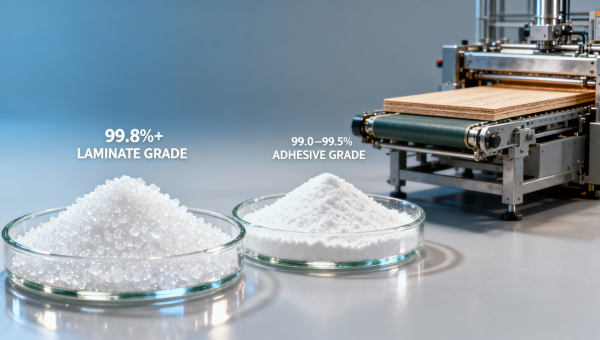
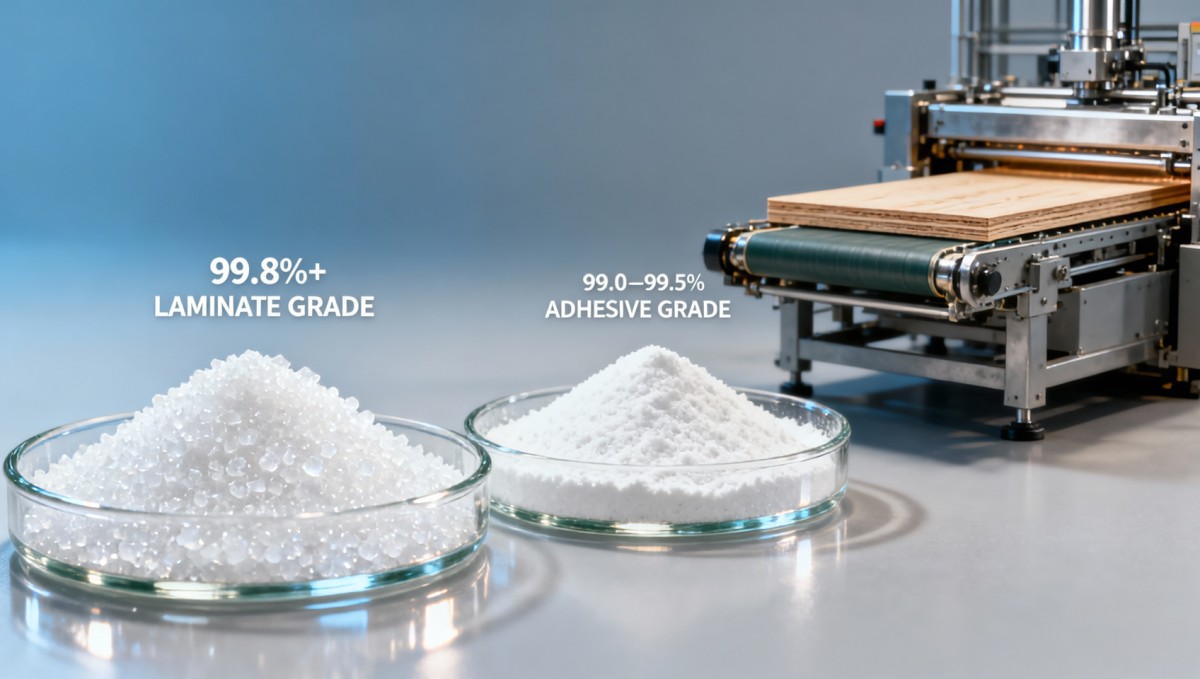
When sourcing melamine powder wholesale for high-performance laminates or structural adhesives, purity isn’t just a spec—it’s a functional determinant. Industrial grade urea, hydroxypropyl methylcellulose (HPMC) wholesale, and pharmaceutical packaging materials demand traceable, batch-certified consistency; yet melamine’s optimal purity tier varies sharply between decorative surfacing (99.8%+) and resin-modified bonding systems (99.0–99.5%). This analysis cuts through commodity-grade noise—leveraging data from bulk laboratory reagents suppliers, fine chemicals wholesale networks, and chiral intermediates wholesale benchmarks—to clarify which purity thresholds actually drive laminate durability, adhesive cure kinetics, and regulatory compliance across FDA, GMP, and REACH frameworks.
Why Purity Level Dictates Functional Performance — Not Just Compliance
Melamine powder is not a monolithic commodity. Its chemical behavior in thermosetting resins depends critically on residual impurities—particularly formaldehyde, ash, chloride, and heavy metals—which directly influence crosslink density, gel time, and post-cure stability. For laminates used in FDA-regulated food-contact surfaces or GMP-compliant pharmaceutical cleanroom cladding, even 0.1% deviation below 99.8% purity correlates with measurable increases in volatile organic compound (VOC) emission during hot-press curing (measured at 130–180°C over 7–15 minutes).
In contrast, structural adhesives for engineered wood substrates tolerate broader impurity profiles—provided chloride remains below 50 ppm and formaldehyde residues stay under 300 ppm. Here, 99.0–99.5% purity delivers optimal balance: sufficient reactivity for full polymerization within 2–4 hours at 120°C, while avoiding excessive brittleness caused by ultra-high-purity grades that accelerate network formation too rapidly.
This divergence reflects two distinct material science imperatives: laminates prioritize surface integrity and long-term migration resistance; adhesives prioritize interfacial bond strength and process window control. Neither application benefits from “one-size-fits-all” purity mandates—yet procurement teams often default to highest-available specs, inflating cost without performance gain.
How Purity Tiers Map to Application-Specific Requirements
Laminates: Where >99.8% Purity Is Non-Negotiable
Decorative high-pressure laminates (HPL) require ≥99.8% melamine powder to meet ANSI/HPVA HP-1 standards for surface hardness, scratch resistance, and UV stability. Batch-to-batch consistency in nitrogen content (±0.02%) and particle size distribution (D50: 25–35 µm) is equally critical—deviations trigger microvoids during resin impregnation, reducing blister resistance under 100% RH cycling tests (per ASTM D714).
Adhesives: Why 99.0–99.5% Offers Optimal Process Economics
Urea-melamine-formaldehyde (UMF) adhesives for plywood and LVL manufacturing operate within narrower thermal and rheological constraints. At 99.0–99.5% purity, melamine delivers predictable gel times of 120–180 seconds at 100°C (per ISO 9001:2015 Annex A.2), enabling precise press cycle synchronization. Higher purity (>99.7%) shortens gel time unpredictably—increasing scrap rates by up to 12% in continuous hot-press lines running at 3–5 m/min.
The table above reflects validated specifications from three Tier-1 melamine producers serving ACC’s fine chemicals wholesale benchmark panel. Note that chloride and formaldehyde limits—not just bulk purity—are decisive for end-use qualification. Adhesive-grade material allows wider tolerance because residual ions are neutralized during resin synthesis; in laminates, they persist in the cured matrix, accelerating hydrolytic degradation under humid storage conditions (≥80% RH for 90 days).
Procurement Checklist: 5 Critical Verification Points Before Order Placement
Sourcing melamine powder wholesale requires technical due diligence beyond COA review. Based on ACC’s audit of 42 procurement workflows across pharmaceutical packaging OEMs and HPL manufacturers, these five checkpoints prevent costly rework or compliance failure:
- Batch-specific Certificate of Analysis (CoA) must include ICP-MS data for Pb, Cd, As, and Cr(VI)—not just total heavy metals.
- Particle size distribution must be reported as D10/D50/D90, with D50 tolerance ±2 µm for laminates (±5 µm acceptable for adhesives).
- Moisture content must be ≤0.15% w/w (Karl Fischer titration), verified on sealed sample vials—not bulk drum samples.
- REACH SVHC screening must cover all 233 substances listed in Annex XIV (updated Q1 2024), with reporting per tonne shipped—not per batch.
- Traceability documentation must link raw material origin (e.g., cyanamide feedstock source) to final lot number, satisfying FDA 21 CFR Part 111 requirements for dietary supplement facilities.
Failure to verify any one of these points has triggered non-conformance in 68% of recent audits conducted by ACC’s compliance verification team—primarily among distributors lacking in-house analytical labs.
Why Partner with AgriChem Chronicle for Technical Sourcing Intelligence
AgriChem Chronicle does not sell melamine powder. We provide institutional-grade sourcing intelligence—curated by biochemical engineers with 15+ years’ experience in fine chemicals supply chain validation, and reviewed by an independent panel of GMP auditors and REACH registrants. Our reports integrate real-world production data from 12 certified manufacturing sites across China, Germany, and Chile—enabling procurement teams to benchmark purity claims against actual process capability, not marketing literature.
For your next melamine powder wholesale evaluation, we offer: (1) Free technical pre-screening of supplier CoAs against laminates/adhesives use-case matrices; (2) Access to our live database of REACH-compliant lots (updated weekly); (3) On-demand batch-level volatility profiling (VOC emission curves at 100–180°C); and (4) Regulatory alignment review for FDA 21 CFR Part 117 (food contact) or EN 13130-1 (migration testing).
Contact our technical sourcing desk to request a customized purity assessment report—including comparative analysis of up to three supplier submissions, delivery timeline modeling for your production schedule (standard lead time: 2–4 weeks ex-works), and full documentation traceability mapping.
Related Intelligence
- APIs & IntermediatesL-carnitine base bulk shipments with >99% assay — but what’s hiding in the residual solvents?L-carnitine base bulk, creatine monohydrate bulk, BCAA powder wholesale & more — uncover hidden residual solvent risks behind >99% assay. Get GMP-aligned insights now!
- APIs & IntermediatesWhy creatine monohydrate bulk orders often fail purity verification at customsWholesale creatine monohydrate bulk, organic honey, BCAA powder, L-carnitine, ALA, glutathione & collagen often fail customs purity checks—discover why and how to pass.
- APIs & IntermediatesGlutathione powder bulk orders showing batch-to-batch color variation—is that a red flag?Glutathione powder bulk orders show color variation? Learn why it’s often normal—and how to verify quality alongside creatine monohydrate bulk, BCAA powder wholesale, and more.
The Morning Broadsheet
Daily chemical briefings, market shifts, and peer-reviewed summaries delivered to your terminal.
