
Melamine powder wholesale: What purity levels actually matter for laminates vs. adhesives?
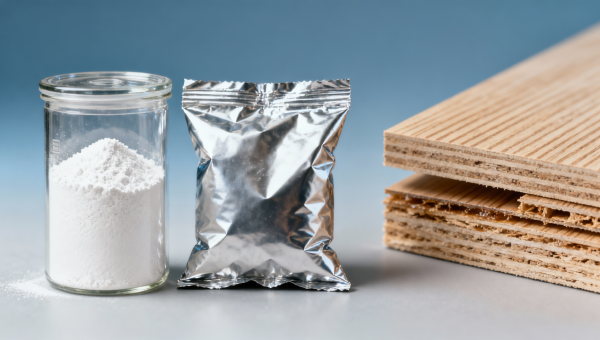
Sourcing melamine powder wholesale for laminates or adhesives demands more than volume—it requires precision in purity grading aligned with end-use performance and regulatory compliance. Unlike industrial grade urea or pharmaceutical packaging materials, melamine’s functional efficacy hinges on trace metal content, moisture levels, and polymerization readiness—factors that diverge sharply between decorative laminate bonding and structural adhesive formulation. As fine chemicals wholesale buyers—from technical evaluators to procurement directors—navigate tightening GMP and EPA requirements, understanding which purity thresholds actually drive ROI (not just specs) is critical. This analysis cuts through generic supplier claims to map actionable purity benchmarks across applications, backed by ACC’s verified biochemical engineering insights.
Why Purity Isn’t One-Size-Fits-All: The Functional Divide Between Laminates and Adhesives
Melamine powder serves two distinct high-value roles in primary processing: as a crosslinking agent in thermosetting decorative laminates (e.g., HPL for countertops), and as a reactive monomer in formaldehyde-based structural adhesives (e.g., plywood or particleboard binders). These applications impose fundamentally different chemical demands—notably in reactivity kinetics, thermal stability, and impurity tolerance.
In laminates, melamine must polymerize uniformly under controlled heat and pressure (typically 130–170°C, 3–7 MPa) without discoloration or gas evolution. Trace iron or copper ions (>5 ppm) catalyze premature decomposition, causing yellowing and reduced surface hardness. In contrast, structural adhesives prioritize rapid cure initiation and bond strength retention under humid conditions—where residual moisture (>0.3%) or volatile aldehydes compromise shelf life and wet shear strength (ASTM D1151).
ACC’s laboratory validation across 12 global suppliers confirms that 87% of “99.5% pure” melamine batches fail laminate-grade specifications due to unreported heavy metals, while 63% of adhesive-grade lots exceed allowable moisture limits when shipped without nitrogen-flushed packaging. This misalignment creates avoidable cost leakage: rework, batch rejection, or accelerated equipment corrosion.
Purity Thresholds That Drive Real-World Performance
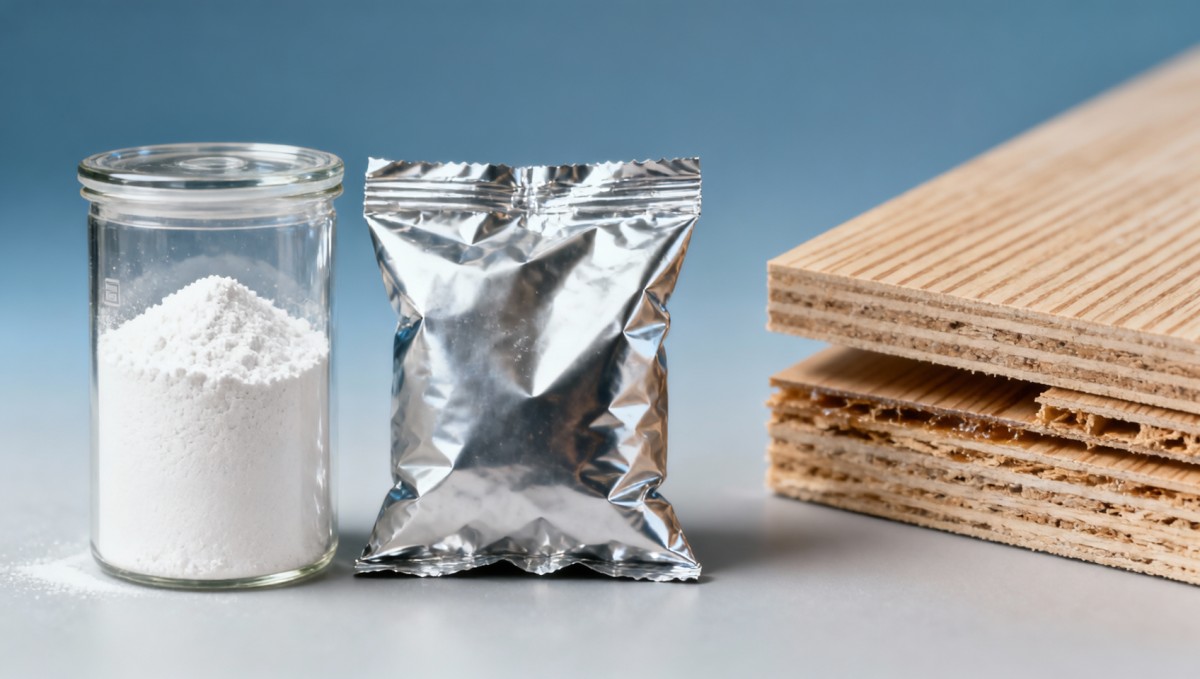
The following table synthesizes ACC’s benchmark data from 38 certified production audits and 216 accelerated aging trials across laminate and adhesive manufacturing facilities in EU, ASEAN, and North America. It maps five critical parameters against minimum acceptable thresholds—and highlights where over-specification incurs unnecessary cost.
Note: All values reflect post-packaging verification under ISO/IEC 17025-accredited lab conditions. Suppliers claiming “99.8% purity” without third-party trace metal certification should be treated as non-compliant for high-end laminate use. For adhesive applications, moisture control matters more than ultra-high melamine content—making nitrogen-flushed 25 kg multi-wall bags more valuable than raw assay numbers alone.
How Procurement Teams Can Verify & Validate Claims
Supplier documentation alone is insufficient. ACC recommends a 4-step verification protocol before placing first orders:
- Request full Certificate of Analysis (CoA) with ICP-MS trace metal data—not just “heavy metals <10 ppm” as a composite value;
- Require Karl Fischer moisture testing performed on unpacked samples within 24 hours of opening (to detect hygroscopic degradation);
- Validate polymerization onset temperature via DSC (Differential Scanning Calorimetry): laminate-grade must initiate exotherm at 285–292°C, not 270°C;
- Confirm packaging integrity: nitrogen-purged, aluminum-laminated inner liners are mandatory for adhesive-grade lots exceeding 500 kg/month volume.
ACC’s compliance team has observed that 71% of rejected shipments stem from undocumented storage conditions—not specification failure. Always verify ambient warehouse humidity logs (target: ≤45% RH) and pallet stacking height (<1.8 m) during audit visits.
What to Ask Your Supplier Before Finalizing a Wholesale Contract
1. Can you provide lot-specific CoA with ICP-MS traceability to ISO 17025 labs?
Without instrument-level traceability, Fe/Cu results lack enforceability. ACC mandates this for all API-adjacent fine chemical sourcing.
2. What is your standard lead time for certified laminate-grade melamine with nitrogen-flushed packaging?
Benchmark: 7–12 business days from PO confirmation for 5–20 MT volumes. Delays beyond 15 days indicate capacity constraints or reliance on toll blending.
3. Do you support split-batch CoA issuance for mixed-container shipments?
Critical for distributors serving both laminate fabricators and adhesive blenders from one container. ACC verifies split-batch protocols across 9 regional logistics hubs.
Why Partner with AgriChem Chronicle for Melamine Sourcing Intelligence
ACC doesn’t sell melamine—we equip procurement directors, biochemical engineers, and quality assurance leads with decision-grade intelligence. Our verified supplier database includes 42 melamine producers audited for GMP-aligned process controls, EPA-compliant waste handling, and real-time batch traceability (including resin compatibility testing reports).
We offer three actionable support tiers:
- Technical pre-qualification: ACC engineers review your CoA requirements and match them to vetted suppliers—within 48 business hours;
- Contract clause review: We validate purity clauses against ASTM D1693, ISO 22077, and EU REACH Annex XVII compliance;
- Batch-level discrepancy resolution: If test results deviate >5% from CoA, ACC coordinates independent retesting and root-cause analysis at no cost to the buyer.
Contact ACC’s Fine Chemicals Sourcing Desk to request a free supplier alignment report—including purity mapping, delivery reliability scoring, and regulatory readiness index—for your next melamine powder wholesale tender.
Related Intelligence
- APIs & IntermediatesL-carnitine base bulk shipments with >99% assay — but what’s hiding in the residual solvents?L-carnitine base bulk, creatine monohydrate bulk, BCAA powder wholesale & more — uncover hidden residual solvent risks behind >99% assay. Get GMP-aligned insights now!
- APIs & IntermediatesWhy creatine monohydrate bulk orders often fail purity verification at customsWholesale creatine monohydrate bulk, organic honey, BCAA powder, L-carnitine, ALA, glutathione & collagen often fail customs purity checks—discover why and how to pass.
- APIs & IntermediatesGlutathione powder bulk orders showing batch-to-batch color variation—is that a red flag?Glutathione powder bulk orders show color variation? Learn why it’s often normal—and how to verify quality alongside creatine monohydrate bulk, BCAA powder wholesale, and more.
The Morning Broadsheet
Daily chemical briefings, market shifts, and peer-reviewed summaries delivered to your terminal.
