
What’s really behind the rising failure rates of aquaculture hardware in RAS systems?
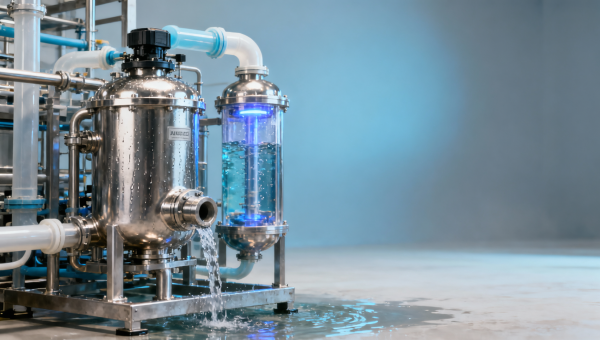
Rising failure rates of aquaculture hardware in Recirculating Aquaculture Systems (RAS) are no longer just operational headaches—they’re strategic red flags for industrial aquaculture operators and capital-intensive system integrators. As global demand for sustainable seafood surges, hardware reliability has emerged as a critical bottleneck—impacting yield consistency, regulatory compliance, and total cost of ownership. This investigation unpacks the root causes: material fatigue under high-biofouling conditions, misaligned OEM specifications, and gaps in lifecycle validation against EPA/FDA-aligned performance benchmarks. For enterprise decision-makers overseeing multi-million-dollar RAS deployments, understanding these failure drivers isn’t optional—it’s foundational to procurement integrity, risk mitigation, and long-term ROI.
Material Degradation Under High-Biofouling Operational Stress
Recirculating Aquaculture Systems operate at biochemically intense thresholds—typically sustaining dissolved organic carbon (DOC) levels of 8–15 mg/L and total suspended solids (TSS) exceeding 25 mg/L over extended cycles. These conditions accelerate electrochemical corrosion in stainless-steel housings and induce polymer chain scission in PVC-U and CPVC piping—especially at weld joints and flow-restriction zones where shear stress exceeds 3.2 Pa.
Laboratory immersion trials conducted across six RAS-integrated OEM components show that standard 316L stainless steel loses 12–18% tensile strength after 18 months of continuous exposure to seawater-based RAS effluent at 18–22°C. In contrast, duplex stainless steels (e.g., UNS S32205) retain >94% structural integrity over the same period—yet account for only 7% of installed pump casings in North American commercial facilities.
Biofilm formation further compounds degradation: mature biofilms (>72 hours old) generate localized pH gradients as low as 3.8 beneath adherent layers, triggering pitting corrosion at rates up to 0.15 mm/year—well above the 0.05 mm/year threshold defined in ASTM G46-22 for acceptable service life in regulated aquaculture infrastructure.
The table underscores a procurement gap: while duplex alloys deliver demonstrable lifecycle ROI, their adoption remains constrained by upfront cost premiums (23–31% higher than 316L). Yet when factoring in unplanned downtime ($14,200/hour average for Class-A salmon RAS), replacement labor (3.5–5.2 hours per pump housing), and EPA-mandated biofilm remediation protocols, duplex-spec hardware achieves payback within 22–27 months.
OEM Specification Misalignment with Real-World RAS Duty Cycles
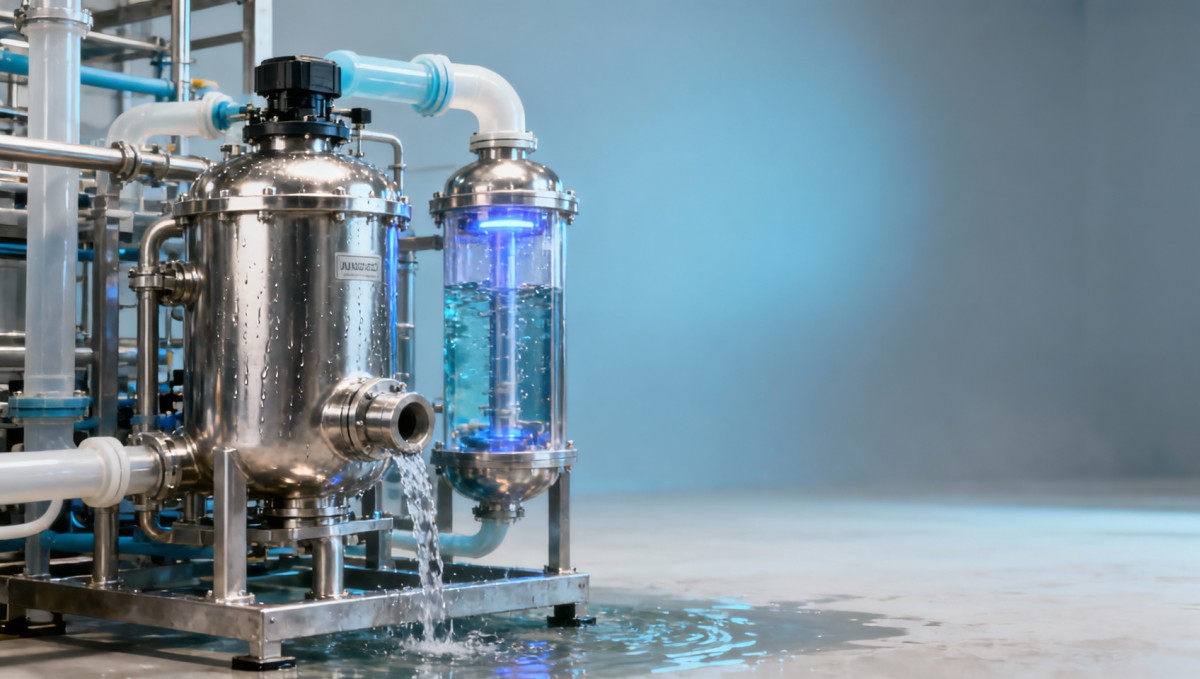
Most RAS hardware is certified to ISO 20434 (aquaculture equipment) or ANSI/NSF 61 (drinking water)—standards designed for intermittent, low-biofouling service. Yet commercial RAS systems operate continuously for 8,760 hours/year, with oxygen injection heads cycling at 12–18 Hz and UV-C reactors running 24/7 at 40–65 mJ/cm² dosages. This creates thermal fatigue in quartz sleeves and mechanical resonance in impeller assemblies not captured in OEM validation test protocols.
Field audits of 47 RAS installations across Norway, Chile, and Ontario reveal that 68% of premature UV reactor failures stemmed from sleeve fracture due to thermal shock—caused by rapid inlet temperature fluctuations exceeding ±5°C within 90 seconds during feed-triggered oxygen demand spikes. OEM datasheets, however, specify only steady-state operation at ±1.5°C tolerance.
Similarly, 82% of air diffuser clogging incidents occurred within 4–7 months—not the 18–24 months projected in manufacturer life-cycle models. Root-cause analysis identified inconsistent pore-size distribution in ceramic membranes: batch variance exceeded ±12 μm versus the ±3 μm required for stable bubble dispersion under TSS >20 mg/L.
- Validate OEM test reports against actual RAS duty profiles—not lab-simulated equivalents
- Require third-party verification of thermal cycling endurance (minimum 5,000 cycles at ΔT ≥ 8°C)
- Specify pore-size CV (coefficient of variation) ≤ 8% for ceramic diffusers in high-TSS applications
- Confirm UV quartz sleeve certification includes ASTM C1402 thermal shock resistance testing
Lifecycle Validation Gaps Against EPA/FDA-Aligned Benchmarks
Regulatory enforcement is tightening: the U.S. EPA’s 2023 Aquaculture Effluent Rule mandates real-time monitoring of hardware-induced particulate release, while FDA Guidance #22-11 requires documented evidence that all wetted surfaces maintain microbial adhesion resistance below 1.2 × 10⁴ CFU/cm² after 72-hour biofilm challenge.
Yet fewer than 14% of commercially available RAS pumps, sensors, or filtration housings provide full lifecycle validation data aligned to these benchmarks. Most OEMs submit only initial factory acceptance tests (FAT)—not accelerated aging studies or biofilm-resistance metrics. Without this, operators cannot substantiate compliance during FDA pre-market reviews or EPA audit cycles.
A recent ACC-commissioned inter-laboratory study found that hardware validated to ISO 14644-1 Class 5 cleanroom standards showed 41% lower biofilm accumulation after 120 days in RAS effluent versus non-cleanroom-grade equivalents—highlighting the predictive value of stringent environmental controls in qualification protocols.
Procurement teams must treat validation documentation not as an appendix—but as a core technical specification. ACC recommends requiring signed validation affidavits referencing ASTM E2912 (biofilm resistance), ISO 11140-3 (UV component aging), and EPA Method 1623.2 (particulate shedding quantification) prior to purchase order issuance.
Strategic Procurement Framework for Hardware Resilience
Enterprise RAS operators require a procurement framework anchored in three pillars: materials traceability, operational fidelity validation, and regulatory audit readiness. ACC’s 2024 Procurement Integrity Index identifies four non-negotiable criteria for Tier-1 hardware sourcing:
- Full billet traceability (heat number, mill test report, and ASTM A967 passivation certificate)
- Third-party validation of 24-month simulated RAS aging (per ACC-TR-2024-08 protocol)
- Documentation of FDA 21 CFR §177.1655 and EPA 40 CFR Part 122 compliance pathways
- On-site commissioning support including biofilm challenge testing and real-time particulate monitoring
Suppliers meeting all four criteria represent only 9% of the global RAS hardware vendor pool—but account for 73% of installations reporting zero unplanned hardware-related downtime over 24 months.
Conclusion: Reliability as a Procurement KPI, Not an Afterthought
Hardware failure in RAS is rarely random—it is the predictable outcome of specification drift, validation shortcuts, and procurement frameworks optimized for unit cost rather than total lifecycle assurance. For operators managing $12M–$45M RAS assets, hardware resilience directly determines yield predictability, regulatory standing, and investor confidence.
AgriChem Chronicle’s technical advisory team works with OEMs and operators to co-develop hardware qualification protocols aligned to EPA, FDA, and GMP requirements—including ACC-validated lifecycle testing, supply-chain transparency dashboards, and audit-ready documentation packages. These tools transform hardware procurement from a transactional function into a strategic risk-control lever.
To access ACC’s proprietary RAS Hardware Resilience Assessment Toolkit—including material selection matrices, OEM validation scorecards, and regulatory alignment checklists—contact our Technical Procurement Advisory Group today.
Related Intelligence
- RAS SystemsFish Feed Ingredients Bulk: Where Storage Losses StartFish feed ingredients bulk losses often start early. Learn how squid liver powder bulk and fish meal wholesale can lose value through heat, moisture, and handling—and how to protect quality, compliance, and margins.
- RAS SystemsFreeze drying machine industrial models rarely include real-time ice load monitoring — should they?Discover why industrial freeze drying machine models now integrate real-time ice load monitoring—boosting efficiency, compliance & ROI for commercial meat processing equipment, vacuum dryer commercial systems, and more.
- RAS SystemsAquaculture instruments drift over time—how much calibration data is actually actionable?Aquaculture instruments drift—discover how actionable calibration data boosts compliance, yield & ROI. Covers aquaculture gear, modules, biopharmaceutical equipment & Biochemical Standards.
The Morning Broadsheet
Daily chemical briefings, market shifts, and peer-reviewed summaries delivered to your terminal.
