
Fish Feed Ingredients Bulk: Where Storage Losses Start
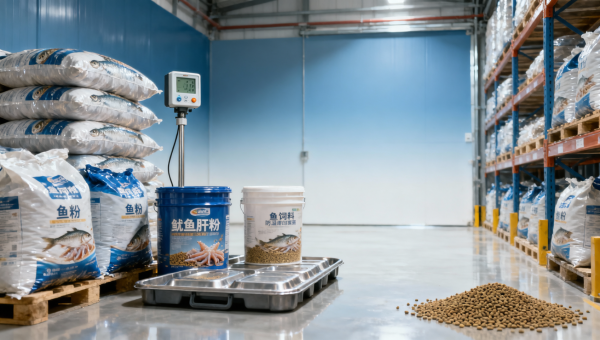
In bulk aquafeed procurement, storage losses often begin long before spoilage is visible. From squid liver powder bulk and fish meal wholesale to wider fish feed ingredients bulk, oxidation, moisture uptake, and contamination can quietly erode value, compliance, and performance. This article examines where losses start, what technical teams and buyers should monitor, and how better handling can protect margins across industrial feed supply chains.
For procurement managers, feed mill operators, quality teams, and project decision-makers, the commercial risk is rarely limited to obvious waste. A 1% to 3% loss in usable nutrient value, a delayed unloading window of 24 to 48 hours, or a moisture rise of just 1 to 2 percentage points can alter formulation stability, shelf life, and audit outcomes. In industrial feed systems, small deviations compound quickly across container loads, warehouses, and production cycles.
The challenge is especially relevant when dealing with protein-rich and lipid-sensitive materials. Fish feed ingredients bulk often move through long international routes, mixed climate zones, and multi-party handling points. By the time a warehouse team notices odor change, caking, dust increase, or discoloration, the loss often started earlier at loading, packaging, ventilation, or storage zoning. Understanding these early triggers is essential for cost control and technical consistency.
Where Storage Losses Begin in Bulk Fish Feed Ingredients
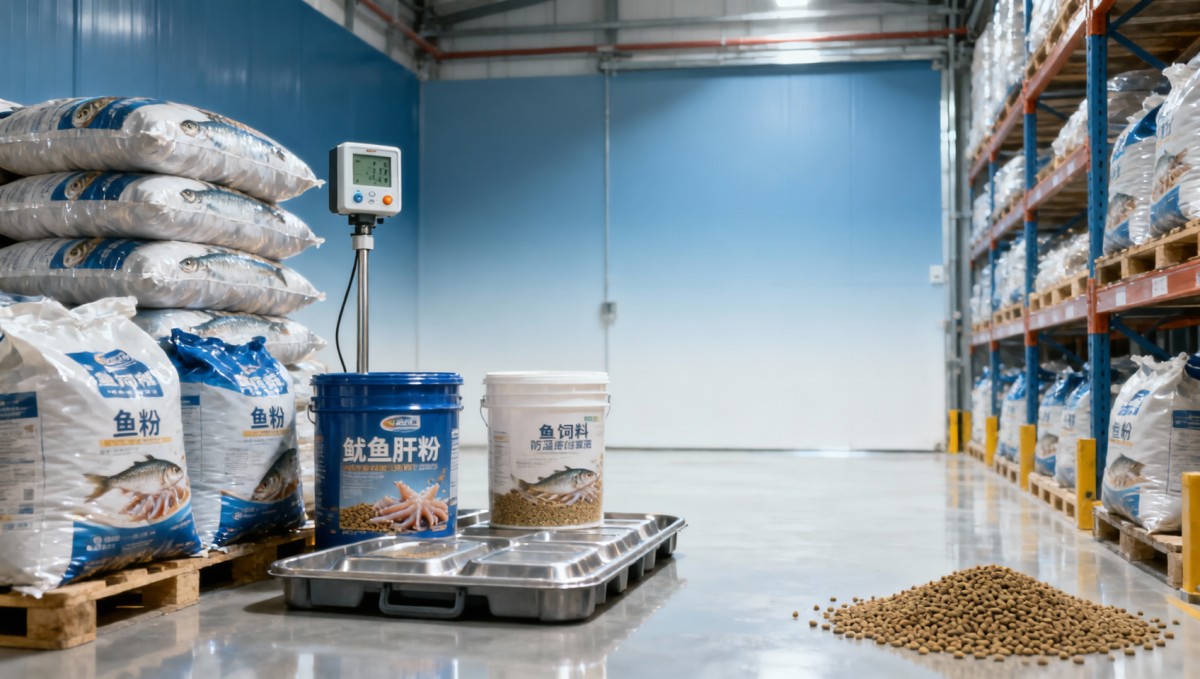
Storage losses usually begin at the interface between ingredient chemistry and logistics conditions. In fish feed ingredients bulk, high-fat meals, marine protein powders, binders, and micronutrient premixes all respond differently to oxygen, humidity, heat, and handling pressure. Materials such as fish meal wholesale lots and squid liver powder bulk are particularly vulnerable because they combine protein density with residual oil, creating favorable conditions for oxidation and rancidity if controls drift.
A common misconception is that losses start only after long-term warehousing. In practice, the first 72 hours after production or discharge are often decisive. If bulk bags are stacked before temperature equalization, if pallets are placed directly against walls, or if condensation develops during marine-to-land transfer, then deterioration can begin before the first inventory check. In humid regions, equilibrium moisture can shift rapidly when ambient relative humidity exceeds 65% to 70%.
Another early trigger is physical damage to packaging and liners. Even minor tears, poor sealing around valve openings, or repeated forklift impact can introduce dust, insects, and airborne contaminants. In large facilities moving 200 to 1,000 tons per month, such defects are not isolated incidents; they can become recurring loss channels if receiving inspection is limited to surface-level checks.
Three primary deterioration mechanisms
- Oxidation: Often accelerated above 25°C, especially in ingredients with significant oil fractions or unstable marine lipids.
- Moisture uptake: Can increase clumping, microbial risk, and flowability issues once packaging barriers weaken or warehouse humidity is poorly managed.
- Cross-contamination: May arise from shared conveyors, open storage areas, dirty unloading tools, or poor zoning between raw and finished materials.
For technical evaluators, the key lesson is that visual spoilage is a late indicator. Odor drift, peroxide value increase, inconsistent particle size after caking, and declining palatability often appear before outright rejection. For finance and commercial approval teams, this means the real cost is not only disposal. It may include reformulation, production interruption, increased additive use, or customer performance complaints.
High-Risk Ingredients and Their Typical Storage Failure Points
Not all aquafeed materials fail in the same way. Bulk buyers should separate ingredients by risk class instead of storing everything under a single warehouse rule. Marine proteins, lipid-rich attractants, mineral carriers, and plant proteins each have different thresholds for heat, moisture, and residence time. A practical risk map helps operators prioritize inspection frequency, storage duration, and packaging upgrades.
Squid liver powder bulk, for example, may present higher odor sensitivity and oxidation exposure because of marine oil content. Fish meal wholesale shipments may face temperature rise and dust losses during unloading and stacking. Plant-based proteins can absorb atmospheric moisture and compact, reducing dosing consistency. Premix components may remain visually stable while losing potency if stored in unsuitable thermal zones for 30 to 60 days.
The table below outlines common storage risks across representative categories of fish feed ingredients bulk. It is designed as a screening tool for purchasing, warehouse, and quality teams before setting receiving and storage protocols.
The main takeaway is that fish feed ingredients bulk should not be managed as a single inventory class. A warehouse running 3 storage zones instead of 1 often gains better control over shelf-life variability, especially where marine ingredients and sensitive micro-components are handled together. Segmentation is a low-complexity step with measurable operational value.
Risk signals that should trigger immediate review
- Bag surface warmth noticeably higher than surrounding stock.
- Visible condensation on liner interiors after receiving.
- Atypical odor shift within 7 to 14 days of storage.
- Powder bridging, hard lumps, or increased fines during discharge.
These signals should not wait for monthly review. In facilities with high stock turns, a same-shift corrective response can prevent larger losses across adjacent lots and downstream batches.
What Buyers, QC Teams, and Operators Should Monitor
An effective monitoring system does not need to be overly complex, but it must be disciplined. For most industrial aquafeed operations, six checkpoints cover the majority of preventable storage failures: packaging condition, receiving temperature, ambient humidity, stack configuration, inventory age, and sanitation status. These controls matter whether the site handles 20 tons per week or a multi-site regional supply network.
Procurement teams should define acceptance criteria before the first shipment arrives. If fish feed ingredients bulk are purchased on specification but received without a practical intake checklist, warehouse staff often rely on visual judgment alone. That creates inconsistency between shifts, locations, and vendors. A documented inspection sequence within the first 2 hours of receipt reduces that variability.
Quality teams should also differentiate between inbound testing and storage-condition verification. Lab tests may confirm protein, ash, fat, or selected quality markers, but warehouse monitoring determines whether those parameters remain stable over 2, 4, or 8 weeks. Both are necessary, and they should be linked in lot records for traceability and dispute resolution.
Recommended monitoring framework
The following matrix provides a practical review structure for technical and commercial teams managing fish feed ingredients bulk across receiving, storage, and internal transfer points.
For operators, the most actionable point is consistency. A temperature reading that is skipped twice per week is not a minor paperwork issue; it can hide a trend. For purchasing teams, the key is enforceability. If contract terms do not align with incoming inspection standards, claims become harder to validate, especially when responsibility is split across shipper, port handler, transporter, and warehouse operator.
Minimum intake checklist for sensitive marine ingredients
- Confirm lot labeling, production date, and storage instructions before unloading.
- Measure surface or probe temperature on representative units.
- Inspect at least 3 points on each pallet or bulk grouping for tears, leakage, or liner exposure.
- Record odor, flow condition, and visible clumping on a standardized form.
- Move sensitive lots to designated storage zones within the same shift.
This basic system improves audit readiness and supports faster escalation when deviations are found. It is also easier to scale than a heavily customized inspection model.
Practical Storage Controls That Protect Margin and Compliance
The most effective storage strategy for fish feed ingredients bulk combines environmental control, inventory discipline, and handling design. Even where full climate control is not feasible, practical improvements can reduce losses. These include keeping stock off floors by at least 10 to 15 cm, maintaining clearance from walls, reducing stack compression, and separating fast-turn marine ingredients from slower-moving additives and plant proteins.
Ventilation should be managed carefully. More airflow is not always better if it introduces humid air during rainy or coastal conditions. Facilities should establish a simple operating rule based on local climate: for example, limit open-door ventilation during peak humidity hours and prioritize air exchange during drier periods. In many locations, this scheduling change alone improves ingredient stability over a 30-day storage cycle.
Handling practices also influence losses. Repeated re-bagging, unnecessary movement, and partial use without proper resealing all increase exposure. If a site frequently opens large units for split use, it should consider smaller pack formats for high-risk materials or set a maximum open-bag residence time, such as 24 to 72 hours depending on sensitivity and ambient conditions.
Storage control priorities by operational impact
The table below ranks common controls by the kind of commercial and technical value they typically provide in feed and ingredient operations.
The strongest margin protection often comes from process discipline rather than expensive infrastructure. A warehouse that improves zoning, inspection timing, and stock rotation may cut hidden losses more effectively than one that invests in new equipment without procedural control. This is particularly important for businesses managing mixed portfolios of fish meal wholesale, squid liver powder bulk, and other fish feed ingredients bulk under the same roof.
Common mistakes that increase storage losses
- Treating all ingredients as shelf-stable for the same duration.
- Stacking pallets too tightly to walls, preventing inspection and airflow management.
- Leaving opened bags unsealed across multiple shifts.
- Failing to document deviations at receipt, which weakens supplier claims.
These are manageable issues, but only when ownership is clearly assigned between procurement, operations, and quality functions.
Procurement, Contracting, and FAQ for Lower-Loss Supply Chains
Storage control starts before goods reach the warehouse, so procurement language matters. Buyers of fish feed ingredients bulk should align commercial terms with technical handling requirements. That may include packaging specifications, moisture-control expectations, transit-duration limits where practical, deviation reporting windows, and agreed inspection steps on arrival. Without these details, even well-run sites struggle to recover costs when losses emerge.
Commercial reviewers and finance approvers should also look beyond unit price. A lower-cost lot that requires faster use, higher antioxidant support, more frequent inspection, or additional waste handling may not be the lower-cost option in practice. Total landed performance includes product stability, unloading efficiency, documentation quality, and storage compatibility with the receiving facility.
For businesses publishing or evaluating technical market intelligence, these points are increasingly relevant as supply chains become longer and regulatory expectations tighten. Better documentation, lot-level traceability, and realistic storage protocols support both operational resilience and stronger supplier relationships.
FAQ: How should buyers assess bulk fish feed ingredient risk?
How long can fish feed ingredients bulk typically remain in storage?
There is no universal number because stability depends on ingredient type, packaging, temperature, humidity, and whether the pack has been opened. In practical operations, sensitive marine ingredients often require tighter review after 2 to 4 weeks, while more stable dry materials may tolerate longer periods under controlled conditions. Internal validation is better than relying on generic shelf-life assumptions.
What should procurement teams request from suppliers?
Request clear packaging details, recommended storage conditions, production date visibility, lot traceability, and handling instructions for unloading and resealing. For fish meal wholesale and squid liver powder bulk, it is also helpful to clarify how the material is protected during transit and what deviation evidence is needed if claims arise within the first 7 days after receipt.
Which metric matters most: price, protein, or stability?
In most B2B feed settings, stability deserves equal weight with price and nutrient specification. A lot that meets nominal specification but degrades quickly in storage can create downstream losses in formulation accuracy, palatability, and customer confidence. For that reason, many technical buyers evaluate at least 4 dimensions together: specification fit, storage behavior, documentation, and total handling cost.
What is the best first improvement for facilities with recurring losses?
Start with a formal receiving and zoning protocol. In many facilities, the fastest gains come from checking temperature and packaging on arrival, separating high-risk marine ingredients, and enforcing FIFO or FEFO weekly. These steps are lower-cost than infrastructure upgrades and often reveal where the real losses begin.
Storage losses in fish feed ingredients bulk rarely begin with obvious spoilage. They start with small, preventable failures in packaging, timing, zoning, inspection, and contracting. For buyers, operators, and quality teams, the most effective response is to treat storage as an active control point rather than a passive holding stage.
AgriChem Chronicle focuses on the decision-critical details that shape industrial purchasing and technical operations across aquaculture, feed processing, and adjacent primary industries. If you need deeper guidance on ingredient risk mapping, storage control planning, or bulk procurement evaluation, contact us to discuss your application, request tailored editorial collaboration, or explore more specialized market intelligence solutions.
Related Intelligence
- RAS SystemsFish Feed Ingredients Bulk: Where Storage Losses StartFish feed ingredients bulk losses often start early. Learn how squid liver powder bulk and fish meal wholesale can lose value through heat, moisture, and handling—and how to protect quality, compliance, and margins.
- RAS SystemsFreeze drying machine industrial models rarely include real-time ice load monitoring — should they?Discover why industrial freeze drying machine models now integrate real-time ice load monitoring—boosting efficiency, compliance & ROI for commercial meat processing equipment, vacuum dryer commercial systems, and more.
- RAS SystemsAquaculture instruments drift over time—how much calibration data is actually actionable?Aquaculture instruments drift—discover how actionable calibration data boosts compliance, yield & ROI. Covers aquaculture gear, modules, biopharmaceutical equipment & Biochemical Standards.
The Morning Broadsheet
Daily chemical briefings, market shifts, and peer-reviewed summaries delivered to your terminal.
