
Marine Satellite Compass or Gyro? What Changes at Sea

At sea, choosing between a marine satellite compass and a gyro affects far more than heading accuracy—it influences navigation, compliance, and crew safety. For operators and buyers evaluating marine satellite compass performance alongside automatic identification system ais, marine radar systems, and epirb emergency beacons, understanding these differences is essential to building reliable, regulation-ready vessels.
For technical evaluators, procurement teams, project managers, and onboard operators, the question is rarely which technology is universally better. The practical question is what changes at sea when a vessel uses a marine satellite compass instead of a gyrocompass, and how that choice affects bridge integration, maintenance workload, operating risk, and lifecycle cost over 3 to 7 years.
This matters especially in fishing fleets, aquaculture support vessels, offshore service craft, workboats, and commercial ships that depend on stable heading input for radar overlay, autopilot control, AIS alignment, and incident response. A poor match between sensor technology and operating profile can create position-heading mismatch, slow commissioning, and higher corrective service frequency within the first 12 months.
Why Heading Technology Changes More Than Navigation
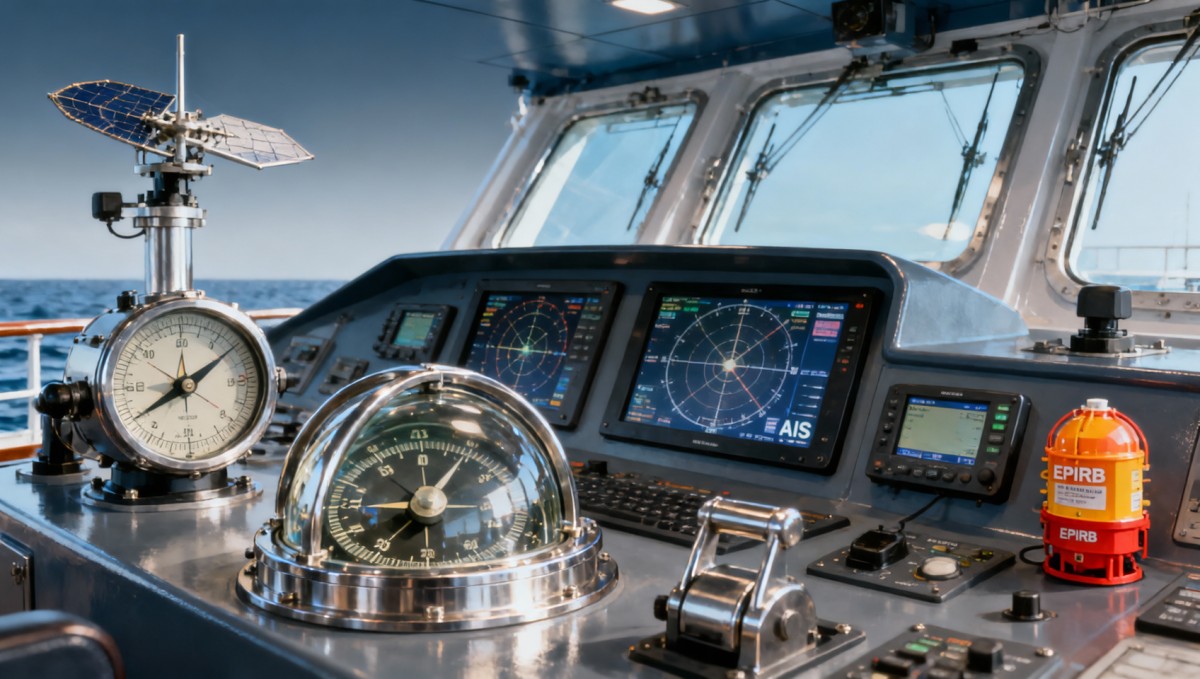
A marine satellite compass determines heading by comparing signals from multiple GNSS antennas. A gyrocompass, by contrast, derives true north from rotational physics and vessel motion. On paper, both provide heading. In real operations, however, they behave differently during acceleration, low-speed maneuvering, high-latitude work, and periods of signal obstruction near cranes, masts, or port structures.
For bridge systems, heading is not an isolated data point. It feeds marine radar systems for target orientation, supports AIS target presentation, and helps maintain consistent steering through autopilot and track control. If heading updates drift by even 1° to 2°, radar overlay quality can degrade noticeably, especially on smaller vessels operating in congested approaches or during nighttime fishery support operations.
In procurement terms, the decision affects four linked areas: installation complexity, ongoing calibration burden, integration with existing electronics, and resilience under the vessel’s actual operating pattern. For example, a coastal patrol or aquaculture service vessel that performs frequent stop-start maneuvers may prioritize fast startup and simpler maintenance, while a blue-water platform may value stable performance through long transits and varied sea states.
The technology choice also influences compliance readiness. Many operators are not simply buying a compass; they are buying dependable heading data for a complete navigation stack that may include radar, AIS, ECDIS where fitted, voyage record systems, and emergency communication architecture. In that context, the sensor must be assessed as part of a system, not as a standalone box on a quotation sheet.
Operational Differences That Matter on the Bridge
- Startup time: many satellite compasses can provide usable heading in minutes, while gyro systems may require a longer settling period, often 1 to 4 hours depending on model and vessel condition.
- Motion sensitivity: gyro performance is often valued in sustained navigation, but satellite solutions can be affected by antenna placement and signal masking.
- Maintenance pattern: gyro systems may involve more specialized service intervals, while satellite compasses shift attention toward antenna integrity, cable routing, and GNSS environment quality.
- Redundancy logic: vessels with strict uptime needs often combine heading sources rather than replacing one technology with another outright.
Marine Satellite Compass vs Gyro: Core Performance Comparison
The most useful comparison is not theoretical precision in perfect conditions. It is how each option performs under real vessel constraints: deck space, superstructure interference, speed profile, power quality, crew skill, and integration demands. The table below outlines the tradeoffs that buyers and marine engineers typically evaluate during specification review.
The key takeaway is that satellite compass selection is often driven by simplicity and rapid integration, while gyro selection is often driven by operational continuity under conditions where GNSS availability or deck geometry may be less predictable. Neither should be purchased without reviewing the vessel’s mission profile over at least 12 operational months.
Where Buyers Often Misjudge Performance
One common mistake is evaluating only nominal heading accuracy and ignoring update behavior, latency, and installation constraints. A stated accuracy figure does not guarantee strong radar overlay if the antenna baseline is too short, if multipath interference is present, or if heading output sentences are not fully compatible with existing bridge systems.
Another mistake is assuming a retrofit will be plug-and-play. In practice, older vessels may have mixed interfaces, legacy autopilot controllers, or radar processors that require converter modules or additional configuration steps. This can add 2 to 5 days to commissioning and should be reflected in budget planning and drydock scheduling.
A Practical Evaluation Sequence
- Map every system that consumes heading data, including radar, AIS, autopilot, dynamic displays, and alarms.
- Review the vessel’s deck layout to identify antenna shadowing, mast blockage, and cable route length.
- Confirm startup, failover, and restart expectations for operations that cannot tolerate long heading recovery time.
- Estimate 3-year maintenance support cost, not just initial hardware cost.
Integration With AIS, Radar, and EPIRB-Ready Safety Architecture
In modern vessel projects, the marine satellite compass or gyro is part of a larger electronics chain. Heading errors can affect target trails, radar chart overlay alignment, and vessel orientation data shared across bridge displays. While an EPIRB emergency beacon does not rely on heading in the same way radar does, the overall safety architecture still benefits from coherent navigation data, clean installation practice, and reliable power distribution.
AIS integration deserves special attention. AIS transceivers depend on correct position and vessel identity data, but heading input improves presentation quality and traffic interpretation, especially during close-quarters maneuvers. On fishing support boats, tug-like utility craft, and harbor service vessels, this becomes operationally significant because low-speed turns and repeated course changes happen many times per shift.
Marine radar systems also expose weak heading quality quickly. If heading updates are delayed or unstable, operators may see misaligned overlays, smearing during turns, or reduced confidence during collision-avoidance interpretation. This is why technical evaluators should test the heading source not only at cruising speed but also during acceleration, deceleration, and 90° to 180° maneuver sequences.
For project managers and safety officers, the installation standard matters almost as much as the hardware choice. Poor grounding, mixed cable routes, and unverified output format settings are still among the most common causes of post-installation trouble calls within the first 30 to 90 days.
System-Level Compatibility Checklist
Before release of a purchase order, teams should compare the heading source against all connected bridge and safety systems. The following matrix is useful during FAT preparation, retrofit planning, or newbuild integration review.
The table highlights a system engineering reality: heading quality is best judged through integration tests, not brochure values. A vessel can pass bench checks yet still present bridge-level usability issues if interface mapping and sea-trial validation are rushed.
Selection Criteria for Operators, Procurement Teams, and Finance Approvers
From a commercial perspective, the right choice depends on vessel type, route profile, onboard technical support, and downtime tolerance. Finance teams often compare only upfront equipment pricing, but the real comparison should include installation labor, auxiliary components, software configuration, crew familiarization, and service call probability over 24 to 36 months.
For retrofit projects, a marine satellite compass may reduce installation disruption if mast access is straightforward and antenna separation requirements can be met. For larger vessels on long routes, a gyro may remain attractive where operators want a heading source less exposed to GNSS limitations. In many fleets, the strongest risk-management decision is a layered setup with primary and backup heading references rather than a single-source philosophy.
Quality and safety managers should also evaluate environmental durability. Salt exposure, vibration, temperature cycling, and connector sealing directly affect reliability. A unit that performs well in a controlled harbor environment may show different behavior after 6 to 9 months of open-sea use if mounting practice or ingress protection review was inadequate.
For engineering leaders, the best procurement process is evidence-based. Require interface lists, commissioning scope, sea-trial criteria, spare-part recommendations, and expected service response windows. A quotation without these details may look cost-effective at first glance but can create hidden expenses during the acceptance period.
Five High-Value Procurement Questions
- What is the realistic startup and stabilization time after cold power-up, and does it fit departure schedules?
- How many bridge and deck systems will consume heading output, and are protocol converters required?
- What is the expected maintenance interval over 12, 24, and 36 months?
- Can the supplier define acceptance tests for radar overlay, AIS behavior, and autopilot response?
- What fallback plan exists if heading is degraded during mission-critical operations?
Typical Decision Framework
A practical decision framework uses 4 weighted dimensions: technical suitability, integration risk, supportability, and total cost. On smaller commercial craft, integration speed may carry 30% to 40% of the decision weight. On ocean-going vessels, resilience and redundancy may deserve the highest weighting. The exact scoring model should reflect operating consequence, not procurement habit.
Implementation, Maintenance, and Common Mistakes at Sea
Even the correct heading technology can underperform if implementation is weak. The most frequent issues seen after installation are poor antenna placement, insufficient separation from other emitters, incomplete interface mapping, and sea trials that are too short to reveal turn-response or signal-loss behavior. A proper commissioning window is often 1 to 3 days, followed by operational observation during the first week of live service.
Maintenance strategies should differ by technology. Satellite compass upkeep usually centers on antenna inspection, connector sealing, cable integrity, software settings, and sky-view preservation after other deck modifications. Gyro maintenance tends to require closer attention to internal health, power quality, vibration conditions, and scheduled specialist support. Both benefit from documented inspection routines every 3 to 6 months.
Operators should be trained to identify symptoms rather than only follow restart procedures. Examples include radar overlay drift during turns, inconsistent heading after berth departure, delayed stabilization after power interruption, or repeated alarms under otherwise normal weather. These early indicators can prevent a minor configuration problem from becoming a bridge usability issue during demanding operations.
For fleet managers, the implementation target should be predictable performance, not just successful installation. That means recording baseline behavior during acceptance, documenting configuration versions, and establishing a support path for remote diagnostics. A fleet that standardizes these steps can often reduce repeat troubleshooting events across sister vessels.
Common Errors to Avoid
- Selecting based on catalog accuracy alone without considering deck geometry and signal environment.
- Skipping full-turn and low-speed maneuver tests during sea trial.
- Treating AIS and radar integration as secondary instead of primary acceptance criteria.
- Ignoring lifecycle service access, spare availability, and technician response time.
- Assuming one technology automatically replaces the need for redundancy on higher-risk vessels.
FAQ for Real-World Selection
How do I choose between a marine satellite compass and a gyro for a retrofit?
Start with the vessel layout and connected systems. If the vessel has clear antenna mounting positions, limited technical support capacity, and a need for fast startup, a marine satellite compass may be attractive. If the vessel operates long offshore routes or in environments where GNSS quality may be inconsistent, a gyro or dual-source arrangement may be more appropriate. Budget 2 to 5 extra integration checks for older bridge electronics.
Does a satellite compass work well with marine radar systems?
Yes, if installation and interface setup are correct. Radar performance depends on stable, timely heading updates. During acceptance, test overlay quality through at least 3 maneuver profiles: straight-line transit, moderate turn, and rapid heading change. If radar misalignment appears only during turns, the issue may be update behavior or mounting geometry rather than the radar itself.
What should procurement teams request from suppliers?
Request interface documentation, installation drawings, commissioning scope, expected maintenance schedule, recommended spare list, and acceptance test procedures. Ask for realistic service response terms, such as remote support within 24 hours and field attendance windows where available. This gives commercial and finance stakeholders a clearer total-cost picture.
Choosing between a marine satellite compass and a gyro is ultimately a vessel-systems decision, not a single-component purchase. The right answer depends on operating pattern, bridge architecture, maintenance capacity, and the level of resilience required across AIS, radar, autopilot, and safety systems. For operators in aquaculture support, fisheries, offshore work, and broader commercial marine settings, structured evaluation reduces both compliance risk and avoidable lifecycle cost.
If your team is comparing heading solutions for a newbuild, retrofit, or multi-vessel standardization plan, use a system-level review that covers installation constraints, integration tests, and 3-year support assumptions. To discuss application-specific criteria, obtain a tailored comparison matrix, or review procurement-ready technical checkpoints, contact us today and get a solution aligned with your vessel profile and operational priorities.
Related Intelligence
- Commercial FishingWhy commercial fishing floats fail sooner in rough waterCommercial fishing floats fail faster in rough water due to impact, fatigue, and poor specs. Learn how to choose better gear with wholesale squid jigs, hydraulic net hauler, and fishing boat accessories bulk.
- Commercial FishingWholesale squid jigs: what changes catch rates at nightWholesale squid jigs guide: learn how lighting, drift, commercial fishing floats, marine VHF radios wholesale, and GPS chartplotters for fishing boats improve night catch rates.
- Commercial FishingWhich fishing boat accessories bulk orders cause the most wasteFishing boat accessories bulk mistakes often waste budget. Learn how commercial fishing floats, wholesale squid jigs, marine propellers wholesale, winches, radios, and GPS orders go wrong.
The Morning Broadsheet
Daily chemical briefings, market shifts, and peer-reviewed summaries delivered to your terminal.
