
Why Automatic Identification System AIS Data Gets Missed
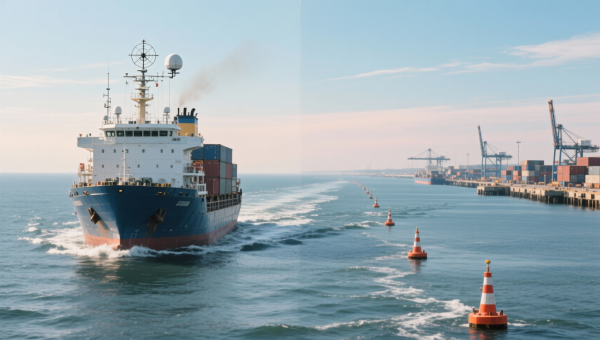
From marine satellite compass failures to blind spots in automatic identification system AIS streams, missed vessel data can distort decisions across procurement, safety, and operations. For buyers comparing marine radar systems, epirb emergency beacons, marine life jackets commercial, fishing safety boots bulk, and heavy duty pvc rain gear, understanding AIS gaps is essential. This analysis also matters to supply teams sourcing squid liver powder bulk, fish meal wholesale, and fish feed ingredients bulk in tightly monitored maritime logistics.
In regulated marine supply chains, AIS is often treated as a reliable baseline for vessel visibility, route confirmation, port approach timing, and shipment traceability. Yet in practice, AIS data can be incomplete, delayed, duplicated, or absent for minutes, hours, or even longer, depending on geography, equipment condition, operating behavior, and the method used to collect signals.
For technical evaluators, procurement teams, safety officers, and project managers, missed AIS data is not just a navigation issue. It affects cargo ETA planning, cold-chain scheduling, fisheries compliance, offshore work planning, insurance reviews, and supplier credibility assessments. Understanding where AIS gaps come from allows buyers to choose better monitoring stacks and reduce operational risk before it turns into a cost event.
How AIS Works and Why Coverage Is Never Truly Continuous
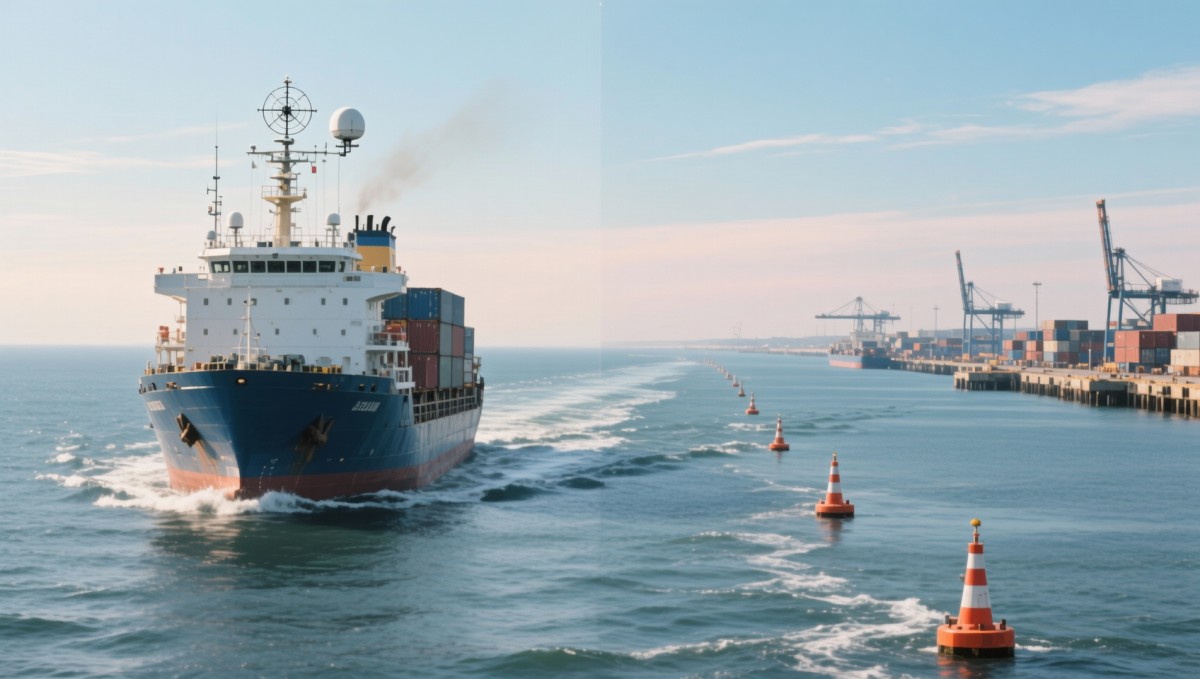
AIS is a VHF-based vessel identification and reporting system designed to broadcast data such as vessel identity, position, speed, course, and navigational status. Depending on the transponder class, update intervals may range from every 2–10 seconds for fast-moving Class A traffic to every 30 seconds or more under slower or simplified conditions. This structure is useful, but it does not guarantee uninterrupted visibility.
A core limitation is that AIS depends on transmission, reception, and data forwarding all working at the same time. A vessel may be transmitting normally, but if terrestrial receivers are out of range, satellite collection windows are limited, or data aggregation systems drop packets, the end user sees a gap. In congested sea lanes, signal collisions can also reduce successful message capture rates.
This matters across sectors linked to maritime procurement. A buyer evaluating fish meal wholesale shipments or fish feed ingredients bulk may assume a vessel disappeared because it stopped moving. In reality, the cargo could still be underway, but the AIS signal was not captured for 20 minutes, 2 hours, or an entire coastal segment because of terrain, traffic density, or weather-related hardware issues.
Operational users should also distinguish between raw AIS transmission and commercial AIS data feeds. Many platforms combine terrestrial and satellite sources, normalize message formats, and filter anomalies. That improves usability, but it can introduce delays of several seconds to several minutes. For strategic planning that delay is acceptable; for live vessel interception or high-risk workboats, it may not be enough.
Key technical layers behind a visible vessel track
- Onboard transponder performance, including antenna condition, power stability, and configuration accuracy.
- Reception path, usually terrestrial VHF stations within roughly 20–40 nautical miles, or satellite pass-based collection over wider areas.
- Data processing layers that validate, de-duplicate, time-stamp, and publish messages into monitoring software.
- User-side display settings that may hide stationary, low-priority, or low-confidence tracks.
The table below summarizes why an AIS signal can exist in theory but still appear as “missed” in real operations.
The practical conclusion is simple: AIS is an essential visibility layer, but it is not a single-source proof system. Buyers and operators should treat it as one of several decision inputs, especially when timelines, safety, or cargo integrity depend on accurate vessel tracking.
The Most Common Reasons Automatic Identification System AIS Data Gets Missed
Missed AIS data usually comes from a small number of recurring causes. The first is geographic limitation. Coastal AIS stations are line-of-sight systems, so mountains, port infrastructure, offshore distance, and even low antenna height can create weak reception zones. In practice, reception quality can fall sharply once a vessel moves beyond 20–40 nautical miles from shore, although exact range varies by antenna setup and sea state.
The second is transmission overload. Busy shipping lanes, fishing grounds, and approaches to major terminals can contain hundreds of simultaneous emitters. When message density rises, collisions and partial decoding become more likely. The result is not always a full blackout; more often, users see irregular update rates, fragmented track histories, or missing speed and heading records during critical maneuvering windows.
Third, vessel-side equipment problems remain common. Damaged antennas, poor cable routing, unstable power supply, GPS feed loss, or incorrect MMSI and static data settings can all degrade output. In smaller commercial fleets, seasonal maintenance cycles may be stretched from 6 months to 12 months or longer, increasing the chance that minor faults go unnoticed until tracking performance becomes visibly poor.
Fourth, signal loss may be intentional or procedural. Some operators switch off transponders in port, during maintenance, or in regions where operational discipline is weak. Others may transmit but with incorrect navigational status, making the vessel harder to classify inside dashboards used by buyers, compliance teams, and insurers. A missing AIS point is therefore not always a technical failure; sometimes it is a behavior and governance problem.
Finally, not all AIS feeds are built the same way. Low-cost data subscriptions may prioritize historical aggregation over low-latency delivery. A platform refreshed every 5–15 minutes may be sufficient for monthly shipment planning, but it is inadequate for tug support coordination, offshore transfer work, or narrow arrival slots at feed and grain terminals where a 30-minute delay can disrupt labor, berth allocation, and unloading plans.
Frequent root causes by operating environment
- Open ocean routes: satellite revisit timing and lower message capture density.
- Coastal approaches: terrain shielding, port cranes, and mixed traffic congestion.
- Fishing fleets: variable equipment upkeep and intermittent reporting discipline.
- Small industrial vessels: lower-grade installations and fewer diagnostics.
- Data platform layer: delayed ingestion, filtering rules, or incomplete integration.
Why marine satellite compass failures make AIS worse
AIS itself does not depend entirely on a satellite compass, but heading and navigation data quality often influence how a vessel track is interpreted. If heading input is unstable, course-over-ground and turn behavior may appear inconsistent, especially during low-speed operations. That creates false alerts, route confusion, or poor confidence scoring inside monitoring systems used for procurement assurance and operational safety reviews.
For vessels transporting temperature-sensitive or regulated marine goods, including fish meal wholesale and bio-derived ingredients, these errors can lead to unnecessary escalation. Teams may assume a vessel deviated, drifted, or stopped, when the issue was actually a sensor integration fault rather than a logistics failure.
Why AIS Gaps Matter for Procurement, Safety, and Supply Chain Control
For procurement teams, AIS gaps change how supplier reliability is judged. If one carrier shows 4 unexplained tracking interruptions during a 10-day voyage, while another maintains near-continuous visibility except for known offshore segments, the second carrier is easier to defend in internal approval meetings. Finance and commercial reviewers increasingly want traceability logic, not just the lowest freight quote.
Safety teams face a different issue. When AIS drops out during severe weather, night transit, or fishing activity, operators may depend more heavily on marine radar systems, EPIRB emergency beacons, and direct radio reporting. That is why vessel safety procurement should never be built around AIS alone. Personal protective equipment such as marine life jackets commercial grade, fishing safety boots bulk, and heavy duty pvc rain gear remains critical because visibility systems can degrade exactly when physical risk rises.
For project managers and terminal planners, missed AIS data affects berth scheduling and labor coordination. A plant receiving squid liver powder bulk or feed ingredients bulk may schedule unloading crews based on a vessel ETA window of 6–8 hours. If the vessel’s last reliable AIS point is stale by 90 minutes and weather worsens, demurrage risk, idle labor costs, and storage bottlenecks increase quickly.
Quality control and compliance personnel also use vessel movement records to support chain-of-custody reviews. While AIS is not a legal substitute for bills of lading, logbooks, or customs records, it often acts as a practical cross-check. In regulated sectors, any unexplained visibility gap longer than a defined threshold—such as 30 minutes in coastal transfer zones or 2 hours near controlled fishing grounds—may trigger additional documentation requests.
Decision impact across buyer roles
The table below shows how different stakeholders interpret missed AIS data and what action they typically need.
The key takeaway is that AIS gaps do not carry one universal meaning. Their impact depends on the cargo type, route risk, reporting cadence, and the internal decision that depends on the data. The same 45-minute gap may be minor for a low-risk coastal supply run but significant for a controlled offshore loading operation.
How to Evaluate AIS Reliability When Sourcing Marine Equipment or Logistics Partners
When evaluating a vessel monitoring solution or a logistics partner, buyers should focus on reliability architecture rather than dashboards alone. Attractive maps and clean interfaces do not reveal whether the platform merges terrestrial and satellite AIS, how often positions refresh, or how exceptions are flagged. Ask for normal update intervals, offshore latency ranges, and data retention periods such as 30, 90, or 365 days.
Marine equipment sourcing should follow the same logic. If a fleet relies on AIS as part of daily coordination, it should also assess complementary tools: marine radar systems for real-time local awareness, EPIRB emergency beacons for distress signaling, and dependable onboard power management. For crew safety and deck continuity, commercial-grade life jackets, bulk fishing safety boots, and heavy-duty PVC rain gear reduce risk when electronic awareness is temporarily degraded.
For bulk buyers in aquaculture, feed, and fishery-related raw materials, logistics partner reviews should include route profile, seasonality, and reporting discipline. A supplier moving fish feed ingredients bulk through dense coastal waters may need stronger nearshore visibility. A long-haul deep-sea route may depend more on satellite AIS plus scheduled manual reports every 4–6 hours.
A practical buying framework is to score providers across five dimensions: signal continuity, equipment maintenance, fallback communication, documentation quality, and exception response speed. Even a simple 1–5 scale creates a defensible evaluation structure for commercial and financial approval teams.
A workable 5-point evaluation checklist
- Confirm whether the provider uses both terrestrial and satellite AIS, not just one source.
- Ask what qualifies as a tracking exception: 15 minutes, 30 minutes, 2 hours, or route-specific thresholds.
- Review maintenance intervals for AIS transponders, antennas, GPS inputs, and compass-linked sensors.
- Check fallback procedures such as VHF, satellite communications, radar watch, and manual ETA reporting.
- Request historical route samples, especially in monsoon seasons, high-latitude routes, or congested ports.
What procurement documents should ask for
In RFQs or technical questionnaires, include items such as average update interval, known coverage limitations, incident escalation workflow, and last service date for core onboard navigation equipment. This reduces ambiguity and helps distinguish between a low-cost quote and a well-controlled operating partner.
If the shipment supports regulated ingredients, ask how AIS records are cross-referenced with port call logs and cargo documentation. That extra step can materially improve confidence when handling sensitive supply chains linked to APIs, biochemical inputs, or marine-origin feed ingredients.
Implementation Steps to Reduce AIS Blind Spots in Real Operations
Reducing AIS blind spots requires a layered operating model rather than one equipment purchase. The first step is mapping the voyage profile. Identify where vessels commonly lose visibility: offshore segments, fjord-like coastlines, crowded terminals, or bad-weather corridors. Over a 3-month review period, many operators can isolate 2–4 repeat zones where missed AIS is normal and should be planned for rather than treated as a surprise.
The second step is setting escalation thresholds. For example, a fleet might accept up to 20 minutes of AIS silence in a known harbor shadow zone, but require immediate review if a vessel disappears for more than 45 minutes in open transit. Thresholds should differ by cargo value, crew risk, and route complexity. One fixed rule for all vessels usually produces either too many false alarms or too little control.
The third step is integrating secondary evidence. Radar logs, port agent updates, satcom check-ins, engine status reports, and geofenced arrival notifications all help fill the gaps. In practical supply chain control, this layered approach is stronger than demanding impossible “100% visibility” from AIS alone.
The fourth step is maintenance discipline. A documented inspection cycle every 6 months for transponder output, antenna connections, power supply integrity, and GPS synchronization can significantly reduce preventable outages. Fleets operating in salt-heavy, high-vibration, or trawl-intensive environments may need shorter intervals, such as every 90–120 days.
Example implementation flow
- Audit 60–90 days of voyage data and classify gaps by location, duration, and vessel type.
- Set route-specific thresholds for acceptable delay, review, and urgent escalation.
- Verify onboard hardware and linked inputs such as GPS and heading sources.
- Define secondary monitoring methods, including radar, satcom, and port-agent reporting.
- Review supplier and carrier performance quarterly, not only after incidents.
For industrial buyers, the value of this process is measurable even without complex analytics. Fewer false alerts mean less wasted labor. Better ETA confidence means tighter unloading coordination. Stronger documentation means faster internal approval when sourcing marine safety gear, marine electronics, or logistics services for bulk fishery and feed supply chains.
Frequently Asked Questions About Missed AIS Data
Does missing AIS always mean the vessel is doing something suspicious?
No. Many AIS gaps are technical or environmental. A missed signal may result from offshore distance, receiver congestion, antenna issues, or satellite collection timing. Suspicion should rise only when the gap pattern is inconsistent with route conditions, repeats at unusual locations, or conflicts with other documents and communications.
What gap duration should trigger a procurement or compliance review?
There is no universal threshold, but a practical rule is to define 3 levels: a caution review after 15–30 minutes in high-traffic coastal zones, a formal operational check after 45–120 minutes in normal transit, and enhanced documentation if the gap overlaps with restricted areas, transfer events, or regulated cargo movement.
Can marine radar replace AIS for tracking shipments?
Not completely. Radar is highly useful for local situational awareness and target detection, especially within a vessel’s operational vicinity. AIS adds identity, declared navigation status, and broader route context. In procurement and risk control, the best approach is complementary use, not choosing one system as a total substitute for the other.
What should buyers of marine safety products remember when AIS is unreliable?
They should prioritize redundancy. If tracking quality falls, crew protection and distress signaling become more important, not less. Commercial marine life jackets, EPIRB emergency beacons, anti-slip fishing safety boots, and heavy-duty PVC rain gear should be evaluated as part of a combined safety system with documented inspection and replacement schedules.
Missed automatic identification system AIS data is rarely a single-point failure. It usually reflects the interaction of vessel hardware, reception limits, signal congestion, platform processing, and operating discipline. For organizations buying marine electronics, safety equipment, or maritime logistics support for aquaculture, fishery, feed, and biochemical supply chains, the smartest decision is to treat AIS as a critical layer within a broader assurance framework.
AgriChem Chronicle helps institutional buyers and technical teams interpret these operational details in commercial terms: which risks are normal, which gaps deserve escalation, and which procurement requirements create better traceability at sea. If you need a more precise sourcing framework for marine monitoring, vessel safety equipment, or maritime-linked ingredient logistics, contact us to discuss your application, compare options, and obtain a tailored solution path.
Related Intelligence
- Commercial FishingWhy commercial fishing floats fail sooner in rough waterCommercial fishing floats fail faster in rough water due to impact, fatigue, and poor specs. Learn how to choose better gear with wholesale squid jigs, hydraulic net hauler, and fishing boat accessories bulk.
- Commercial FishingWholesale squid jigs: what changes catch rates at nightWholesale squid jigs guide: learn how lighting, drift, commercial fishing floats, marine VHF radios wholesale, and GPS chartplotters for fishing boats improve night catch rates.
- Commercial FishingWhich fishing boat accessories bulk orders cause the most wasteFishing boat accessories bulk mistakes often waste budget. Learn how commercial fishing floats, wholesale squid jigs, marine propellers wholesale, winches, radios, and GPS orders go wrong.
The Morning Broadsheet
Daily chemical briefings, market shifts, and peer-reviewed summaries delivered to your terminal.
