
Why commercial fishing floats fail sooner in rough water
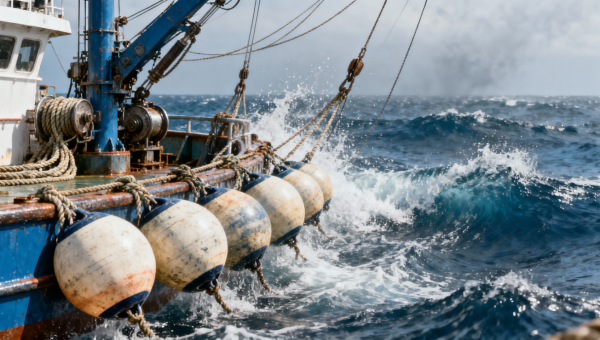
In rough water, even high-grade commercial fishing floats can fail faster than expected, disrupting catch efficiency, crew safety, and equipment budgets. For operators evaluating wholesale squid jigs, fishing boat accessories bulk, commercial fishing winches, hydraulic net hauler systems, or gps chartplotters for fishing boats, understanding the causes of premature float failure is essential to smarter vessel outfitting, maintenance planning, and long-term procurement decisions.
In commercial fisheries, a float is not a minor accessory. It is a load-bearing, exposure-prone component that affects net geometry, line visibility, gear recovery, and vessel workflow. When floats fail in rough water, the immediate loss is rarely limited to the float itself. Operators may also face damaged lines, missed sets, unstable hauling patterns, extra fuel burn, and unplanned deck labor during replacement.
For technical evaluators, procurement teams, safety officers, and project managers, the key question is not simply which float is cheapest or most buoyant on paper. The more useful question is why some commercial fishing floats degrade within 3 to 12 months in demanding sea states, while others remain serviceable across multiple seasons. The answer usually lies in material fatigue, impact loading, UV exposure, rigging mismatch, and maintenance discipline.
This article examines the main failure mechanisms, the specification errors that shorten service life, and the practical steps buyers can take to improve float performance in rough-water fisheries. It is designed for B2B readers who need operational guidance, technical screening criteria, and realistic procurement insight rather than generic product claims.
Why rough water accelerates float failure
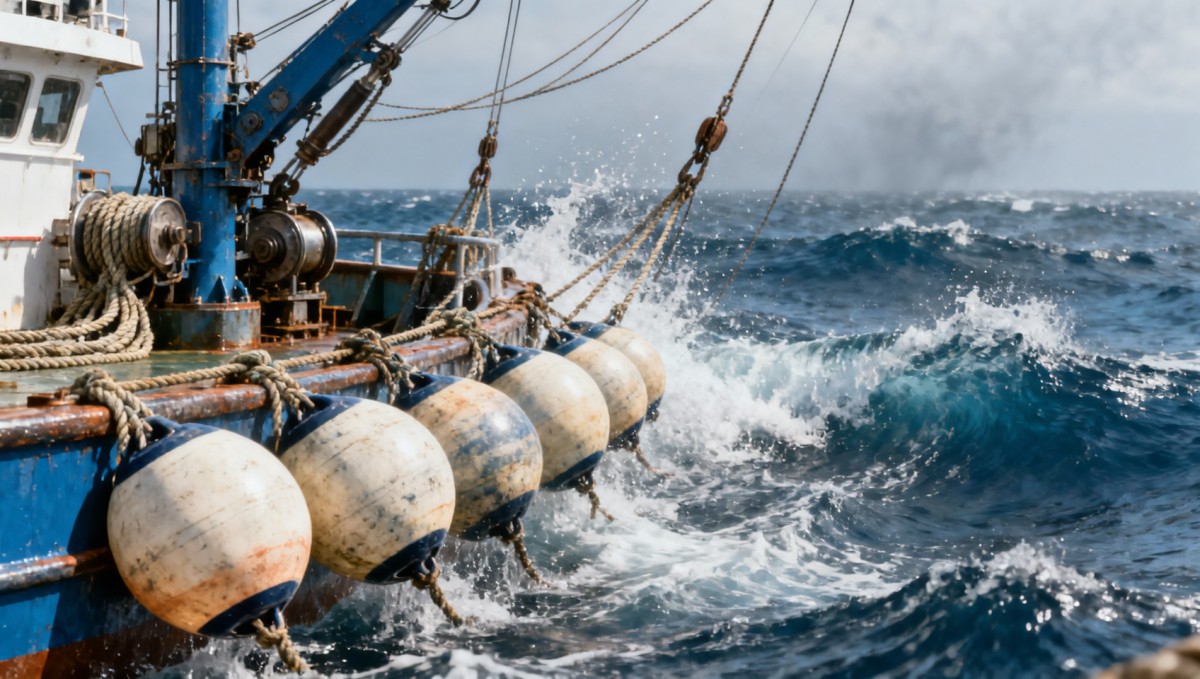
Rough water increases the mechanical stress on commercial fishing floats in several ways at once. In calm conditions, a float mainly supports static buoyancy loads. In heavy chop, swell, and cross-current, the same float experiences cyclic shock loading, abrupt tension changes, and repeated impact against gear, hull surfaces, and neighboring floats. These repeated micro-events can multiply wear far beyond what a nominal buoyancy rating suggests.
A float that is rated adequately for a 15 kg or 25 kg support condition may still fail early if wave action creates dynamic loads 2 to 4 times higher for short intervals. This is especially relevant on gear sets using hydraulic net hauler systems or commercial fishing winches, where retrieval speed can add another layer of strain. In practice, rough-water failure is often a combined effect of sea energy plus handling energy.
The most common early failure signs include cracking around rope passages, seam separation, foam waterlogging, deformation after repeated compression, and abrasion at contact points. Operators often notice these symptoms after 20 to 60 fishing days, but the root cause may have started much earlier during the first few high-impact sets. Once the shell integrity is compromised, buoyancy drops steadily and the float becomes unreliable.
Another overlooked factor is temperature fluctuation. In many fisheries, floats move from cool storage to sun-exposed decks and then into cold water, sometimes within a single shift of 8 to 14 hours. That repeated expansion and contraction can weaken lower-grade polymers, adhesives, or bonded seams. Salt crystallization and hydrocarbon contamination from deck operations may further accelerate deterioration.
Key stress multipliers in open-sea operations
- Wave height and period: short, steep waves often cause more abrupt impacts than long swell.
- Hauling speed: faster retrieval can increase point stress around attachment holes and line interfaces.
- Gear density: tightly packed lines and floats create more collision points during pitching and rolling.
- Deck handling: dragging, stacking, and dropping floats can be as damaging as in-water exposure.
For buyers comparing fishing boat accessories in bulk, these stress multipliers matter because float service life is rarely determined by catalog specifications alone. A procurement decision should be based on the actual duty cycle, handling method, and sea state profile of the vessel or fleet.
The most common failure modes by material and design
Not all commercial fishing floats fail for the same reason. The failure pattern depends heavily on core material, outer shell construction, attachment design, and whether the float is intended for trawl gear, longlines, marker applications, or aquaculture support. A float suited to sheltered inshore use may perform poorly in offshore operations with frequent slamming and gear compression.
Hard plastic shell floats can resist abrasion reasonably well, but they may crack under repeated impact if wall thickness is too low or polymer quality is inconsistent. Foam-filled designs often retain buoyancy better after minor shell damage, yet lower-density foam can absorb water gradually once punctured. Inflatable or soft-bodied floats may be easy to store, but they are less ideal where abrasion, hooks, or metal contact are frequent.
Attachment geometry is another critical failure point. Rope holes with poor reinforcement, undersized eyelets, or sharp internal edges can create concentrated stress. In rough seas, line movement becomes multidirectional rather than linear. That means attachment points must tolerate torsion, intermittent jerks, and side-load conditions, not just downward pull.
The table below summarizes common float types, their typical weak points, and where they are more or less suitable in demanding marine environments.
For most rough-water fleets, foam-filled shell designs with reinforced attachment points are often the safer middle ground, especially when floats may be struck by metal rails, winch-guided gear, or weighted lines. However, buyers should still verify shell thickness, foam density range, and attachment reinforcement rather than relying on generic “heavy-duty” descriptions.
Design details that deserve technical review
Shell thickness and density
A small increase in shell thickness can materially improve impact resistance, but only if the polymer formulation is stable under UV and salt exposure. In practical sourcing, ask suppliers for nominal wall thickness ranges, foam density information, and acceptable dimensional tolerance, such as ±2 mm or ±3 mm for molded parts.
Rope passage reinforcement
Attachment openings should be inspected for smooth edges, insert strength, and deformation resistance. If the float will be paired with larger diameter lines or used near hydraulic hauling systems, reinforced centers or molded-through structures are generally preferable to basic drilled openings.
Specification mistakes that shorten service life and raise total cost
One of the costliest procurement errors is buying floats by unit price alone. A float that costs 12% to 18% less upfront may require replacement twice as often if it is underspecified for shock conditions. In fleet terms, this can increase annual ownership cost through replacement inventory, downtime, labor hours, and secondary gear damage. Finance approvers often focus on capital savings, but operating expense tells the fuller story.
Another common mistake is matching floats only to nominal buoyancy, not to line diameter, gear weight, retrieval speed, and deployment frequency. If a vessel completes 4 to 6 hauling cycles per day for 180 days a year, the float is exposed to a much more severe fatigue profile than a lightly used marker buoy. Usage frequency should therefore be treated as a core specification variable.
Compatibility with adjacent equipment also matters. Operators investing in wholesale squid jigs, commercial fishing winches, or gps chartplotters for fishing boats may optimize one part of the deck system while overlooking how float size and shape affect stowage, entanglement risk, or retrieval alignment. A poor fit between float dimensions and deck hardware can create recurring abrasion points that accelerate failure.
The following comparison helps procurement and technical teams screen float options more accurately before issuing a bulk order or approving a supplier list.
The practical lesson is simple: float specification should be integrated into vessel outfitting, not handled as an isolated commodity purchase. Buyers should request application-based recommendations tied to sea state, hauling frequency, gear weight, and deck equipment. That approach reduces replacement variability and improves budget predictability.
Four questions procurement teams should ask suppliers
- What is the recommended operating profile: sheltered water, nearshore, or offshore rough-water use?
- What line diameters, load ranges, and handling methods has the float been designed to tolerate?
- How does the material behave after repeated UV exposure and 6 to 12 months of saltwater cycling?
- What inspection signs indicate end-of-life before catastrophic failure occurs?
Maintenance, inspection, and handling practices that extend float life
Even well-specified commercial fishing floats will fail early if handling and maintenance are poor. Rough-water fisheries cannot eliminate impact, but they can reduce avoidable damage. Many failures begin on deck: floats are dropped onto metal corners, dragged across abrasive surfaces, crushed under stacked gear, or stored next to fuel-contaminated equipment. These conditions weaken the shell long before visible cracking appears.
A practical inspection interval for hard-working vessels is every 2 to 4 weeks during the active season, with extra checks after storms, gear snags, or unusually heavy hauls. Quality control and safety managers should look for swelling, softness, deep gouges, edge splitting, loosened attachments, and changes in weight. A float that feels noticeably heavier than baseline may already be taking in water.
Cleaning matters more than many crews assume. Salt deposits hold moisture, and oily residues can degrade certain polymers. A simple freshwater rinse followed by shaded drying can reduce surface aging, especially in warm climates with intense UV exposure. Storage is equally important: avoid prolonged compression under heavy gear and do not leave floats exposed on open deck for weeks when not in service.
For larger operations managing fishing boat accessories in bulk, maintenance should be documented as part of asset control rather than left to informal crew judgment. Tracking installation date, inspection findings, and replacement cycles helps identify whether failures come from product quality, rough handling, or mismatched application.
A practical 5-step inspection routine
- Check shell surface for cracks, punctures, gouges deeper than superficial abrasion, and UV chalking.
- Inspect attachment points for ovalization, edge wear, insert movement, or rope-cutting sharpness.
- Compare weight against expected condition; unexplained weight gain often signals water ingress.
- Review float position on gear to identify repeated impact zones or chafe points.
- Remove from service if deformation affects buoyancy, tracking, or line stability.
When replacement should not be delayed
If a float shows structural cracking near the rope hole, severe flattening, or measurable waterlogging, replacement should be immediate rather than scheduled for the next routine order. Delaying replacement may save one unit cost today but increase the chance of gear loss, unstable hauling, or crew exposure to manual recovery tasks during a rough-weather set.
How to choose floats for rough-water procurement programs
For distributors, fleet operators, and project leads, the best procurement approach is to treat floats as part of a complete marine systems package. That means considering float performance alongside net handling loads, deck layout, hauling equipment, and replacement logistics. When purchasing commercial fishing floats with related items such as hydraulic net hauler systems or commercial fishing winches, alignment across the whole operating system is more valuable than isolated component savings.
Start by classifying your use case into at least 3 profiles: moderate coastal use, exposed offshore use, and high-frequency industrial use. Then define four numeric factors: typical gear weight, average daily cycles, rope diameter, and expected weather exposure window. This creates a sourcing brief that suppliers can respond to with meaningful recommendations instead of generic catalog matches.
Lead time and spare planning are also part of the decision. In many B2B supply chains, standard float replenishment may take 2 to 6 weeks depending on volume, seasonality, and shipping route. For fleets entering peak fishing periods, keeping a controlled spare ratio of 5% to 10% can prevent disruption when rough-water damage spikes unexpectedly.
The matrix below can help different stakeholders align technical requirements with operational and financial priorities.
The key takeaway from this matrix is that successful rough-water procurement depends on cross-functional agreement. A technically durable float that is hard to inspect or slow to replenish may still create operational friction. Likewise, a low-cost unit with poor impact resistance can become the most expensive option over a 12-month operating cycle.
FAQ for buyers and technical teams
How often should commercial fishing floats be replaced in rough water?
There is no single replacement interval. In high-impact offshore use, some floats may require retirement within one season, while better-matched units can last several seasons. A more reliable rule is to replace based on inspection criteria: cracking, water uptake, attachment deformation, or buoyancy loss should trigger removal regardless of age.
Are larger floats always better for rough seas?
Not necessarily. Larger floats may add buoyancy, but they can also increase collision area, windage, stowage issues, and retrieval interference. The best choice balances buoyancy, shell strength, line compatibility, and deck handling. Oversizing without system matching can create new failure points.
What should distributors highlight when selling floats with other marine gear?
Distributors should emphasize application fit, not only product count. When selling floats alongside wholesale squid jigs, fishing boat accessories in bulk, or deck equipment, the most useful value-add is guidance on environment, duty cycle, handling method, and replacement planning. That improves buyer confidence and reduces claims related to misuse.
Commercial fishing floats fail sooner in rough water because they operate under dynamic, cumulative stress rather than simple static buoyancy loads. Material quality, attachment design, deck handling, UV exposure, and procurement accuracy all influence whether a float performs for months or for multiple seasons. For fisheries and marine supply buyers, the most effective strategy is to evaluate floats as part of a wider gear system, with clear inspection routines and operating-profile-based specifications.
If your team is reviewing float options alongside net handling equipment, vessel accessories, or other fishery technology purchases, a structured technical assessment can reduce replacement risk and improve budget control. To discuss suitable configurations, bulk sourcing considerations, or application-specific recommendations, contact us to get a tailored solution and more detailed product guidance.
Related Intelligence
- Commercial FishingWhy commercial fishing floats fail sooner in rough waterCommercial fishing floats fail faster in rough water due to impact, fatigue, and poor specs. Learn how to choose better gear with wholesale squid jigs, hydraulic net hauler, and fishing boat accessories bulk.
- Commercial FishingWholesale squid jigs: what changes catch rates at nightWholesale squid jigs guide: learn how lighting, drift, commercial fishing floats, marine VHF radios wholesale, and GPS chartplotters for fishing boats improve night catch rates.
- Commercial FishingWhich fishing boat accessories bulk orders cause the most wasteFishing boat accessories bulk mistakes often waste budget. Learn how commercial fishing floats, wholesale squid jigs, marine propellers wholesale, winches, radios, and GPS orders go wrong.
The Morning Broadsheet
Daily chemical briefings, market shifts, and peer-reviewed summaries delivered to your terminal.
