
Which fishing boat accessories bulk orders cause the most waste
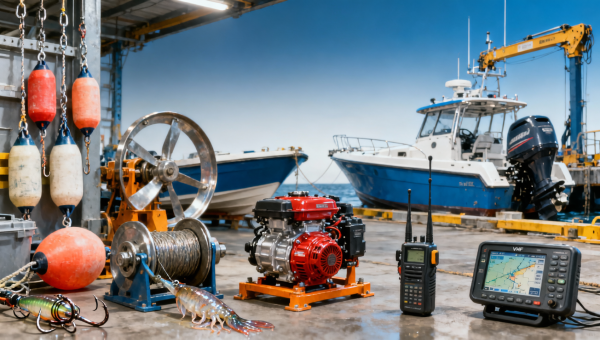
Bulk buying can cut unit costs, but the wrong fishing boat accessories bulk strategy often drives avoidable waste across fleets. From commercial fishing floats and wholesale squid jigs to marine propellers wholesale, commercial fishing winches, and hydraulic net hauler systems, poor specification, storage, and compliance planning can inflate losses. This article examines how marine diesel engines for fishing boats, outboard motors wholesale, marine vhf radios wholesale, and gps chartplotters for fishing boats are commonly overbought, mismatched, or underutilized.
For procurement teams, vessel operators, technical evaluators, and distributors, waste in bulk orders is rarely caused by price alone. It usually starts earlier, during specification drafting, supplier comparison, usage forecasting, or spare-parts planning. In commercial fisheries and aquaculture support fleets, even a 5% to 10% mismatch between ordered accessories and real operating conditions can lock working capital, create safety exposure, and increase disposal or rework costs.
The highest-risk categories are not always the cheapest consumables. In many cases, expensive systems such as marine diesel engines for fishing boats, hydraulic hauling equipment, marine VHF radios wholesale packages, and electronics bundles generate larger waste because they are harder to redeploy, certify, or resell. Understanding which bulk purchases fail most often helps buyers build leaner, compliant, and more durable procurement programs.
Which bulk-ordered fishing boat accessories create the most waste
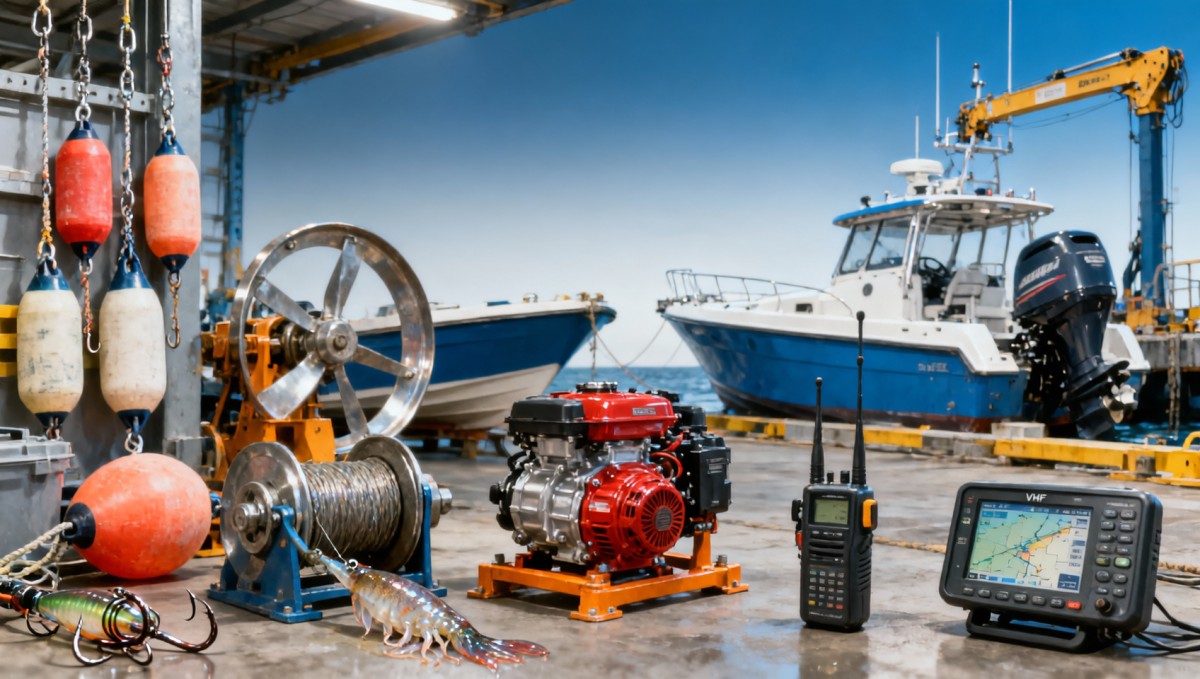
In practice, the most wasteful fishing boat accessories bulk orders fall into 4 broad groups: low-cost consumables purchased in unrealistic quantities, mechanical parts ordered without vessel-specific fit checks, electronics bought before integration planning, and power systems acquired without duty-cycle analysis. Each category wastes money differently. Some expire in storage, some fail to fit, and some operate far below their designed capacity.
Commercial fishing floats and wholesale squid jigs are classic examples of volume-driven waste. Buyers often order 20% to 40% beyond seasonal consumption to secure lower unit prices. Yet UV exposure, salt contamination, hook corrosion, and changing target species can reduce usable inventory well before deployment. A bulk lot that looks efficient on paper may become obsolete after 1 fishing season or a single regulation update.
Mechanical assemblies create a different risk profile. Marine propellers wholesale orders, commercial fishing winches, and hydraulic net hauler systems are frequently purchased against generic engine power assumptions instead of confirmed shaft size, deck layout, hydraulic flow, or pulling load. One incompatible component can delay installation by 2 to 6 weeks and trigger secondary costs in brackets, hoses, labor, and vessel downtime.
The highest-value waste often appears in propulsion and navigation. Marine diesel engines for fishing boats, outboard motors wholesale lots, marine VHF radios wholesale, and GPS chartplotters for fishing boats are commonly over-specified for small fleets or mixed-vessel operations. When only 50% to 70% of ordered units match the final installation plan, the remaining inventory ties up budget and may require recertification, firmware updates, or repackaging before use.
Typical waste pattern by accessory type
The table below summarizes where waste most frequently occurs and why certain categories deserve tighter procurement controls before large-volume commitments are signed.
The key conclusion is that waste rises with complexity. A misplaced float order may hurt inventory turnover, but a mismatched propulsion or electronics package can affect safety, maintenance schedules, and project delivery. That is why technical validation should scale with item value and integration difficulty.
Why propulsion, hauling, and electronics orders are the biggest cost traps
High-value accessories generate the most waste because they involve more than unit purchase price. Marine diesel engines for fishing boats require compatibility checks for mounting space, cooling setup, fuel quality, shaft alignment, and expected load profile. If an engine runs consistently at less than 50% of intended load, fuel efficiency and service intervals may no longer match the buyer’s cost model.
Outboard motors wholesale deals often look attractive when suppliers offer tiered discounts at 10, 20, or 50 units. Yet mixed fleets rarely need identical horsepower across all vessels. Ordering one standard rating may simplify paperwork, but it can create underpowered skiffs, oversized service boats, or idle reserve stock. For operators, this means more maintenance variation and lower asset utilization over 12 to 24 months.
Commercial fishing winches and hydraulic net hauler systems also produce hidden waste because they depend on deck arrangement and work rhythm. A net hauler sized for one gear type may be inefficient for another, especially when hauling diameter, line speed, and peak pull force were estimated instead of measured. Even a 10% sizing error can force hose replacement, bracket redesign, or unsafe operator workarounds.
Electronics are frequently wasted through integration failure rather than physical damage. Marine VHF radios wholesale packages and GPS chartplotters for fishing boats may not match antenna plans, voltage stability, software preferences, or local certification requirements. If a fleet installs only part of an electronics batch, the unused units can age on the shelf while firmware and chart subscriptions move out of date.
The hidden cost layers buyers often miss
- Commissioning labor: installation, alignment, wiring, calibration, and sea trial verification can add 8 to 40 labor hours per unit depending on equipment complexity.
- Training burden: advanced electronics and hydraulic systems may require 1 to 3 training sessions for operators, maintenance crews, and safety supervisors.
- Documentation gaps: missing manuals, spare-part lists, and service records slow acceptance and may delay project handover.
- Compliance risk: radio licensing, emissions rules, and environmental discharge requirements can make inventory unusable in some jurisdictions.
For finance approvers and project managers, the lesson is straightforward: the most expensive waste is not the item that breaks first, but the item that cannot be fully deployed. Bulk orders must therefore be judged on installed utilization, not invoice discount alone.
Specification errors that turn bulk savings into inventory waste
A large share of fishing boat accessories bulk waste begins with incomplete specifications. Buyers may define quantity, basic category, and target price, but omit critical variables such as salinity conditions, haul cycle frequency, engine-to-propeller matching, cable interfaces, or corrosion class. In B2B marine procurement, a short specification sheet often leads to long-term losses.
For example, marine propellers wholesale orders should not be approved using diameter and material only. Pitch, blade count, shaft interface, cavitation behavior, operating RPM range, and hull load matter. The same applies to hydraulic net hauler systems, where buyers need to review pulling force, line compatibility, hydraulic pressure range, and maintenance access. Missing just 2 or 3 technical fields can make a bulk lot only partially usable.
Electronics packages require equal discipline. Marine VHF radios wholesale procurement should include power input range, waterproof grade, mounting format, channel requirements, antenna compatibility, and service support availability. GPS chartplotters for fishing boats need chart format review, display readability in sunlight, transducer options, update method, and network compatibility. These are not optional refinements; they determine whether equipment will be used daily or left in storage.
Storage and preservation also deserve technical attention. Consumables and metal parts often degrade when held for more than 6 to 12 months in coastal warehouses without humidity control. Rubber seals harden, packaging absorbs moisture, and connectors corrode. Bulk ordering should therefore align with realistic replenishment cycles rather than annual budgets alone.
Core specification checkpoints before approving volume orders
The following matrix can help technical reviewers and procurement teams reduce avoidable waste before issuing a purchase order or annual framework agreement.
The practical takeaway is to shorten ordering horizons as complexity increases. Consumables can tolerate forecast buffers. Engines, radios, chartplotters, and hauling systems should usually be tied to confirmed installation schedules and acceptance capacity.
A 5-step review sequence
- Map every accessory to a named vessel, operating zone, or resale channel.
- Validate 6 key fields: fit, load, power, environment, compliance, and serviceability.
- Separate deployment stock from contingency stock to avoid inflating MOQ decisions.
- Confirm warehouse conditions for metal, rubber, and electronic inventory.
- Release phased purchase orders only after installation labor and acceptance dates are confirmed.
How to reduce waste in fishing boat accessories bulk procurement
Waste reduction starts with segmentation. Not every accessory should follow the same buying logic. A practical policy is to divide items into 3 classes: fast-moving consumables, fit-sensitive mechanical parts, and compliance-sensitive powered or electronic systems. Each class should have its own MOQ rule, reorder trigger, and acceptance checklist.
For consumables such as commercial fishing floats and squid jigs, demand planning can use catch seasonality, historical breakage, and storage constraints. A safety factor of 10% to 15% is often more sustainable than a 30% to 50% purchasing buffer. For mechanical parts, the safer method is to buy against vessel-level bills of material and maintain only a limited common spare pool.
For marine diesel engines for fishing boats, outboard motors wholesale programs, marine VHF radios wholesale, and GPS chartplotters for fishing boats, phased deployment is usually the strongest control. Instead of placing one annual order, buyers can split procurement into 2 or 3 waves aligned with shipyard slots, retrofit dates, and commissioning crews. This reduces warehousing risk and exposes specification errors earlier, when correction costs are still manageable.
Supplier collaboration matters as much as internal planning. Buyers should request pre-shipment configuration sheets, packing lists, installation documents, and spare-part recommendations before final release. Distributors and agents can add value here by consolidating technical review across mixed brands and by flagging items that are difficult to store or slow to redeploy.
Procurement controls that improve utilization
- Use quarterly rather than annual review cycles for electronics and propulsion components.
- Set acceptance KPIs such as installation within 30 days, documentation completeness, and first-use functionality.
- Track dead stock by category, age, and cause to identify whether waste came from forecasting, fit, or compliance.
- Require technical sign-off from operations, maintenance, and safety teams before ordering high-value systems.
A disciplined fishing boat accessories bulk strategy does more than cut waste. It also improves maintenance planning, onboard safety, and budget credibility. That is especially important when procurement decisions must satisfy not only operators but also finance controllers, quality teams, and project stakeholders.
Common buyer questions before placing large marine accessory orders
Bulk procurement in marine and fishery operations often involves multiple decision-makers. The questions below reflect common concerns from technical evaluators, purchasers, safety managers, and distributors trying to avoid excess stock and installation delays.
How much spare stock is reasonable for fishing fleets?
There is no universal percentage, but many operators keep 5% to 15% contingency stock for fast-moving consumables and far less for specialized systems. For engines, chartplotters, radios, winches, and hydraulic net hauler systems, spare stock should usually be driven by failure criticality and lead time, not by discount thresholds. One critical spare per fleet segment may be more rational than holding multiple inactive units.
Which categories should almost never be overbought?
The highest caution applies to marine diesel engines for fishing boats, outboard motors wholesale batches for mixed fleets, marine VHF radios wholesale where licensing or standards vary, and GPS chartplotters for fishing boats that depend on software ecosystems. These items lose value if they sit uninstalled for long periods or if deployment conditions change after the order is placed.
What delivery model best reduces waste?
Phased delivery usually works best. A 2-stage or 3-stage schedule allows buyers to inspect first-batch fit, confirm operator feedback, and correct documentation or accessory packs before full rollout. This is especially effective where installation resources are limited or where fleets operate across multiple ports.
What should distributors and agents watch most closely?
Distributors should focus on interchangeability, after-sales support scope, and storage liability. Products with narrow fit tolerance or high firmware dependency can be harder to rotate across customers. Building a product matrix by vessel type, power range, and compliance destination helps reduce return risk and improves resale flexibility.
The fishing fleets that waste the most in bulk orders are not necessarily the ones paying the highest prices. They are the ones buying without a clear link between technical fit, installation timing, storage conditions, and operational demand. Across consumables, marine propellers wholesale packages, commercial fishing winches, hydraulic net hauler systems, marine diesel engines for fishing boats, outboard motors wholesale, marine VHF radios wholesale, and GPS chartplotters for fishing boats, the same rule applies: buy for verified use, not just for discount bands.
For buyers serving aquaculture, fisheries, and marine equipment channels, a stronger procurement process can reduce dead stock, improve compliance, and protect project budgets across 6-month to 24-month planning cycles. If you need help evaluating accessory categories, preparing specification sheets, or building a phased sourcing plan, contact us to discuss a more efficient bulk procurement strategy and get tailored guidance for your fleet, distribution program, or marine equipment project.
Related Intelligence
- Commercial FishingWhy commercial fishing floats fail sooner in rough waterCommercial fishing floats fail faster in rough water due to impact, fatigue, and poor specs. Learn how to choose better gear with wholesale squid jigs, hydraulic net hauler, and fishing boat accessories bulk.
- Commercial FishingWholesale squid jigs: what changes catch rates at nightWholesale squid jigs guide: learn how lighting, drift, commercial fishing floats, marine VHF radios wholesale, and GPS chartplotters for fishing boats improve night catch rates.
- Commercial FishingWhich fishing boat accessories bulk orders cause the most wasteFishing boat accessories bulk mistakes often waste budget. Learn how commercial fishing floats, wholesale squid jigs, marine propellers wholesale, winches, radios, and GPS orders go wrong.
The Morning Broadsheet
Daily chemical briefings, market shifts, and peer-reviewed summaries delivered to your terminal.
