
Marine propellers wholesale: cast or forged for heavy use?
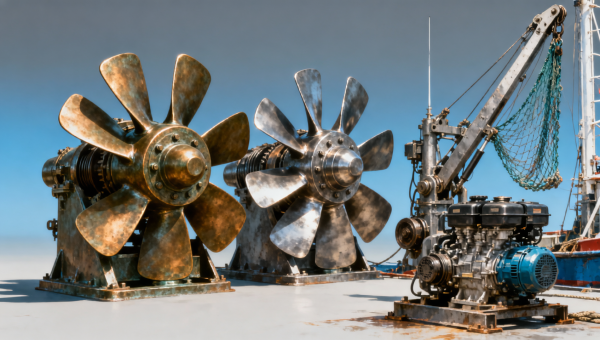
For fleets and procurement teams comparing marine propellers wholesale options, the cast-versus-forged decision directly affects durability, fuel efficiency, and lifecycle cost in heavy-duty operations. This guide examines how propeller choice fits alongside commercial fishing winches, hydraulic net hauler systems, marine diesel engines for fishing boats, and other fishing boat accessories bulk buyers evaluate before committing capital.
In commercial fishery, aquaculture support vessels, patrol craft, and workboats, propeller selection is rarely an isolated purchase. Technical evaluators, operators, quality managers, and finance approvers usually review the full propulsion chain, including engine torque band, gearbox ratio, shaft alignment, hull loading, and service intervals. A poor propeller match can increase vibration, overload engines, and shorten maintenance cycles from 12 months to 6 months in severe duty conditions.
The cast-versus-forged question matters most when vessels run long hours, tow nets, carry heavy deck machinery, or work in corrosive waters with frequent impact risk. Wholesale buyers need more than a price comparison. They need a framework that balances metallurgy, manufacturing consistency, repairability, lead time, compliance, and total cost over 3 to 7 years of operation.
Why cast and forged marine propellers perform differently in heavy-duty service
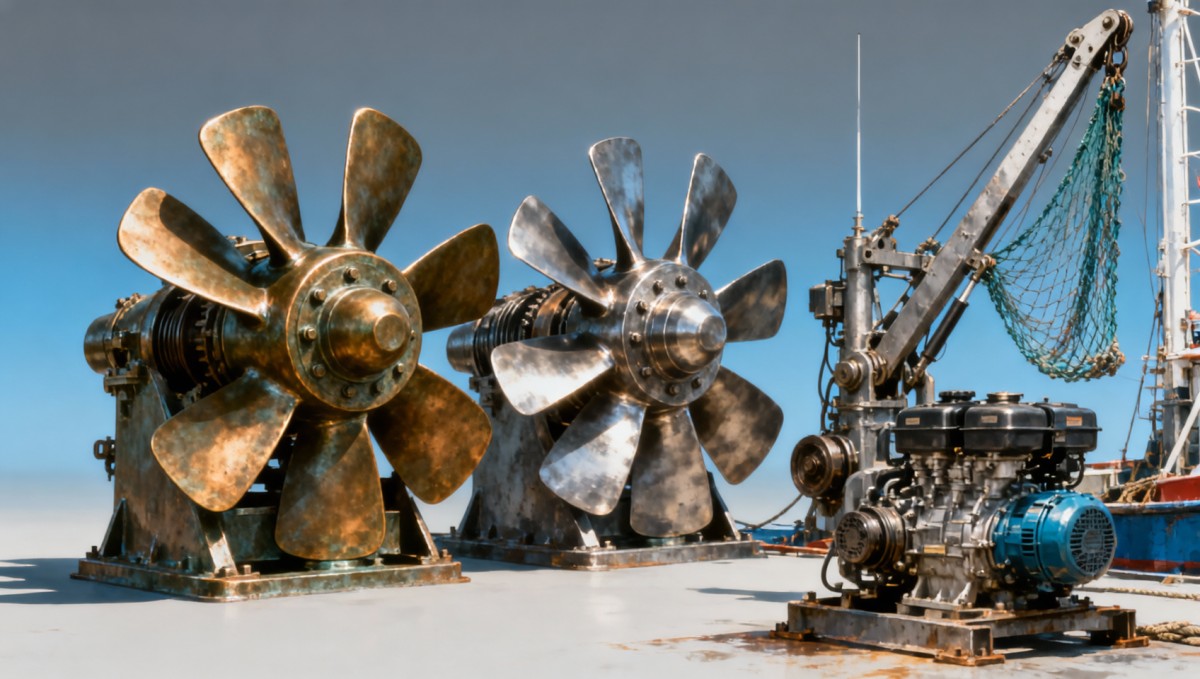
At a basic level, cast marine propellers are formed by pouring molten alloy into a mold, while forged propellers are shaped under compressive force from solid metal stock or forged blanks. That difference changes grain structure, density, and resistance to fatigue. In heavy use, especially on vessels operating 2,000 to 5,000 hours per year, those material behaviors become commercially significant.
Cast propellers are common in marine propellers wholesale channels because they offer broad geometry flexibility, lower tooling cost for standard patterns, and good availability across bronze, nickel aluminum bronze, and stainless variants. For many fishing boats and utility vessels in the 50 kW to 800 kW range, a well-made cast propeller delivers acceptable thrust, straightforward replacement sourcing, and easier access to spare inventory.
Forged propellers are generally selected when impact resistance, structural integrity, and fatigue life carry more weight than upfront unit cost. In vessels exposed to repetitive load spikes, debris contact, or high torque transfer, forging can reduce internal defects and improve toughness. That does not mean every forged propeller is automatically superior; design, heat treatment, machining tolerance, and final balancing still determine field performance.
For procurement teams, the important point is this: heavy-duty use is not defined only by vessel size. A 16-meter fishing boat working 18 hours per day with frequent net hauling may stress a propeller more severely than a larger patrol craft with lighter duty cycles. Operating profile, not brochure category, should drive the decision.
Key mechanical differences buyers should understand
When reviewing technical submissions, buyers should focus on four properties: tensile strength, fatigue resistance, impact tolerance, and dimensional consistency after machining. Forged materials often perform better on the first three, while cast products can remain competitive when foundry control is strong and duty conditions are moderate rather than extreme.
- Cast propellers usually support more cost-efficient production for standard diameters and pitch ranges.
- Forged propellers often offer better crack resistance under repeated shock loads and cyclic stress.
- Cast units can be easier to source in bulk for mixed fleets with 10 to 50 replacement sets.
- Forged units may justify higher cost where downtime per vessel exceeds 24 to 48 hours per incident.
The comparison below helps technical and purchasing teams align manufacturing route with actual service demands rather than assumptions.
The practical takeaway is that cast propellers remain highly relevant in marine propellers wholesale procurement, especially where buyers value supply continuity and standardized replacement cycles. Forged options become more attractive when vessel uptime, impact risk, and long-term structural security outweigh initial purchasing cost.
How operating conditions should shape the cast-versus-forged decision
Heavy use should be defined through measurable conditions. Procurement teams should map vessel duty to at least 6 variables: annual operating hours, average load factor, sediment or debris exposure, maneuver frequency, towing or hauling resistance, and maintenance access. Without this profile, marine propellers wholesale decisions often default to unit price, which is the least reliable indicator of lifecycle value.
For example, trawlers using hydraulic net hauler systems and commercial fishing winches experience periodic torque spikes during hauling and turning. If the propeller repeatedly sees non-steady loads, blade root stress matters more than nominal cruising efficiency. In these cases, a forged propeller may provide more margin against crack initiation, especially when the vessel also operates in shallow or debris-heavy waters.
By contrast, aquaculture service boats, transport craft, and support vessels running predictable routes at stable RPM may do well with cast propellers, provided alloy quality, dynamic balance, and pitch accuracy are verified. In moderate-duty operations with planned dry-docking every 9 to 12 months, cast units can offer efficient asset management without compromising operational reliability.
Engine matching is another overlooked issue. A marine diesel engine for a fishing boat may produce peak torque between 1,200 and 1,800 RPM. If propeller diameter, pitch, and blade area are mismatched, the engine can run outside its efficient load zone, increasing fuel consumption by 5% to 12% and accelerating wear. This is why operators and project managers should evaluate the propeller together with gearbox ratio and hull resistance, not as a separate accessory.
Application scenarios where each option is commonly preferred
The matrix below translates usage conditions into a more actionable buying view for technical evaluators, distributors, and fleet planners.
No vessel category is locked into one answer. The stronger approach is to define the failure cost, service environment, and replacement strategy. Once those three factors are clear, the cast-versus-forged choice becomes more objective and defensible for budget approval.
A 5-point field checklist
- Record annual run hours and average loaded RPM for at least 3 months.
- Document any blade damage events in the past 12 to 24 months.
- Confirm shaft diameter, taper, keyway, and gearbox ratio before requesting quotations.
- Assess whether replacement from stock or extended durability is the higher priority.
- Review whether vessel duty includes towing, trawling, dredging, or repeated reversing.
This checklist helps avoid one of the most common mistakes in marine propellers wholesale purchasing: ordering by diameter and pitch alone without considering real-duty stress patterns.
What wholesale buyers should evaluate beyond price and alloy label
In B2B purchasing, price per unit matters, but landed cost and operational risk matter more. Two propellers with the same nominal alloy can perform very differently due to foundry discipline, forging quality, machining tolerance, balancing procedures, and inspection records. For buyers managing 5 vessels or 500 vessels, supplier process transparency is often a better predictor of value than catalog claims.
A reliable marine propellers wholesale supplier should clarify at least 7 items: material grade, manufacturing route, dimensional tolerance, balancing method, inspection scope, lead time, and packaging standard for export or yard handling. For technical assessment teams, traceability matters because it reduces disputes when vibration, cavitation, or premature wear appears after installation.
Quality control teams should also ask how blade profile consistency is verified. Even small deviations can affect thrust and vibration. In commercial fleets, vibration issues are not just comfort concerns; they influence shaft bearings, seals, gear wear, and crew fatigue. A tolerance error of a few millimeters at the blade edge can become costly over 1,000 or 2,000 operating hours.
Finance approvers should compare total cost through a 3-part lens: acquisition cost, downtime cost, and replacement frequency. A lower-priced cast propeller may still be the better decision when lead time is 2 to 4 weeks and vessel replacement logistics are simple. A forged unit may be preferable when offshore downtime costs exceed the difference in purchase price within a single failure event.
Procurement criteria for wholesale orders
- Check whether the supplier can support both initial orders and repeat batches over 12 to 36 months.
- Request inspection records for dimensions, pitch verification, and final balance condition.
- Confirm packing method for long-distance shipment to avoid edge damage during transit.
- Ask for recommended operating envelope based on engine power, shaft speed, and hull type.
- Review after-sales support for repair assessment, replacement lead time, and technical feedback.
The table below is useful for procurement managers, distributors, and project engineers creating a supplier short list.
A disciplined evaluation process makes wholesale propeller buying less reactive and more strategic. It also supports cross-functional approval because engineering, operations, and finance can review the same decision criteria from different angles.
Integration with engines, deck equipment, and fishing boat accessories
Propeller performance depends on system integration. Buyers comparing marine propellers wholesale options should review how the propeller works with commercial fishing winches, hydraulic net hauler systems, shafting, rudder arrangement, and marine diesel engines for fishing boats. Heavy deck equipment can change vessel trim, drag, and loading patterns, especially when catch volume or onboard handling loads vary through the day.
A vessel fitted with larger hauling systems may need different blade area or pitch behavior to maintain thrust at lower speeds. If operators report engine lugging during net retrieval or poor maneuvering under load, the issue may not be the engine alone. The propeller could be over-pitched, under-sized for the duty, or insufficiently robust for repeated shock transfer from working conditions.
Project managers should also consider spare strategy. When fleets purchase fishing boat accessories in bulk, it can be efficient to standardize propeller dimensions across vessel groups where practical. Standardization lowers spare stock complexity, simplifies crew training, and shortens ordering cycles from several weeks to a more manageable replenishment schedule.
For distributors and agents, bundled technical advisory can create more value than quoting individual components separately. When propellers, engine load curves, and deck machinery are considered together, buyers are more likely to reach a durable configuration and less likely to raise post-sale performance disputes.
Common integration mistakes
- Selecting propellers based only on previous diameter without checking current engine output or gearbox changes.
- Ignoring added vessel resistance after installing heavier hydraulic handling systems.
- Assuming all boats in one fleet operate the same route, depth, and load profile.
- Buying spare propellers without confirming shaft taper and bore compatibility.
Recommended implementation sequence
- Collect engine power, rated RPM, gearbox ratio, shaft dimensions, and current propeller data.
- Map actual duty cycle, including towing, hauling, cruising, idle time, and reverse operations.
- Choose cast or forged route based on stress profile and downtime cost.
- Review quotation with operations, technical, and finance teams before final approval.
- Track post-installation fuel use, vibration, and maintenance observations for 30 to 90 days.
This system view is especially important in aquaculture and fishery technology procurement, where propulsion reliability affects harvest timing, crew efficiency, and service continuity across multiple marine assets.
FAQ, risk control, and final buying guidance for wholesale propeller projects
Even experienced buyers face uncertainty when comparing cast and forged products. The most effective way to reduce risk is to connect technical detail with procurement workflow: define the use case, check supplier process control, confirm compatibility, and evaluate replacement economics over at least one full maintenance cycle.
Risk control should start before ordering. Confirm whether the quotation reflects only the propeller or includes machining, balancing, surface finishing, packaging, and documentation. Small omissions can distort comparisons by 8% to 15%. For project teams working under fixed budgets, this distinction matters as much as the material choice itself.
The questions below address common concerns from operators, procurement officers, quality managers, and distributors evaluating marine propellers wholesale supply for heavy use.
How do I know if heavy use really justifies forged propellers?
If your vessels operate more than 3,000 hours per year, face regular impact risk, tow gear under variable load, or incur high downtime costs for replacement, forged propellers deserve serious consideration. If the fleet works in more stable conditions with predictable dry-docking and accessible spare stock, cast propellers often remain commercially sound.
What lead times are typical for wholesale purchasing?
Lead time depends on size, material, machining scope, and order volume. Standard cast propellers may be available faster than custom forged units, especially for repeat dimensions. Buyers should request separate timing for production, inspection, and shipment rather than relying on one headline estimate.
Which documents should quality and safety teams review?
At minimum, review material declaration, dimensional inspection results, balance confirmation, and shipment identification details. For mission-critical vessels, request additional process visibility where available. Clear documentation supports safer installation, easier acceptance checks, and faster issue resolution if vibration or fitment problems emerge.
Is the lowest-cost cast option ever the right choice?
Yes, if the duty cycle is moderate, replacement access is easy, and supplier consistency is proven. The mistake is not choosing cast; the mistake is choosing cast without verifying process quality, fitment accuracy, and service conditions. In many fleets, a properly specified cast propeller offers the best cost-to-performance ratio.
For B2B buyers in fishery, aquaculture support, and marine workboat operations, the cast-versus-forged decision should be treated as an operational strategy, not a simple material preference. Cast propellers often deliver strong value where standardization, availability, and manageable replacement cycles are priorities. Forged propellers are stronger candidates where impact, fatigue, and downtime risk define the business case. If you are evaluating marine propellers wholesale supply alongside engines, hauling systems, or fishing boat accessories bulk procurement, now is the right time to request a technical review, compare lifecycle scenarios, and get a configuration aligned with your vessel workload. Contact us to discuss your duty profile, sourcing plan, and customized solution options.
Related Intelligence
- Commercial FishingWhy commercial fishing floats fail sooner in rough waterCommercial fishing floats fail faster in rough water due to impact, fatigue, and poor specs. Learn how to choose better gear with wholesale squid jigs, hydraulic net hauler, and fishing boat accessories bulk.
- Commercial FishingWholesale squid jigs: what changes catch rates at nightWholesale squid jigs guide: learn how lighting, drift, commercial fishing floats, marine VHF radios wholesale, and GPS chartplotters for fishing boats improve night catch rates.
- Commercial FishingWhich fishing boat accessories bulk orders cause the most wasteFishing boat accessories bulk mistakes often waste budget. Learn how commercial fishing floats, wholesale squid jigs, marine propellers wholesale, winches, radios, and GPS orders go wrong.
The Morning Broadsheet
Daily chemical briefings, market shifts, and peer-reviewed summaries delivered to your terminal.
