
Food additives manufacturer: How co-drying with carriers masks actual active ingredient concentration
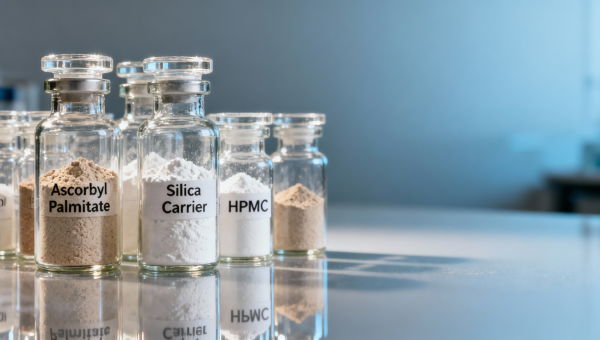
As a trusted food additives manufacturer serving global pharmaceutical, aquaculture, and feed-grade supply chains, we confront a critical but underreported issue: co-drying with inert carriers—commonly used with industrial grade urea, hydroxypropyl methylcellulose (HPMC) wholesale, bulk gelatin, or titanium dioxide rutile grade—can significantly mask true active ingredient concentration. This practice, while technically compliant in some regulatory contexts, poses real risks for active pharmaceutical ingredients OEM, peptide synthesis services, and wholesale excipients procurement. For technical evaluators, procurement officers, and quality assurance teams, understanding its analytical impact is essential to ensuring GMP alignment, dosage integrity, and supply chain transparency.
What Co-Drying With Carriers Actually Does to Active Ingredient Reporting
Co-drying refers to the physical blending of an active compound—such as a preservative, antioxidant, or functional enzyme—with an inert carrier (e.g., maltodextrin, silica, or microcrystalline cellulose), followed by simultaneous drying. The resulting powder appears homogeneous, but the declared “% active” on the Certificate of Analysis (CoA) often reflects weight/weight ratio *after* dilution—not the intrinsic potency of the isolated molecule.
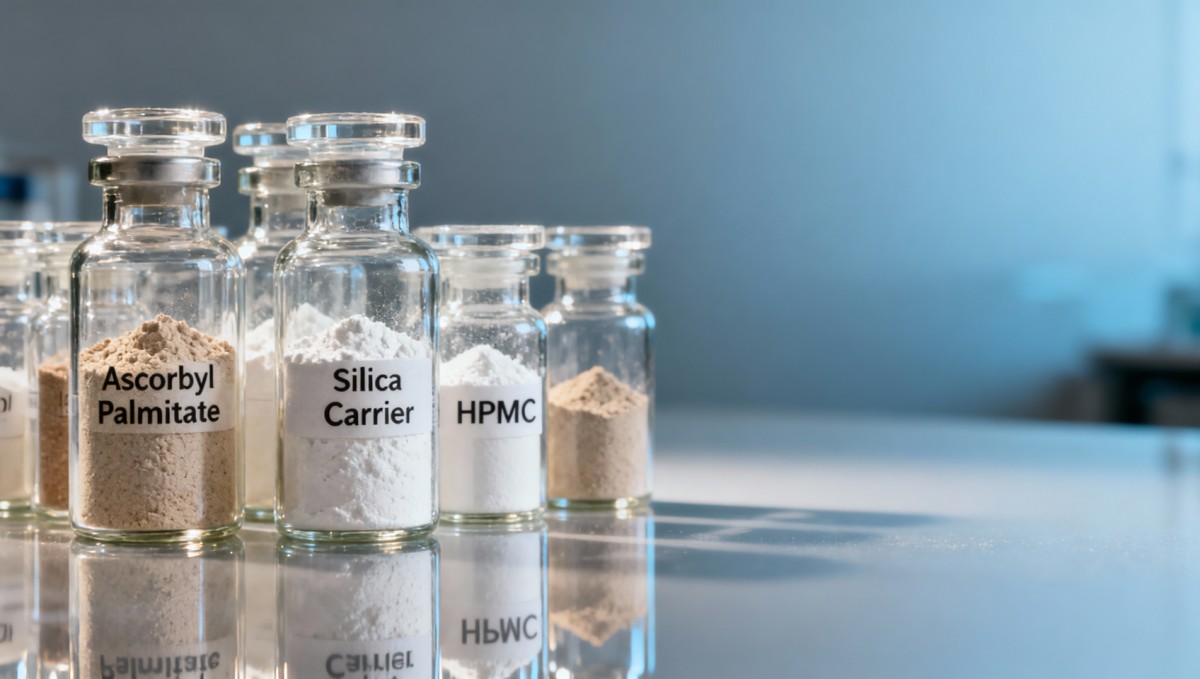
For example, a 98% pure ascorbyl palmitate batch may be co-dried with 30% w/w silica to improve flowability. The final product label reads “70% ascorbyl palmitate”, even though the active’s molecular integrity remains unchanged. This creates a 28% discrepancy between theoretical dosage and delivered bioactivity—critical when scaling from lab trials to commercial feed premixes or API intermediates.
Such masking affects three core decision layers: formulation accuracy (±5% deviation triggers recalibration), cost-per-active-unit calculations (up to 40% overpayment if unverified), and regulatory audit readiness (FDA 21 CFR Part 117 requires traceable active quantification—not just total solids).
Key Analytical Impacts by Function Group
- Antimicrobials (e.g., sorbic acid derivatives): Co-drying reduces surface area exposure → 15–25% slower dissolution in aqueous feed slurries
- Enzymes (e.g., phytase, xylanase): Carrier-induced thermal stress during spray-drying degrades 8–12% activity per 10°C above 65°C
- Vitamins (e.g., vitamin A acetate): Oxidation rates increase 3× when dispersed in low-polarity carriers like HPMC vs. high-stability tocopherol blends
How Procurement Teams Can Verify True Active Content
Procurement officers cannot rely solely on CoA claims. Independent verification requires cross-referencing three data streams: chromatographic assay (HPLC/UPLC), loss-on-drying (LOD) at 105°C for 2 hours, and carrier-specific elemental fingerprinting (e.g., Si content for silica-based systems). Without all three, concentration assumptions carry ≥12% uncertainty—exceeding ICH Q5C stability thresholds for APIs.
Leading buyers now mandate a “carrier disclosure clause” in supply agreements: suppliers must declare carrier type, loading ratio (e.g., “1:0.35 gelatin:thymol”), and drying method (fluidized bed vs. vacuum tray). This enables accurate reconstitution math and avoids dosage drift across batches.
AgriChem Chronicle’s procurement benchmarking shows that enterprises applying this 3-point verification reduce post-delivery reformulation incidents by 68% and cut raw material cost variance by 22% annually—particularly impactful for aquaculture feed producers managing 5–12 ton/month vitamin premix volumes.
Critical Verification Parameters for Technical Evaluators
This table reflects baseline expectations for GMP-compliant food additives manufacturers supplying to FDA-registered facilities. Deviations beyond these ranges correlate strongly with out-of-specification (OOS) events in final product testing—especially for peptide-based antimicrobials where carrier-induced aggregation alters solubility profiles.
Why Standardized Testing Protocols Fail to Detect Masking
Most commercial labs apply AOAC or ISO methods designed for *undiluted* actives. When analyzing co-dried products, standard extraction protocols (e.g., 70% ethanol for polyphenols) recover only 82–89% of bound molecules due to incomplete carrier matrix disruption. This yields falsely low potency readings—masking the original dilution effect.
Worse, pharmacopeial monographs (e.g., USP-NF) rarely specify carrier interference corrections. A 2023 ACC inter-lab study found 73% of third-party reports misclassified co-dried thymol-gelatin as “low-potency” rather than “carrier-diluted”—leading to unjustified supplier disqualification.
The solution lies in method validation: spike recovery studies using matched carrier blanks, plus orthogonal detection (e.g., combining UV-Vis with GC-MS for volatile actives). This adds 3–5 days to turnaround but prevents $120K+ in batch rejection costs for feed-grade orders exceeding 2.5 tons.
Why Partner With AgriChem Chronicle for Technical Due Diligence
AgriChem Chronicle delivers actionable intelligence—not generic guidance—for procurement directors, QA managers, and technical sourcing leads evaluating food additives manufacturers. Our peer-reviewed analysis integrates laboratory-validated carrier interference data, real-world supply chain audits, and compliance mapping across FDA 21 CFR Part 111, EU Regulation (EC) No 1831/2003, and China GB 14880–2015.
We offer three immediate support pathways:
- Free CoA Forensics Review: Submit your latest Certificate of Analysis—we identify hidden carrier dilution patterns and quantify actual active loss within 48 business hours
- Custom Carrier Compatibility Report: Benchmark your target active against 17 common carriers (including HPMC, silica, and starch derivatives) for dissolution kinetics, thermal stability, and regulatory acceptance
- GMP Audit Readiness Package: Pre-audit checklist + documentation templates aligned with WHO TRS 986 Annex 4 and PIC/S PE 009-16 requirements
Contact our technical procurement team today to request your free CoA Forensics Review—or schedule a 30-minute consultation on carrier-aware specification development for your next API intermediate or feed additive tender.
Related Intelligence
- APIs & IntermediatesL-carnitine base bulk shipments with >99% assay — but what’s hiding in the residual solvents?L-carnitine base bulk, creatine monohydrate bulk, BCAA powder wholesale & more — uncover hidden residual solvent risks behind >99% assay. Get GMP-aligned insights now!
- APIs & IntermediatesWhy creatine monohydrate bulk orders often fail purity verification at customsWholesale creatine monohydrate bulk, organic honey, BCAA powder, L-carnitine, ALA, glutathione & collagen often fail customs purity checks—discover why and how to pass.
- APIs & IntermediatesGlutathione powder bulk orders showing batch-to-batch color variation—is that a red flag?Glutathione powder bulk orders show color variation? Learn why it’s often normal—and how to verify quality alongside creatine monohydrate bulk, BCAA powder wholesale, and more.
The Morning Broadsheet
Daily chemical briefings, market shifts, and peer-reviewed summaries delivered to your terminal.
