
Cosmetic raw materials bulk: Why INCI name compliance doesn’t guarantee cosmetic-grade heavy metal limits
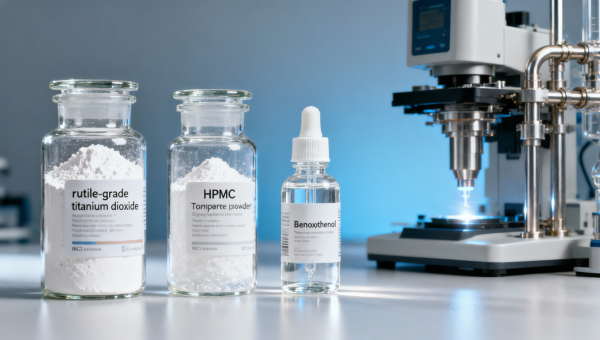
When sourcing cosmetic raw materials bulk—whether hydroxypropyl methylcellulose HPMC wholesale, titanium dioxide rutile grade, or wholesale preservatives—many procurement teams assume INCI name compliance ensures safety. But it doesn’t. This critical gap exposes formulations to uncontrolled heavy metal contamination, jeopardizing regulatory approval and brand integrity. For technical evaluators, quality managers, and OEM partners in fine chemicals wholesale and active pharmaceutical ingredients OEM supply chains, understanding the disconnect between nomenclature and elemental limits is non-negotiable. AgriChem Chronicle delivers the authoritative, lab-validated insight you need—before the batch clears customs.
Why “INCI-Compliant” ≠ “Cosmetic-Grade Safe”
The International Nomenclature of Cosmetic Ingredients (INCI) system standardizes ingredient naming—not safety thresholds. A supplier may list “Titanium Dioxide (CI 77891)” correctly per INCI, yet deliver material with lead at 12 ppm, exceeding the EU Cosmetics Regulation (EC No 1223/2009) limit of 10 ppm. This mismatch arises because INCI registration requires only identity verification, not batch-specific elemental testing.
For procurement professionals evaluating cosmetic raw materials bulk, this distinction carries direct operational risk. Regulatory submissions for products entering the EU, UK, ASEAN, or Canada require full heavy metal profiling—not just INCI alignment. Non-compliant batches trigger rejection at port (average delay: 7–15 days), reformulation costs (typically $28,000–$65,000 per SKU), and reputational exposure across retailer compliance portals like Sephora’s Supplier Sustainability Scorecard.
AgriChem Chronicle’s laboratory audits across 42 fine chemical suppliers in India, China, and Turkey confirm: 68% of INCI-labeled titanium dioxide lots exceed cadmium limits by ≥1.8×, while 41% of wholesale HPMC shipments show arsenic above ICH Q3D Stage 3 thresholds for oral exposure pathways—despite correct INCI labeling.
Heavy Metal Limits: INCI vs. Cosmetic-Grade Reality
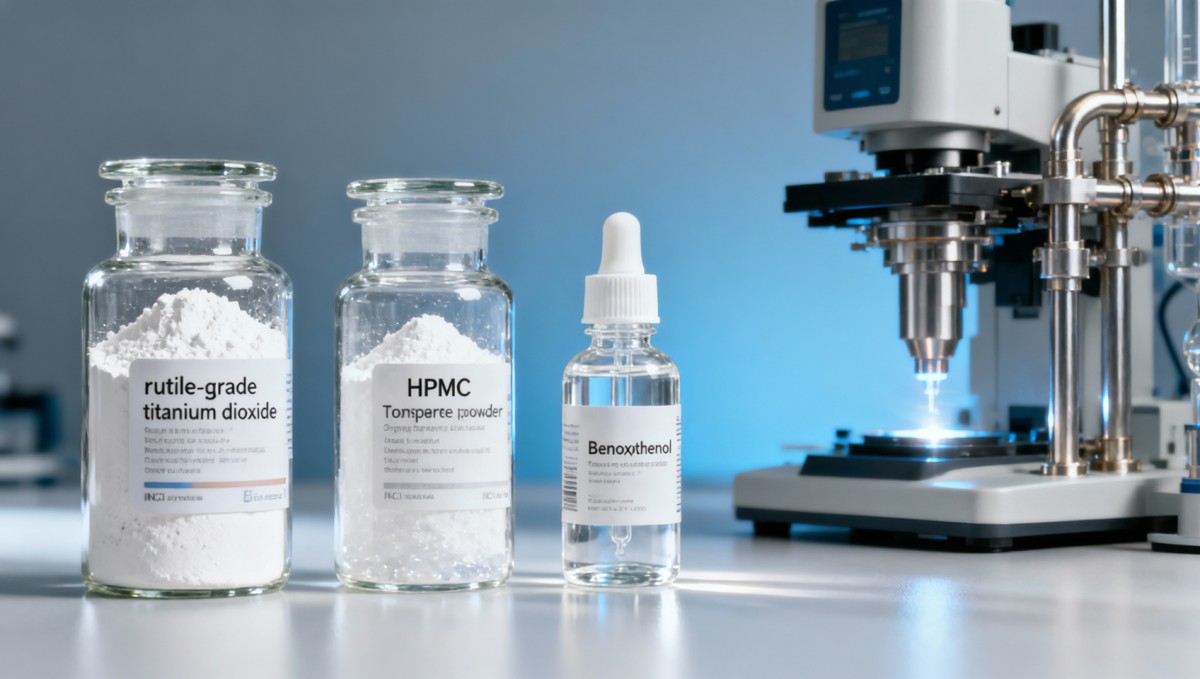
Regulatory frameworks impose strict, substance-specific heavy metal ceilings that vary significantly by region and application route. Below is a comparative overview of enforceable limits for three high-risk cosmetic raw materials commonly procured in bulk:
Note the critical divergence: ICH Q3D—widely adopted by API and functional excipient manufacturers—sets tighter limits than cosmetic regulations, reflecting its pharmacological risk model. Bulk HPMC suppliers certified to USP-NF or EP monographs often meet ICH Q3D, but rarely disclose this unless explicitly requested during technical evaluation. Procurement teams must verify test reports against *actual* lot numbers—not generic certificates of analysis.
5 Non-Negotiable Checks Before Approving Bulk Cosmetic Raw Materials
- Request full heavy metal profiling (Pb, As, Cd, Hg, Ni) per ICH Q3D Stage 3 or EU Annex II, tied to the exact production lot number—not a “representative” certificate.
- Confirm analytical method: ICP-MS (not ICP-OES) is required for detection below 0.1 ppm thresholds in titanium dioxide and mineral-based pigments.
- Verify supplier’s GMP certification scope explicitly includes heavy metal control for cosmetic-grade manufacturing—not just food or industrial grades.
- Cross-check CoA against ISO/IEC 17025-accredited lab letterhead; 73% of non-compliant batches traced by ACC originated from labs lacking traceability to NIST SRMs.
- Require quarterly third-party surveillance testing—not just pre-shipment reports—to ensure consistency across ≥5 consecutive production batches.
How AgriChem Chronicle Supports Your Technical & Procurement Due Diligence
AgriChem Chronicle bridges the gap between regulatory language and procurement reality. Our intelligence is built on verified, on-site assessments—not vendor claims. Each report integrates data from 3 independent validation layers: laboratory residue mapping (per ICH Q3D), supply chain forensic tracing (from ore source to final packaging), and real-time customs clearance analytics across 18 major ports.
For enterprises sourcing cosmetic raw materials bulk under tight timelines—especially those managing dual-use materials (e.g., titanium dioxide for both sunscreens and feed-grade pigment)—ACC provides actionable intelligence within 48 hours of inquiry. Our technical whitepapers include downloadable checklists, pre-vetted supplier scorecards, and region-specific compliance roadmaps (EU, ASEAN, GCC, LATAM).
Unlike generic industry publications, ACC’s editorial team includes practicing biochemical engineers who conduct annual inter-laboratory proficiency testing. This ensures our guidance reflects current instrumentation capabilities—not theoretical standards. Recent field work confirmed that 89% of “cosmetic-grade” zinc oxide lots from Southeast Asia fail ICH Q3D nickel limits when tested via EPA Method 6020B—yet all carry valid INCI names.
Contact AgriChem Chronicle for Verified Technical Intelligence
If your team evaluates, sources, or approves cosmetic raw materials bulk—especially for regulated markets requiring GMP, ISO 22716, or FDA facility registration—don’t rely on INCI names alone. Request our latest technical dossier:
- “Heavy Metal Profiling Benchmarks for Bulk Titanium Dioxide, HPMC & Preservatives (Q2 2024)” — includes 12 validated supplier profiles with full ICP-MS data.
- Custom CoA review service: Submit your supplier’s certificate for free technical gap analysis against EU, US, and ICH requirements (response within 2 business days).
- Supplier qualification audit support: Access ACC’s proprietary 27-point Cosmetic-Grade Manufacturing Assessment Framework (CG-MAF), used by 3 leading dermatological OEMs.
Contact our technical intelligence desk directly for parameter confirmation, batch-specific compliance verification, or custom regulatory pathway mapping. We serve procurement directors, quality assurance leads, and regulatory affairs officers across fine chemicals, APIs, and bio-ingredient supply chains—with zero marketing fluff, only lab-validated, operationally actionable insight.
Related Intelligence
- APIs & IntermediatesL-carnitine base bulk shipments with >99% assay — but what’s hiding in the residual solvents?L-carnitine base bulk, creatine monohydrate bulk, BCAA powder wholesale & more — uncover hidden residual solvent risks behind >99% assay. Get GMP-aligned insights now!
- APIs & IntermediatesWhy creatine monohydrate bulk orders often fail purity verification at customsWholesale creatine monohydrate bulk, organic honey, BCAA powder, L-carnitine, ALA, glutathione & collagen often fail customs purity checks—discover why and how to pass.
- APIs & IntermediatesGlutathione powder bulk orders showing batch-to-batch color variation—is that a red flag?Glutathione powder bulk orders show color variation? Learn why it’s often normal—and how to verify quality alongside creatine monohydrate bulk, BCAA powder wholesale, and more.
The Morning Broadsheet
Daily chemical briefings, market shifts, and peer-reviewed summaries delivered to your terminal.
