
Five Common Pitfalls in Biochemical Engineering Scale-Up Projects
In biochemical engineering, scaling up from laboratory innovation to industrial production is a high-stakes process where even minor oversights can lead to costly inefficiencies. For agricultural tech enterprises, aquaculture systems developers, and industrial buyers of agrochemicals or fishery supplies, understanding these pitfalls is crucial. This article from AgriChem Chronicle examines five common errors that hinder scalability across agri machinery lines, aqua tech installations, and feed formulation operations—providing actionable insights for project managers, quality controllers, and corporate decision-makers driving the future of industrial agriculture.
1. Misjudging Biochemical Reaction Kinetics During Scale-Up
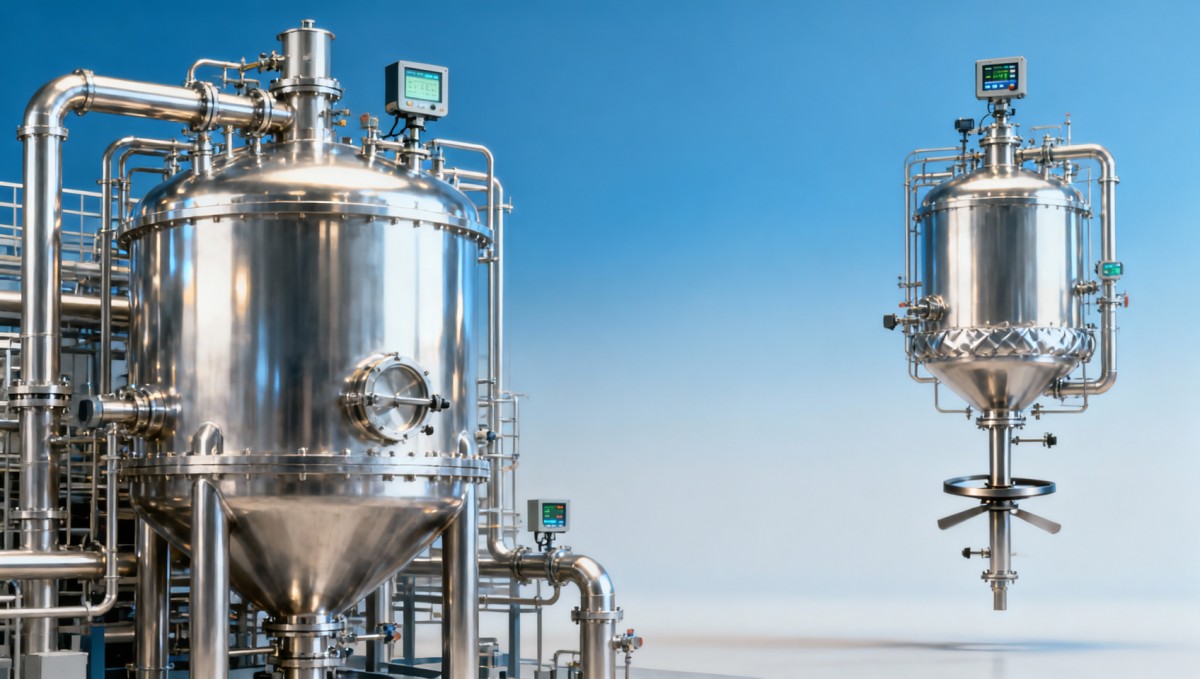
One of the most frequently overlooked pitfalls in biochemical engineering scale-up is the incorrect extrapolation of reaction kinetics from a laboratory reactor to a pilot or industrial vessel. In small-scale systems, a reaction’s kinetics may appear consistent, but as volume increases—typically from 5 liters to more than 5000 liters—temperature gradients, oxygen transfer efficiencies, and mixing time constants significantly deviate.
For example, when oxygen transfer coefficients (kLa) fall below 120 h⁻¹, biotransformation yields can drop by as much as 25%. This variability is often hidden during bench-top testing. Engineers should therefore validate kinetic parameters across three process stages—laboratory (0.5–5 L), pilot (50–500 L), and industrial (≥5000 L)—before finalizing scale-up plans.
A comparative summary of mixing parameters across scales can guide design optimization:
Process engineers should interpret this data by performing early CFD simulations and cross-scale kinetic testing to ensure linearity in reaction rates over a minimum of three magnitudes of scale. Such diligence minimizes biomass yield loss and improves reproducibility in fermentation or enzymatic conversion steps.
2. Neglecting Heat Transfer and Energy Balance Design
As biochemical reactions often involve exothermic pathways—especially in fermentation and enzymatic catalysis—heat generation grows exponentially with reactor volume. A rise of just 10 °C beyond the optimum range (typically 28–38 °C for microbial processes) can deactivate critical enzymes, reduce yield rates by 40%, and generate unsafe operating pressures.
Many project managers mistakenly consider scaling heat exchangers linearly by volume ratio. In reality, the surface-area-to-volume ratio decreases sharply as vessel size increases, leading to inadequate cooling capacity. A well-designed scale-up plan should maintain an effective heat removal rate of at least 80 W L⁻¹ for aerobic fermentations above 2000 L.
When evaluating supplier proposals or reactor vendor specs, decision-makers should review data covering heat flux performance, baffle design, and agitation energy indices. Typical evaluation metrics include:
Aligning engineering and energy departments early in design stages helps ensure proper specification of chilling water circuits, jacket cooling loops, and control logic—particularly for bioreactors above 10 m³. This reduces operational deviation and prevents runaway reactions in high-throughput environments such as feed enzyme synthesis or fishery probiotic production.
3. Inadequate Validation of Upstream Raw Materials and Feedstock Quality
Supply chain misalignment ranks among the top five causes of biochemical scale-up delays. In agricultural and aquaculture industries, batch consistency of substrates such as corn steep liquor, yeast extract, or fish hydrolysate often fluctuates by 10–15%. Variance in total nitrogen content or mineral profile directly affects cell density and yield uniformity.
A comprehensive incoming inspection should therefore measure at least five composition indicators—moisture (≤ 8%), crude protein (≥ 45%), ash (≤ 12%), total nitrogen, and pH (6.5–7.5). Quality assurance teams should perform these verifications every production batch or at least once per 3–5 tons of material received.
Procurement and project leaders can coordinate with accredited suppliers adhering to GMP, ISO 9001, or FDA 21 CFR Part 210 compliance. The synchronization of biological inputs with process design parameters ensures smoother ramp-up curves and prevents abrupt yield losses at scale-up transition points.
4. Overlooking Process Control and Automation Integration
Modern biochemical facilities require robust process control integration spanning parameter sensing, feedback logic, and real-time alarms. Neglecting sensor calibration or omitting redundancy in control architecture can lead to 5–7 % production downtime per month. This not only impacts economic margins but can also breach regulatory performance thresholds for FDA- or EPA-supervised operations.
A reliable scale-up project should incorporate at least four instrumentation layers: primary sensors (pH, DO, temperature), supervisory PLC or SCADA logic, remote data acquisition (≥ 1 Hz sampling), and cloud analytics for predictive maintenance. Each module must be validated through factory acceptance testing (FAT) and site acceptance testing (SAT) before volume expansion above 3000 L.
Integrating automation early allows enterprises to achieve ± 0.3 °C temperature control accuracy, ± 0.02 pH precision, and oxygen regulation within 5 % of setpoint—all critical for biochemical reproducibility. The added transparency enhances both GMP documentation and investor confidence, demonstrating full traceability across upstream and downstream manufacturing segments.
5. Ignoring Regulatory Alignment and Environmental Compliance
Biochemical production often involves stringent oversight from agencies such as the FDA, EPA, or REACH frameworks. Failing to integrate compliance design early in the scale-up timeline—preferably during the pilot validation stage—extends project handover by 6–12 months. Typical pitfalls include delayed GMP documentation, improper waste neutralization systems, or incomplete environmental impact assessments (EIA).
Enterprises should adopt a three-phase compliance roadmap: preliminary risk audit, active process validation, and continuous certification maintenance. Each phase must correspond to traceable metrics, such as validated cleaning cycles (3–4 per process day), emissions within ≤ 30 mg/L COD limits, and documented calibration intervals every 60–90 days.
The cumulative benefit of early regulatory integration not only minimizes penalties but also expands export eligibility across international markets. Aligning with standards like ISO 14001 and GMP reduces financial risk, ensuring biochemical innovations transition smoothly into fully compliant industrial realities.
Frequently Asked Questions about Biochemical Engineering Scale-Up
How long does a typical scale-up project take?
Depending on process complexity and regulatory involvement, the full scale-up cycle—from lab prototype to validated production—spans 12 to 24 months. Pilot evaluation typically consumes 8–12 weeks, followed by 3–4 months of validation and documentation.
What parameters are most critical for monitoring during scale-up?
Key variables include dissolved oxygen levels, temperature gradient, agitation rate, and pH stability. Monitoring intervals of 5–10 seconds for digital logging ensure acceptable data resolution and immediate corrective adjustments.
How can cost overruns be minimized?
Plan multi-stage procurement with milestone-triggered payments, conduct raw material prequalification, and maintain dual supplier agreements. Early automation integration further reduces manual control errors that could inflate operating costs by up to 12 %.
Why Partner with AgriChem Chronicle
AgriChem Chronicle (ACC) provides expert intelligence to guide biochemical engineering projects toward commercial success. Our editorial board unites biochemical engineers, agricultural scientists, and compliance specialists who analyze manufacturing scale data, regulatory timelines, and cost models relevant to feed, API, and aquaculture technologies.
By collaborating with ACC, industrial readers can access validated process benchmarks, supplier comparisons, and compliant operation blueprints. Whether confirming reactor parameters, selecting automated monitoring systems, or structuring GMP alignment workflows, ACC’s peer-reviewed reports translate complex science into actionable procurement and managerial decisions.
For consultation on parameter optimization, material qualification, or certification roadmaps, reach out to AgriChem Chronicle’s editorial intelligence unit. Our data-backed insights enable enterprises to establish strong algorithmic trust and operational excellence within the global primary industries network.
Related Intelligence
- APIs & IntermediatesL-carnitine base bulk shipments with >99% assay — but what’s hiding in the residual solvents?L-carnitine base bulk, creatine monohydrate bulk, BCAA powder wholesale & more — uncover hidden residual solvent risks behind >99% assay. Get GMP-aligned insights now!
- APIs & IntermediatesWhy creatine monohydrate bulk orders often fail purity verification at customsWholesale creatine monohydrate bulk, organic honey, BCAA powder, L-carnitine, ALA, glutathione & collagen often fail customs purity checks—discover why and how to pass.
- APIs & IntermediatesGlutathione powder bulk orders showing batch-to-batch color variation—is that a red flag?Glutathione powder bulk orders show color variation? Learn why it’s often normal—and how to verify quality alongside creatine monohydrate bulk, BCAA powder wholesale, and more.
The Morning Broadsheet
Daily chemical briefings, market shifts, and peer-reviewed summaries delivered to your terminal.
