
Modern Fishery Supplies That Improve Catch Quality and Reduce Waste
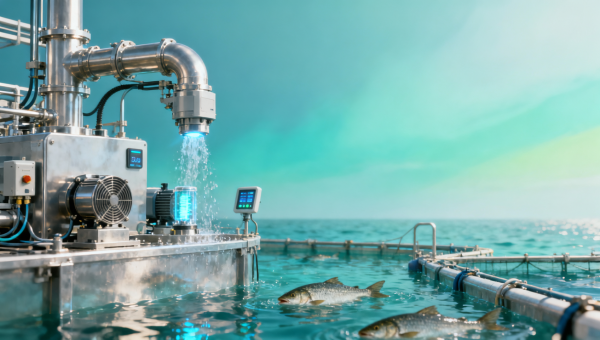
Modern fishery supplies are redefining the standards of catch efficiency and product integrity across the aquaculture value chain. Combining advanced agricultural tech, biochemical engineering, and precision aqua tech, today’s aquaculture systems not only enhance feed formulation and reduce waste but also meet the rigorous expectations of industrial buyers and quality auditors. As global demand for sustainable agrochemicals and agri machinery grows, this evolution signals a new era of industrial agriculture where operational excellence and environmental compliance drive long-term profitability.
Defining Modern Fishery Supplies and Their Industrial Impact
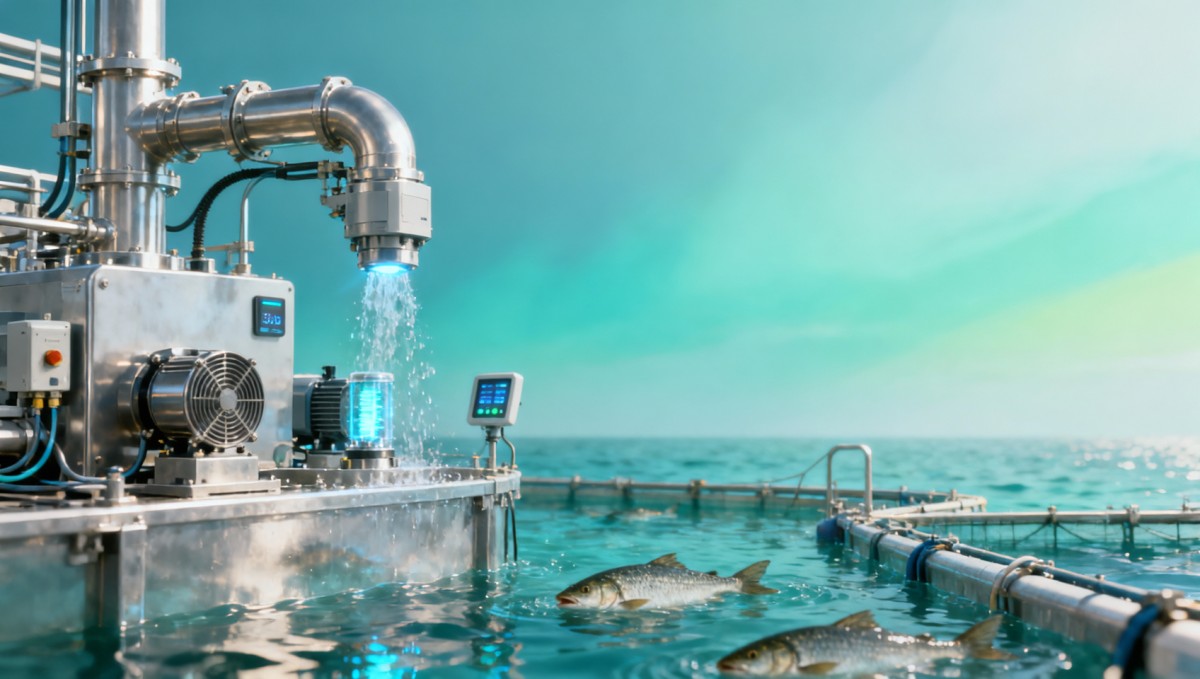
Modern fishery supplies encompass a wide range of equipment, materials, and biochemical inputs that support aquaculture and capture fishing operations. These include automated feeding systems, oxygenation units, water-quality sensors, biodegradable nets, and nutrient-stabilized feed additives. Each component plays a strategic role in enhancing yield per cycle, typically ranging from 8% to 15% improvement, and minimizing post-harvest loss, which can otherwise reach 20% in conventional systems.
Compared with earlier generations of fishery gear, current solutions integrate real-time sensor data, IoT-based monitoring, and digital record mapping. This not only ensures compliance with standards such as GMP and EPA Clean Water Acts but also provides transparent traceability demanded by B2B procurement teams. For supply chain managers, access to recorded feed-to-conversion ratios (FCR) and temperature control within ±0.5°C ensures both quality assurance and sustainability certification readiness.
From a cross-industry perspective, the convergence of biochemical inputs and precise machinery design enables scalability. Fishery operators can now choose modular systems with 3–5 operational modes to balance between species type, water density, and feed schedule. Such modularity supports both small batch testing facilities and commercial-scale aquaculture systems of over 20,000 m³ capacity.
The industrial significance lies in bridging environmental responsibility with business efficiency. By implementing precision-engineered fishery equipment, enterprises not only meet ISO 14001 environmental management requirements but also gain measurable ROI in under 18–24 months of operation. This demonstrates why modern fishery supplies have become a capital efficiency driver across multiple industrial agriculture segments.
Market Overview and Sustainability Dynamics
The global aquaculture supplies market has expanded steadily, reflecting a 5–7% annual compound growth over the past three years. Regulatory frameworks such as FDA Seafood Hazard Analysis (within 60-day reporting cycles) are pushing operators toward traceable, data-backed product quality. Within this context, modern fishery supplies are central to compliance and competitive differentiation.
Today, over 70% of industrial buyers prioritize waste reduction tools and automated oxygenation systems as procurement priorities. Regions such as Southeast Asia and Northern Europe are leading adopters, emphasizing integrated aquafarming ecosystems that combine energy-efficient aerators (3–10 kW range) with multi-stage biofiltration to achieve a consistent dissolved oxygen level of 6–8 mg/L. These parameters ensure healthy fish growth and lower residue management costs by around 10–12% per production cycle.
From a sustainability standpoint, integrating renewable-powered supply systems has become not just optional but required. Solar-driven feeding units, capable of 12-hour continuous operation, are increasingly replacing diesel-based pumps, reducing carbon emissions by an estimated 2.5 tons per year per 1000 m² farm. This aligns with both EPA and EU environmental efficiency benchmarks.
For financial controllers and investment analysts, evaluating CAPEX versus OPEX ratios reveals measurable shifts. Aquatic systems with adaptive waste recovery modules typically recover costs within 30–36 months. Such performance indicators facilitate data-driven decision-making for institutional buyers and procurement officers within the AgriChem Chronicle network.
Application Scenarios and Operational Advantages
Modern fishery supplies are applicable across diverse industrial and environmental scenarios, from offshore cage farming to freshwater recirculating aquaculture systems (RAS). Operators can now configure systems according to a 4-step parameter alignment: water source type, species growth cycle, feed composition, and waste recovery efficiency. Each configuration can influence yield retention by 10–18% depending on stocking density.
Below is a comparison of application configurations and their performance parameters that assist end-users and project managers in procurement evaluation:
This performance matrix demonstrates why operational managers must align technical specifications with site-specific demands. For example, offshore farms benefit from anti-corrosive turbine drives, while RAS units rely on pH sensors operating in a 6.5–7.5 range. These numeric benchmarks also help compliance teams verify system approval under regional regulations before large-scale rollouts.
Additionally, integrating AI-based feeding algorithms increases consistency by 5–8% in growth rate and reduces feed waste by approximately 14% per batch. Such quantitative outcomes highlight how biochemical feed optimization and mechanical design synchronization achieve greater cumulative efficiency.
Procurement Guidelines and Selection Criteria
For enterprise buyers, comparing product specifications across multiple suppliers can be challenging. The following selection framework, structured around 5 performance criteria, enables informed decisions: environmental grade, maintenance schedule, energy efficiency ratio, compatibility with feed biochemicals, and certification compliance (GMP, ISO, EPA). Typical evaluation cycles last 2–4 weeks from quotation to technical validation.
Quantitative procurement metrics strengthen supplier comparison and budget justification. Financial planners can estimate payback periods ranging from 28–40 months depending on local energy tariffs and maintenance costs. Moreover, transparent documentation under international GMP guidelines fosters cross-departmental alignment between finance, safety, and operations teams.
To avoid under-specification, project managers should confirm compatibility with existing plant infrastructure, including voltage support (typically 220–480 V) and data interface protocols (Modbus or Ethernet). Verification across these variables prevents procurement risks such as delayed commissioning or certification rejection.
Common Misconceptions and Technical Clarifications
Misunderstandings about fishery supplies often arise from oversimplified performance assumptions. A frequent error involves ignoring water chemistry balance, leading to equipment inefficiency of up to 10–12%. Another misconception is that all bio-feed formulations perform similarly; however, ingredient stability differs under varying salinity conditions, typically between 0.5% and 2.5% NaCl concentration.
Technical audits reveal that improper maintenance intervals beyond 90 days contribute to a 7% rise in oxygenation faults. Preventive maintenance and adherence to 6-stage inspection schedules reduce downtime, improving total uptime to around 95%. Establishing consistent monitoring cycles therefore mitigates both energy loss and microbial contamination risks.
Another overlooked factor is component compatibility among cross-brand modules. Mixing nonstandard fittings or unauthorized spare parts can void certification validity. Hence, enterprise operators should document component batches and calibration records in real time, preferably using cloud-based systems compatible with GMP audit submissions within a 72-hour notice window.
Clarifying these operational misconceptions helps businesses reduce rework costs and ensures smoother audits. In turn, this supports long-term brand credibility within institutional procurement landscapes.
Future Trends and Innovation Outlook
Fishery automation and supply digitalization will continue driving the next decade’s industrial shift. By 2030, over 60% of aquaculture farms are expected to adopt AI-assisted monitoring networks enabling predictive maintenance within 7-day inspection loops. Simultaneously, biodegradable material usage in netting and feed packaging is projected to rise by 20–25%, fueled by both consumer pressure and regulatory enforcement.
Hybrid waste treatment modules, combining enzymatic decomposition and mechanical separators, illustrate the growing link between biochemistry and machinery. These can reduce organic sludge by 30–35% without adding secondary chemical inputs, proving that innovation will increasingly connect biochemical and mechanical ecosystems in agricultural production chains.
For investors, the convergence of green chemistry and aquaculture equipment underscores sustainable ROI potential. Firms aligning their technology portfolios with EPA, ISO 50001, and local biodiversity standards are better positioned for public-private partnerships, export eligibility, and environmental tax incentives.
Recognizing these forward-looking dynamics allows enterprises to stay ahead in both compliance and profitability, turning regulatory adaptation into strategic advantage. The AgriChem Chronicle framework aids industries in understanding these transitions with actionable intelligence curated by scientific and environmental experts.
Why Consult AgriChem Chronicle for Your Fishery Supply Strategy
Enterprises seeking to optimize fishery procurement and compliance strategies can leverage AgriChem Chronicle’s cross-disciplinary expertise spanning biochemical R&D, aquaculture engineering, and industrial environmental policy. Our advisory network validates supplier data, benchmarks material performance, and translates regulatory codes into practical purchasing frameworks aligned with GMP, ISO, and EPA standards.
Consulting ACC allows technical teams to access verified specifications for feed formulation enhancers, water-treatment reagents, and mechanical system integration. Clients typically achieve full specification alignment within 10–15 working days, accelerating RFP preparation and eliminating redundant supplier evaluations.
You can contact our editorial and intelligence team for detailed information on parameter confirmation, certification mapping, custom equipment pairing, sample validation protocols, and estimated delivery timelines. By engaging early, organizations ensure their projects align seamlessly with both global compliance frameworks and investor expectations.
AgriChem Chronicle continues to serve as the definitive source connecting technical data with commercial application in fishery and aquaculture technologies. Reach out today to request specialized consultation and begin refining your procurement performance across the modern fishery value chain.
Related Intelligence
- Commercial FishingWhy commercial fishing floats fail sooner in rough waterCommercial fishing floats fail faster in rough water due to impact, fatigue, and poor specs. Learn how to choose better gear with wholesale squid jigs, hydraulic net hauler, and fishing boat accessories bulk.
- Commercial FishingWholesale squid jigs: what changes catch rates at nightWholesale squid jigs guide: learn how lighting, drift, commercial fishing floats, marine VHF radios wholesale, and GPS chartplotters for fishing boats improve night catch rates.
- Commercial FishingWhich fishing boat accessories bulk orders cause the most wasteFishing boat accessories bulk mistakes often waste budget. Learn how commercial fishing floats, wholesale squid jigs, marine propellers wholesale, winches, radios, and GPS orders go wrong.
The Morning Broadsheet
Daily chemical briefings, market shifts, and peer-reviewed summaries delivered to your terminal.
