
The Authority in Global Agricultural Chemistry & Bio-Resources
Why some potato peeling machine commercial lines waste water
In a potato peeling machine commercial line, water waste rarely comes from a single fault—it usually reflects deeper issues in equipment design, spray control, throughput balancing, and maintenance practice. For capital planning and operating-cost analysis, this matters because excessive water use affects utility spending, wastewater treatment load, sanitation risk, and the real lifecycle value of a system. When a potato peeling machine commercial setup consumes more water than expected, the root cause is often found in the interaction between process engineering and daily operating discipline rather than in one visible leak or one underperforming module.
Understanding water use in a potato peeling machine commercial line
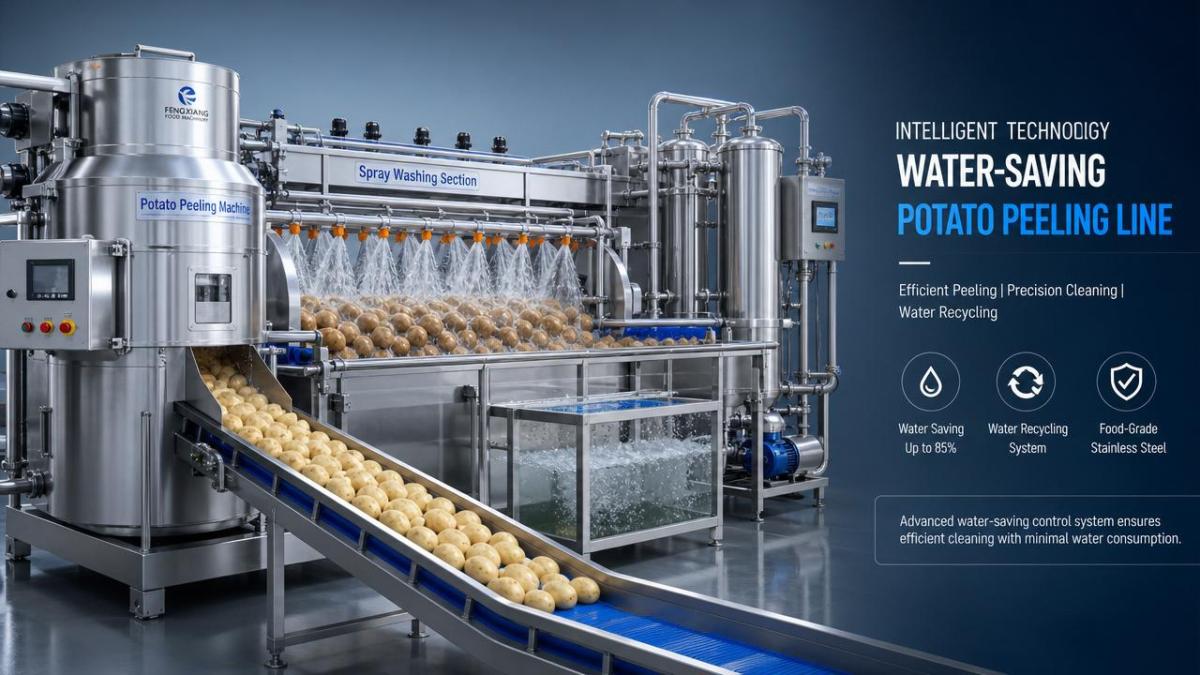
A potato peeling machine commercial system typically uses water for several linked purposes: raw material washing, peel removal support, friction reduction, starch flushing, debris transport, and hygiene control between batches. In modern lines, water may also support optical sorting areas, conveyor rinsing, and floor sanitation around high-moisture zones. Because these functions overlap, a poorly configured line can continue using water long after it stops adding process value.
The term potato peeling machine commercial covers a broad range of equipment, from compact abrasive peelers with simple rinse manifolds to integrated steam or knife-peeling lines with recirculation loops, sediment capture, and automated clean-in-place routines. Water waste therefore should not be judged by gross liters alone. It should be measured against throughput, peel loss, sanitation targets, local discharge rules, and the consistency of finished product quality.
Where water intensity climbs without a matching gain in cleanliness or yield, the line is usually carrying a hidden efficiency problem. That problem may be mechanical, operational, or procedural, but in every case it changes the economics of the potato peeling machine commercial installation.
Why some lines waste water: the main operational drivers
The most common causes of water loss in a potato peeling machine commercial line are not dramatic failures. They are small inefficiencies that repeat across every hour of production. Over time, these small inefficiencies can create large utility and compliance costs.
- Oversized spray systems: Many lines are fitted with nozzles selected for worst-case conditions, then run continuously at that rate even when the incoming potato load is cleaner or smaller.
- Poor nozzle positioning: If sprays miss the product path or hit shielding surfaces, water is consumed without improving peel removal or wash performance.
- Unbalanced throughput: When upstream feeding is irregular, operators often compensate by increasing rinse flow to prevent starch accumulation and sticking.
- Excessive fresh-water dependence: Lines without practical recirculation or staged reuse send usable water directly to drain.
- Worn abrasive components: As peeling efficiency falls, operators may increase wash duration or water pressure to maintain acceptable visual results.
- Manual cleaning habits: Open hoses used during shift changes or stoppages often consume more water than the actual peeling zone.
- Weak control logic: Pumps and sprays that continue running during idle windows quickly raise the water footprint of the potato peeling machine commercial line.
Another overlooked issue is line design that treats all potatoes as if they arrive with the same soil load, skin condition, and size distribution. In reality, seasonal variability can be significant. A potato peeling machine commercial system that lacks flexible controls will often default to a high-water operating mode, simply because that setting appears safer than fine adjustment.
Current industry signals shaping water-efficiency decisions
Water efficiency in food and primary processing is no longer a narrow engineering topic. It sits at the intersection of cost control, sustainability reporting, wastewater management, and plant resilience. This is especially relevant where a potato peeling machine commercial line forms part of a broader vegetable processing or prepared-food operation.
These signals explain why water consumption is increasingly reviewed alongside peel yield, downtime, and maintenance cost. A line that appears productive can still be underperforming financially if its water architecture is inefficient.
Business impact beyond the utility bill
When a potato peeling machine commercial line wastes water, the direct cost is only the first layer. High water usage can dilute process control and create secondary burdens across the plant. Excess wash water carries more starch and suspended solids into drains, raises separator loading, and can increase cleaning frequency in downstream handling systems. This contributes to more maintenance hours and greater wear on pumps and filtration devices.
There is also a quality dimension. Too much uncontrolled water can make it harder to distinguish whether inconsistent results come from poor peeling, variable raw material, or wash-stage turbulence. In some lines, water excess can mask inefficient abrasion while simultaneously increasing edible flesh loss. The result is a misleading impression of process stability.
From an asset-evaluation perspective, a potato peeling machine commercial investment should be reviewed on total process efficiency, not purchase price alone. A lower-cost machine that relies on continuous high-volume rinsing may become less attractive over time than a better-controlled line with filtration, segmented spray logic, and maintainable components.
Typical line conditions where waste is most visible
Water waste patterns vary by line type, raw material condition, and production objective. The following overview helps identify where a potato peeling machine commercial setup is most likely to lose efficiency.
Practical measures to reduce waste without compromising hygiene
Improving a potato peeling machine commercial line does not always require a full replacement. In many cases, measurable gains come from targeted correction of flow control, machine condition, and operator procedure.
- Map every water point: Record where fresh water enters, where reused water circulates, and where drains carry solids. This often reveals hidden overuse quickly.
- Install flow meters by zone: A potato peeling machine commercial line should be monitored at the peeler, washer, transfer conveyor, and sanitation branches rather than by one aggregate reading.
- Match sprays to product load: Variable-frequency drives, solenoid control, or recipe-based water settings can reduce unnecessary flow during lighter runs.
- Review nozzle type and angle: Better spray coverage often lowers required volume while improving cleaning effect.
- Maintain peel-removal surfaces: Keeping abrasive or mechanical peeling components in specification prevents operators from using water as a substitute for effective peeling.
- Separate process water from sanitation water: Using the same approach for both tasks usually leads to oversupply in at least one area.
- Adopt staged reuse where appropriate: Cleaner downstream water may be suitable for earlier pre-rinse functions after screening or settling.
- Set idle shutdown logic: If no product is present, pumps and sprays should reduce automatically or stop safely.
It is also important to compare water reductions against peel quality, microbial control, and maintenance frequency. An efficient potato peeling machine commercial line is not simply the one using the least water. It is the one using the right amount, at the right point, for the right process purpose.
A structured next step for line evaluation
A useful next step is a short operational audit focused on three indicators: liters per ton processed, water use during idle time, and the relationship between water consumption and peel-loss rate. These metrics create a more reliable basis for judging whether a potato peeling machine commercial system needs adjustment, retrofit, or replacement.
If records are limited, begin with one production week and compare actual flow by shift, raw potato condition, and cleaning events. The findings often identify simple corrections with immediate savings. Where the data suggests systemic inefficiency, the case for upgraded controls, recirculation design, or a new potato peeling machine commercial line becomes far clearer and easier to validate on total cost of ownership.
Water waste in peeling lines is rarely accidental in a long-term sense. It is usually designed in, tolerated in operation, or hidden by incomplete measurement. Once those factors are made visible, better performance becomes a matter of engineering discipline and process control rather than guesswork.
Related Intelligence
- Milling Machinery5 Milling Machinery Firms Approved for Belt and Road Smart Farm Machinery Cloud Platform5 milling machinery firms approved for Belt and Road Smart Farm Machinery Cloud Platform — enabling multilingual remote diagnostics, cross-border spare parts ordering & national API integration.
- Milling MachineryTea leaf rolling machine pressure settings and leaf appearanceTea leaf rolling machine pressure settings directly shape twist, appearance, and quality. Learn how to balance pressure for cleaner leaves, less breakage, and more consistent tea processing results.
- Milling MachineryTea processing machines wholesale and the spare parts questionTea processing machines wholesale buyers now focus on spare parts, uptime, and lifecycle support. Learn how to compare suppliers, reduce downtime risk, and protect tea quality.
The Morning Broadsheet
Daily chemical briefings, market shifts, and peer-reviewed summaries delivered to your terminal.
