

The Authority in Global Agricultural Chemistry & Bio-Resources
Cocoa bean roaster commercial settings that affect flavor consistency
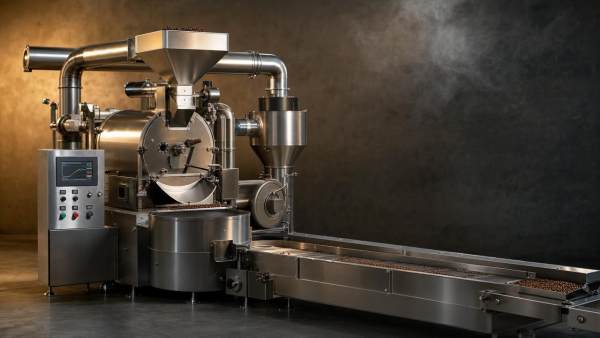
In commercial chocolate production, a cocoa bean roaster commercial setup does far more than heat beans—it defines flavor consistency, batch safety, and audit-ready process control. For quality assurance and safety teams, the roaster has become a strategic control point as production standards tighten and flavor tolerance narrows. Settings that once seemed purely operational, such as roast temperature, airflow balance, dwell time, and bean moisture adjustment, now sit at the center of repeatability, traceability, and waste reduction. As industrial food processing continues to favor measurable, validated systems, understanding how a cocoa bean roaster commercial platform behaves under changing raw material conditions is no longer optional.
Flavor consistency is becoming a process-control issue, not just a roasting skill
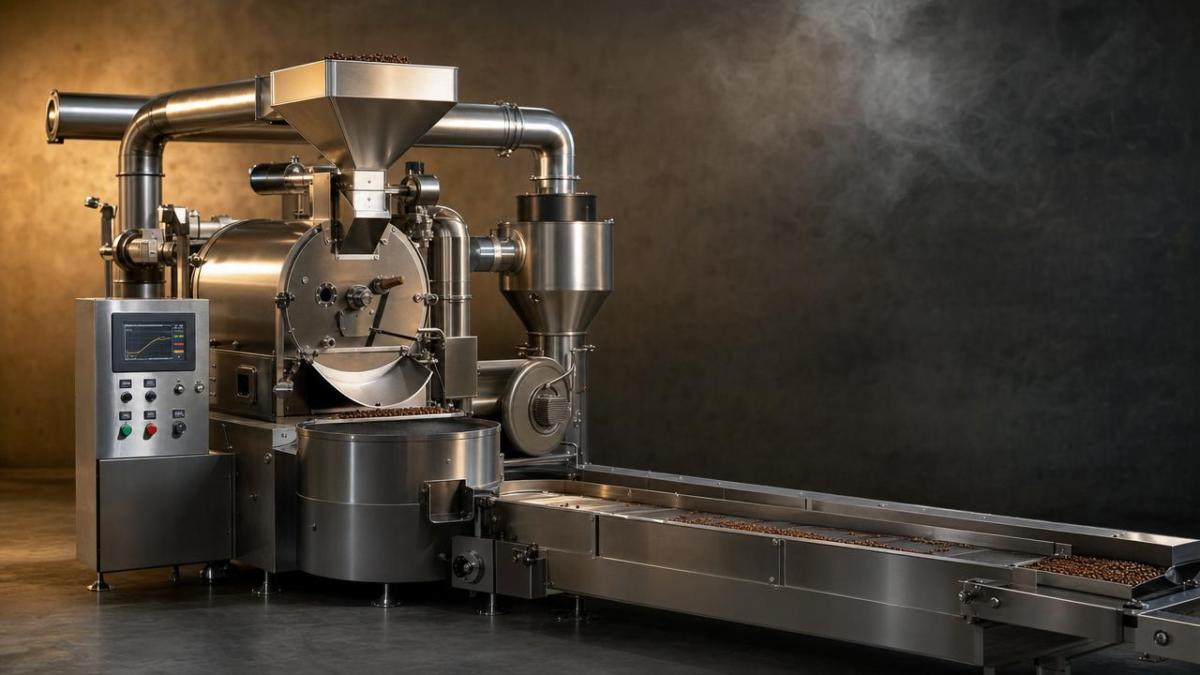
Across primary processing and food ingredient industries, one clear signal is emerging: flavor variation is increasingly treated as a systems problem. In cocoa processing, this shift is especially visible in the way facilities evaluate a cocoa bean roaster commercial line. Rather than relying on operator instinct alone, plants now compare roast curves against incoming bean quality data, sanitation records, and downstream sensory results. The commercial roasting stage must support both flavor development and documented consistency, especially when batch-to-batch variation can affect liquor quality, fat release, shell separation, and finished chocolate profile.
This change is being reinforced by broader industry expectations. More buyers and technical reviewers expect evidence of controlled thermal processing, validated cleaning procedures, and repeatable setpoint management. In that environment, a cocoa bean roaster commercial system is judged not only by throughput, but by how reliably it can reproduce target flavor notes while preventing scorching, underdevelopment, or microbial risk linked to inadequate thermal exposure.
The main settings influencing a cocoa bean roaster commercial profile are now under closer scrutiny
The most important settings in a cocoa bean roaster commercial process do not operate independently. They interact dynamically, and small changes in one parameter can create unexpected flavor drift elsewhere in the line. For that reason, many facilities are moving from single-point target temperatures to full roast profile management.
Key variables shaping consistency
Among these variables, the temperature curve is often the most misunderstood. A fixed endpoint temperature does not guarantee a stable result. In a cocoa bean roaster commercial environment, ramp speed matters because cocoa varieties, fermentation levels, and bean size distributions respond differently to heat. A fast ramp can lock in harsh notes, while a slow ramp may flatten desirable acidity and increase energy use without improving quality.
Airflow deserves equal attention. Inadequate exhaust can cause smoke recirculation and flavor dulling, while excessive airflow may strip volatile aromatics or create external-over-internal roasting imbalance. This is why modern commercial cocoa roasting increasingly depends on coordinated thermal and airflow control rather than isolated burner adjustments.
Why raw material variability is forcing tighter cocoa bean roaster commercial settings
One of the strongest drivers behind this operational shift is inconsistency in incoming beans. Origin changes, seasonal storage conditions, fermentation differences, and logistics-related moisture swings all affect how cocoa reacts in a cocoa bean roaster commercial system. A roast profile that works well for one lot can produce sharp acidity, brittle shells, or excessive roast character in another.
What is driving tighter process control
- Greater variation in bean origin blends and harvest conditions
- Rising documentation demands tied to food safety and process validation
- Lower tolerance for flavor deviation in premium and industrial formulations
- Pressure to reduce waste, rework, and over-roasted discard volumes
- Increased use of digital monitoring tools that expose hidden process drift
These forces are not unique to chocolate. Across feed processing, botanical extraction, and fine chemical drying operations, plants are revisiting how thermal systems are set, monitored, and corrected in real time. In that context, the cocoa bean roaster commercial category reflects a larger industrial pattern: precision settings are replacing generalized machine operation.
The impact extends beyond flavor into safety, efficiency, and downstream performance
Roast consistency influences more than taste. In many operations, poor control in a cocoa bean roaster commercial stage creates cascading inefficiencies downstream. Uneven roast development can affect winnowing performance, liquor particle behavior, press efficiency, and blending accuracy. If some beans remain underdeveloped while others are over-roasted, later processing stages must compensate, often at the cost of throughput and sensory stability.
There is also a compliance dimension. Commercial roasting must support safe, auditable production. While roasting is not a substitute for a full food safety system, stable thermal exposure and accurate recordkeeping help demonstrate process discipline. Facilities that cannot show how the cocoa bean roaster commercial profile was set, monitored, and adjusted may struggle when investigating sensory complaints, contamination concerns, or yield losses.
Operational areas most affected
- Winnowing: shell separation becomes less predictable when roast depth varies within a batch
- Grinding: inconsistent roast can alter nib brittleness and particle formation behavior
- Blending: flavor correction requires more intervention and may increase formulation complexity
- Quality release: more sensory holds and retesting may slow dispatch timing
- Energy use: overcompensation for poor settings often raises fuel consumption and cycle time
The smartest response is to treat cocoa bean roaster commercial control as a data discipline
The most effective commercial roasting strategies now begin before heat is applied. Instead of asking for one ideal setting, stronger operations define acceptable ranges based on bean attributes and product targets. A cocoa bean roaster commercial process should therefore be linked to incoming moisture checks, bean size grading, origin tracking, and sensory benchmarks from prior successful lots.
Priority control points to monitor
- Incoming bean moisture and storage equilibration time
- Roaster preheat stability before batch loading
- Actual versus target temperature ramp rate
- Airflow consistency across the full roast cycle
- Exhaust cleanliness and smoke removal performance
- Post-roast cooling speed to prevent carryover roasting
- Batch record linkage to sensory and yield outcomes
Cooling is often underestimated. Even a well-managed cocoa bean roaster commercial cycle can drift out of specification if beans continue developing after discharge. Fast, uniform cooling protects the intended flavor endpoint and improves reproducibility. This is especially important in larger production environments where residual heat can keep nib chemistry moving long after roasting appears complete.
A practical framework for judging whether current settings are future-ready
A useful way to evaluate a cocoa bean roaster commercial operation is to ask whether settings are descriptive or predictive. Descriptive control means recording what happened after a batch is finished. Predictive control means using bean data, machine response history, and roast curve behavior to reduce deviation before defects appear. The second model is quickly becoming the preferred standard in industrial processing.
If repeated flavor drift, shelling inefficiency, or energy overuse is visible, the issue is often not the machine alone but the way the cocoa bean roaster commercial settings are governed. Better results typically come from tighter baseline definitions, stronger batch segmentation, and clearer thresholds for intervention.
The next step is to standardize decisions around cocoa bean roaster commercial performance
Facilities seeking more stable flavor consistency should begin with a structured review of roast curves, airflow patterns, bean moisture history, and post-roast sensory outcomes. The goal is not merely to optimize a single batch, but to establish a repeatable decision framework for the cocoa bean roaster commercial process. That includes defining acceptable raw material bands, validating operating windows, and documenting how settings change when bean conditions shift.
In a market where product reliability, traceability, and processing efficiency carry equal weight, commercial cocoa roasting is becoming a benchmark for operational maturity. Organizations that treat roasting as a controlled, evidence-based system will be better positioned to protect flavor integrity, reduce avoidable deviation, and sustain confidence across the full production chain. A focused audit of current cocoa bean roaster commercial settings is therefore a practical and timely place to start.
Related Intelligence
- Milling Machinery5 Milling Machinery Firms Approved for Belt and Road Smart Farm Machinery Cloud Platform5 milling machinery firms approved for Belt and Road Smart Farm Machinery Cloud Platform — enabling multilingual remote diagnostics, cross-border spare parts ordering & national API integration.
- Milling MachineryTea leaf rolling machine pressure settings and leaf appearanceTea leaf rolling machine pressure settings directly shape twist, appearance, and quality. Learn how to balance pressure for cleaner leaves, less breakage, and more consistent tea processing results.
- Milling MachineryTea processing machines wholesale and the spare parts questionTea processing machines wholesale buyers now focus on spare parts, uptime, and lifecycle support. Learn how to compare suppliers, reduce downtime risk, and protect tea quality.
The Morning Broadsheet
Daily chemical briefings, market shifts, and peer-reviewed summaries delivered to your terminal.
