
The Authority in Global Agricultural Chemistry & Bio-Resources
5 Milling Machinery Firms Approved for Belt and Road Smart Farm Machinery Cloud Platform
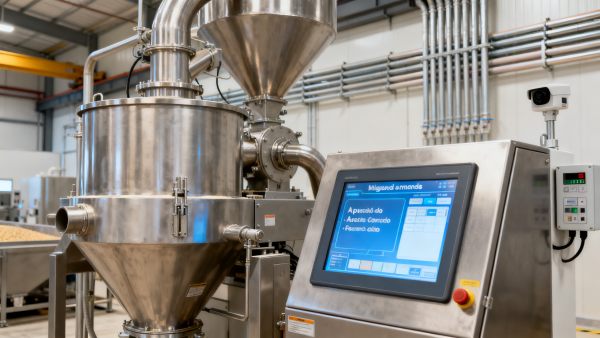
On May 8, 2026, China’s Ministry of Industry and Information Technology (MIIT) approved five grain milling machinery manufacturers to connect to the Belt and Road Smart Farm Machinery Cloud Platform — a development with implications for international agricultural equipment trade, after-sales service infrastructure, and multilingual digital support systems. This update signals evolving requirements for export-oriented machinery suppliers, cross-border technical service providers, and regional distribution partners operating in emerging markets.
Event Overview
On May 8, 2026, MIIT announced the second batch of enterprises authorized to access the Belt and Road Smart Farm Machinery Cloud Platform. Five milling machinery (grain processing machinery) manufacturers were included. The platform supports remote fault diagnosis and collaborative spare parts ordering in English, Arabic, Spanish, and Portuguese. As confirmed, the platform has completed API integration with national agricultural machinery management platforms in 11 countries, including Kazakhstan, Egypt, and Mexico.
Industries Affected by This Development
Direct Exporters of Milling Machinery
These firms face new interoperability expectations when entering or expanding in Belt and Road partner countries. Platform connectivity is not mandatory for export, but integration enables direct access to national-level agricultural machinery data ecosystems — potentially influencing tender eligibility, after-sales certification, and local regulatory compliance pathways.
After-Sales Service & Technical Support Providers
Providers offering remote diagnostics, spare parts logistics, or multilingual technician coordination may see shifting demand patterns. The four-language diagnostic interface implies growing standardization pressure on third-party service networks supporting Chinese-made milling equipment abroad.
Regional Distributors & Local Channel Partners
Distributors in countries where national agricultural machinery platforms are already API-connected (e.g., Egypt, Mexico, Kazakhstan) may encounter increased requests from end-users or government agencies for cloud-linked service reporting — affecting warranty validation, maintenance logging, and subsidy-related documentation workflows.
What Relevant Enterprises or Practitioners Should Focus On — And How to Respond Now
Monitor official implementation guidelines from MIIT and partner-country agriculture ministries
The current announcement lists approvals but does not specify technical onboarding timelines, data-sharing obligations, or certification prerequisites. Enterprises should track subsequent notices regarding platform integration requirements, especially any linkage to China’s Export Commodity Technical Requirements (GB/T standards) or national import registration procedures.
Assess exposure to priority markets with live API integrations
Of the 11 connected countries, Kazakhstan, Egypt, and Mexico represent diverse regulatory environments and agricultural mechanization stages. Companies active in these markets should review whether their existing service infrastructure — particularly remote diagnostic tools and spare parts inventory systems — can interoperate with the platform’s documented API specifications once published.
Distinguish between policy signal and operational readiness
This approval reflects institutional capacity-building, not immediate market access conditionality. There is no public indication that platform access will become a prerequisite for customs clearance, subsidy eligibility, or public procurement in partner countries — yet. Treat this as an early-stage infrastructure alignment effort, not a compliance deadline.
Prepare multilingual technical documentation and spare parts cataloguing protocols
The platform’s four-language support focuses on remote diagnosis and collaborative ordering. Firms should audit whether their current technical manuals, error code libraries, and spare parts nomenclature are consistently translated and structured for machine-readable input — especially where Arabic or Portuguese localization has been historically limited.
Editorial Perspective / Industry Observation
Observably, this development is best understood as an infrastructure signal — not a commercial trigger. It reflects China’s ongoing effort to embed domestic industrial software standards into transnational agricultural value chains. Analysis shows the emphasis lies on backend interoperability (APIs with national platforms) rather than front-end user adoption metrics. From an industry perspective, the significance lies less in immediate revenue impact and more in long-term path dependency: repeated integration into such platforms may gradually shape how maintenance data, failure analytics, and parts lifecycle information are governed across borders. Current attention should focus on mapping technical compatibility gaps — not forecasting sales uplift.
Conclusion
This approval marks a step in the institutionalization of digital after-sales infrastructure for Chinese agricultural machinery exports. It does not alter current trade rules or certification regimes, but it does indicate where technical alignment efforts are concentrating — particularly around language-enabled remote diagnostics and cross-government data exchange. For stakeholders, it is更适合理解为 a forward-looking systems-readiness indicator, not a near-term operational requirement.
Information Source
Primary source: Official notice issued by China’s Ministry of Industry and Information Technology (MIIT), published May 8, 2026.
Note: Ongoing observation is required regarding technical integration specifications, rollout timelines for API documentation, and any future linkage to national import or subsidy policies in partner countries.
Related Intelligence
- Milling Machinery5 Milling Machinery Firms Approved for Belt and Road Smart Farm Machinery Cloud Platform5 milling machinery firms approved for Belt and Road Smart Farm Machinery Cloud Platform — enabling multilingual remote diagnostics, cross-border spare parts ordering & national API integration.
- Milling MachineryTea leaf rolling machine pressure settings and leaf appearanceTea leaf rolling machine pressure settings directly shape twist, appearance, and quality. Learn how to balance pressure for cleaner leaves, less breakage, and more consistent tea processing results.
- Milling MachineryTea processing machines wholesale and the spare parts questionTea processing machines wholesale buyers now focus on spare parts, uptime, and lifecycle support. Learn how to compare suppliers, reduce downtime risk, and protect tea quality.
The Morning Broadsheet
Daily chemical briefings, market shifts, and peer-reviewed summaries delivered to your terminal.
