

The Authority in Global Agricultural Chemistry & Bio-Resources
Tea processing machines wholesale and the spare parts question
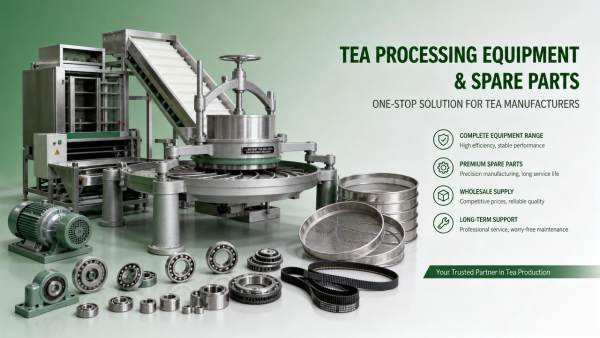
For organizations evaluating tea processing machines wholesale, the conversation is no longer limited to machine capacity, energy consumption, or initial unit price. A more consequential issue has moved to the center of equipment decisions: spare parts availability. In tea manufacturing, where withering, rolling, fermentation, drying, sorting, and packaging depend on synchronized mechanical performance, even a minor component failure can interrupt throughput, affect leaf quality, and raise cost per kilogram. The spare parts question has therefore become a strategic indicator of supplier reliability, lifecycle value, and operational resilience.
This shift reflects broader changes across industrial procurement in the primary processing sector. Buyers comparing tea processing machines wholesale offers are increasingly judging not only what arrives in the container, but also what remains accessible for the next three to ten years: bearings, rollers, belts, motors, heating elements, PLC modules, cutters, screens, chains, and food-contact wear parts. In practical terms, the real cost of a machine is now inseparable from the quality, compatibility, and lead time of its replacement parts.
Why the spare parts question is becoming central in tea processing machine decisions
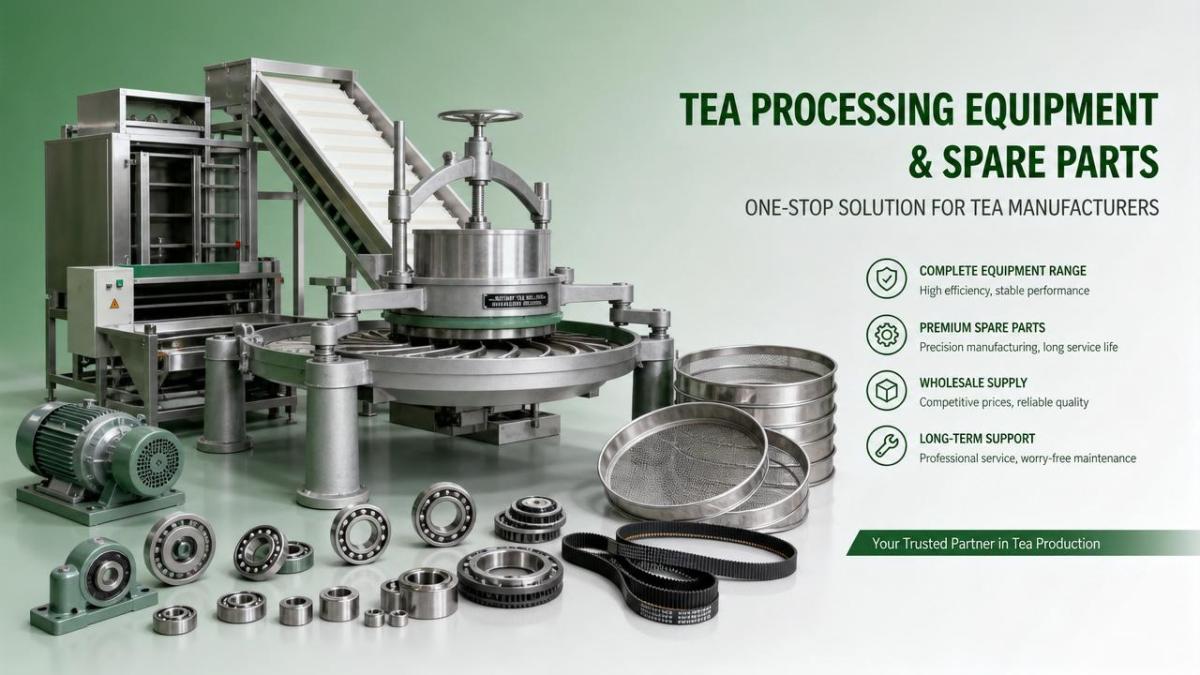
The market for tea processing machines wholesale has evolved alongside rising expectations for consistency, traceability, and production uptime. Tea processors are no longer choosing equipment only for startup installation. They are building systems expected to operate continuously under seasonal pressure, variable leaf input, and stricter quality controls. Under these conditions, spare parts move from an afterthought to a risk-management priority.
A machine can appear cost-effective at the quotation stage yet become expensive if replacement components are proprietary, poorly documented, or unavailable in regional inventory. This is especially relevant in integrated tea lines, where one failed reducer, damaged mesh, or non-standard sensor can stop downstream functions. As a result, the strongest tea processing machines wholesale proposals increasingly include parts lists, maintenance intervals, stock policies, and cross-reference documentation as part of the commercial evaluation.
The trend signals behind stronger demand for parts transparency
Several market signals explain why buyers are paying closer attention to serviceability and replacement supply in tea processing machines wholesale transactions. What used to be a maintenance issue is now connected to quality assurance, planning reliability, and export readiness.
These signals are reshaping how tea processing machines wholesale options are benchmarked. A supplier with slightly higher upfront pricing may present lower overall risk if the parts ecosystem is stable, documented, and regionally supported. This is one reason lifecycle support is becoming a decisive differentiator in the wholesale tea machinery market.
What is driving the shift from equipment price to lifecycle assurance
The move toward lifecycle assurance is not accidental. It is being driven by a combination of technical, commercial, and operational pressures that are now common across machinery-intensive industries, including tea processing.
- Production continuity: Tea leaves are time-sensitive. Delays during withering, oxidation, or drying can alter product characteristics and reduce saleable output.
- Machine specialization: Modern tea rollers, dryers, sorters, and conveyors often use custom dimensions or specific assemblies that cannot be replaced easily from general industrial stock.
- Quality control demands: Worn or mismatched parts can create uneven processing, contamination risk, or temperature instability.
- Import complexity: Customs delays, freight disruption, and minimum order quantities can turn a simple replacement into weeks of downtime.
- Digital service expectations: Buyers increasingly expect exploded diagrams, preventive maintenance schedules, and remote troubleshooting support with every tea processing machines wholesale purchase.
These drivers explain why the spare parts question is now part of strategic due diligence. In a competitive environment, dependable parts support is no longer an add-on service. It is part of the machine’s practical value.
How spare parts risk affects different business functions
The impact of weak spare parts planning in tea processing machines wholesale does not stay inside the maintenance workshop. It spreads across operations, quality, finance, and customer fulfillment. This is why parts visibility should be assessed as an enterprise-wide issue rather than a narrow technical concern.
Operationally, a delayed belt, burner, motor, or screen can halt an entire line. Quality-wise, using non-original or poorly matched components may affect heat transfer, rolling uniformity, particle separation, or hygienic compliance. Financially, emergency freight and unplanned labor can quickly erase any savings gained from a low purchase price. Commercially, missed delivery schedules may damage contract performance and buyer confidence.
- Operations: Downtime risk rises when critical wear parts are not stocked or clearly specified.
- Quality assurance: Part inconsistency can compromise repeatability across batches.
- Budget control: Total ownership costs become unpredictable without planned replacement cycles.
- Technical teams: Maintenance efficiency falls when manuals, codes, and part drawings are incomplete.
- Supply continuity: Export-oriented production is more vulnerable to replacement part lead time shocks.
The key issues to verify before choosing tea processing machines wholesale
When comparing tea processing machines wholesale suppliers, several checkpoints deserve as much attention as machine specification sheets. These points help distinguish between equipment that is merely available for purchase and equipment that can remain productive over time.
- Critical spare parts list: Confirm which items are considered wear parts, consumables, and high-failure-risk components.
- Parts standardization: Check whether bearings, motors, chains, and electrical components follow recognizable industrial standards or unique proprietary formats.
- Inventory commitment: Ask whether the supplier stocks parts locally, regionally, or only at origin.
- Documentation depth: Request exploded diagrams, part codes, maintenance guides, and recommended stock quantities.
- Compatibility control: Verify whether model revisions change part dimensions, connectors, or software versions.
- Lead time realism: Compare promised dispatch times with actual freight routes and import processes.
- Material and food-contact suitability: For trays, surfaces, seals, and contact components, assess durability, hygiene, and replacement frequency.
For many buyers, these checks reveal the true difference between competing tea processing machines wholesale offers. A complete spare parts structure signals engineering maturity and stronger after-sales discipline.
A practical framework for judging supplier readiness
This framework helps translate the spare parts question into measurable criteria. In the tea processing machines wholesale market, clarity is often a better predictor of performance than low entry cost.
What to do next to reduce risk and protect production continuity
The most effective response is to treat spare parts planning as part of the initial sourcing scope, not as a post-installation task. That means requiring a recommended parts package with every tea processing machines wholesale quotation, separating fast-wear items from emergency-critical components, and confirming part numbers before shipment. It also means documenting substitute brands where possible for bearings, drives, electricals, and routine maintenance items.
A stronger next step is to build a simple lifecycle file for each machine group: model, serial number, commissioning date, top failure points, standard replacement interval, current stock level, and supplier response time. This converts a reactive maintenance culture into a planned continuity model. For facilities expanding capacity, it is also wise to favor lines with parts commonality across multiple machines, reducing inventory complexity and simplifying technical training.
In today’s market, selecting tea processing machines wholesale is as much about support architecture as equipment output. The suppliers worth prioritizing are those able to demonstrate not just machine delivery, but durable lifecycle backing, transparent parts management, and practical service readiness. That is the difference between owning machinery and securing dependable tea production.
Related Intelligence
- Milling Machinery5 Milling Machinery Firms Approved for Belt and Road Smart Farm Machinery Cloud Platform5 milling machinery firms approved for Belt and Road Smart Farm Machinery Cloud Platform — enabling multilingual remote diagnostics, cross-border spare parts ordering & national API integration.
- Milling MachineryTea leaf rolling machine pressure settings and leaf appearanceTea leaf rolling machine pressure settings directly shape twist, appearance, and quality. Learn how to balance pressure for cleaner leaves, less breakage, and more consistent tea processing results.
- Milling MachineryTea processing machines wholesale and the spare parts questionTea processing machines wholesale buyers now focus on spare parts, uptime, and lifecycle support. Learn how to compare suppliers, reduce downtime risk, and protect tea quality.
The Morning Broadsheet
Daily chemical briefings, market shifts, and peer-reviewed summaries delivered to your terminal.
