
The Authority in Global Agricultural Chemistry & Bio-Resources
Feed & Grain processing equipment with lower cleaning downtime
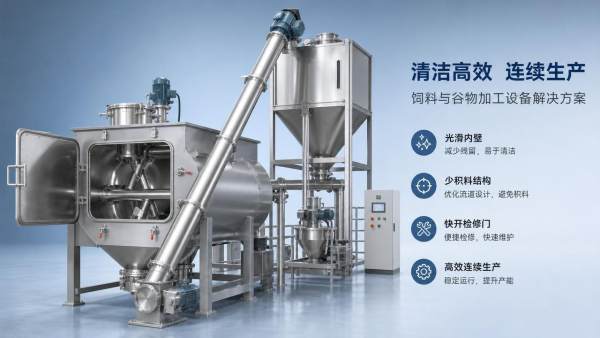
For operators, every extra minute spent on washdown or changeover cuts into throughput and raises labor costs. Modern Feed & Grain processing equipment with lower cleaning downtime is designed to simplify sanitation, reduce residue buildup, and keep production moving without compromising safety or product quality. In daily plant operations, the real value is not just faster cleaning on paper, but better fit for the production scenario: ingredient shifts, moisture levels, batch frequency, allergen control, dust handling, and maintenance access all affect whether cleaning time can actually be reduced. This article examines how to judge those scenarios, where low-downtime equipment performs best, and what practical steps improve reliability over time.
When lower cleaning downtime matters most in Feed & Grain processing equipment
Not every plant has the same sanitation pressure. In some lines, cleaning is driven by sticky ingredients and cross-contamination risk. In others, the challenge is dust accumulation, inaccessible transfer points, or repeated short production runs. Choosing Feed & Grain processing equipment simply because it promises “easy cleaning” is rarely enough. The more effective approach is to match sanitation design to the actual operating pattern.
Scenario-based evaluation helps identify what “lower cleaning downtime” really means. For a mill producing similar formulations for long runs, the goal may be reducing weekly deep-clean hours. For a line changing from medicated to non-medicated feed, the priority may be fast validation and minimal carryover. In grain handling, lower cleaning downtime often depends on whether boots, conveyors, sifters, and bucket elevators resist buildup and allow safe access without major disassembly.
Scenario 1: Frequent recipe changeovers and short production runs
Short-run production creates one of the strongest use cases for Feed & Grain processing equipment with sanitary, quick-access design. Plants that switch often between protein blends, premixes, additives, or grain grades lose significant productive time if hoppers, mixers, feeders, and conveyors trap material in corners or behind guards. In this scenario, smooth internal surfaces, reduced horizontal ledges, tool-less doors, and clear inspection points can save meaningful labor every shift.
The key judgment point is whether changeover frequency is high enough that sanitation design directly affects output. If equipment is cleaned several times a day, even a 10-minute reduction per cycle can translate into major annual gains. Here, equipment should also support repeatable reassembly, because lower cleaning downtime only creates value when startup after cleaning is fast and consistent.
What to prioritize in this scenario
- Quick-release panels and covers for mixers, sifters, and screw conveyors
- Minimal dead zones where fines, oils, or additives collect
- Fast visual verification of cleanliness before restart
- Seals and gaskets that are easy to remove, inspect, and replace
- Consistent access for both dry cleaning and wet washdown where applicable
Scenario 2: Sticky, oily, or high-moisture materials that increase residue buildup
Some formulations naturally resist fast cleaning. Molasses-based blends, high-fat feed, fermented ingredients, and damp grain fractions can coat surfaces and accumulate in transfer points. In these cases, lower cleaning downtime depends less on nominal cleaning speed and more on how the Feed & Grain processing equipment controls adhesion and material flow during production.
The most important judgment factor is where buildup starts. If residue forms in chutes, discharge transitions, paddle zones, or under belt supports, sanitation time will rise regardless of labor effort. Equipment with steeper discharge geometry, anti-buildup liners, smoother weld finishes, and fewer hidden recesses can reduce both manual scraping and washdown time. In practice, this also lowers the risk of microbial growth, odor, and off-spec carryover.
Operational signs that this scenario applies
- Visible residue after normal discharge cycles
- Frequent manual scraping during line shutdowns
- Cleaning chemicals or water use increasing over time
- Repeated product quality variation after startup
- Dust and residue combining into hardened deposits
Scenario 3: High-throughput continuous lines where access time is the main bottleneck
In large continuous operations, the problem is often not the cleaning method itself but the time required to isolate, open, enter, inspect, and restart the line. This makes access engineering central to the value of Feed & Grain processing equipment. Systems that reduce lockout complexity, provide safer access platforms, and allow targeted cleaning at critical points can dramatically reduce downtime without changing the core process.
This scenario is common where upstream and downstream units are tightly linked. A single difficult-to-clean elevator leg or aspiration duct can delay the entire line. The right decision is usually not to optimize every machine equally, but to identify the sanitation bottlenecks that stop restart approval. Equipment layouts that support sectional cleaning and better inspection often deliver more usable time than isolated component upgrades.
How scenario needs differ across Feed & Grain processing equipment
The same low-downtime claim can mean different things depending on the production environment. The table below helps compare needs by scenario and clarifies what features deserve closer attention during equipment selection or retrofit planning.
Practical adaptation advice before upgrading or replacing equipment
A good upgrade decision starts with measuring where sanitation time is actually consumed. In many facilities, cleaning downtime is blamed on one machine while the real delay comes from access limitations, poor sequencing, or difficult discharge paths. Before investing in new Feed & Grain processing equipment, map the full cleaning cycle from shutdown to restart. Note isolation steps, cover removal, residue removal, inspection, drying, and reassembly time.
- Audit cleaning by asset: rank mixers, conveyors, bins, elevators, and screens by labor hours per cleaning event.
- Check hidden retention points: transitions, fasteners, support ledges, air ducts, and flexible connections are common problem areas.
- Separate dry and wet needs: not all Feed & Grain processing equipment should be washed down the same way, especially where moisture control matters.
- Use maintenance records: recurring seal failure, corrosion, or worn surfaces often explain why cleaning time keeps increasing.
- Evaluate restart stability: lower cleaning downtime is only valuable if the line returns to target throughput and quality quickly.
Common misjudgments that keep cleaning downtime high
One frequent mistake is focusing only on machine speed while ignoring sanitary access. A faster mixer or conveyor does not solve cleaning delays if residue remains trapped in discharge zones. Another common error is assuming all stainless construction automatically means low cleaning downtime. Material choice matters, but surface finish, weld quality, geometry, and accessibility usually have greater impact on day-to-day sanitation.
Facilities also underestimate the interaction between maintenance and cleanability. Bent covers, worn seals, misaligned shafts, and damaged liners can turn originally efficient Feed & Grain processing equipment into a persistent sanitation burden. In addition, over-washing can create its own downtime through drying delays, corrosion risk, and residue migration into bearings or enclosed spaces. The best outcome comes from matching cleaning method, frequency, and equipment design to the operating scenario rather than applying one standard routine everywhere.
Next-step actions for selecting Feed & Grain processing equipment with lower cleaning downtime
To move from general interest to measurable improvement, start with a short scenario review. Identify whether the main issue is changeover frequency, sticky material buildup, continuous-line access, or carryover sensitivity. Then compare current equipment against those conditions using simple criteria: number of access points, minutes to open and close, visible residue zones, cleaning verification time, and restart consistency.
When reviewing Feed & Grain processing equipment, ask for evidence tied to real sanitation performance rather than only production capacity. Drawings of internal geometry, access layout, clean-out paths, and maintenance points often reveal more than a generic specification sheet. A practical evaluation may also include a cleaning trial, inspection checklist, or downtime benchmark before and after retrofit. With that approach, lower cleaning downtime becomes a verifiable operating advantage rather than a marketing claim, helping plants protect throughput, improve hygiene control, and make equipment decisions that fit actual production demands.
Related Intelligence
- Commercial Feed PelletSingapore’s Aquaculture Tech FastTrack Extends to Commercial Feed PelletsAquaculture Tech FastTrack now covers Commercial Feed Pellets — unlock 72-hour Singapore clearance with CNAS test reports. Key for China-Singapore feed exporters, labs & importers.
- Commercial Feed PelletFeed & Grain processing technology that cuts raw material lossFeed & Grain processing technology that cuts raw material loss helps processors improve yield, moisture control, traceability, and ROI—see which systems deliver measurable savings.
- Commercial Feed PelletSinking fish feed machine and the cost of poor water stabilitySinking fish feed machine selection affects feed waste, water quality, and ROI. Learn how better pellet stability cuts hidden aquaculture costs and improves long-term performance.
The Morning Broadsheet
Daily chemical briefings, market shifts, and peer-reviewed summaries delivered to your terminal.
