

The Authority in Global Agricultural Chemistry & Bio-Resources
Why onion grading machine accuracy changes during peak season
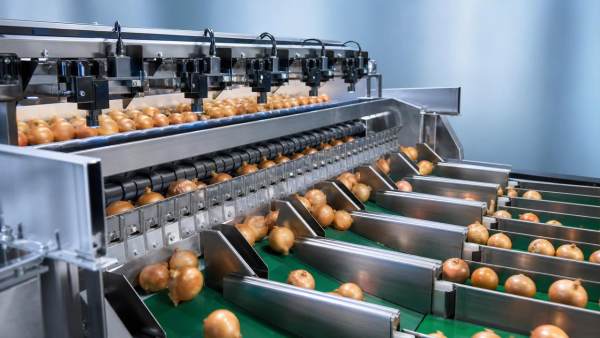
During peak harvest windows, even a well-calibrated onion grading machine can show unexpected shifts in accuracy, affecting quality control, food safety checks, and downstream packing efficiency. In large-scale produce handling, grading precision is not only a technical metric but also a commercial safeguard that influences waste rates, labor use, carton consistency, and customer acceptance. When throughput surges in a compressed seasonal window, the machine, the incoming onions, and the plant environment all change at once. Understanding why an onion grading machine behaves differently during peak season helps operations teams stabilize sorting performance, reduce rework, and preserve compliance under pressure.
What grading accuracy means in onion processing
An onion grading machine is designed to separate onions by size, weight, shape, color, and visible defects so that packing lines receive uniform product. Accuracy refers to how consistently the machine places each onion into the correct category based on the target specification. In practice, that includes correct diameter measurement, reliable defect recognition, stable lane assignment, and low false rejection rates.
Outside peak season, machine settings are often validated under moderate flow, cleaner crop conditions, and steadier ambient temperatures. During harvest peaks, however, the same onion grading machine may process more variable lots at higher speed for longer operating hours. This does not necessarily mean the equipment is failing. More often, the grading system is being challenged by a combination of material variability, sensor limitations, vibration, contamination, and operator adjustment frequency.
For fresh produce facilities, even a small decline in onion grading machine accuracy can create a chain reaction: mixed pack sizes, claim exposure, reduced line efficiency, and additional manual inspection. That is why seasonal drift should be treated as a controllable operational risk rather than an unavoidable harvest problem.
Seasonal operating conditions that change machine behavior
Peak season places a distinct load on agricultural machinery and inspection systems. The issue is rarely one single cause. Accuracy changes usually emerge from multiple stress points acting together. In onion handling, the most common signals are shown below.
In integrated packhouses, these conditions often develop simultaneously. A faster line speed may increase vibration, while dirtier onions introduce more dust, and overtime schedules delay cleaning intervals. As a result, the onion grading machine appears less accurate even though each contributing factor may be relatively small on its own.
Material variability is often the biggest hidden cause
Peak-season onions are not uniform raw material. Harvest timing, field moisture, curing quality, storage history, and varietal differences can significantly alter how onions travel and how they are measured. A grading profile developed on dry, evenly cured onions may underperform when a new lot has more neck tissue, irregular roundness, flaky skin, or attached soil.
This matters because an onion grading machine depends on predictable presentation. If onions rotate unpredictably on rollers, sit unevenly on cups, or carry loose outer skin that obscures their outline, the sensor system may misread diameter or classify a cosmetic issue as a structural defect. Moist surfaces can also change reflectivity, which affects optical systems using cameras, lasers, or near-infrared elements.
Another overlooked issue is mixed-lot feeding. When onions from different plots, sizes, or storage ages are blended to maintain throughput, the machine sees a broader distribution than the current recipe was designed for. That wider spread can increase both under-grading and over-grading, especially near threshold bands where one or two millimeters determine the final category.
Mechanical and sensor-related drift during heavy use
A modern onion grading machine combines mechanics, electronics, software, and product handling geometry. During peak season, extended operation places stress on all four. Rollers can wear, cup carriers can loosen, chain tension can shift, and conveyor belts can deviate from ideal tracking. Even subtle mechanical changes affect product spacing and orientation at the inspection point.
Sensors are equally vulnerable. Camera lenses collect dust. Lighting modules lose consistency as heat builds. Photoelectric sensors may react differently when surface residue accumulates. Load cells and dimensional measuring units can drift if vibration and temperature rise above routine conditions. In lines that run multiple shifts, these issues can emerge before the next scheduled maintenance check.
The result is often intermittent error rather than total failure. That is why seasonal accuracy loss can be difficult to detect early. Operators may see a normal average output while hidden classification variance grows in specific grades or defect channels. Regular verification sampling is essential to confirm whether the onion grading machine is still sorting to spec across the full product range.
Why this matters for quality control and business performance
Accuracy changes are not limited to a technical dashboard. They directly affect grading integrity, food handling discipline, labor allocation, and shipment consistency. In broad industrial terms, this is where produce equipment performance connects with commercial outcomes.
- Misgraded onions can cause pack-size nonconformance, especially in retail or export specifications.
- False rejects increase waste, rework loops, and manual resorting costs.
- Undetected defects may weaken quality assurance records and raise complaint risk.
- Unstable machine performance slows downstream bagging, boxing, and pallet planning.
- Frequent line interventions reduce overall equipment effectiveness during the most critical production period.
For this reason, the onion grading machine should be viewed as part of a wider control system, not as an isolated sorter. Packing efficiency, shelf presentation, and shipment acceptance all depend on stable grading. Seasonal variance therefore deserves the same structured attention given to sanitation, traceability, and preventive maintenance.
Typical high-risk scenarios in peak onion grading
Not every operation experiences the same type of drift. The most common scenarios can be grouped by product condition, line configuration, and production pressure.
Practical steps to keep an onion grading machine accurate in peak season
A stable response requires process discipline more than emergency adjustment. The following measures are practical and widely applicable across produce grading operations.
- Validate at peak-speed conditions. Test the onion grading machine at actual seasonal throughput, not only at standard speed.
- Separate incoming lots. Group onions by variety, field condition, storage age, or moisture profile where possible.
- Increase cleaning frequency. Short, scheduled cleaning windows often protect accuracy better than waiting for end-of-shift maintenance.
- Monitor trend data. Track reject rates, grade distribution, and manual check results by hour rather than by day.
- Check presentation quality. Infeed alignment, singulation, and spacing are as important as sensor calibration.
- Use targeted recalibration. Recalibrate after major lot changes, belt adjustments, or environmental shifts.
- Audit with physical samples. Routine hand-checks remain essential for confirming machine decisions against real product specifications.
It is also useful to define action thresholds in advance. For example, if a certain grade shows a rise in manual correction beyond a set percentage, the line should trigger inspection of optics, discharge timing, and infeed load. This prevents slow drift from becoming a major quality event.
Operational next steps for seasonal control
The most reliable way to manage peak-season accuracy is to treat the onion grading machine as a dynamic system influenced by crop biology, line mechanics, and environmental conditions. Start with a short seasonal readiness review: verify calibration at harvest speed, define lot-specific grading settings, tighten cleaning intervals, and establish mid-shift sample checks. Then compare machine output against pack claims and defect tolerances using simple trend records.
When recurring drift appears, focus first on product presentation, contamination, and throughput pressure before assuming software failure. In many facilities, the fastest gains come from stabilizing feed conditions and shortening feedback loops between machine data and floor verification. A well-managed onion grading machine can maintain strong accuracy even in the busiest harvest weeks, but only when seasonal variability is expected, measured, and controlled with discipline.
Related Intelligence
- Heavy Agri MachineryHow to shortlist Agri & Forestry machinery manufacturersAgri & Forestry machinery manufacturers: learn how to shortlist reliable suppliers by comparing capability, compliance, service, and delivery strength for smarter, lower-risk sourcing.
- Heavy Agri MachineryWhy onion grading machine accuracy changes during peak seasonOnion grading machine accuracy can shift during peak season due to higher throughput, dust, crop variability, and sensor drift. Learn the causes and smart fixes to protect quality.
- Heavy Agri MachineryHow to read Agri & Forestry machinery specifications betterAgri & Forestry machinery specifications explained clearly: learn how to compare power, hydraulics, weight, safety, and compliance to choose equipment smarter and avoid costly mistakes.
The Morning Broadsheet
Daily chemical briefings, market shifts, and peer-reviewed summaries delivered to your terminal.
