

The Authority in Global Agricultural Chemistry & Bio-Resources
How to shortlist Agri & Forestry machinery manufacturers
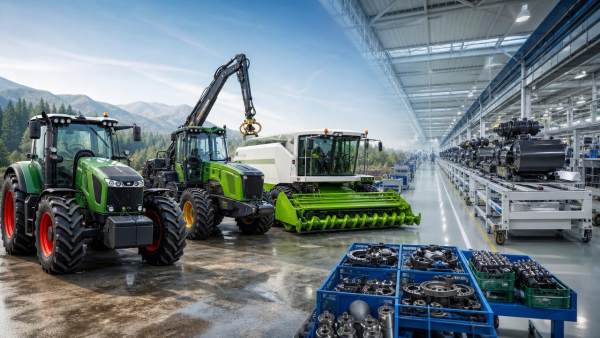
Shortlisting Agri & Forestry machinery manufacturers is no longer a matter of comparing catalogs or price sheets alone. For business evaluators, the real challenge lies in verifying production capability, compliance standards, after-sales support, and long-term supply reliability. This guide outlines a practical framework to help procurement teams identify credible manufacturers and reduce sourcing risk with greater confidence.
What should business evaluators examine first when shortlisting Agri & Forestry machinery manufacturers?
The first screening step should focus on operational fit, not brand visibility. Many Agri & Forestry machinery manufacturers appear competitive on paper, yet fail under closer review because their engineering scope, delivery discipline, or service network does not match the buyer’s actual operating environment.
For business evaluators in a cross-sector procurement setting, the shortlist must be built around measurable factors: equipment category specialization, manufacturing consistency, spare parts responsiveness, safety documentation, and export readiness. This is especially important when machinery will support large farms, primary processing sites, timber operations, or integrated industrial supply chains.
Start with a relevance filter
- Confirm whether the manufacturer focuses on tractors, harvesters, forestry loaders, mulchers, sprayers, seeders, or mixed machinery portfolios.
- Check if their equipment is designed for your terrain, crop type, forest density, climate, fuel quality, and operator skill level.
- Assess whether they serve OEM, dealer, direct institutional procurement, or project-based export channels.
- Review whether they can provide documentation required for import approval, customs declaration, and maintenance planning.
A useful shortlist is not long. In most cases, three to six qualified Agri & Forestry machinery manufacturers are enough for a serious technical and commercial comparison.
How to build a practical evaluation framework for Agri & Forestry machinery manufacturers
Procurement teams often lose time because they compare suppliers with inconsistent criteria. A structured matrix helps evaluators score Agri & Forestry machinery manufacturers on the same basis, reducing bias and making internal approval easier.
The table below provides a practical shortlist framework that can be adapted for tractors, forestry attachments, harvesting lines, and specialized field machinery.
This framework shifts the discussion from generic claims to verifiable evidence. For business evaluators, that is the difference between a visually impressive supplier and a procurement-ready manufacturer.
Core screening questions
- Can the manufacturer prove repeatable output for the machine category you need?
- Do their specifications match the duty cycle, payload, and environmental conditions of your operation?
- Is support available after commissioning, or does service depend entirely on third parties?
- Are lead times stable enough for seasonal agricultural or forestry deployment windows?
Which technical and commercial signals separate strong manufacturers from risky options?
The most reliable Agri & Forestry machinery manufacturers tend to perform well across both engineering and commercial controls. Evaluators should resist the temptation to overvalue unit price if the total operating profile remains unclear.
Technical signals worth checking
- Consistency of chassis fabrication, corrosion protection, hydraulic routing, and protective guarding.
- Availability of service manuals, exploded parts drawings, maintenance schedules, and consumable lists.
- Compatibility with standard implements, power take-off systems, attachment couplings, or telematics modules where relevant.
- Evidence of inspection points before shipment, such as functional tests, leak checks, and electrical verification.
Commercial signals worth checking
- Clarity of quotation scope, including tooling, optional attachments, spare parts kits, packaging, and training.
- Reasonable payment terms aligned with production milestones and inspection status.
- A realistic warranty structure that states covered components, exclusions, and claims process.
- Transparent communication during technical clarification, rather than evasive or purely sales-led responses.
If a supplier provides fast prices but weak technical files, that is a warning sign. Robust Agri & Forestry machinery manufacturers usually treat documentation as part of the product, not as an afterthought.
How do you compare shortlisted Agri & Forestry machinery manufacturers side by side?
Once a preliminary list is formed, evaluators need a direct comparison model. The goal is not only to identify the cheapest option, but to compare lifetime suitability, operational risk, and support quality.
The comparison table below is useful when ranking Agri & Forestry machinery manufacturers during internal review meetings.
A comparison like this helps stakeholders from finance, operations, and compliance speak from a common evidence base. That is often essential in integrated agribusiness and industrial procurement environments where machine failure affects upstream and downstream processes.
What compliance and documentation should be reviewed before final approval?
Compliance does not mean the same thing in every market, but business evaluators should always ask whether shortlisted Agri & Forestry machinery manufacturers can support safe operation, import procedures, and maintenance governance with complete documentation.
Common documentation categories
- Operator manuals covering installation, startup, safe use, shutdown, and routine maintenance.
- Parts lists with component identification suitable for reordering and service planning.
- Inspection or factory test records where applicable.
- Statements related to emissions stage, electrical configuration, hydraulic safety, or guarding standards, depending on machine type and destination market.
- Packing details, serial number traceability, and shipment labeling support for cross-border procurement.
In complex supply chains, missing documents can delay customs release, insurance claims, commissioning, and maintenance handover. ACC’s editorial approach is valuable here because it emphasizes supply chain transparency and cross-border compliance logic rather than promotional surface claims.
Why industry intelligence matters
AgriChem Chronicle operates at the intersection of technical evaluation, regulatory awareness, and industrial procurement realities. For business evaluators reviewing Agri & Forestry machinery manufacturers, this matters because supplier credibility is rarely determined by machinery alone. It also depends on whether the producer can operate within increasingly regulated global sourcing systems.
What are the most common mistakes when shortlisting Agri & Forestry machinery manufacturers?
Shortlists often fail because teams optimize for speed or price without testing operational consequences. In agriculture and forestry, that can become expensive quickly because downtime is seasonal, field-dependent, and difficult to recover.
Frequent shortlist errors
- Treating all machinery manufacturers as interchangeable, even when one is strong in tillage equipment and weak in forestry attachments.
- Ignoring consumables, wear parts, and maintenance intervals during price evaluation.
- Assuming local dealer presence automatically guarantees technical competence or parts availability.
- Failing to verify whether quoted specifications reflect standard configuration or optional upgrades.
- Approving a supplier before clarifying documentation, warranty limitations, and post-delivery service responsibilities.
These mistakes are avoidable when procurement uses a disciplined checklist and reviews suppliers with both engineering and commercial lenses.
FAQ: practical questions about evaluating Agri & Forestry machinery manufacturers
How many Agri & Forestry machinery manufacturers should be shortlisted?
In most commercial evaluations, three to six manufacturers are sufficient. Fewer than three may reduce competitive visibility. More than six often creates review fatigue unless the project covers multiple machine classes or several operating regions.
What matters more: unit price or lifecycle cost?
Lifecycle cost is usually the better decision basis. For Agri & Forestry machinery manufacturers, a lower purchase price can be offset by poor fuel efficiency, limited parts access, short component life, or long service delays during peak season.
How do you verify after-sales capability without relying on marketing claims?
Ask for service workflows, parts ordering procedures, warranty claim steps, and expected response times. A capable manufacturer should explain how issues are logged, diagnosed, approved, and resolved, not merely say that support is available.
Are certifications the main proof of supplier quality?
No. Certifications and conformity records are important, but they are only one part of the picture. Evaluators should also review engineering files, production consistency, traceability, packaging discipline, and service readiness.
Why choose us when researching Agri & Forestry machinery manufacturers?
AgriChem Chronicle supports business evaluators who need more than supplier lists. Our editorial strength lies in connecting machinery capability, industrial procurement logic, regulatory awareness, and supply chain transparency across agriculture, forestry, biochemical, and primary processing sectors.
Because our intelligence is shaped by agricultural scientists, engineering perspectives, and global trade compliance insight, we help buyers assess Agri & Forestry machinery manufacturers in a way that is technically grounded and commercially useful.
What you can consult with us about
- Parameter confirmation for tractors, harvesting units, forestry equipment, attachments, and integrated machinery packages.
- Shortlist design based on application scenario, terrain conditions, output targets, and budget constraints.
- Review of delivery lead time assumptions, spare parts planning, and post-sale service commitments.
- Guidance on documentation expectations, certification-related questions, and export-readiness checks.
- Support for quote comparison, supplier communication points, and risk-focused procurement preparation.
If your team is currently shortlisting Agri & Forestry machinery manufacturers, contact AgriChem Chronicle with your equipment category, expected application, sourcing region, and timeline. We can help you refine evaluation criteria, compare supplier evidence, and move toward a more defensible procurement decision.
Related Intelligence
- Heavy Agri MachineryHow to shortlist Agri & Forestry machinery manufacturersAgri & Forestry machinery manufacturers: learn how to shortlist reliable suppliers by comparing capability, compliance, service, and delivery strength for smarter, lower-risk sourcing.
- Heavy Agri MachineryWhy onion grading machine accuracy changes during peak seasonOnion grading machine accuracy can shift during peak season due to higher throughput, dust, crop variability, and sensor drift. Learn the causes and smart fixes to protect quality.
- Heavy Agri MachineryHow to read Agri & Forestry machinery specifications betterAgri & Forestry machinery specifications explained clearly: learn how to compare power, hydraulics, weight, safety, and compliance to choose equipment smarter and avoid costly mistakes.
The Morning Broadsheet
Daily chemical briefings, market shifts, and peer-reviewed summaries delivered to your terminal.
