
The Authority in Global Agricultural Chemistry & Bio-Resources
Sinking fish feed machine and the cost of poor water stability
For financial decision-makers in aquaculture, a sinking fish feed machine is not just a production asset—it directly affects feed conversion, water quality, labor efficiency, and compliance risk. Poor water stability in sinking feed can quickly inflate operating costs through waste, contamination, and stock performance losses. Understanding this link is essential for evaluating true equipment ROI and avoiding hidden long-term expenditure.
In practical terms, feed that breaks down too early can turn a line-item machinery purchase into a multi-year operating cost problem. For farms producing tilapia, catfish, carp, shrimp, or other bottom-feeding species, the wrong equipment setup may increase fines, nutrient leaching, pond turbidity, and cleaning frequency within weeks of commissioning. A well-selected sinking fish feed machine, by contrast, supports consistent pellet density, controlled moisture, and stronger pellet integrity from the production floor to the water column.
For budget owners, procurement managers, and finance teams reviewing capital expenditure in aquaculture, the key question is no longer the machine price alone. The more relevant question is how equipment design influences total feed stability, downstream waste, and compliance exposure over 12–36 months. This article examines where poor water stability creates hidden losses, how to evaluate machine specifications with an ROI lens, and which procurement criteria matter most before investment approval.
Why Water Stability Matters More Than the Purchase Price
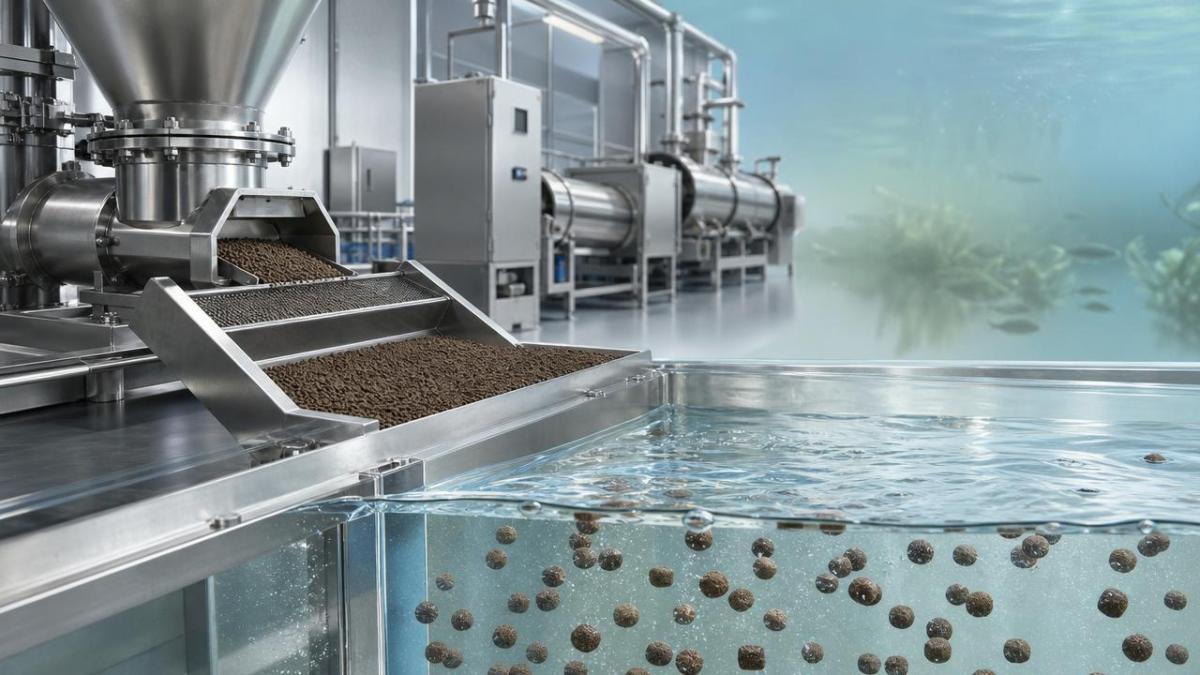
Water stability refers to how long a sinking pellet maintains its structure after immersion while still allowing species-appropriate feed intake. In commercial aquaculture, an acceptable target often falls in the range of 15–120 minutes depending on species, pellet diameter, and feeding environment. For financial approvers, this parameter matters because every minute of avoidable pellet disintegration can translate into direct material loss and indirect biological cost.
A sinking fish feed machine influences water stability through several production variables: grinding fineness, conditioning temperature, moisture addition, die compression ratio, retention time, and cooling performance. If one of these variables is unstable, the pellet may look acceptable at bagging stage but fail in pond or tank conditions. That disconnect is where many underestimated costs begin.
The hidden cost chain of unstable sinking pellets
Poor water stability does not create one isolated loss. It usually creates a chain of 4–6 cost events across feed efficiency, labor, pond management, and stock performance. First, pellets fragment before consumption, causing feed wastage. Second, dissolved nutrients increase ammonia and organic load. Third, staff spend more time on monitoring and cleaning. Fourth, fish or shrimp growth may become less uniform, affecting harvest planning and revenue timing.
Even a 2%–5% increase in effective feed waste can materially alter annual cost structures on medium and large farms. If a site consumes 5,000 tons of sinking feed per year, losses from poor pellet stability can quickly exceed the annual service budget of the machine itself. This is why feed equipment should be evaluated as a cost-control system, not simply as a processing line item.
Where finance teams often underestimate exposure
- They compare upfront machine quotations without pricing the cost of unstable pellets over 12 months.
- They treat water quality issues as farm-management problems instead of equipment-output problems.
- They focus on nameplate capacity, such as 1–5 tons per hour, but not on pellet durability consistency across shifts.
- They exclude maintenance downtime, rework feed, and rejected batches from the ROI model.
The table below shows how water stability problems typically move through the operating model and where a sinking fish feed machine can either reduce or amplify cost pressure.
The key takeaway is that machine underperformance usually compounds across departments. What appears to be a small pellet-quality issue at the mill can become a feed-cost, labor-cost, and biosecurity concern by the time it reaches the pond. That cross-functional impact is especially relevant for financial stakeholders responsible for capex discipline and long-term operating margins.
Species and system type change the stability requirement
Not every operation needs the same pellet profile. Raceway systems, ponds, recirculating aquaculture systems, and cage farming can require different sinking rates and water stability durations. A pellet designed for quick bottom access in one species may still need 20–30 minutes of integrity, while another use case may demand 60 minutes or more to limit breakdown before full consumption.
This means a sinking fish feed machine should not be selected on a generic promise of “good pellets.” Finance teams should ask for the target pellet diameter range, moisture window, conditioning method, and expected in-water retention profile for the actual species mix. A line making 1.5 mm shrimp feed and 6 mm fish feed faces very different process control demands.
How a Sinking Fish Feed Machine Shapes Real Operating Economics
From a technical standpoint, water stability is not produced by one component alone. It is the result of how the entire line works together, from raw material preparation to pellet cooling and screening. For finance teams, this is important because low quoted equipment prices often reflect omissions in process control, automation, wear resistance, or post-pellet handling.
Core machine factors that influence pellet performance
A sinking fish feed machine typically includes grinding, mixing, conditioning, pelletizing or extrusion-related forming stages, drying or cooling, and final screening. In most commercial plants, 5 technical variables drive the difference between stable pellets and costly breakdown: particle size distribution, steam or moisture conditioning, compression force, residence time, and cooling uniformity.
- Particle size: finer, more uniform grinding often supports stronger pellet bonding.
- Conditioning: controlled heat and moisture improve starch gelatinization and cohesion.
- Compression: die ratio and pressure affect density and sinking behavior.
- Retention time: too short may weaken pellet structure; too long may damage formulation balance.
- Cooling and drying: poor finishing can cause cracks, brittleness, or moisture inconsistency.
Typical evaluation ranges before approval
When reviewing supplier proposals, it is useful to request operating ranges rather than broad claims. Typical lines may run from 0.5 to 8 tons per hour depending on formulation and pellet size. Power demand can vary significantly, often from 30 kW for compact systems to more than 250 kW for larger integrated lines. Moisture control deviations of even 1%–2% can affect final durability and storage behavior.
Suppliers should also explain how the line performs across at least 3 production conditions: standard output, high-throughput output, and small-diameter feed output. A machine that only achieves good water stability at reduced capacity may not deliver the economics promised in the proposal.
The following comparison helps financial reviewers distinguish between surface-level machine affordability and true lifecycle value.
For many institutional buyers, the better business case is not the cheapest line but the line that narrows variation. Stable output supports more reliable feed budgeting, fewer quality claims, and better predictability in farm-level consumption. Those three factors often matter more to finance than a small reduction in acquisition price.
How to calculate ROI beyond machine cost
A robust ROI review should include at least 6 cost dimensions: machine acquisition, commissioning, energy use, wear parts, labor demand, and feed-loss reduction potential. In aquaculture, feed frequently represents one of the largest operating expenses, so a modest gain in pellet retention can outweigh a large difference in machine quote value over 24 months.
A practical approval model can compare two scenarios over 3 years. Scenario A uses a lower-cost line with higher pellet variability. Scenario B uses a better-controlled sinking fish feed machine with stronger output consistency. The comparison should test at least 3 assumptions: a 1%–3% change in usable feed retention, a 5%–15% change in cleaning or intervention labor, and a 2%–8% difference in unplanned stoppage time.
- Estimate annual feed volume processed or consumed.
- Model expected loss from fines and instability under current conditions.
- Add water management and labor costs linked to unstable pellets.
- Include downtime cost from maintenance or inconsistent output.
- Compare payback under conservative, base, and stress-case scenarios.
This approach gives financial teams a clearer picture than supplier brochures alone. It also creates a common language between production managers, nutrition teams, and capex approvers, reducing the risk of a procurement decision based solely on nameplate capacity.
Procurement Criteria Financial Approvers Should Require
A disciplined procurement process reduces the chance of approving a machine that performs well only under ideal test conditions. In commercial aquaculture, finance teams should require a structured review of process capability, support scope, spare parts planning, and commissioning accountability before releasing budget.
Five questions to ask every supplier
The first question is whether the supplier can define target water stability for the intended species and pellet sizes. The second is how the proposed line controls moisture and temperature batch to batch. The third is what wear parts are expected within the first 6–12 months. The fourth is what commissioning support is included. The fifth is how performance acceptance will be verified after startup.
- Ask for pellet-size production ranges, not just single-point output data.
- Ask for recommended raw material consistency and formulation limits.
- Ask for maintenance intervals in hours, shifts, or tons processed.
- Ask for a startup checklist with measurable acceptance criteria.
- Ask which process data can be monitored by operators in real time.
Warning signs in supplier quotations
Finance teams should be careful when quotations emphasize only “high output” or “energy saving” without showing pellet durability conditions. Another warning sign is the absence of spare-part schedules, control logic detail, or commissioning responsibilities. If a vendor cannot explain how the sinking fish feed machine maintains pellet integrity across different formulations, the investment risk is materially higher.
Lead time should also be reviewed carefully. Typical delivery windows may range from 6–16 weeks for standard systems, while installation and optimization may take another 1–4 weeks depending on site readiness. Delays affect cash flow timing, production plans, and inventory purchasing, so these variables belong in the capex review.
Implementation and post-installation control
Equipment selection is only the first step. To protect returns, operators should establish a 90-day stabilization plan after installation. During this period, teams can track pellet breakage, moisture variation, sinking behavior, operator interventions, and cleaning frequency. Those indicators reveal whether the machine is producing the economics used to justify the purchase.
A practical implementation sequence often involves 4 stages: pre-install review, mechanical installation, process commissioning, and performance verification. Each stage should have named responsibilities and a short list of sign-off criteria. For larger operations, monthly performance review in the first quarter can reduce the risk of small quality issues becoming recurring operating losses.
Common mistakes after machine startup
- Running at maximum throughput before moisture and conditioning are optimized.
- Changing formulations too quickly without verifying pellet integrity in water.
- Skipping operator training on die wear, cooling balance, and fines control.
- Measuring output tons per hour but not measuring usable pellet performance.
For finance leaders, the most effective control mechanism is to link final internal acceptance to operating evidence, not just installation completion. If the line was purchased to reduce feed waste and protect water quality, those outcomes should be measured in the first operating quarter.
Strategic Value for Industrial Buyers and Publishing-Savvy Manufacturers
In today’s aquaculture and feed-processing environment, institutional buyers are under pressure to justify every capital purchase against risk, compliance, and supply continuity. A sinking fish feed machine sits at the intersection of machinery, feed efficiency, environmental management, and production planning. That makes it relevant not only to farm managers, but also to CFOs, procurement directors, and technical review committees.
For manufacturers and solution providers, presenting equipment through a technically credible, commercially disciplined lens is increasingly important. Buyers want evidence of process logic, lifecycle support, and operational suitability for regulated or quality-sensitive environments. They respond better to detailed performance frameworks than to broad marketing language.
A financially sound purchase decision should therefore connect 3 realities: the physical performance of the feed, the biological performance of the stock, and the budget performance of the operation. When poor water stability is ignored, hidden costs spread across all three. When the right sinking fish feed machine is chosen with measurable criteria, the result is better cost control, stronger process predictability, and a more defensible return on capital.
For aquaculture investors, feed mill operators, and institutional procurement teams, the most prudent next step is a structured technical-commercial review before budget release. If you need support comparing machine options, validating lifecycle cost assumptions, or refining a procurement shortlist, contact us to discuss your application, request a tailored evaluation framework, or learn more about practical solutions for stable sinking feed production.
Related Intelligence
- Commercial Feed PelletSingapore’s Aquaculture Tech FastTrack Extends to Commercial Feed PelletsAquaculture Tech FastTrack now covers Commercial Feed Pellets — unlock 72-hour Singapore clearance with CNAS test reports. Key for China-Singapore feed exporters, labs & importers.
- Commercial Feed PelletFeed & Grain processing technology that cuts raw material lossFeed & Grain processing technology that cuts raw material loss helps processors improve yield, moisture control, traceability, and ROI—see which systems deliver measurable savings.
- Commercial Feed PelletSinking fish feed machine and the cost of poor water stabilitySinking fish feed machine selection affects feed waste, water quality, and ROI. Learn how better pellet stability cuts hidden aquaculture costs and improves long-term performance.
The Morning Broadsheet
Daily chemical briefings, market shifts, and peer-reviewed summaries delivered to your terminal.
