

The Authority in Global Agricultural Chemistry & Bio-Resources
Singapore’s Aquaculture Tech FastTrack Extends to Commercial Feed Pellets
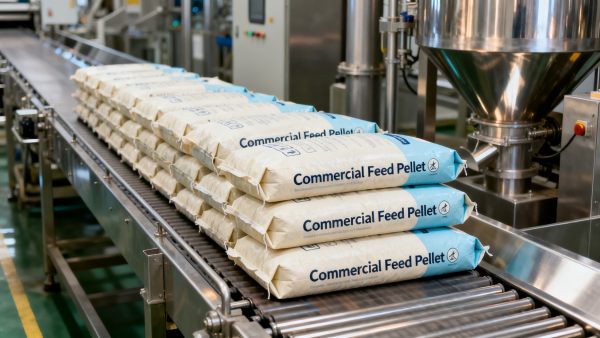
Starting 1 May 2026, Singapore’s Singapore Food Agency (SFA) will extend its ‘Aquaculture Tech FastTrack’ mutual recognition mechanism to Commercial Feed Pellet products — the first expansion beyond Recirculating Aquaculture Systems (RAS). This development directly impacts feed exporters, testing laboratories, and aquaculture supply chain stakeholders operating between China and Singapore, as it streamlines regulatory acceptance of key safety and quality test reports issued by CNAS-accredited laboratories in China.
Event Overview
On 1 May 2026, the Singapore Food Agency (SFA) officially expanded the ‘Aquaculture Tech FastTrack’ certification mutual recognition mechanism to cover Commercial Feed Pellet. Under this extension, SFA recognizes test reports from China National Accreditation Service for Conformity Assessment (CNAS)-accredited laboratories for three specific parameters: mycotoxins, melamine, and vitamin stability. A preliminary list of 37 Chinese feed manufacturers has been included in the mutual recognition scope. As a result, customs clearance time for eligible products entering Singapore is reduced from an average of 14 days to within 72 hours.
Which Subsectors Are Affected
Feed Exporters & Manufacturers
These companies are directly affected because the FastTrack extension applies specifically to Commercial Feed Pellet — a finished product category requiring pre-market compliance verification. Eligibility depends on inclusion in the official 37-company list and reliance on CNAS-issued test reports meeting SFA’s technical scope. Impact includes faster market access, lower documentation overhead, and potential competitive differentiation among peer exporters.
Testing Laboratories (CNAS-Accredited)
Laboratories accredited by CNAS and already conducting mycotoxin, melamine, and vitamin stability testing for feed clients now serve as critical enablers of FastTrack eligibility. Their test reports become formal entry documents for Singapore. Impact centers on increased demand for technically aligned reporting, stricter adherence to SFA’s methodological and format requirements, and possible need for calibration or validation updates to maintain recognition.
Importers & Distributors in Singapore
Local importers handling commercial aquafeed face reduced lead times and more predictable clearance schedules. However, they remain responsible for verifying that incoming shipments originate from listed manufacturers and are accompanied by valid, SFA-aligned CNAS reports. Impact includes tighter upstream due diligence and revised internal compliance checkpoints prior to customs submission.
Supply Chain Service Providers (e.g., Customs Brokers, Certification Consultants)
Providers supporting cross-border feed trade must update their guidance materials and client advisories to reflect the new FastTrack scope. They are increasingly tasked with validating report authenticity, checking manufacturer inclusion status, and confirming parameter coverage — not just document routing. Impact manifests in updated service scopes and heightened technical literacy requirements.
What Relevant Companies or Practitioners Should Focus On
Monitor official updates to the manufacturer list and technical annexes
The initial list covers 37 Chinese enterprises, but SFA may expand it periodically. Stakeholders should subscribe to SFA’s official notifications and verify whether their suppliers or partners appear on current or future versions — inclusion is mandatory for FastTrack benefits.
Confirm alignment between CNAS lab reports and SFA’s specified parameters and methods
Recognition applies only to reports covering mycotoxins, melamine, and vitamin stability — and only when conducted per SFA-accepted protocols. Companies must review lab report formats, detection limits, and reference standards against SFA’s published technical criteria before submission.
Distinguish policy rollout from operational readiness
While the mechanism takes effect on 1 May 2026, actual implementation depends on system integration at Singapore customs and laboratory data exchange channels. Early adopters should conduct trial submissions and validate turnaround times before scaling operations.
Prepare documentation workflows for traceability and audit readiness
FastTrack does not eliminate recordkeeping obligations. Firms should retain evidence linking each shipment to its corresponding CNAS report, manufacturer listing status, and batch-specific test results — all subject to post-clearance verification by SFA.
Editorial Perspective / Industry Observation
Observably, this expansion signals Singapore’s intent to institutionalize science-based, laboratory-driven equivalence in aquaculture input regulation — moving beyond equipment-centric (e.g., RAS) to material-centric (feed) recognition. Analysis shows the initiative functions less as a full regulatory harmonization and more as a targeted risk-mitigation pathway: it reduces administrative friction without delegating safety assurance to foreign authorities. From an industry perspective, it reflects growing prioritization of feed safety as a systemic aquaculture resilience factor — especially amid tightening global scrutiny on antimicrobial use and nutritional integrity. Current attention should focus less on immediate scale-up and more on precise technical compliance, as narrow parameter scope and strict lab accreditation conditions mean benefits remain conditional and non-transferable across other feed types or markets.
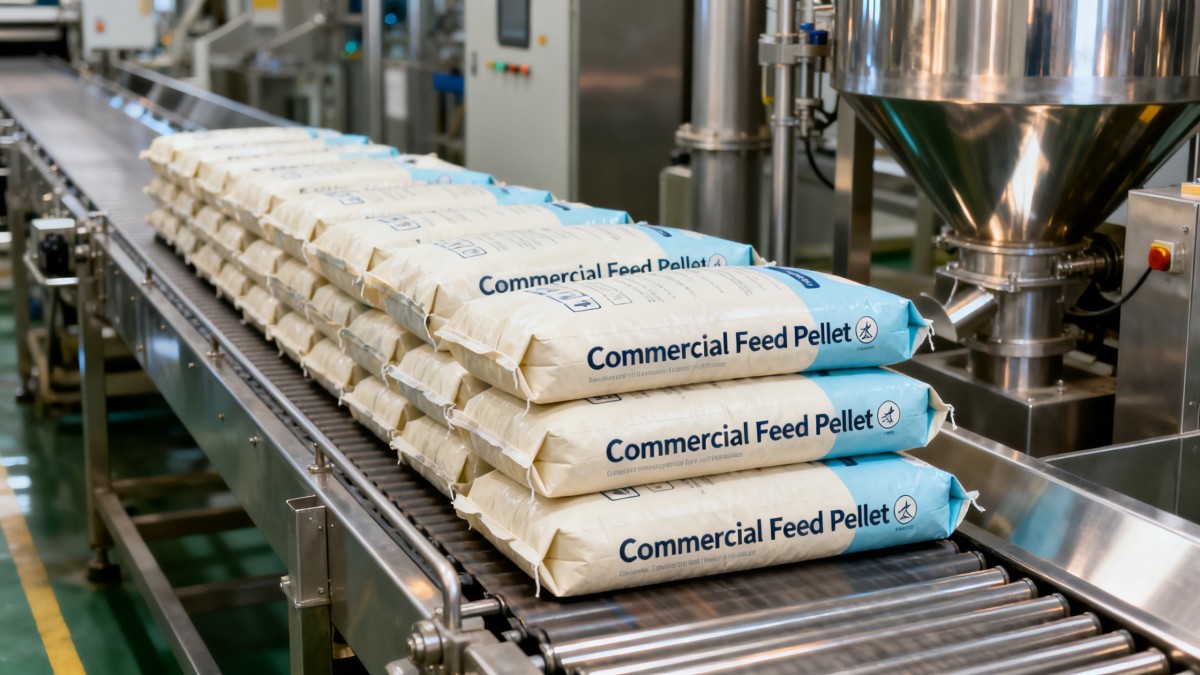
In summary, the FastTrack extension to Commercial Feed Pellet represents a procedural efficiency gain — not a regulatory relaxation — for a defined subset of China–Singapore aquafeed trade. Its significance lies in precedent-setting: it establishes a replicable model for mutual recognition anchored in third-party laboratory competence rather than national system equivalence. Stakeholders are advised to treat it as a calibrated, parameter-limited facilitation tool — not a broad market access gateway.
Source: Singapore Food Agency (SFA) official announcement (effective 1 May 2026); confirmed scope: Commercial Feed Pellet, mycotoxins/melamine/vitamin stability testing, CNAS laboratory recognition, initial list of 37 Chinese manufacturers, 72-hour clearance target. Ongoing monitoring is recommended for updates to the manufacturer list and any technical annex revisions.
Related Intelligence
- Commercial Feed PelletSingapore’s Aquaculture Tech FastTrack Extends to Commercial Feed PelletsAquaculture Tech FastTrack now covers Commercial Feed Pellets — unlock 72-hour Singapore clearance with CNAS test reports. Key for China-Singapore feed exporters, labs & importers.
- Commercial Feed PelletFeed & Grain processing technology that cuts raw material lossFeed & Grain processing technology that cuts raw material loss helps processors improve yield, moisture control, traceability, and ROI—see which systems deliver measurable savings.
- Commercial Feed PelletSinking fish feed machine and the cost of poor water stabilitySinking fish feed machine selection affects feed waste, water quality, and ROI. Learn how better pellet stability cuts hidden aquaculture costs and improves long-term performance.
The Morning Broadsheet
Daily chemical briefings, market shifts, and peer-reviewed summaries delivered to your terminal.
