

The Authority in Global Agricultural Chemistry & Bio-Resources
India BIS Releases IS 17892:2026 for Climate Control Equipment
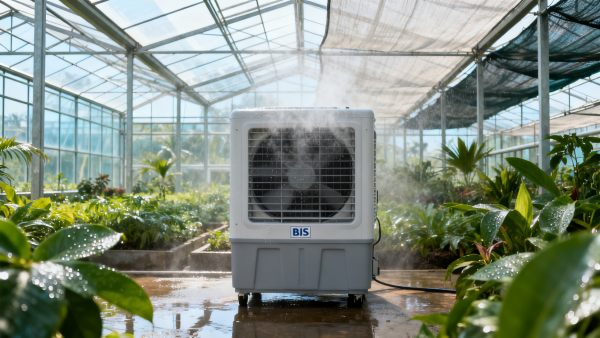
On May 5, 2026, the Bureau of Indian Standards (BIS) published the final version of IS 17892:2026, Agricultural Greenhouse Climate Control Systems, setting a mandatory high-temperature–high-humidity durability test for climate control and ventilation equipment entering the Indian market. The standard takes effect on November 1, 2026. Manufacturers and exporters—particularly those supplying to India’s agricultural infrastructure, greenhouse technology, and controlled-environment agriculture sectors—must now prepare for stricter technical compliance requirements.
Event Overview
The Bureau of Indian Standards (BIS) officially released IS 17892:2026 on May 5, 2026. The standard applies to climate control and ventilation equipment intended for agricultural greenhouses. It mandates that all imported units undergo a 72-hour endurance test at 45°C and 95% relative humidity (RH), with test reports required from BIS-authorized laboratories. Enforcement begins November 1, 2026. Current data indicates that fewer than 35% of Chinese-manufactured devices pass this test, primarily due to insufficient thermal management design and non-compliant sealing materials under tropical operating conditions.
Industries Affected
Direct Exporters & Trading Companies
Companies exporting climate control or ventilation equipment from China—and other non-domestic sources—to India face immediate regulatory risk. Non-compliance will block customs clearance and BIS certification, halting market access. Affected product categories include exhaust fans, evaporative coolers, heating units, and integrated environmental controllers used in commercial greenhouses.
Original Equipment Manufacturers (OEMs) & Contract Manufacturers
OEMs supplying components or assembled units to Indian importers must verify whether their current designs meet the 45°C/95% RH requirement. Thermal stress on motors, electronics, and gaskets—especially in sealed enclosures—is now a critical validation point. Design revisions may be needed before Q3 2026 to allow time for retesting and documentation.
Supply Chain & Certification Service Providers
Third-party testing labs, BIS liaison agents, and conformity assessment bodies will see increased demand for accredited high-humidity endurance testing. However, only BIS-authorized labs may issue valid reports. Service providers must confirm lab accreditation status and capacity ahead of the November 2026 deadline, as bottlenecks are anticipated.
Key Considerations and Recommended Actions
Monitor official BIS implementation guidance
BIS has not yet published detailed test protocols, sample report templates, or transitional arrangements. Exporters should track updates on the BIS website and subscribe to official notifications, especially regarding acceptable deviations, grandfathering provisions (if any), and lab authorization lists.
Prioritize verification for high-volume or high-risk product lines
Focus initial testing on best-selling or structurally complex models—e.g., variable-frequency drive (VFD)-integrated fans or multi-sensor environmental controllers—where thermal accumulation and condensation resistance are most challenging. Avoid broad-spectrum revalidation; instead, use failure root-cause analysis from existing sub-35% pass-rate data to guide targeted redesign.
Distinguish between policy signal and operational readiness
The issuance of IS 17892:2026 is a formal regulatory milestone, but actual enforcement depends on customs coordination, lab capacity, and importer awareness. While certification is mandatory post-November 2026, early shipments without valid reports may still clear under transitional review—though this is unconfirmed and carries risk. Treat the standard as binding, but verify real-time port-level practice via Indian partners.
Initiate supplier communication and documentation alignment now
Exporters must ensure that BIS-authorized lab reports explicitly list model numbers, serial number ranges, and test conditions matching shipment declarations. Coordinate with Indian importers to align labeling, user manuals, and technical dossiers with IS 17892:2026 clauses—especially Clause 7.3 (environmental endurance) and Annex B (test methodology).
Editorial Perspective / Industry Observation
Observably, IS 17892:2026 signals India’s shift toward performance-based, climate-adapted technical regulation—not just safety or EMC compliance. Analysis shows this reflects broader BIS efforts to reduce field failures in tropical agricultural infrastructure, where equipment downtime directly impacts crop yield. It is less a one-off standard update and more a precedent: similar climatic stress requirements may extend to irrigation controllers, solar-powered sensors, or post-harvest storage systems in future revisions. From an industry perspective, the low current pass rate among Chinese suppliers highlights a gap between generic industrial design and localized environmental resilience—a gap now codified into market access terms.
Current evidence suggests IS 17892:2026 functions both as an enforceable requirement and as a structural signal. Its November 2026 effective date confirms it is no longer hypothetical—but its full operational impact remains contingent on lab scalability, importer preparedness, and enforcement consistency across Indian ports. Continuous monitoring of BIS circulars and trade advisory notices is therefore essential beyond the initial publication.
This standard does not represent a temporary adjustment. Rather, it formalizes long-standing field experience into a verifiable benchmark. For global suppliers, it reinforces that “compliance” increasingly means “performance under local ambient stress”—not just adherence to nominal electrical or mechanical specs.
The release of IS 17892:2026 marks a material tightening of technical market access for climate control and ventilation equipment in India. It elevates environmental endurance from a recommended feature to a mandatory, test-verified condition. For affected stakeholders, the standard is best understood not as a singular hurdle, but as an indicator of India’s evolving regulatory emphasis on real-world reliability in tropical agri-infrastructure. Proactive technical alignment—rather than reactive certification—will define competitive positioning over the next 18 months.
Source: Bureau of Indian Standards (BIS), official notification dated May 5, 2026, referencing IS 17892:2026 Agricultural Greenhouse Climate Control Systems.
Note: Lab accreditation status, test protocol details, and transitional provisions remain subject to further BIS announcements and require ongoing observation.
Related Intelligence
- Climate Control & VentilationIndia BIS Releases IS 17892:2026 for Climate Control EquipmentIndia BIS IS 17892:2026 mandates 45°C/95% RH durability testing for climate control equipment—key for exporters, OEMs & certifiers entering India’s greenhouse market. Act now!
- Climate Control & VentilationIndia BIS Proposes New Tropical Durability Test for Climate Control DevicesIndia BIS proposes new tropical durability test for climate control devices—45°C/95%RH, 72-hour mandate. Key for exporters, manufacturers & suppliers targeting India’s agri-infrastructure.
- Climate Control & VentilationCommercial LED grow lights wholesale: how to judge real efficiencyCommercial led grow lights wholesale: learn how to judge real efficiency beyond headline PPE by comparing PPFD uniformity, driver quality, thermal design, and verified testing.
The Morning Broadsheet
Daily chemical briefings, market shifts, and peer-reviewed summaries delivered to your terminal.
