

The Authority in Global Agricultural Chemistry & Bio-Resources
Global Shipping Alliance Launches Green Corridor Asia-Europe Cold Chain Route
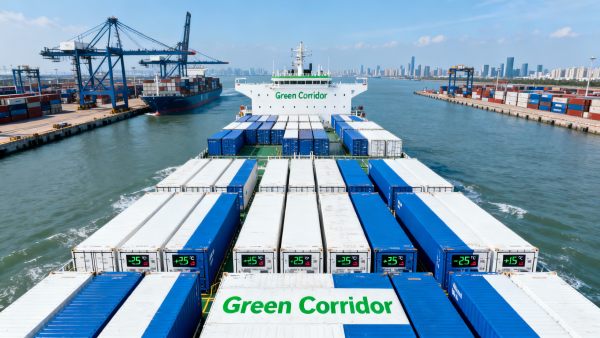
On May 8, 2026, a coalition of 11 global container carriers—including Maersk, CMA CGM, and Hapag-Lloyd—announced the launch of the first ‘Green Corridor’ Asia-Europe cold chain dedicated service, effective June 1, 2026. The route is designed specifically for precision agricultural equipment, including Aeration & Water Tech systems, with precise temperature control ranging from –25°C to +15°C. It offers a 22% reduction in maritime surcharges compared to standard reefer containers. Key ports of call include Yangshan (Shanghai), Ningbo-Zhoushan, Rotterdam, and Hamburg; booking is now open. This development is particularly relevant for agricultural technology exporters, cold-chain logistics providers, and manufacturers of climate-sensitive agri-inputs—and signals a shift toward sector-specific, efficiency-driven maritime infrastructure.
Event Overview
On May 8, 2026, the Global Shipping Alliance—a consortium of 11 container shipping lines—publicly announced the launch of its first ‘Green Corridor’ Asia-Europe cold chain dedicated service, scheduled to commence operations on June 1, 2026. The service is tailored for precision agricultural equipment, explicitly naming Aeration & Water Tech devices as priority cargo. Temperature control is guaranteed across a range of –25°C to +15°C. The alliance states that the maritime surcharge for this service is 22% lower than that applied to conventional refrigerated containers. Initial port rotations include Shanghai Yangshan, Ningbo-Zhoushan, Rotterdam, and Hamburg. Booking capacity is currently available.
Industries Affected by This Development
Direct Exporters of Agricultural Technology Equipment
Companies exporting Aeration & Water Tech systems—or similar precision agri-tech hardware requiring strict thermal management—face direct implications. The new route offers standardized, verified temperature profiles and a cost advantage over general reefer options, potentially improving landed cost predictability and reducing transit-related product failure risk.
Raw Material and Component Suppliers to Agri-Tech Manufacturers
Suppliers of temperature-sensitive subcomponents (e.g., sensors, microcontrollers, or fluidic modules) may see downstream demand shifts. If OEMs begin aligning production schedules or inventory planning around the fixed weekly sailings and confirmed thermal parameters of the Green Corridor, suppliers may need to adjust lead time expectations or packaging specifications accordingly.
Contract Manufacturers and Assemblers of Climate-Controlled Equipment
Firms engaged in final assembly or kitting of Aeration & Water Tech units may experience tighter coordination requirements. The dedicated nature of the service implies stricter documentation, pre-booking windows, and potential cutoff timelines—especially given the limited initial port coverage. Compliance with temperature validation protocols (e.g., pre-trip inspection reports, data logger submission) may become de facto prerequisites for shipment acceptance.
Cold-Chain Logistics Providers and Freight Forwarders
Third-party logistics providers specializing in temperature-controlled transport must evaluate integration readiness. The 22% surcharge reduction applies only to the maritime leg under this specific routing and does not extend to inland haulage, customs clearance, or depot handling. Forwarders will need to verify whether their current reefer tender agreements or carrier contracts accommodate this new service tier—and whether their systems support automated slot allocation or temperature compliance reporting.
What Stakeholders Should Monitor and Act On Now
Track official service guidelines and tariff publications
The alliance has confirmed the launch date and initial ports but has not yet published full technical specifications (e.g., acceptable container types, required pre-cooling duration, or data logger certification standards). Stakeholders should monitor carrier portals and alliance communications for updates before committing to firm bookings.
Assess eligibility of current product SKUs against stated temperature range and classification criteria
The service explicitly names Aeration & Water Tech devices—but does not define scope beyond that. Companies should confirm whether their specific models fall within the designated cargo category, especially if units operate across multiple ambient ranges or contain mixed components (e.g., electronics + hydraulic assemblies). Misclassification could result in rejection or reclassification surcharges.
Distinguish between announced capability and operational readiness
While booking is open, the first sailing is scheduled for June 1, 2026—leaving minimal buffer for system testing or contingency planning. Early adopters should treat the initial three sailings as operational pilots: allocate non-critical shipments, validate documentation workflows, and record any deviations in temperature logs or handover procedures.
Align internal procurement and warehouse scheduling with fixed port rotation windows
With only four initial ports and no published frequency (e.g., weekly vs. biweekly), shippers must coordinate cut-off times, container drop-off deadlines, and inland transport legs well in advance. Delays at origin terminals—particularly during peak export seasons in Shanghai or Ningbo—could result in missed slots without guaranteed alternative capacity.
Editorial Perspective / Industry Observation
Observably, this initiative reflects a growing trend among ocean carriers to move beyond commoditized reefer offerings and develop vertical-specific solutions—particularly where regulatory scrutiny, product liability exposure, or customer SLAs justify differentiated infrastructure. Analysis shows the 22% surcharge reduction is likely tied to optimized vessel stowage, reduced energy variability per TEU, and streamlined documentation—not broad cost cutting. From an industry perspective, the Green Corridor is better understood as a pilot signal than an immediately scalable solution: its narrow geographic scope, limited cargo definition, and absence of published performance benchmarks suggest it functions primarily as a proof-of-concept for future corridors (e.g., trans-Pacific or intra-Asia). Continued monitoring is warranted—not because the route itself is transformative today, but because it indicates how alliances may prioritize high-value, low-volume, high-compliance cargo segments in coming years.
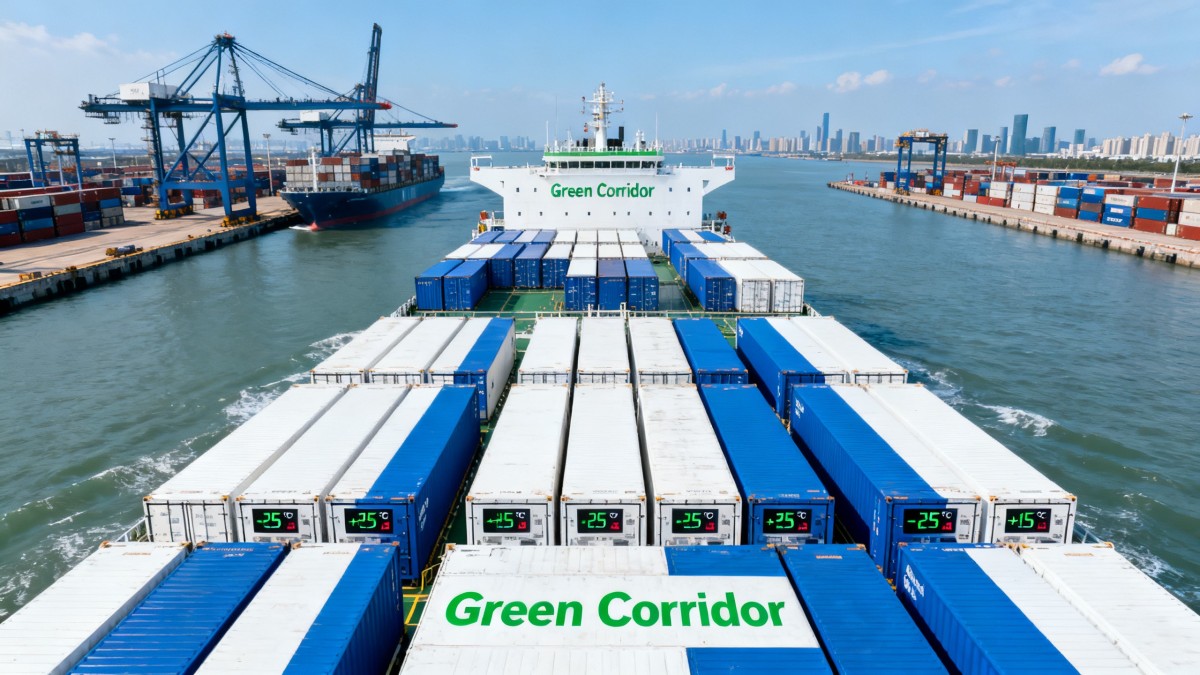
In summary, the Green Corridor Asia-Europe cold chain route represents a targeted infrastructure upgrade—not a wholesale shift in maritime cold-chain economics. Its immediate significance lies in improved cost and control certainty for a narrow set of agri-tech exporters, rather than systemic disruption. Current stakeholders are advised to treat it as an early-access option requiring careful qualification, not a default replacement for existing reefer arrangements. The broader implication is less about today’s capacity and more about the direction of carrier investment: toward verifiable, sector-aligned logistics services.
Source: Official joint announcement by the Global Shipping Alliance (May 8, 2026). No third-party verification or independent performance data has been published to date. Ongoing observation is recommended for service reliability metrics, expansion announcements, and tariff transparency updates.
Related Intelligence
- Aeration & Water TechGlobal Shipping Alliance Launches Green Corridor Asia-Europe Cold Chain RouteGreen Corridor Asia-Europe cold chain route launched: 22% lower surcharges, –25°C to +15°C control for agri-tech exports. Book now!
- Aeration & Water TechCommercial protein skimmers: what foam quality tells youCommercial protein skimmers reveal more than waste removal—foam quality helps operators spot loading shifts, imbalance, and maintenance needs early for steadier performance.
- Aeration & Water TechDissolved oxygen controller alarms that point to sensor driftDissolved oxygen controller alarms may signal sensor drift, not process upset. Learn key alarm patterns, faster field checks, and service tips to reduce downtime and protect compliance.
The Morning Broadsheet
Daily chemical briefings, market shifts, and peer-reviewed summaries delivered to your terminal.
