

The Authority in Global Agricultural Chemistry & Bio-Resources
ANVISA Expands Natural Ingredients Exemption List, Grants Fast-Track for Chinese Plant-Based Protein Powders
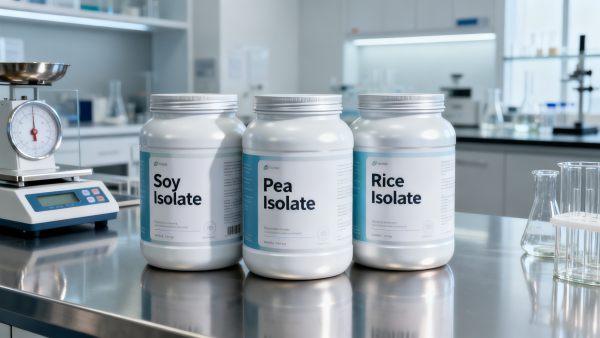
Brazil’s National Health Surveillance Agency (ANVISA) updated Resolution RDC No. 221/2026 on May 6, 2026, adding plant-based protein powders — including soy, pea, and rice isolates — to its Natural Ingredients import registration exemption list. This change enables Chinese manufacturers to use a dedicated online ‘fast-track’备案 system, reducing review time from 90 days to five working days. Approved products may enter Brazilian distribution channels directly, without requiring a local legal representative. The update is particularly relevant for exporters of functional food ingredients, plant-based nutrition products, and dietary supplement raw materials — and signals a meaningful shift in regulatory accessibility for Asian suppliers targeting the Latin American market.
Event Overview
On May 6, 2026, ANVISA published an amendment to Resolution RDC No. 221/2026. The amendment explicitly includes plant-based protein powders derived from soy, pea, and rice isolates in the list of natural ingredients exempt from full pre-market registration for import into Brazil. Under this revision, eligible products manufactured in China may undergo streamlined online notification via a newly designated ‘fast-track’ channel. Upon successful submission and approval — confirmed within five working days — such products are authorized for direct entry into Brazilian distribution networks, without mandatory engagement of a local agent or additional post-notification compliance steps.
Industries Affected
Direct Exporters (China-based)
Chinese companies exporting plant-based protein powders to Brazil are directly affected, as the exemption removes two major barriers: lengthy registration timelines and dependency on Brazilian legal representatives. Impact manifests in reduced time-to-market, lower administrative overhead, and simplified documentation workflows for shipments destined specifically for Brazil.
Ingredient Sourcing & Blending Firms (Global)
Firms that source, formulate, or repackage plant-based proteins for finished foods or supplements may experience shifts in supplier selection criteria. With faster access and clearer regulatory pathways, Chinese-origin isolates could gain competitive weight against alternatives from North America or Europe — especially where cost, scalability, or formulation compatibility aligns.
Contract Manufacturers & Toll Processors (Brazil & LATAM)
Brazilian and regional contract manufacturers serving domestic brands may see increased inbound inquiries for co-manufacturing using imported Chinese protein bases. The exemption does not alter local GMP or labeling requirements, but it lowers the threshold for incorporating these inputs into locally produced finished goods — potentially accelerating product development cycles.
Distribution & Import Logistics Providers
Logistics and customs brokerage firms supporting health ingredient imports into Brazil will need to update internal protocols and client guidance to reflect the new notification pathway. While physical import procedures remain unchanged, documentation verification, certificate handling, and ANVISA portal navigation now differ for exempted plant-based protein powder consignments.
What Relevant Companies or Practitioners Should Monitor and Do Now
Track official implementation guidance from ANVISA
Although Resolution RDC No. 221/2026 is published, operational details — such as required document formats, portal access credentials, and definitions of ‘originating manufacturer’ — are expected to be issued separately. Companies should subscribe to ANVISA’s official notices and monitor updates to the agency’s e-SIS system interface.
Verify eligibility of specific SKUs against the defined scope
The exemption applies only to isolated plant proteins from soy, pea, and rice — not hydrolysates, concentrates, blends, or products with added vitamins, enzymes, or flavorings. Firms must confirm whether their exact product specifications fall within the narrowly defined category before initiating fast-track submissions.
Distinguish between regulatory clearance and commercial readiness
Fast-track notification grants market access permission, but does not replace compliance with Brazilian labeling regulations (RDC No. 259/2022), allergen declarations, or Good Manufacturing Practice (GMP) alignment for downstream processing. Companies should coordinate parallel reviews of packaging, claims, and local partner agreements.
Prepare supply chain documentation in advance
ANVISA’s five-day timeline assumes complete, error-free submissions. Exporters should pre-validate certificates of analysis, manufacturing licenses, and product specifications — ensuring traceability from raw material origin through final isolation — to avoid delays due to administrative corrections.
Editorial Perspective / Industry Observation
Observably, this update functions less as a broad policy liberalization and more as a targeted procedural refinement — one that reflects ANVISA’s increasing focus on risk-proportionate oversight for low-risk natural ingredients. Analysis shows that the inclusion of specific plant isolates suggests growing familiarity with internationally standardized production methods and quality benchmarks among Brazilian regulators. From an industry perspective, the move appears calibrated to support domestic innovation in plant-based nutrition while maintaining safety thresholds. It is currently best understood as a signal of regulatory maturation rather than an immediate market-opening event — its real-world impact will depend on consistent implementation, transparency in rejection reasons, and whether similar pathways emerge for other high-volume botanical or fermented ingredients.
This resolution marks a concrete step toward harmonizing import logistics for certain functional food ingredients in Brazil — yet it remains narrowly scoped and contingent upon strict adherence to defined technical criteria. For stakeholders, the most constructive approach is to treat it as an operational opportunity requiring precise execution, not a strategic inflection point. Its significance lies not in scale, but in precedent: if successfully administered, it may inform future expansions of the exemption list or inspire analogous adjustments in neighboring jurisdictions.
Information Sources:
• Official text of ANVISA Resolution RDC No. 221/2026, published May 6, 2026
• ANVISA’s public notice archive and e-SIS platform documentation (as of May 2026)
Note: Implementation guidelines, portal access rules, and enforcement practices remain under observation and subject to further clarification.
Related Intelligence
- Natural IngredientsANVISA Expands Natural Ingredients Exemption List, Grants Fast-Track for Chinese Plant-Based Protein PowdersANVISA fast-tracks Chinese plant-based protein powders — soy, pea, rice isolates now exempt from full registration, cutting approval to 5 days.
- Natural IngredientsANVISA Expands Natural Ingredients Exemption for Plant-Based Protein Powders in BrazilANVISA expands natural ingredients exemption for plant-based protein powders—soy, pea & brown rice isolates (≥80% protein) now fast-tracked in Brazil.
- Natural IngredientsANVISA Launches Fast-Track for Natural Ingredients in BrazilANVISA fast-track for natural ingredients in Brazil cuts import registration to 21 working days—key for exporters, formulators & compliance teams. Act now!
The Morning Broadsheet
Daily chemical briefings, market shifts, and peer-reviewed summaries delivered to your terminal.
